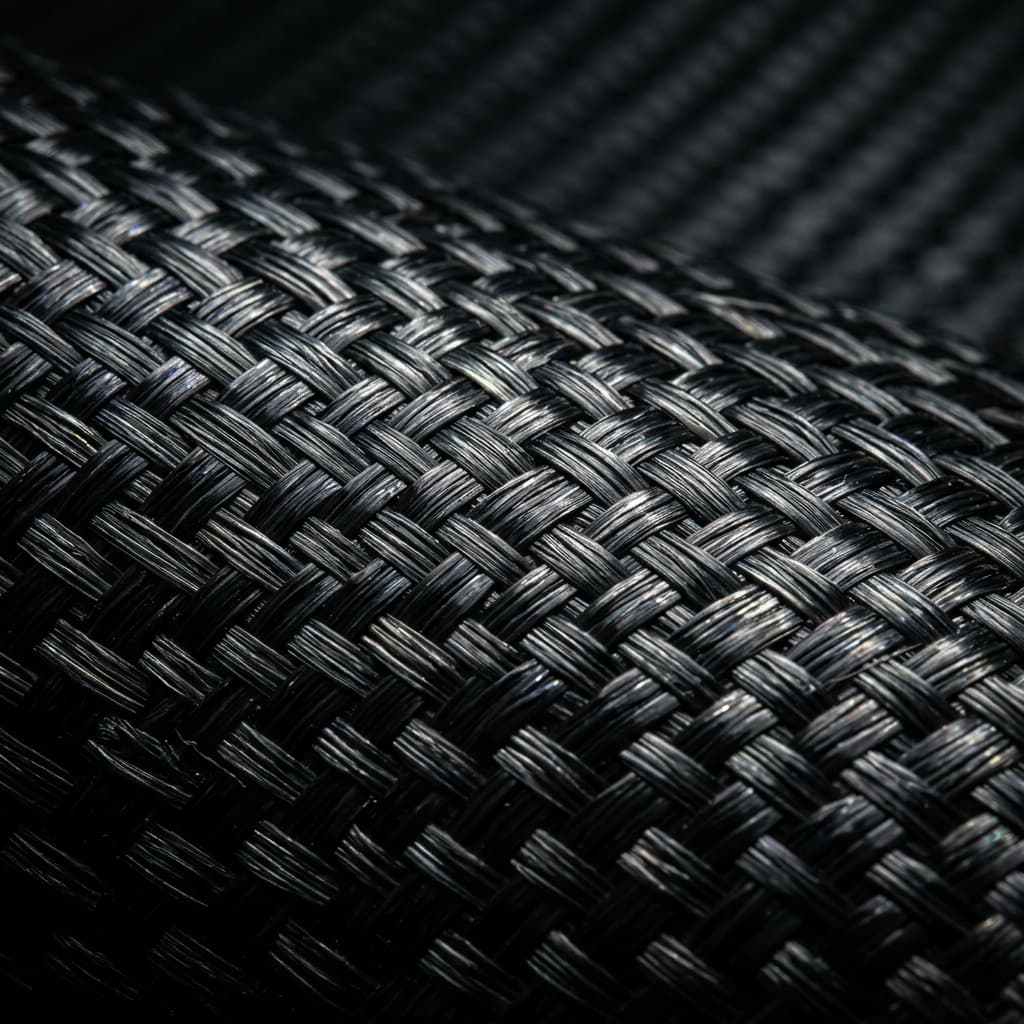
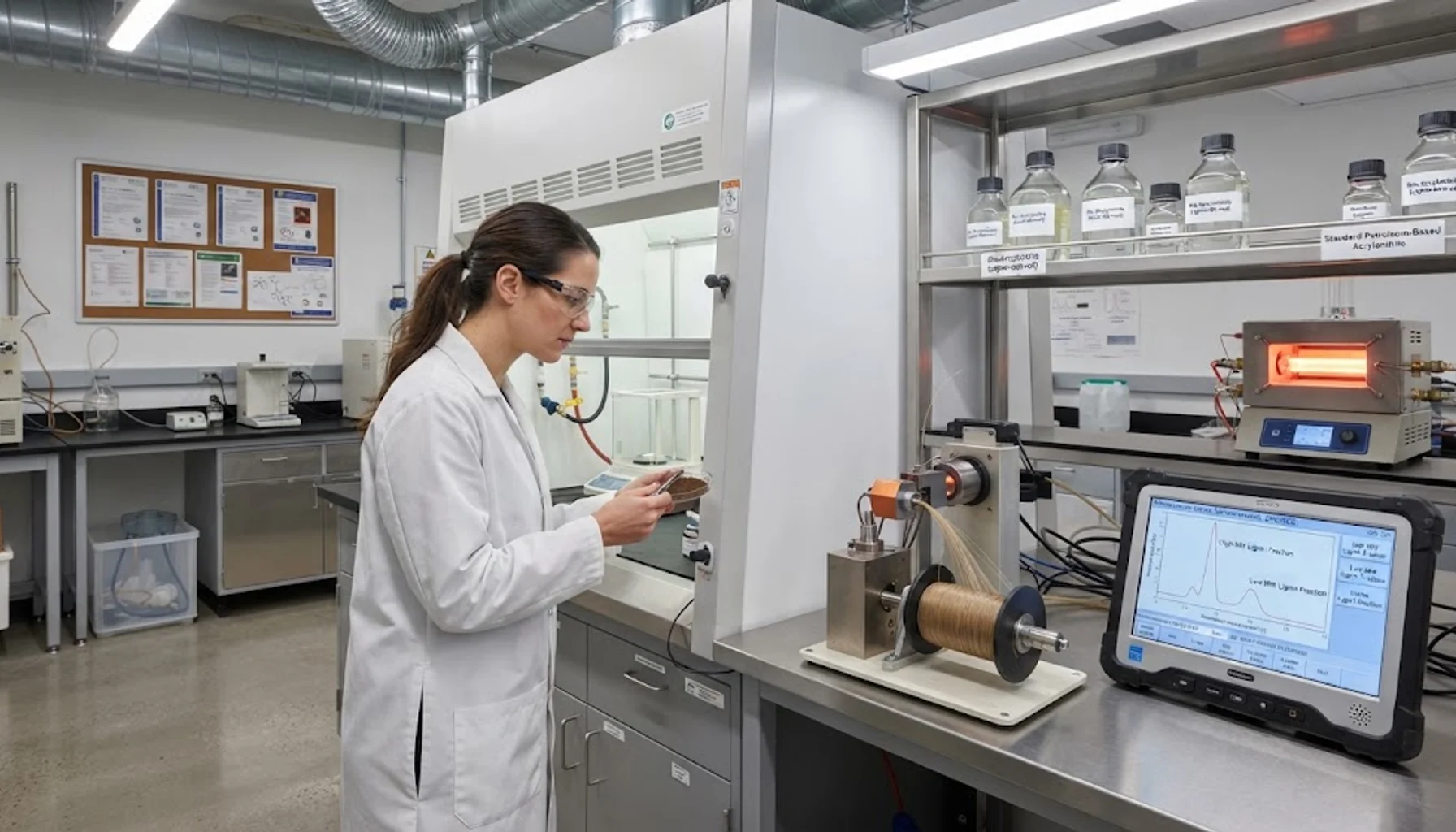
The carbon fiber industry is exploring bio-based precursors to reduce dependence on petroleum-derived acrylonitrile. Lignin-based precursors from paper pulp waste and bio-acrylonitrile from sugarcane ethanol are the most advanced alternatives. This article reviews their technical readiness, mechanical properties, and ISCC PLUS sustainability certification pathways.
Introduction
The carbon fiber industry faces a fundamental sustainability challenge: over 90% of the world's carbon fiber is produced from polyacrylonitrile (PAN) derived from petroleum-based acrylonitrile. This creates both supply chain dependency on volatile petrochemical markets and a significant carbon footprint — approximately 15–25 kg of CO₂ equivalent per kilogram of carbon fiber produced. As demand for carbon fiber grows (projected 12–15% CAGR through 2030), the industry is actively exploring bio-based precursors to reduce environmental impact while maintaining the mechanical properties that make carbon fiber indispensable.
Bio-based carbon fiber precursors fall into three categories: lignin-based precursors from paper pulp waste, bio-acrylonitrile from renewable feedstocks, and novel bio-derived polymers. Each pathway offers different trade-offs in cost, performance, scalability, and certification readiness.
Lignin-Based Precursors
Lignin is the second most abundant natural polymer after cellulose, constituting 15–30% of wood biomass by weight. As a byproduct of the paper pulping industry (approximately 50 million tonnes produced annually worldwide), lignin is both abundant and low-cost — typically selling for /bin/zsh.20–0.50/kg, compared to .50–3.00/kg for acrylonitrile monomer.
The challenge lies in converting lignin's complex, heterogeneous aromatic structure into a spinnable precursor fiber with properties approaching those of PAN:
• Molecular weight distribution: Lignin from kraft pulping has broad molecular weight distribution (1,000–100,000 g/mol), requiring fractionation or modification to achieve the narrow distribution needed for consistent fiber spinning.
• Sulfur content: Kraft lignin contains 1–3% sulfur from the pulping process, which must be reduced below 0.5% to prevent fiber degradation during carbonization.
• Thermal stability: Lignin begins to soften and flow at 120–150°C (glass transition temperature), which is too low for conventional melt spinning. Cross-linking treatments (formaldehyde, glyoxal, or thermal) are required to increase thermal stability.
Current lignin-based carbon fibers achieve tensile modulus of 150–200 GPa (vs. 230+ GPa for standard PAN-based CF) and tensile strength of 1.0–1.5 GPa (vs. 3.5–5.0 GPa for standard CF). While these properties are insufficient for aerospace applications, they are adequate for automotive, wind energy, and construction applications where extreme mechanical performance is not required.
Key developers include Stora Enso (Finland), which produces lignin-based carbon fiber from its kraft pulp mills; Dimpora (Germany), developing electrospun lignin nanofibers; and the University of Kentucky's Center for Applied Energy Research, pioneering lignin-based carbon fiber for automotive applications.
Bio-Acrylonitrile Pathways
Bio-acrylonitrile (bio-AN) offers the most direct route to bio-based carbon fiber, as it can be used as a drop-in replacement for petroleum-derived acrylonitrile in existing PAN-based carbon fiber manufacturing processes without requiring any process changes.
Two primary production routes have reached commercial scale:
• Sugarcane ethanol route: Developed by ANL (Australia) and commercialized by Braskem (Brazil), this pathway dehydrates 3-amino-1-propanol (produced from bio-ethanol and ammonia) to produce bio-AN. Braskem's 2024 pilot plant produces 5,000 tonnes/year of bio-AN, with plans to scale to 50,000 tonnes/year by 2028.
• Glycerin route: Trillium Renewable Chemicals (USA) converts glycerin — a biodiesel byproduct — into bio-AN through a catalytic ammoxidation process. The glycerin route benefits from low-cost feedstock (/bin/zsh.30–0.50/kg glycerin) and the established biodiesel supply chain.
Bio-AN carbon fiber achieves identical mechanical properties to petroleum-based CF, as the PAN chemistry is molecularly equivalent. The primary differentiator is cost: bio-AN currently costs 20–40% more than petroleum-AN, but this premium is expected to decrease as production scales.
ISCC PLUS Certification
ISCC (International Sustainability and Carbon Certification) PLUS is the leading certification system for bio-based and recycled content in chemical products. For carbon fiber, ISCC PLUS provides:
• Mass balance accounting: Allows gradual transition from fossil to bio-based feedstocks within existing production facilities, without requiring dedicated bio-based production lines.
• Chain of custody: Tracks bio-based content from feedstock source through intermediate products to final carbon fiber, ensuring traceability and preventing double-counting.
• Sustainability criteria: Verifies that bio-based feedstocks meet land-use, biodiversity, and social sustainability requirements.
Several European carbon fiber producers are pursuing ISCC PLUS certification: Hexcel for its bio-based prepreg line, SGL Carbon for its lignin-based carbon fiber, and Toray for its biomass-derived PAN products.
Performance and Application Considerations
The choice of bio-based precursor depends on the target application:
• Aerospace: Currently requires PAN-based CF from petrochemical or bio-AN sources. Lignin-based CF does not meet aerospace mechanical property requirements. Bio-AN from sugarcane or glycerin is the only viable pathway for aerospace-grade bio-based carbon fiber.
• Automotive: Lignin-based CF is viable for semi-structural applications (body panels, interior structures) where tensile strength of 1.0–1.5 GPa is sufficient. Bio-AN CF enables higher-performance automotive applications (chassis, crash structures).
• Wind energy: Lignin-based CF is well-suited for wind turbine blade spar caps, where stiffness (not strength) is the primary design driver and cost sensitivity is high.
• Construction: Lignin-based CF for concrete reinforcement and structural strengthening represents the lowest-cost application for bio-based carbon fiber.
Market Outlook and Challenges
The bio-based carbon fiber market is projected to reach million by 2030, representing 8–12% of the total carbon fiber market. Key challenges include:
• Cost reduction: Bio-based precursors must achieve cost parity with petroleum-based materials to reach mainstream adoption. Current premiums of 20–40% are barriers for price-sensitive applications.
• Scale-up: Lignin-based CF production is currently limited to pilot and small commercial scale (100–1,000 tonnes/year). Scaling to 10,000+ tonnes/year requires significant capital investment in precursor processing infrastructure.
• Property gap: Lignin-based CF still trails PAN-based CF in mechanical properties, limiting its addressable market. Bridging this gap requires advances in precursor purification, spinning technology, and carbonization processes.
Conclusion
Bio-based carbon fiber precursors — whether lignin, bio-AN, or novel bio-polymers — represent an important pathway toward sustainable carbon fiber production. While lignin-based precursors offer abundant, low-cost feedstock for non-aerospace applications, bio-acrylonitrile provides a drop-in solution for maintaining PAN-level performance with reduced environmental impact. ISCC PLUS certification provides the framework for traceability and sustainability verification. As the carbon fiber industry scales to meet growing demand from electric vehicles, wind energy, and hydrogen storage, bio-based precursors will play an increasingly important role in ensuring supply chain sustainability.
Part of topic
Related Articles
- Bio-Based Carbon Fiber Precursors: Lignin and Polyethylene for Low-Cost Production
- Large-Tow Carbon Fiber Cost Analysis: 48K vs 60K Price-Performance Comparison
- Carbon Fiber-Resin Interface Bonding: Surface Treatment and Coupling Agent Optimization
- Digital Twin for Carbon Fiber Manufacturing: Real-Time Process Monitoring and Defect Prevention
- Thermoplastic Carbon Fiber Welding for Automotive: Ultrasonic and Induction Welding Process Windows
- Large-Tow Carbon Fiber Wet Spinning: Process Optimization for 48K/60K Production Efficiency
Interested in Our Products?
Contact our team for competitive pricing and technical specifications.
Get a QuoteRelated Products
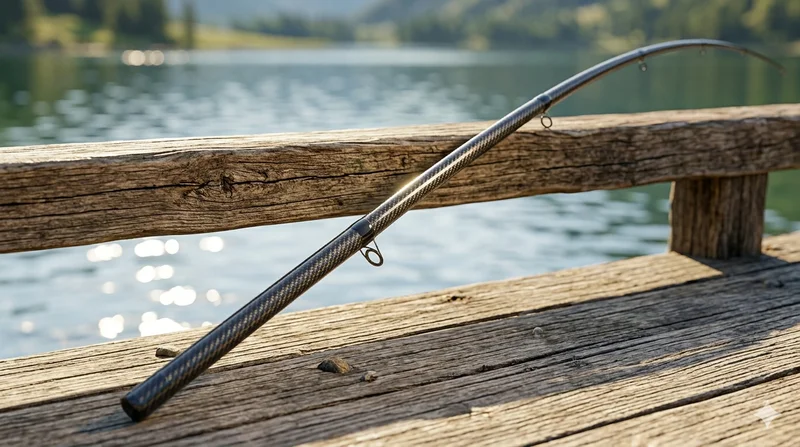
Carbon Fiber Fishing Rod Blank
High-quality carbon fiber fishing rod blank manufactured from multiple grades of Toray carbon fiber cloth. Available in a wide range of lengths, powers, and actions for freshwater and saltwater applications. Suitable for OEM rod building.
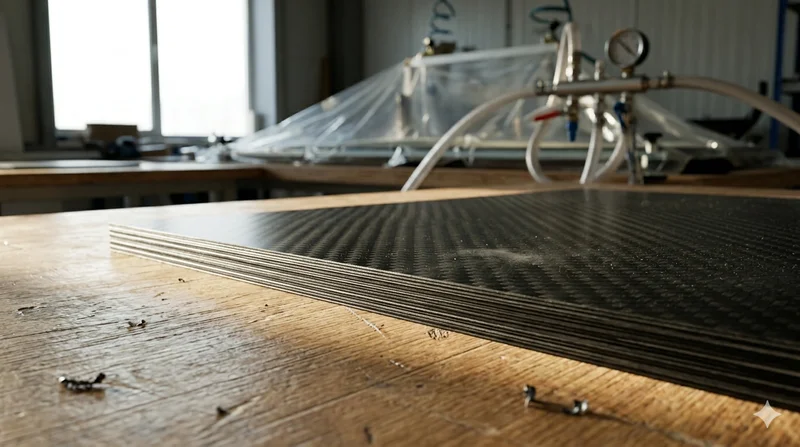
Carbon Fiber Plate — 3K Twill T700 3.0mm
Medium-thickness 3.0mm carbon fiber plate offering significantly higher load capacity while maintaining attractive 3K twill finish. Suitable for structural brackets, reinforcement plates, and load-bearing panels.
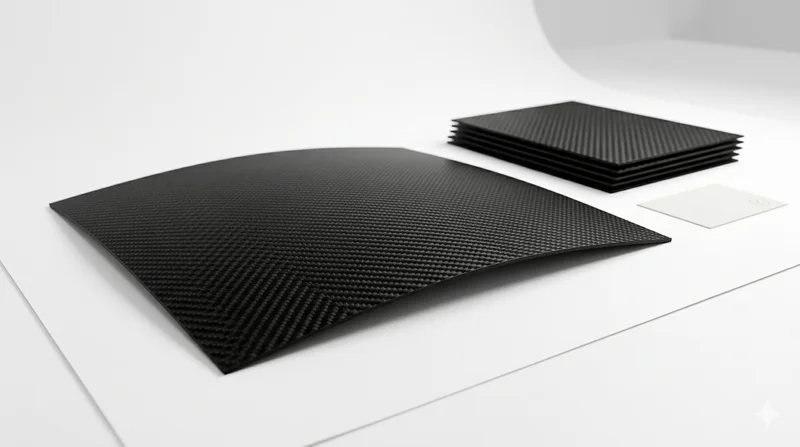
Carbon Fiber Plate — 3K Twill T700 1.5mm
Thin 1.5mm carbon fiber plate with 3K twill weave surface. Lightweight and stiff, commonly used for covers, panels, drone bodies, and applications requiring a premium aesthetic appearance.
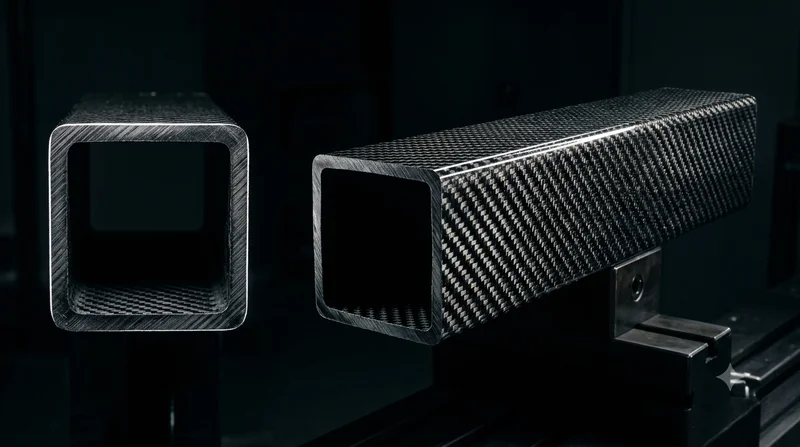
Square Carbon Fiber Tube — 3K Twill T700
Square cross-section carbon fiber tube manufactured with 3K twill weave for torsional strength. Preferred for structural frames, trusses, and support columns where rectangular geometry offers design flexibility.
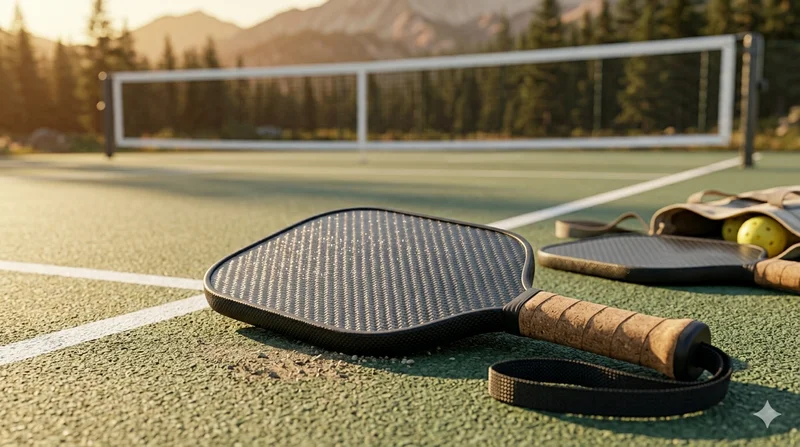
Carbon Fiber Pickleball Paddle
High-performance pickleball paddle with Toray T700 carbon fiber face and polypropylene honeycomb core. Delivers excellent power-to-weight ratio, spin generation, and vibration dampening for competitive play.