
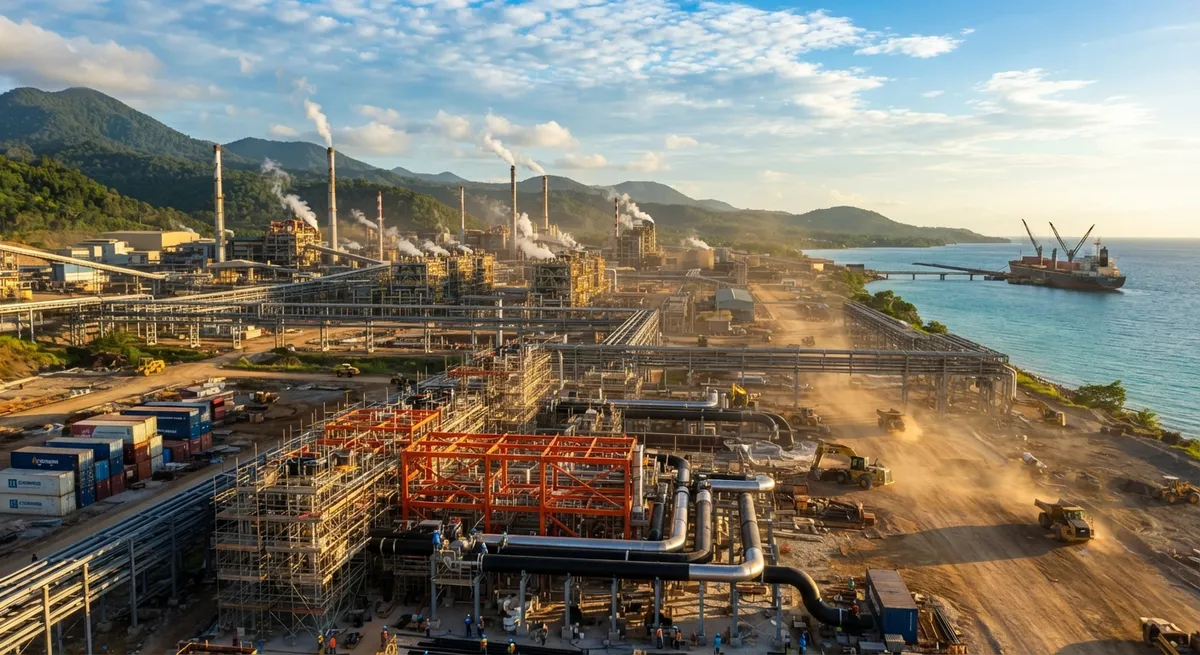
Indonesia's carbon fiber demand is projected to reach 4,800–5,600 tonnes by 2026, driven by the country's aggressive push to become the world's largest EV battery manufacturing hub, a downstream nickel processing industry valued at $38B, and major infrastructure projects under the newly relocated Nusantara capital development. This market briefing examines carbon fiber consumption patterns across Indonesia's aerospace, automotive, energy, and construction sectors with actionable supply chain intelligence for B2B carbon fiber exporters.
Indonesia is undergoing a structural economic transformation that positions it as one of Southeast Asia's most promising growth markets for advanced composite materials. With a GDP of $1.45 trillion (2025) growing at 5.1% annually, a newly operational downstream nickel processing industry valued at over $38 billion, and a planned $35 billion capital relocation to Nusantara, the country presents a multi-sector demand profile that carbon fiber suppliers cannot afford to ignore.
This report provides a data-driven assessment of Indonesia's carbon fiber market dynamics for 2026, with sector-by-sector consumption analysis, import statistics, and strategic guidance for B2B exporters serving the Indonesian market.
Market Size and Growth Trajectory
Indonesia's carbon fiber consumption has grown from an estimated 1,200 tonnes in 2020 to 3,400 tonnes in 2024, reflecting a compound annual growth rate (CAGR) of 23.1%. By 2026, we project demand of 4,800–5,600 tonnes, making Indonesia the fourth-largest carbon fiber market in Asia-Pacific after China, Japan, and South Korea.
| Sector | 2024 Consumption (tonnes) | 2026E Consumption (tonnes) | CAGR 2024–2026 | Key Driver |
|---|---|---|---|---|
| Aerospace & Defense | 520 | 680 | 14.4% | PT Dirgantara Indonesia N219/N245 production ramp |
| Automotive & EV Components | 480 | 850 | 33.1% | EV battery pack enclosures, lightweight body panels for electric two/three-wheelers |
| Oil & Gas / Geothermal | 620 | 780 | 12.2% | Downstream petrochemical pipe repair, geothermal well casings |
| Construction & Infrastructure | 680 | 1,120 | 28.3% | Nusantara capital construction, bridge seismic retrofits, sea-water-resistant rebar |
| Wind Energy | 350 | 620 | 33.1% | Sulawesi and Papua offshore wind farm development |
| Sports & Consumer Goods | 290 | 380 | 14.5% | Bicycle, fishing rod, and sporting equipment manufacturing for export |
| Other (Marine, Medical, etc.) | 460 | 590 | 13.3% | Boat building, prosthetics, industrial rollers |
| Total | 3,400 | 5,020 | 21.5% | — |
Data compiled from Indonesia Ministry of Industry, Badan Pusat Statistik (BPS) trade data, and industry interviews. 2026E figures represent the midpoint of a range. Import data is based on HS 6815.11 (carbon fibers) and 3926.90 (articles of plastics including composites).
Nickel Downstreaming: The Unexpected Carbon Fiber Demand Multiplier
Indonesia's nickel downstreaming policy — banning raw nickel ore exports since 2020 to force domestic processing — has created a $38 billion nickel processing industry centered in Morowali, Weda Bay, and Pomalaa Industrial Parks. This has several direct implications for carbon fiber demand:
- High-temperature corrosion-resistant equipment: Nickel smelting and HPAL (high-pressure acid leach) facilities require chemical process equipment — pipes, tanks, and structural supports — that operate in sulfuric acid environments at 200–280°C. CFRP lined pipes and carbon fiber-reinforced vinyl ester tanks are increasingly specified for their corrosion resistance and weight savings over stainless steel.
- EV battery material handling: The transport and handling of nickel sulfate, mixed hydroxide precipitate (MHP), and precursor cathode active material (pCAM) demands non-contaminating, chemically inert structural materials. Carbon fiber pallets, containment trays, and automated guided vehicle (AGV) components for battery-grade material clean rooms represent a rapidly growing niche.
- Smelter construction surge: Indonesia plans 28 additional nickel smelters by 2028 (from 45 operating in 2025). Each smelter complex requires 150–300 tonnes of FRP/CFRP structural components for cable trays, pipe supports, and grating in corrosive zones — adding 4,200–8,400 tonnes of composite material demand over the three-year build cycle.
EV Battery Hub Ambitions Driving Automotive CFRP Demand
Indonesia's ambition to become the world's largest EV battery cell production hub by 2027 — targeting 280 GWh annual capacity — creates a parallel ecosystem for carbon fiber in EV manufacturing:
- Battery enclosure systems: EV battery packs for Indonesia's growing domestic EV production (targeting 600,000 EVs annually by 2030 per the Perpres 55/2019 regulation) increasingly specify CFRP enclosures for weight reduction and thermal management. A typical 80 kWh pack enclosure in CFRP weighs 12–15 kg versus 35–45 kg in steel.
- Two/three-wheeler electrification: Indonesia is the world's third-largest motorcycle market (6.5 million units/year). The government's target of 13 million electric two-wheelers by 2030 is driving demand for mass-produced CFRP body panels optimized for high-volume compression molding — a segment where YongXian's 50K–60K large-tow carbon fiber offers the cost structure needed for price-sensitive mobility applications.
- Battery component supply chain: Battery cell manufacturing facilities require clean rooms with carbon fiber-reinforced structural members for their non-shedding, non-contaminating properties. Each 10 GWh gigafactory requires approximately 25–40 tonnes of carbon fiber structural components.
Nusantara: Infrastructure-Scale Demand
The relocation of Indonesia's capital from Jakarta to Nusantara (Ibu Kota Nusantara, IKN) in East Kalimantan — a $35 billion project spanning 2022–2045 — creates a structural demand floor for carbon fiber in construction applications:
- Seismic retrofitting: Nusantara sits in a moderate seismic zone (design PGA 0.3–0.4 g). CFRP wrapping for column and beam retrofitting — approximately 1.5–2.5 tonnes per large government building — will consume an estimated 350–500 tonnes of carbon fiber across the initial development phase (2026–2030).
- Coastal and marine infrastructure: Nusantara's location near the Mahakam River delta requires corrosion-resistant construction materials for bridges, piers, and waterfront structures. CFRP-reinforced concrete and all-CFRP pedestrian bridges are being specified in the IKN master plan.
- Prefabricated modular construction: The accelerated construction timeline demands prefabricated building modules. CFRP reinforcing bars (rebar) for thin-shell precast concrete elements offer 6× the tensile strength of steel rebar with no corrosion — ideal for the humid tropical environment.
Regional Logistics and Supply Chain Considerations
| Factor | Assessment | Implication for Exporters |
|---|---|---|
| Tariff regime | HS 6815.11: 5–10% import duty; ACFTA/ASEAN-China FTA preferential rates available | Chinese exporters benefit from 0% tariff under ACFTA; others need country-of-origin planning |
| Local content requirements | TKDN (Tingkat Komponen Dalam Negeri) mandates 25–40% local content for government procurement | Consider local prepregging partnerships or toll conversion arrangements |
| Port infrastructure | Tanjung Priok (Jakarta) congestion at 78% capacity; Tanjung Perak (Surabaya) at 65% | Specify Balikpapan or Makassar port of entry for Nusantara/Kalimantan-bound materials |
| In-country conversion | Limited autoclave capacity; growing AFP/ATP tape-laying capability at PT Dirgantara Indonesia | Ship unidirectional prepreg or woven fabric rather than finished parts; premium for conversion |
| Quality certification | SNI (Standar Nasional Indonesia) certification required; ISO 9001/AS9100 recommended | Budget 6–12 months for SNI certification process; engage BNSP-accredited certifier |
Frequently Asked Questions
How does Indonesia's nickel downstreaming policy directly affect carbon fiber importers?
The downstreaming policy drives two demand vectors. First, the construction and operation of 28 new smelters and HPAL plants creates immediate demand for CFRP corrosion-resistant equipment (pipes, tanks, structural supports) — an estimated 150–300 tonnes per smelter complex. Second, the nickel processing facilities handle corrosive chemicals (sulfuric acid at 200–280°C, hydrogen fluoride) where CFRP and carbon fiber-reinforced vinyl ester composites outperform stainless steel in both cost and service life. Importers supplying these sectors should target material specifications certified to ASTM D4097 (tanks) and ASME RTP-1 (vessels).
What carbon fiber grades and tow sizes are most in demand for Indonesian applications?
The Indonesian market divides into two distinct demand tiers. For aerospace (PT Dirgantara Indonesia) and defense applications, standard-modulus 12K–24K tow (T300/T700 class) with aerospace-grade resin systems is required — approximately 20–25% of total market volume. For the remaining 75–80% — including construction, energy, EV components, and consumer goods — large-tow 50K–60K carbon fiber with industrial-grade sizing is the cost-optimal choice. YongXian's 50K large-tow fiber is well-positioned for this segment, offering tensile strength of 4,100 MPa at a price point of $16–20/kg FOB China, significantly below the $28–35/kg for aerospace-grade 12K.
What are the entry barriers for a new carbon fiber supplier to the Indonesian market?
The primary barriers are: (1) SNI certification — a 6–12 month process requiring local testing by B4T (Balai Besar Bahan dan Barang Teknis) or an accredited laboratory; (2) TKDN local content compliance for government-related procurement — typically requiring a local prepregging or converting partner; (3) established supply relationships — Indonesian industrial buyers are relationship-driven and often require 12–18 months of qualification before placing volume orders; (4) logistics — container shipping from major Chinese ports to Tanjung Priok takes 5–8 days, but inland distribution to Kalimantan or Sulawesi adds 7–14 days. A SEA-based distribution hub (e.g., Batam or Singapore) is recommended for building inventory buffer.
How does the Nusantara capital relocation timeline affect carbon fiber demand?
The IKN project is divided into five phases (2022–2045). The initial phase (2022–2026) focused on basic infrastructure — roads, water, and power — with relatively modest carbon fiber consumption (≈ 150 tonnes cumulative). The second phase (2026–2030) transitions to government building construction, including 38 ministerial buildings, the presidential palace, and legislative complex — driving CFRP demand for seismic retrofitting, corrosion-resistant rebar, and modular construction components to an estimated 350–500 tonnes. The third through fifth phases (2030–2045) will add commercial and residential districts, potentially bringing total IKN-related carbon fiber demand to 2,000+ tonnes by project completion.
What is the competitive landscape for carbon fiber suppliers in Indonesia?
The Indonesian market is currently served by: (1) Toray Industries — dominant in aerospace via PT Dirgantara Indonesia supply contracts; (2) Teijin — strong in automotive with joint development programs for EV components; (3) Chinese suppliers (Zhongfu Shenying, Guangwei Composites, YongXian) — price-competitive for large-tow industrial applications; (4) Mitsubishi Chemical — niche position in oil & gas CFRP pipe. The Chinese suppliers collectively hold approximately 45% of the industrial-grade market share and are growing at 12–15% annually. Price competition is intensifying: 50K large-tow CFRP prepreg prices declined from $32/kg (2020) to approximately $24/kg (2025) FOB Chinese port. Differentiation through technical support, local inventory, and SNI certification is increasingly important over pure price competition.
Part of topic
Related Articles
- Recycled Carbon Fiber Market Forecast 2030: Technology Maturity and Commercialization Path
- South Korea Carbon Fiber Market 2026: Hydrogen Economy and Shipbuilding Innovation
- Wind Turbine Blade Leading Edge Protection 2026: Polyurethane, Tape, and Metallic Shield Solutions
- China Carbon Fiber Overcapacity 2026: Price War Impact and Industry Consolidation
- India Carbon Fiber Market 2026: Wind Energy, Aerospace, and Defense Expansion
- PAN Precursor Market 2026: Acrylonitrile Supply and Carbon Fiber Cost Structure
Interested in Our Products?
Contact our team for competitive pricing and technical specifications.
Get a QuoteRelated Products
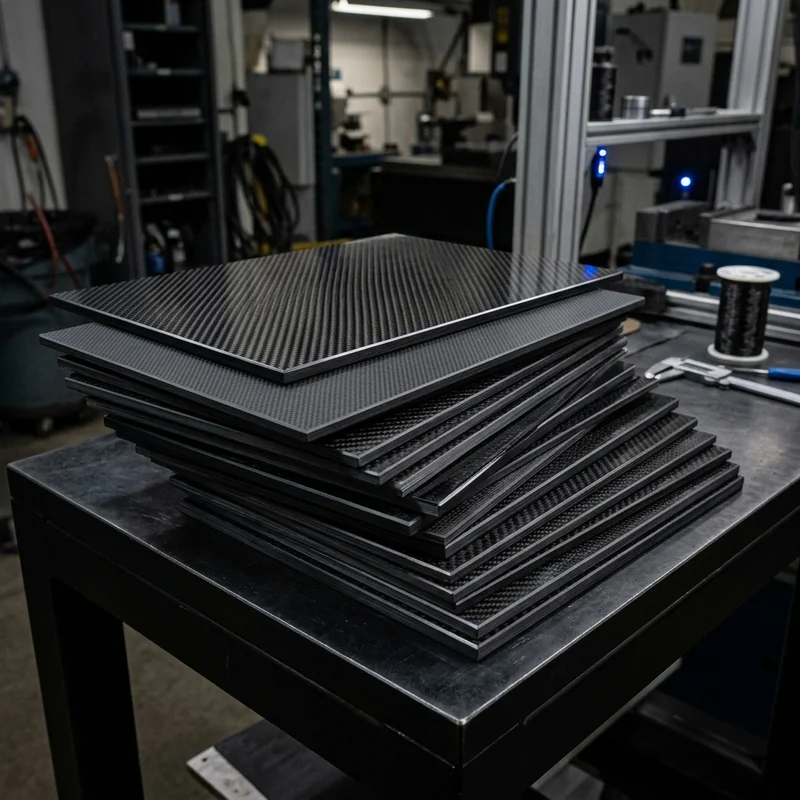
Carbon fiber standard plate-3k stripe
Lightweight, ultra-rigid standard sheets for drone fuselages, robot housings, facades and structural applications.

Carbon Fiber Plate — 3K Twill T700 3.0mm
Medium-thickness 3.0mm carbon fiber plate offering significantly higher load capacity while maintaining attractive 3K twill finish. Suitable for structural brackets, reinforcement plates, and load-bearing panels.

Carbon Fiber Plate — 3K Twill T700 1.5mm
Thin 1.5mm carbon fiber plate with 3K twill weave surface. Lightweight and stiff, commonly used for covers, panels, drone bodies, and applications requiring a premium aesthetic appearance.
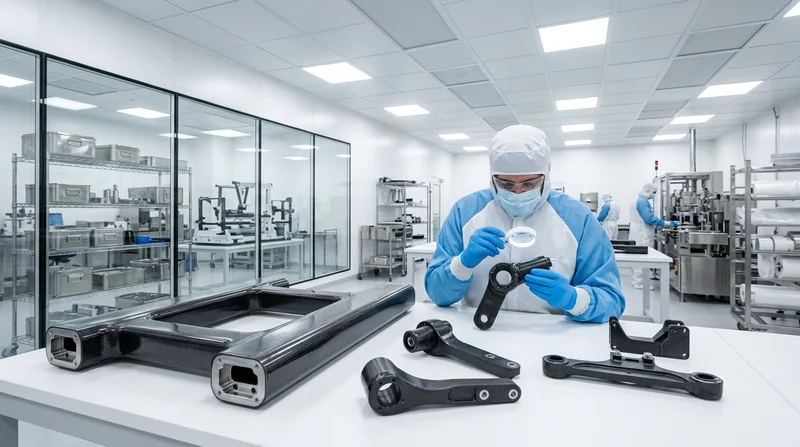
Custom Carbon Fiber Medical Device Components
Medical-grade carbon fiber components manufactured for imaging equipment, surgical instruments, and patient support systems. Carbon fiber's radiolucency (X-ray transparency) and high strength-to-weight ratio make it ideal for CT scanner beds, wheelchair frames, surgical robot arms, and MRI-compatible accessories. Biocompatible resin systems available.

Square Carbon Fiber Tube — 3K Twill T700
Square cross-section carbon fiber tube manufactured with 3K twill weave for torsional strength. Preferred for structural frames, trusses, and support columns where rectangular geometry offers design flexibility.