
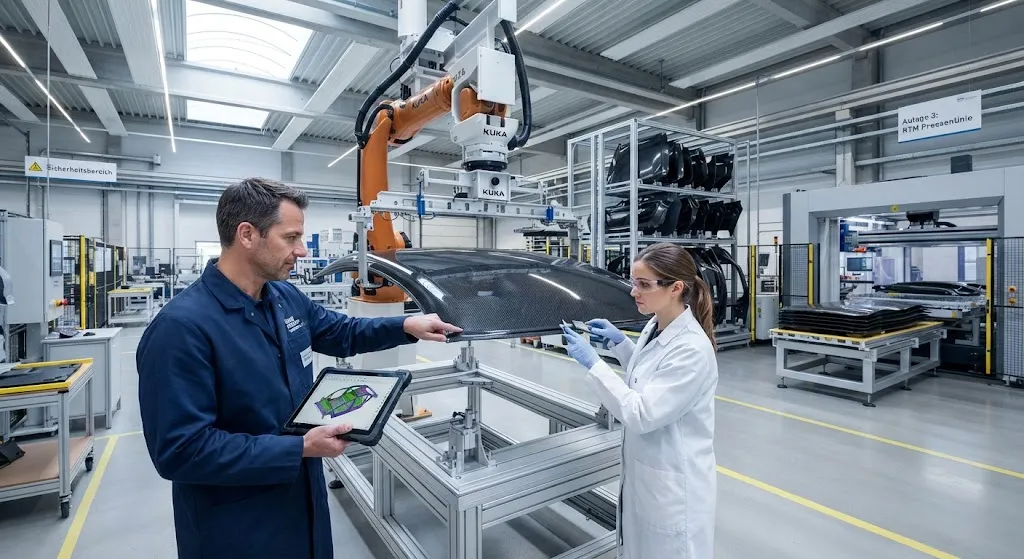
Germany's carbon fiber supply chain is a case study in how industrial capacity and end-market demand can become badly misaligned. At the peak of the BMW i-series program, German automakers and their Japanese partners operated some of the largest carbon fiber production capacity in the w
Introduction
Germany's carbon fiber supply chain is a case study in how industrial capacity and end-market demand can become badly misaligned. At the peak of the BMW i-series program, German automakers and their Japanese partners operated some of the largest carbon fiber production capacity in the world, built specifically for automotive applications. When the i3 and i8 were phased out, much of that capacity was mothballed or redirected, exposing the brutal cost arithmetic of using aerospace-grade reinforcement in volume automotive.
That history matters today because electric vehicles are re-igniting lightweighting demand. Battery weight, range anxiety, and the need to offset heavy packs are pushing automakers back toward carbon fiber — but for different components, at different volumes, and with a far more disciplined cost focus. This article traces how Germany's carbon fiber ecosystem was built, why the i-series experiment taught the industry hard lessons about cost, and where EV lightweighting is creating genuine new demand.
How the BMW i-Series Built a Carbon Fiber Ecosystem
The BMW i-series program was the most ambitious automotive carbon fiber project ever attempted. Rather than buying standard aerospace prepreg, BMW vertically integrated the supply chain to drive down cost. The centerpiece was the joint venture with SGL Carbon in Moses Lake, Washington, which produced automotive-grade carbon fiber from low-cost polyacrylonitrile precursor at a price far below aerospace material. That fiber was converted to fabric, then to preforms, and finally to large structural body parts using resin transfer molding at BMW's plants in Leipzig and Landshut.
At its peak the Moses Lake facility could produce around 9,000 tonnes of carbon fiber per year — a scale that made the i-series the single largest consumer of carbon fiber in the automotive world and positioned SGL as a leading supplier to the sector. The architecture of the i3 and i8 used a carbon fiber passenger cell bonded to an aluminum chassis, demonstrating that carbon fiber could be used not just for cosmetic trim but for the primary structure of a production vehicle.
Why the Cost Model Broke
The i-series proved the technology but struggled with the economics. The table below compares the cost structure of automotive carbon fiber against the materials it was expected to displace:
| Material | Typical Cost (USD/kg) | Density (g/cm³) | Approach to Lightweighting | Bolt-on vs Integrated |
|---|---|---|---|---|
| Aerospace-grade carbon fiber prepreg | 60-200 | 1.6 | Highest performance, autoclave | Integrated structure |
| Automotive-grade carbon fiber (SGL Moses Lake) | 12-18 | 1.6-1.8 | RTM, large panels | Integrated structure |
| High-strength aluminum sheet | 3-6 | 2.7 | Stamped panels | Bolt-on / spot-welded |
| Advanced high-strength steel | 1-2 | 7.8 | Hot-stamped | Spot-welded |
| Glass fiber reinforced composites | 2-4 | 2.0 | Compression molding | Bolt-on |
The fundamental problem is visible in the last two rows. Even at the aggressive low-end carbon fiber price of 12-18 USD/kg, the material cost alone is several times the cost of an entire finished metal or glass fiber part. To justify that premium, the carbon fiber part must either save enough weight to improve range or performance in a way customers pay for, or be produced at volumes high enough to amortize the enormous tooling and machinery investment. The i3 and i8 were low-volume, niche products, so neither condition was fully satisfied.
Capacity Repurposing and the EV Shift
As the i-series wound down, Germany's automotive carbon fiber capacity became a reminder of the capital-intensity of the supply chain. The Moses Lake facility, built for roughly 9,000 tonnes, was scaled back and repurposed. This episode crystallized several supply chain lessons that now shape decision-making in the EV era:
- Volume is the master variable: Carbon fiber capacity at the 1,000-10,000 tonne scale only makes sense when there is a guaranteed, high-volume offtake. Niche or declining programs leave expensive plants underutilized.
- Automotive fiber needs its own grade: Aerospace fiber is over-specified and over-priced for cars. Automotive-grade fiber, optimized for processability and cost rather than extreme modulus, is the only economically viable path for high-volume parts.
- Fast, cost-scalable processes win: Autoclave curing is too slow and expensive for automotive rates. High-pressure RTM, resin infusion, and now fast-cure thermoplastic stamping are the processes that survived the i-series lesson.
- Part selection determines viability: The i-series used carbon for the whole passenger cell. More successful automotive programs target specific components — underbody, battery enclosure, roof, door — where the weight-to-cost trade-off is favorable.
Where German EV Lightweighting Demand Is Reopening
German automakers are returning to carbon fiber, but with a fundamentally different portfolio strategy than the i-series. The current drivers are battery-electric platform economics rather than the technology showcase approach of a decade ago. The most active areas include structural battery enclosures, where each kilogram saved extends range; roof and door panels, where low-inertia moving parts improve both weight and crash performance in specific zones; and underbody and floor structures that offset heavy battery packs. German EV programs are also increasingly combining carbon fiber with aluminum and high-strength steel in true mixed-material architectures rather than all-carbon cells.
For suppliers, this creates a different kind of opportunity than the i-series. Instead of a single massive integrated cell, the EV era rewards flexible producers who can supply carbon fiber components at medium volumes across multiple platforms, with process innovation in fast-cure resins and thermoplastic composites that drive cycle times down and margins up. The equipment and capacity built during the i-series era did not disappear; it was refined, and the same German engineering discipline is now being applied to making carbon fiber economically competitive for electric vehicles.
Quality Assurance and Supply Discipline
Automotive carbon fiber supply chains carry quality assurance obligations that differ from aerospace. Whereas aerospace certifies every batch against documented allowables, automotive producers must maintain consistency across high-rate production while controlling cost. This means automated non-destructive testing for porosity and fiber volume fraction, statistical process control on resin transfer molding and infusion parameters, and rigorous material traceability from precursor to finished part. German automotive standards expect documented process control and first-article inspection that bridge the gap between aerospace rigor and automotive throughput.
Frequently Asked Questions
Why did the BMW i-series carbon fiber program struggle financially?
The i-series brought carbon fiber to primary automotive structure, but at low production volumes that could not amortize the enormous capital investment in dedicated carbon fiber and part-manufacturing capacity. The material cost of automotive carbon fiber, even at the low end of 12-18 USD/kg, was several times higher than the fully finished cost of aluminum or steel parts. With niche sales, neither the cost-reduction curve nor the volume needed for profitability materialized, so when the models were phased out the expensive capacity was idled or redirected.
Is carbon fiber now cost-effective for electric vehicles?
For many components, yes — but selectively. The economics of carbon fiber in EVs have improved dramatically at the system level because the weight it removes directly translates into longer range or a smaller, cheaper battery for the same range. This gives carbon fiber a unique value proposition it lacked in combustion vehicles, where weight savings were less directly monetized. The most cost-effective targets today are structural battery enclosures, roofs, and floor components, where process innovation in fast-cure resins and thermoplastic composites has driven cycle times down and made medium-volume production feasible.
Where is Germany's automotive carbon fiber capacity today?
Much of the dedicated capacity built for the i-series, including the large Moses Lake facility, was scaled back and repurposed as the program wound down. However, Germany retains a deep technical base in composite engineering, robotics, and fast-cure process technology. That capability is being redeployed toward the EV era's profile: flexible, multi-platform supply of selective carbon fiber components, and growing interest in thermoplastic composites for high-rate, recyclable automotive parts. The capital-intensive full-cell approach of the i-series has given way to more targeted applications.
What is the main supply chain lesson from Germany's experience?
The central lesson is that carbon fiber capacity in the 1,000-10,000 tonne range only makes economic sense when backed by guaranteed, high-volume offtake, and that automotive-grade fiber and processes must be optimized separately from aerospace. The i-series demonstrated both the technical feasibility of composite primary structures and the importance of part selection and volume discipline. The EV era is applying these lessons by targeting well-chosen components and investing in cost-scalable processes rather than trying to build an all-carbon vehicle from the outset.
Conclusion
Germany's carbon fiber supply chain was built in response to an ambitious but prematurely scaled experiment, and its evolution since then has distilled a clear set of operating principles for the automotive industry. The i-series proved that carbon fiber can carry the structural load of a production vehicle; the industry's subsequent correction proved that cost and volume discipline determine whether that capability is commercially viable. For electric vehicles, the value proposition has fundamentally improved because weight saved is range and battery cost saved.
For engineering teams evaluating carbon fiber for EV platforms, the practical path is to select high-value components, choose automotive-grade fiber, and adopt fast-cure processes that scale. Browse our carbon fiber fabric and reinforcement range designed for automotive and electric vehicle programs, or contact our engineering team to discuss material selection and supply strategy for your lightweighting project.
Part of topic
Related Articles
- Recycled Carbon Fiber Market Forecast 2030: Technology Maturity and Commercialization Path
- South Korea Carbon Fiber Market 2026: Hydrogen Economy and Shipbuilding Innovation
- Wind Turbine Blade Leading Edge Protection 2026: Polyurethane, Tape, and Metallic Shield Solutions
- China Carbon Fiber Overcapacity 2026: Price War Impact and Industry Consolidation
- India Carbon Fiber Market 2026: Wind Energy, Aerospace, and Defense Expansion
- PAN Precursor Market 2026: Acrylonitrile Supply and Carbon Fiber Cost Structure
Interested in Our Products?
Contact our team for competitive pricing and technical specifications.
Get a QuoteRelated Products
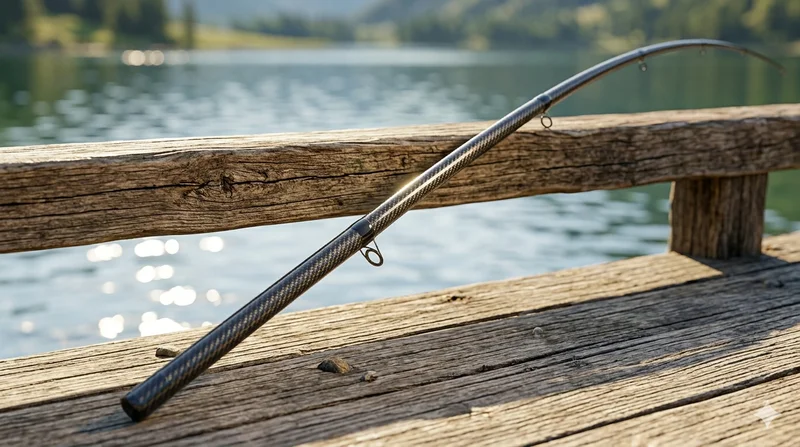
Carbon Fiber Fishing Rod Blank
High-quality carbon fiber fishing rod blank manufactured from multiple grades of Toray carbon fiber cloth. Available in a wide range of lengths, powers, and actions for freshwater and saltwater applications. Suitable for OEM rod building.
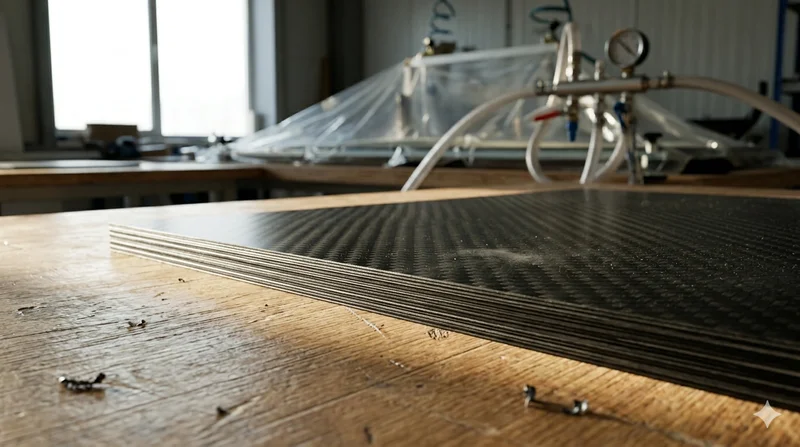
Carbon Fiber Plate — 3K Twill T700 3.0mm
Medium-thickness 3.0mm carbon fiber plate offering significantly higher load capacity while maintaining attractive 3K twill finish. Suitable for structural brackets, reinforcement plates, and load-bearing panels.
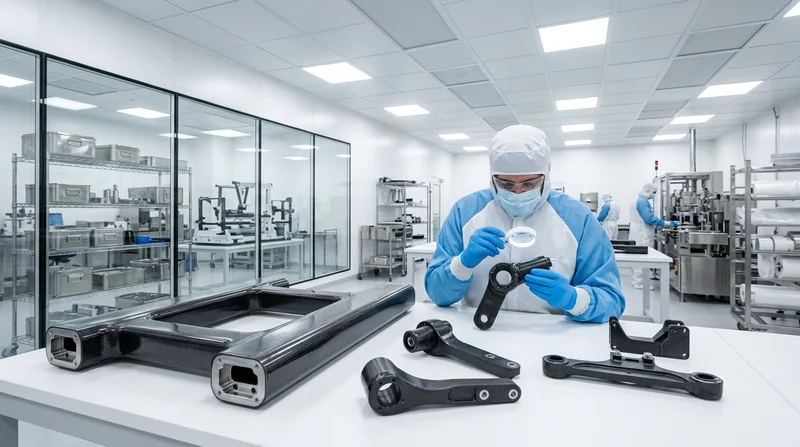
Custom Carbon Fiber Medical Device Components
Medical-grade carbon fiber components manufactured for imaging equipment, surgical instruments, and patient support systems. Carbon fiber's radiolucency (X-ray transparency) and high strength-to-weight ratio make it ideal for CT scanner beds, wheelchair frames, surgical robot arms, and MRI-compatible accessories. Biocompatible resin systems available.

Carbon Fiber Plate — 3K Twill T700 1.5mm
Thin 1.5mm carbon fiber plate with 3K twill weave surface. Lightweight and stiff, commonly used for covers, panels, drone bodies, and applications requiring a premium aesthetic appearance.

Square Carbon Fiber Tube — 3K Twill T700
Square cross-section carbon fiber tube manufactured with 3K twill weave for torsional strength. Preferred for structural frames, trusses, and support columns where rectangular geometry offers design flexibility.