
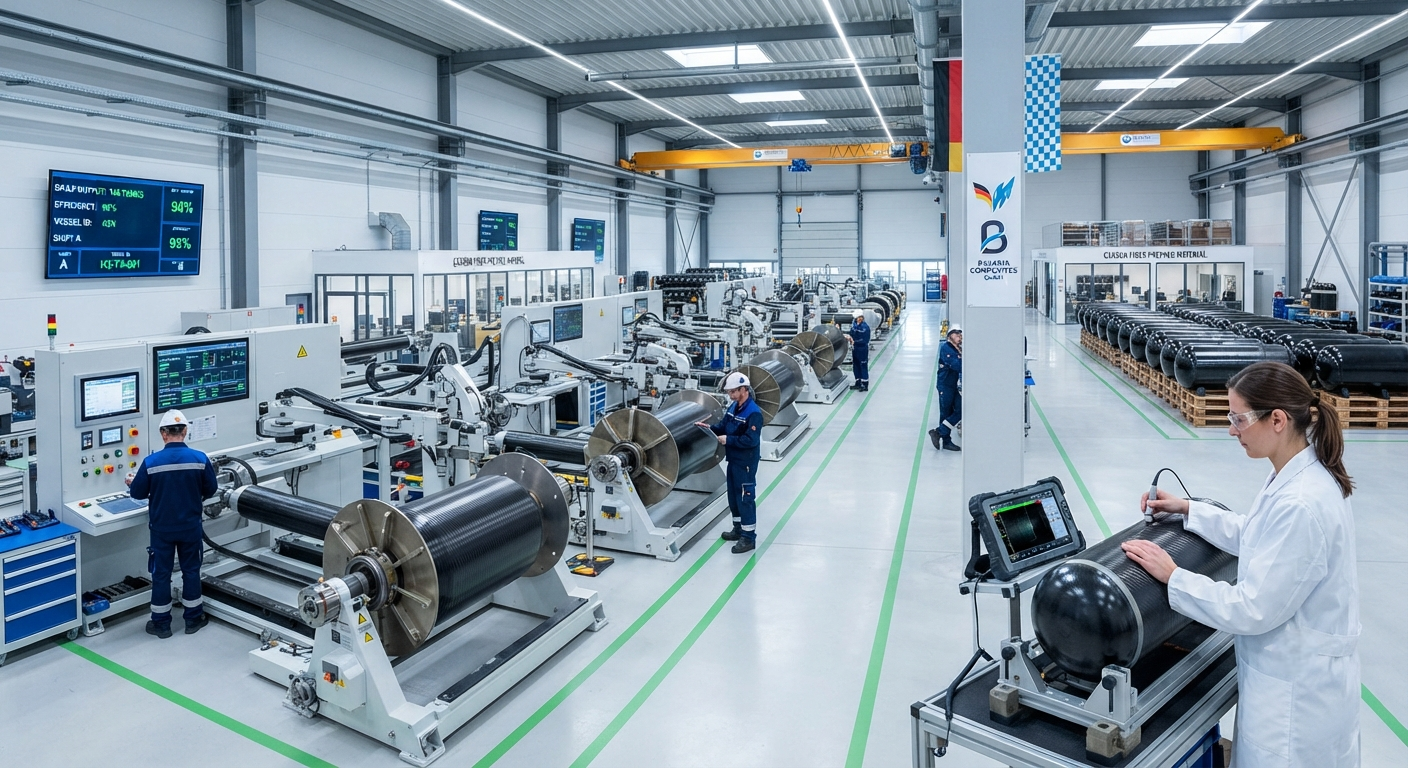
Comprehensive B2B market analysis of Germany's carbon fiber landscape in 2026. Automotive electrification drives 38% of consumption, aerospace (Airbus A350) anchors 1,440+ tonnes annual demand, while wind energy and hydrogen pressure vessels push industrial growth at 18-30% CAGR. Includes real-data comparison tables, regulatory context (CBAM), and strategic entry considerations for international suppliers targeting Europe's largest composites market.
The German Carbon Fiber Landscape in 2026
Germany remains Europe's largest economy and the continent's most significant market for carbon fiber composites. In 2026, the German carbon fiber market is projected to reach approximately €1.8 billion, driven by a unique convergence of three industrial pillars: a deeply rooted aerospace heritage, an automotive sector undergoing its most radical transformation in a century, and a world-leading industrial innovation ecosystem. For B2B carbon fiber suppliers and procurement professionals, understanding the German market's distinct dynamics is essential for strategic positioning in the European composites supply chain.
Unlike other European markets where a single industry dominates carbon fiber consumption, Germany presents a diversified demand profile. The automotive sector accounts for roughly 38% of carbon fiber consumption, aerospace for 22%, industrial applications (wind energy, machinery, pressure vessels) for 28%, and sports and leisure for 12%. This diversification provides a measure of stability — downturns in one sector are partially offset by growth in others — while creating unique technical requirements that vary significantly across application domains.
Automotive Transition: Lightweighting at Scale
Germany's automotive industry, which produced approximately 4.1 million passenger vehicles in 2025, is undergoing a structural shift toward electric mobility that is reshaping material demand. Battery electric vehicles (BEVs) now account for 38% of new vehicle registrations in Germany, up from 18% in 2023. This electrification trend has profound implications for carbon fiber demand.
Key automotive drivers for carbon fiber in Germany include:
- Battery enclosure systems: German OEMs including Volkswagen, BMW, and Mercedes-Benz are increasingly specifying carbon fiber-reinforced composites for battery pack enclosures. A typical BEV battery housing requires 15–25 kg of CFRP material, offering 40–55% weight reduction compared to steel while providing electromagnetic shielding and crash protection. With Germany targeting 15 million BEVs on the road by 2030, the addressable market for battery enclosure CFRP alone is substantial.
- Structural body components: Next-generation vehicle platforms from BMW's Neue Klasse and Mercedes' MB.EA architecture incorporate carbon fiber in B-pillars, roof structures, and floor modules. These applications use rapid-cure prepreg systems processed in compression moulding with cycle times under 10 minutes, compatible with high-volume production rates of 50,000–100,000 units per year per production line.
- Underbody protection: Carbon fiber composite underbody panels protect battery packs from road debris and gravel impact. These large-format panels (typically 1.5–2.5 m² per vehicle) are produced using high-rate wet compression moulding (WCM) with processing cycles of 4–8 minutes.
- Interior structural components: Short carbon fiber injection-molded compounds are increasingly replacing glass fiber-reinforced plastics in instrument panel carriers, door modules, and seat structures, where carbon fiber's higher stiffness-to-weight ratio enables thin-wall design and 15–30% weight savings.
| Automotive Application | Material System | CFRP per Vehicle (kg) | Production Volume (units/year) | Adoption Rate (2026) |
|---|---|---|---|---|
| Battery enclosure | Epoxy prepreg / HP-RTM | 15–25 | 800,000 | 24% of BEVs |
| B-pillar reinforcement | Rapid-cure UD prepreg | 1.5–3.0 | 450,000 | 18% of premium vehicles |
| Underbody shields | Glass/CF hybrid WCM | 3.5–6.0 | 320,000 | 12% of BEVs |
| Interior carriers (IP, door) | Short-fiber CF/PA6 | 2.0–4.5 | 1,200,000 | 38% of new vehicles |
| Roof structure | CF-SMC | 3.0–5.0 | 180,000 | 8% of luxury vehicles |
Aerospace Heritage: Established Demand Base
Germany's aerospace sector, anchored by Airbus's Hamburg facility — the world's largest aircraft manufacturing site by square footage — provides a stable and demanding base of carbon fiber demand. The Airbus A350, with its carbon fiber wing and fuselage structure comprising 53% composites by weight, is produced at Hamburg-Finkenwerder, consuming approximately 12 tonnes of carbon fiber per aircraft. With an A350 production rate of approximately 10 aircraft per month in 2026, this single program consumes roughly 1,440 tonnes of carbon fiber annually.
Beyond Airbus, Germany's aerospace supply chain includes a dense network of Tier 1 and Tier 2 manufacturers such as Premium Aerotec, Diehl Aviation, and MT Aerospace, each with substantial carbon fiber processing capabilities. The military aerospace segment, including the Eurofighter Typhoon and the Future Combat Air System (FCAS) program, adds additional demand for high-performance, defence-grade carbon fiber materials.
- Airbus A350 production: Consumes 12 tonnes of CF per aircraft, 10 aircraft/month — annual demand of 1,440 tonnes from this program alone.
- A321XLR fuselage panels: The extended-range single-aisle aircraft uses CFRP rear fuselage and centre wing box sections, adding 4–6 tonnes of CF per aircraft.
- FCAS / Next Generation Weapon System (NGWS): Germany's next-generation fighter program, entering detailed design phase in 2026–2027, is expected to specify advanced CFRP structures with requirements for stealth-compatible materials and higher service temperatures (180–250°C).
- Helicopter programs: Airbus Helicopters' H145 and H160 models use extensive CFRP fuselage and rotor blade structures, together consuming approximately 350 tonnes of carbon fiber annually across the product line.
Industrial Innovation: Wind Energy and Pressure Vessels
Germany's industrial carbon fiber consumption extends well beyond automotive and aerospace. Two industrial sectors merit particular attention:
Wind Energy
Germany's wind energy sector, targeting 30 GW of offshore wind capacity by 2030, drives significant demand for carbon fiber in rotor blade manufacture. Siemens Gamesa, with its blade manufacturing facilities in Cuxhaven and Hull, uses carbon fiber spar caps in its flagship SG 14-236 DD and SG 11.0-200 DD offshore turbines. A single 108-metre blade for the SG 14-236 DD contains approximately 18–22 tonnes of carbon fiber in the spar cap alone. With Germany planning 7 GW of new offshore capacity annually through 2030, the wind energy sector is expected to consume 6,000–8,000 tonnes of carbon fiber per year by 2028.
Type IV and Type V Pressure Vessels
Germany's hydrogen economy strategy — investing €9 billion in hydrogen infrastructure through 2030 — is driving rapid growth in carbon fiber composite pressure vessels for hydrogen storage. Type IV vessels (polymer liner with carbon fiber/epoxy overwrap) and emerging Type V vessels (fully composite, linerless) are essential for hydrogen transport and refuelling station storage. A single Type IV vessel for a hydrogen refuelling station operating at 700 bar requires 80–120 kg of carbon fiber. The German hydrogen mobility market is projected to require 3,500–4,500 tonnes of carbon fiber for pressure vessels annually by 2029.
| Industrial Application | 2025 CF Consumption (tonnes) | 2030 Projected CF Consumption (tonnes) | CAGR | Key German Manufacturers |
|---|---|---|---|---|
| Wind energy — spar caps | 3,200 | 7,500 | 18.6% | Siemens Gamesa, Nordex |
| Hydrogen pressure vessels | 1,100 | 4,200 | 30.7% | NPROXX, Hexagon Purus |
| Industrial rollers & machinery | 600 | 900 | 8.4% | Saueressig, Walzen Irle |
| Medical imaging (CT/X-ray) | 180 | 280 | 9.2% | Siemens Healthineers |
| Rail transport | 250 | 550 | 17.1% | Siemens Mobility, Alstom |
Sustainability and Recycling: The German Regulatory Context
Germany's regulatory environment is increasingly shaping carbon fiber procurement decisions. The EU's Carbon Border Adjustment Mechanism (CBAM), fully phased in by 2026, imposes carbon pricing on imported goods including carbon fiber and composite materials. German manufacturers are under pressure to demonstrate the carbon footprint of their material inputs, driving demand for low-carbon carbon fiber produced with renewable energy and recycled carbon fiber (rCF) products.
Several German research initiatives — including the CFK Valley Stade Recycling Cluster and the RWTH Aachen Institut für Textiltechnik — are advancing carbon fiber recycling technologies. Commercially available recycled carbon fiber products from German suppliers such as CFK Valley Recycling and carboNXT now offer tensile strength retention of 85–95% compared to virgin fibre, at a cost premium of only 10–25% below virgin material pricing. For non-structural automotive and industrial applications, rCF is becoming a standard specification.
Frequently Asked Questions
What are the key certifications required for carbon fiber suppliers to the German automotive market?
Suppliers to German automotive OEMs must typically hold IATF 16949 certification (automotive quality management standard) and ISO 9001:2015. For structural carbon fiber components, additional VDA (German Association of Automotive Industry) standards apply: VDA Volume 1 (documentation and archiving), VDA Volume 2 (quality assurance of deliveries), and VDA Volume 6 (process audit based on IATF 16949). Many German OEMs also require material-specific testing according to DIN EN 2565 (carbon fiber tensile testing) and DIN EN 2559 (carbon fiber fabric weight determination). For battery enclosure applications, compliance with UN ECE R100 (battery safety) and the specific OEM flammability standards (e.g., BMW GS 97034, Mercedes DBL 5406) is mandatory.
How does the German carbon fiber market differ from the French or UK markets?
The German market is distinctly more automotive-driven (38% of consumption) compared to France where aerospace dominates (55% of consumption, driven by Airbus Toulouse and Safran), and the UK where motorsport and defence (45% combined) are the largest segments. German industrial carbon fiber consumption across wind energy, hydrogen storage, and general machinery is significantly larger than in any other European country — approximately 3× the industrial consumption of France and 4× that of the UK. Logistics infrastructure is also more developed: the Rhine-Ruhr region hosts Europe's densest concentration of composites processors, with over 200 CFRP-related companies within a 100 km radius of Cologne. The German market also exhibits a higher demand for automation-compatible materials (e.g., fast-cure prepregs for robotic pick-and-place) reflecting the country's advanced manufacturing automation landscape.
What is the current import duty structure for carbon fiber entering Germany from non-EU suppliers?
Carbon fiber products imported into Germany (and all EU member states) are classified under Combined Nomenclature (CN) code 6815.11.00 — "Articles of carbon fibers for non-electrical purposes." The standard EU Most-Favoured-Nation (MFN) duty rate is 7.0% ad valorem for carbon fiber fabrics and 5.7% for carbon fiber prepregs. Carbon fiber yarns and filaments fall under CN 5404.90.90 at 4.5%. For imports from countries with EU free trade agreements (South Korea, Vietnam, Japan, Switzerland, Canada), duties are progressively being eliminated under the respective FTA schedules. However, imports from China face the standard MFN rate, and anti-dumping measures applicable to certain Chinese carbon fiber products (Commission Implementing Regulation EU 2020/1705) may add additional duties of 8–15% depending on the product category. German customs authorities apply the Union Customs Code (UCC) and require binding tariff information (BTI) for complex carbon fiber products with multiple material constituents.
Part of topic
Related Articles
- Recycled Carbon Fiber Market Forecast 2030: Technology Maturity and Commercialization Path
- South Korea Carbon Fiber Market 2026: Hydrogen Economy and Shipbuilding Innovation
- Wind Turbine Blade Leading Edge Protection 2026: Polyurethane, Tape, and Metallic Shield Solutions
- China Carbon Fiber Overcapacity 2026: Price War Impact and Industry Consolidation
- India Carbon Fiber Market 2026: Wind Energy, Aerospace, and Defense Expansion
- PAN Precursor Market 2026: Acrylonitrile Supply and Carbon Fiber Cost Structure
Interested in Our Products?
Contact our team for competitive pricing and technical specifications.
Get a QuoteRelated Products

Carbon Fiber Plate — 3K Twill T700 1.5mm
Thin 1.5mm carbon fiber plate with 3K twill weave surface. Lightweight and stiff, commonly used for covers, panels, drone bodies, and applications requiring a premium aesthetic appearance.
Custom Carbon Fiber Medical Device Components
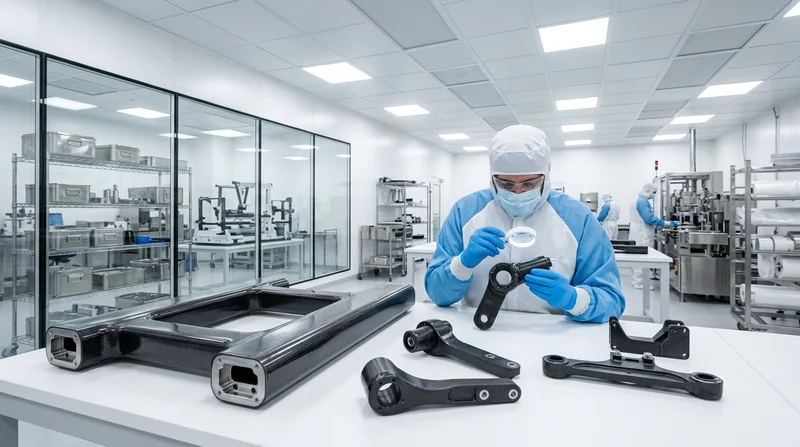
Medical-grade carbon fiber components manufactured for imaging equipment, surgical instruments, and patient support systems. Carbon fiber's radiolucency (X-ray transparency) and high strength-to-weight ratio make it ideal for CT scanner beds, wheelchair frames, surgical robot arms, and MRI-compatible accessories. Biocompatible resin systems available.
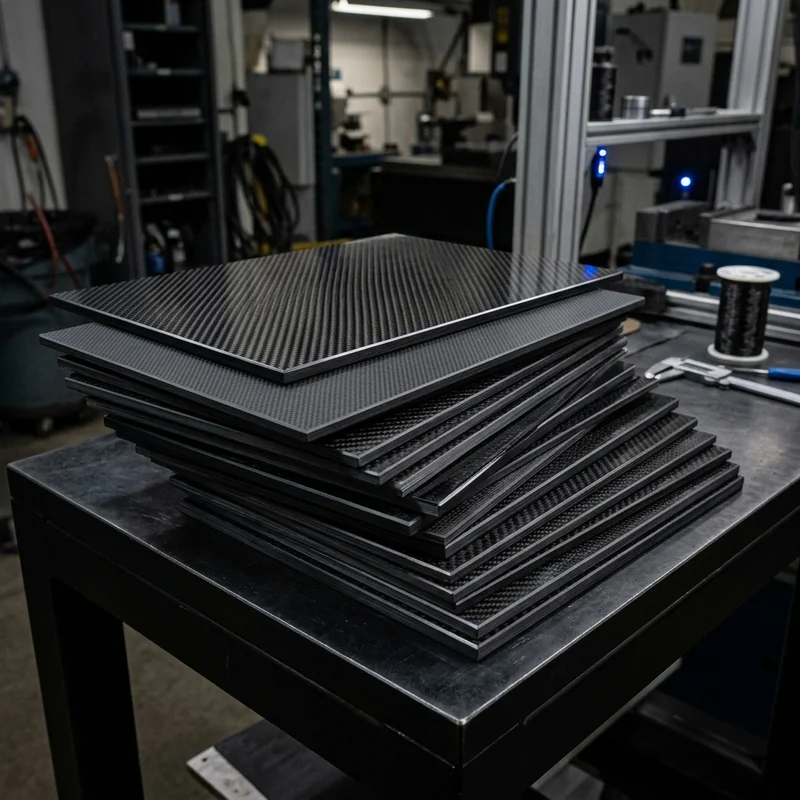
Carbon fiber standard plate-3k stripe
Lightweight, ultra-rigid standard sheets for drone fuselages, robot housings, facades and structural applications.

Square Carbon Fiber Tube — 3K Twill T700
Square cross-section carbon fiber tube manufactured with 3K twill weave for torsional strength. Preferred for structural frames, trusses, and support columns where rectangular geometry offers design flexibility.

Carbon Fiber Plate — 3K Twill T700 3.0mm
Medium-thickness 3.0mm carbon fiber plate offering significantly higher load capacity while maintaining attractive 3K twill finish. Suitable for structural brackets, reinforcement plates, and load-bearing panels.