
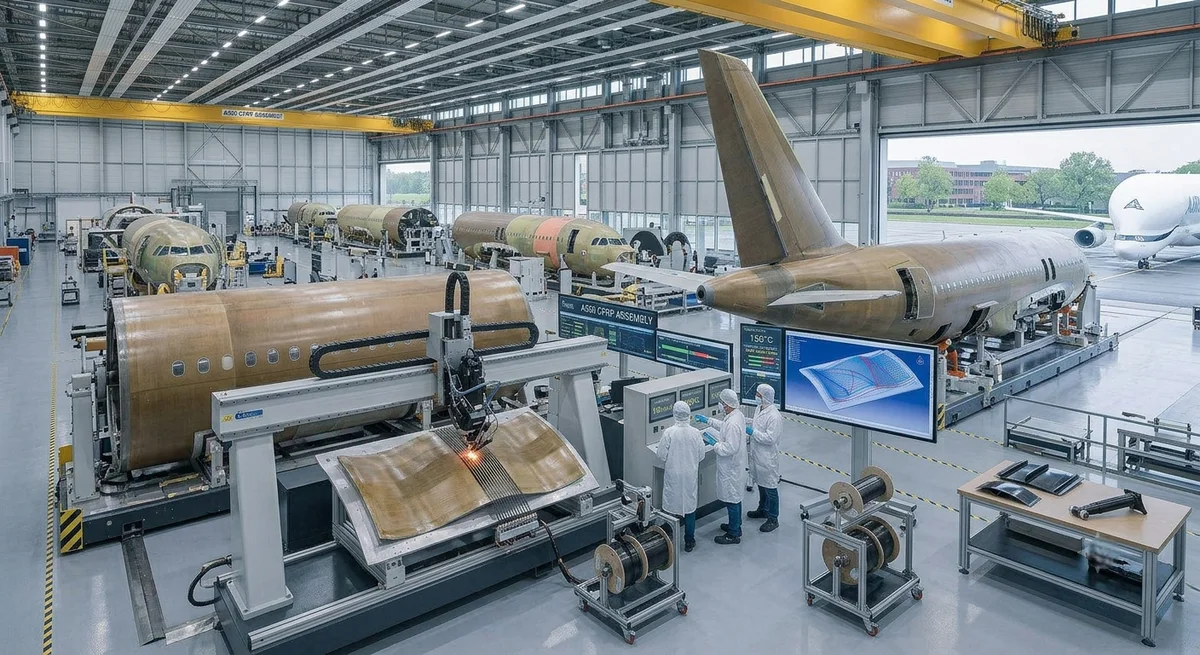
An in-depth analysis of France's carbon fiber aerospace supply chain — from PAN precursor to finished composite structures — serving Airbus, Dassault Aviation, and Safran. Supplier profiles, production capacities, and qualification requirements for B2B partners.
France Carbon Fiber Aerospace Supply Chain: Serving Airbus, Dassault, and Safran
France is home to the most concentrated and technologically advanced carbon fiber aerospace supply chain in Europe. Anchored by Airbus (Toulouse), Dassault Aviation (Bordeaux/Mérignac), and Safran (Paris region), the French aerospace composites ecosystem consumes an estimated 4,500–5,500 metric tonnes of carbon fiber annually — representing approximately 35–40% of European aerospace carbon fiber demand and 12–15% of global aerospace CF consumption. This article provides B2B suppliers, investors, and procurement professionals with a detailed map of the French carbon fiber aerospace supply chain, covering raw material suppliers, prepreggers, part manufacturers, and Tier-1 integrators.
Supply Chain Structure and Key Players
| Supply Chain Tier | Company | Location | Core Product / Service | Annual CF Processing Capacity | Key Customer(s) |
|---|---|---|---|---|---|
| PAN Precursor | SGL Carbon (JV with CF&Co) | Lavéra (Marseille) | PAN-based precursor tow (50K) | 3,000 t precursor → ~1,500 t CF | Hexcel, Solvay |
| PAN Precursor | Mitsubishi Chemical (formerly Grafil) | Abbeville (or imported from Japan) | PAN precursor and carbonized fiber | 2,000 t (French distribution) | Airbus supply chain |
| Carbon Fiber Production | Hexcel | Les Avenières (Isère) | Carbon fiber tow (IM7, AS4, HexTow® series) + prepreg | 3,500 t CF + 8M m² prepreg/yr | Airbus, Safran, Dassault |
| Carbon Fiber + Prepreg | Solvay (formerly Cytec) | Saint-Avold, Toulouse (R&D) | Aerospace prepreg (CYCOM® series), adhesive films | 2,000 t CF equivalent prepreg | Airbus, Dassault |
| Prepreg & Materials | Toray Carbon Fibers Europe | Abidos (Pau) | Carbon fiber + prepreg (Torayca® T700, T800) | 2,500 t CF + 5M m² prepreg/yr | Airbus, Safran |
| Prepreg | Gurit | Morges (Switz.) + French support | Epoxy prepreg (SE 85, SE 90 series) | 500 t (French market only) | Dassault (secondary) |
| Composite Part Manufacturing | Stelia Aerospace (Airbus subsidiary) | Méaulte, Rochefort, Toulouse | Wings, fuselage sections, empennage | 500+ t CF parts/yr | Airbus (A320, A350, A220) |
| Composite Part Manufacturing | Daher | Tarbes, Saint-Nazaire | Aircraft structures, nacelles, landing gear doors | 300+ t CF parts/yr | Airbus, Dassault |
| Composite Part Manufacturing | Latécoère | Toulouse, Montredon | Fuselage sections, doors, floor structures | 200+ t CF parts/yr | Airbus, Dassault |
| Engine Composites | Airbus Safran Launchers / Safran Composites | Le Haillan (Bordeaux), Vernon | Engine composite parts, rocket motor casings | 150+ t CF parts/yr | Safran (CFM, LEAP, M88) |
| Engineering & Qualification | IRT Saint-Exupéry | Toulouse | R&D, testing, composites qualification | N/A (R&D lab) | All French aerospace OEMs |
Key Programs Driving French Aerospace CF Demand
- Airbus A350 XWB (existing): ~53% composite by weight, consuming approximately 45 tonnes of carbon fiber per airframe. With a production rate of 10–12 units per month (2026), this program alone consumes 5,400–6,480 tonnes of carbon fiber annually across the supply chain. Primary CF grades: Toray T800S intermediate modulus (24K tow) and Hexcel IM7 (12K tow).
- Airbus A320neo / A321XLR (high-rate): 35% composite by weight, with composite wing box (CFRP rear spar and belly fairing) and empennage. Production rate of 55–60 units per month consumes 3,200–3,800 tonnes of CF equivalent across the supply chain. Primary CF grade: standard modulus (230 GPa) at 24K and 50K tow.
- Dassault Rafale F4 (production): 70% composite by airframe surface area, consuming 8–12 tonnes of CF per aircraft. Annual production of 15–20 units requires 150–240 tonnes of carbon fiber annually. Primary CF grade: intermediate modulus 12K tow.
- Airbus H160 / H175 helicopters: 55–60% composite by weight, consuming 400–600 tonnes of CF annually at combined production rates of 40–50 units per year.
- Safran LEAP engine program: Composite fan blades (3D woven carbon fiber/epoxy) and composite fan cases for CFM International LEAP engines. Annual production of 1,800–2,000 engines consumes 600–800 tonnes of carbon fiber annually for blades and cases alone.
- Future programs (2026–2030): Airbus A320neo successor (New Generation Single Aisle, NGSA) expected to be 55–60% composite, entering detailed design phase in 2026–2027. Dassault NGS (New Generation Fighter for FCAS) will leverage maximum composite content (>75%). Safran's Open Fan RISE engine architecture uses composite structures for up to 30% of the nacelle and pylon weight.
Qualification Requirements for New Suppliers
Entering the French aerospace carbon fiber supply chain requires navigating a rigorous qualification framework:
- EN/AS9100D certification: Mandatory for all Tier-2 and above suppliers. Average time to certification: 12–18 months. Estimated cost: $50,000–120,000 including consulting, audit, and corrective actions.
- Airbus PQ (Product Qualification): Specific material qualification testing per ABD0031 (Airbus standard) or AIPS 03-05-000 for prepreg materials. Requires 18–36 months of testing and documentation. Estimated cost: $200,000–500,000 per material grade.
- Dassault Aviation qualification: DMD references (Dassault Material Database) and DCORM (Dassault Composite Materials) standards. Qualification timeline: 12–24 months. The process typically mirrors Airbus requirements with additional Dassault-specific testing protocols for military applications (MIL-STD-810 compliance).
- Safran qualification: Safran Group standard SPS (Safran Product Standards) for engine composites. Particularly stringent for LEAP program materials — requires NADCAP accreditation for NDT and testing laboratories. Timeline: 18–36 months.
- Nadcap accreditation: Required for all composite manufacturing and testing processes (AC7114/AC7118 for composites). Renewal every 12–24 months. Non-accredited suppliers face automatic exclusion from Safran and Airbus Defence & Space contracts.
- French MoD security clearance: Required for suppliers to Dassault military programs (Rafale, nEUROn, FCAS). Process involves ANSSI (French National Cybersecurity Agency) inspection for ITAR-free data handling. Timeline: 6–12 months.
Cost Structure and Pricing Dynamics
| Material / Service | Price Range (2026) | Key Price Drivers |
|---|---|---|
| PAN precursor (aerospace grade, domestically produced) | $18–28/kg | Supplier concentration (SGL + Mitsubishi dominate European supply); energy costs (carbonization furnace: 40–60 MWh/t CF) |
| Standard modulus CF tow (24K, 50K) | $22–35/kg | Hexcel and Toray market control; production scale; PAN cost pass-through |
| Intermediate modulus CF tow (12K, IM7/IM8 class) | $45–70/kg | Limited supply base (Hexcel, Toray, Solvay); longer carbonization time; high quality control cost |
| Aerospace-grade epoxy prepreg (carbon fabric) | $60–120/m² | Resin chemistry complexity; cold-chain logistics; Airbus & Dassault qualification overhead |
| Aerospace thermoplastic prepreg (CF/PEEK) | $200–350/m² | High processing temperature; precision melt impregnation; qualification confined to 2 suppliers |
| Composite part fabrication (Tier 2, prepreg layup + autoclave) | $150–400/kg finished part | Labor content (30–50% of cost); NDT requirements; autoclave cycle cost ($200–500/cycle) |
| Composite part fabrication (Tier 1, automated AFP/ATL) | $80–200/kg finished part | Higher capital investment but lower labor; reduced material waste (15–20% vs 30–40% hand layup) |
Geographic Clusters and Logistics
The French aerospace composites supply chain is organized around three major geographic clusters:
- Toulouse Aerospace Valley (Occitanie): The largest cluster, housing Airbus headquarters, Stelia Aerospace, Latécoère, IRT Saint-Exupéry, and 300+ SMEs. Advantages: direct proximity to Airbus final assembly lines, dedicated composites engineering workforce (12,000+ qualified personnel), and France's only composite-specific training school (IMT Mines Albi).
- Bordeaux-Mérignac Aerospace Hub (Nouvelle-Aquitaine): Dassault Aviation's main facility (Rafale final assembly), ArianeGroup (rocket composites), Safran Composites, and the Plateforme Technologique Aéronautique (PTA). Specializes in defense composites and high-temperature materials.
- Rhône-Alpes CF Corridor (Auvergne-Rhône-Alpes): Hexcel Les Avenières (largest CF production site in France), Toray Abidos, and Solvay Saint-Avold. This corridor produces the majority of raw carbon fiber and prepreg consumed by the French aerospace industry.
Frequently Asked Questions
Q: What is the minimum production volume required for a foreign CF manufacturer to qualify as a supplier to French aerospace?
A: The qualification process itself does not mandate a minimum production volume — Airbus PQ and Dassault DMD qualification standards are based on material performance, not supplier capacity. However, commercial viability typically requires a minimum annual supply contract of 200–500 metric tonnes of carbon fiber (or equivalent prepreg volume) to justify the $200,000–500,000 qualification cost investment. For smaller suppliers (<200 t/yr capacity), the recommended entry strategy is Tier-2 or Tier-3 subcontracting — supplying parts or subcomponents to established Tier-1 French suppliers (Stelia, Daher, Latécoère) rather than attempting direct OEM qualification. The qualification pathway for Tier-2/3 subcontractors is significantly shorter (6–12 months) and certification cost is 70–80% lower.
Q: How does the French supply chain compare to the German or UK aerospace CF supply chains?
A: France has the most vertically integrated aerospace CF supply chain in Europe. Key differences: (1) France has domestic carbon fiber production (Hexcel Les Avenières, Toray Abidos) while Germany's CF production is split between SGL Carbon (primarily automotive/industrial) and imported supply for aerospace. The UK has virtually no domestic CF production — all aerospace CF is imported from the US, Japan, or France. (2) France benefits from the Airbus home-advantage — Toulouse hosts the OEM's largest composites facility (Stelia Aerospace Méaulte), giving French suppliers preferential proximity for JIT delivery and engineering support. (3) France has dedicated government-supported composites R&D infrastructure (IRT Saint-Exupéry with €50M annual budget) vs Germany's Faserinstitut Bremen (university-affiliated, €8M budget) and the UK's NCC Bristol (industry consortium, €15M budget). (4) French labor costs in composites manufacturing are €45–65/hr (fully loaded) vs €55–80/hr in Germany and €40–55/hr in the UK.
Q: What are the emerging opportunities for B2B suppliers in the French CF aerospace supply chain (2026–2030)?
A: Five high-growth opportunity areas: (1) Thermoplastic composites — Airbus is actively qualifying PEKK and LM-PAEK for the NGSA program (first thermoplastic primary structure application); qualified TPC prepreg suppliers remain scarce (<5 globally). (2) Recycled carbon fiber — France's AGEC law mandates 100% recyclability for new aircraft types by 2028; suppliers of mechanical or pyrolytic rCF with retained mechanical properties (>85% of virgin) will be in high demand. (3) Automated inspection — Airbus targeted 100% automated NDT by 2027; suppliers of inline thermography, laser shearography, and AI-based defect detection systems are being actively scouted. (4) Rapid cure prepregs — 180°C-cure systems with <30-minute cycle times for high-rate A320 neck production; enables autoclave throughput increase of 3–4×. (5) Local PAN precursor production — European supply chain security concerns have driven French government subsidies for domestic PAN production; suppliers of acrylonitrile monomer, spinning equipment, or precursor tow are being sought.
Q: What are the certification and lead times for qualifying a new carbon fiber prepreg system for Airbus?
A: Full Airbus qualification for a new prepreg system (following ABD0031 / AIPS 03-05-000) requires: 24–36 months timeline, $200,000–500,000 direct cost, testing of >5,000 coupons across mechanical, thermal, and aging properties, NDT validation (ultrasonic C-scan of 10+ panels), fire-smoke-toxicity (FST) testing per FAR 25.853, and factory audit by Airbus (quality systems, process control, cold-chain management). The qualification is material-grade specific — qualifying a 180°C-cure epoxy prepreg does not automatically qualify a 120°C-cure variant, even from the same supplier. However, once qualified, a material remains in the Airbus Qualified Products List (QPL) for 5 years, with annual surveillance testing ($30,000–60,000/year). Dassault and Safran typically accept Airbus-qualified materials with delta-qualification testing (6–12 months, $50,000–100,000).
Q: How stable is the French aerospace CF demand through 2030, and what are the risk factors?
A: Baseline forecast projects French aerospace CF demand growing at a CAGR of 5–7% from 2026 to 2030, reaching 6,500–7,500 tonnes annually by 2030. Drivers: A320 successor (NGSA) >55% composite content, Rafale F4/F5 export orders (India, UAE, Greece), LEAP/Open Fan engine production growth, and Airbus forecast of 40,000+ new aircraft deliveries (2026–2040). Risk factors: (1) A320 production rate volatility — Airbus has fluctuated between 45–65 units/month since 2023; rate changes directly impact CF demand. (2) Geopolitical supply chain disruption — French aerospace CF is currently 70%+ sourced from Hexcel (US) and Toray (Japan); European supply chain security initiatives are driving qualification of Chinese CF as a dual-source option (Zhongfu Shenying, Guangwei Composites completing Airbus PQ by Q3 2027). (3) NGSA delay — the A320 successor program is scheduled for EIS (Entry Into Service) 2035–2037; any delay postpones the 55%+ composite demand surge. (4) PFAS/REACH regulatory tightening — potential restrictions on certain epoxy hardeners and fluoropolymer interleaf materials could force reformulation programs affecting supply and cost.
Part of topic
Related Articles
- Recycled Carbon Fiber Market Forecast 2030: Technology Maturity and Commercialization Path
- South Korea Carbon Fiber Market 2026: Hydrogen Economy and Shipbuilding Innovation
- Wind Turbine Blade Leading Edge Protection 2026: Polyurethane, Tape, and Metallic Shield Solutions
- China Carbon Fiber Overcapacity 2026: Price War Impact and Industry Consolidation
- India Carbon Fiber Market 2026: Wind Energy, Aerospace, and Defense Expansion
- PAN Precursor Market 2026: Acrylonitrile Supply and Carbon Fiber Cost Structure
Interested in Our Products?
Contact our team for competitive pricing and technical specifications.
Get a QuoteRelated Products
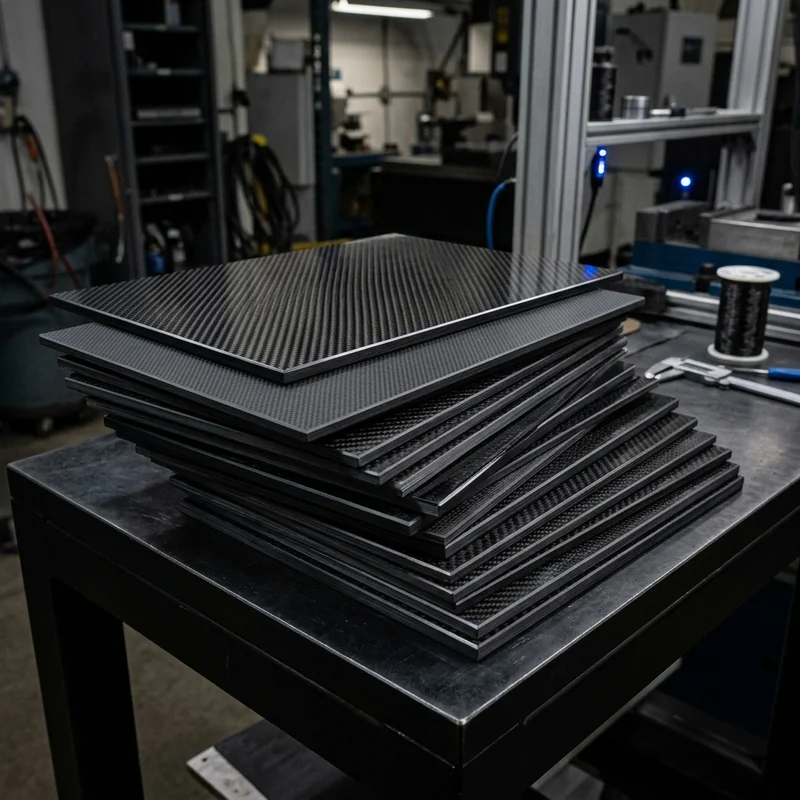
Carbon fiber standard plate-3k stripe
Lightweight, ultra-rigid standard sheets for drone fuselages, robot housings, facades and structural applications.

Carbon Fiber Plate — 3K Twill T700 1.5mm
Thin 1.5mm carbon fiber plate with 3K twill weave surface. Lightweight and stiff, commonly used for covers, panels, drone bodies, and applications requiring a premium aesthetic appearance.

Square Carbon Fiber Tube — 3K Twill T700
Square cross-section carbon fiber tube manufactured with 3K twill weave for torsional strength. Preferred for structural frames, trusses, and support columns where rectangular geometry offers design flexibility.

Carbon Fiber Plate — 3K Twill T700 3.0mm
Medium-thickness 3.0mm carbon fiber plate offering significantly higher load capacity while maintaining attractive 3K twill finish. Suitable for structural brackets, reinforcement plates, and load-bearing panels.
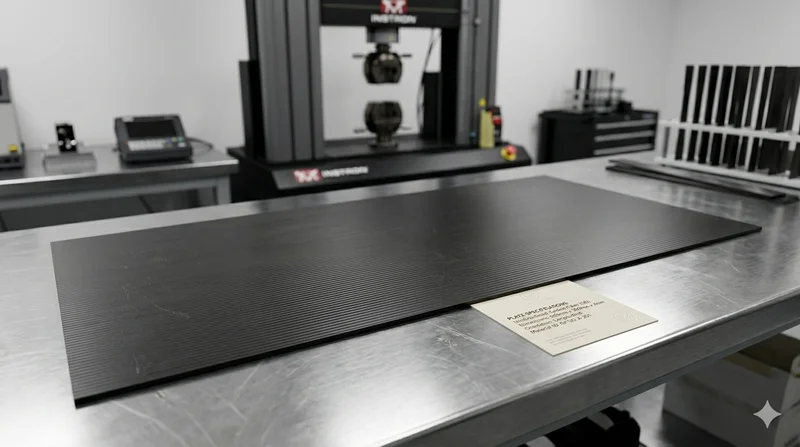
Carbon Fiber Plate — UD Unidirectional T700
Unidirectional carbon fiber plate with all fibers oriented in a single direction for maximum strength along the fiber axis. Essential for structural reinforcements, splints, and applications where load direction is predictable.