
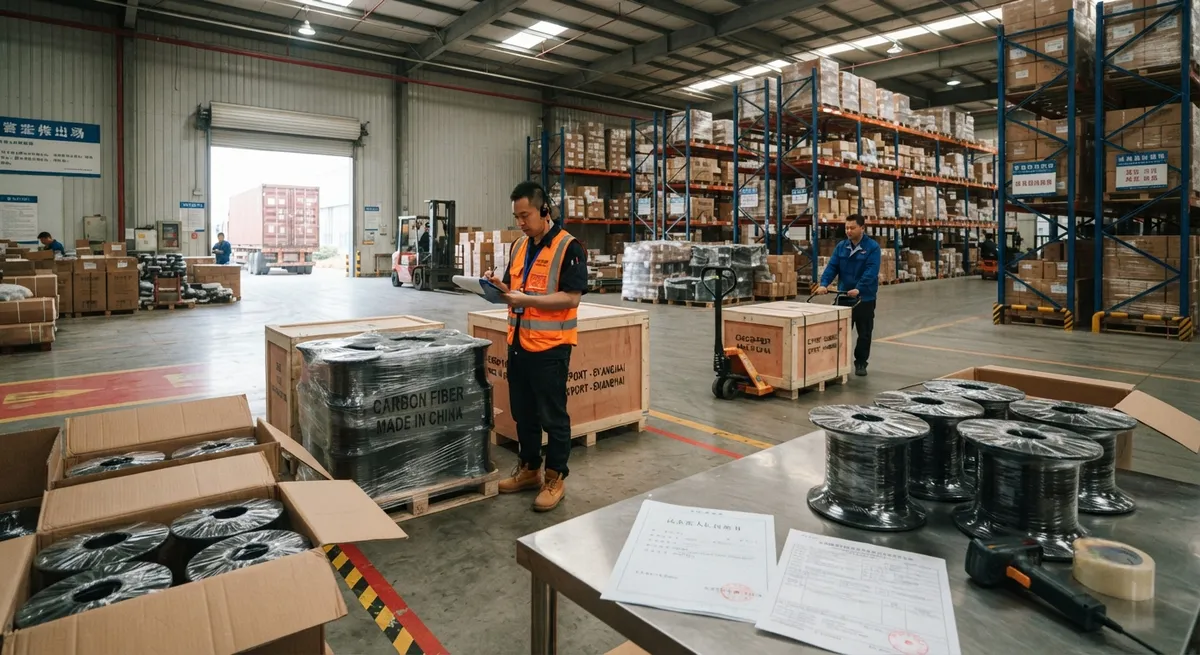
China carbon fiber export controls have become one of the defining supply chain risks for the global composites industry in 2026. China now accounts for roughly 50% of global carbon fiber production capacity and an even larger share of industrial-grade output, making its export policies
Introduction
China carbon fiber export controls have become one of the defining supply chain risks for the global composites industry in 2026. China now accounts for roughly 50% of global carbon fiber production capacity and an even larger share of industrial-grade output, making its export policies a structural factor in pricing and availability worldwide. What began as an instrument of technology protection has evolved into a broader strategic materials policy that affects every B2B buyer sourcing from Chinese producers.
This article explains the current licensing framework, identifies which products fall under control, and outlines the compliance and mitigation strategies that buyers use to protect their supply chains. The regulatory landscape is moving quickly, so the guidance here is oriented toward principles and process rather than a point-in-time snapshot that will be outdated within a quarter.
The Strategic Materials Policy Shift
The tightening of Chinese carbon fiber export controls mirrors a global trend. The United States and Japan have restricted exports of carbon fiber production equipment and high-performance fiber technologies, and China has responded by formalizing controls on the outbound movement of its own strategic materials — high-grade carbon fiber among them. The policy rationale is explicit: carbon fiber feeds aerospace, defense, hydrogen energy, and high-end manufacturing, all sectors in which China maintains strategic competition.
In practice, the controls operate through a licensing regime administered by the Ministry of Commerce (MOFCOM) under the dual-use items export control catalog. Buyers and exporters must determine whether their target product falls within controlled categories, and if so, obtain an export license before shipment. The scope of controlled goods has expanded in waves since the early 2020s, and the 2025-2026 updates added several fiber grades and downstream product categories to the list.
What Is Controlled: Product Categories and Thresholds
Understanding precisely which carbon fiber products fall under Chinese export control is the first compliance step. The controlled categories can be summarized as follows:
| Product Category | Control Basis | Typical End Uses | Buyer Impact |
|---|---|---|---|
| High-grade carbon fiber tow (≥24K aerospace-grade) | Dual-use list, high modulus & high strength grades | Aerospace structures, defense, space | License required; end-use scrutiny |
| PAN precursor and specialized resin systems | Strategic material protection | Fiber conversion, prepreg production | Restricted export; limited availability |
| Production equipment and technology transfers | Mirror of US/Japan controls | New fiber plants, capacity expansion | Equipment exports blocked or licensed |
| Industrial-grade tow (12K, 24K standard) | Generally outside core control, but watchlist | Wind, pressure vessels, automotive | Mostly available; documentation required |
Two important nuances shape how the controls operate in practice. First, "end use" matters as much as "end user": fiber destined for defense or aerospace applications in certain countries faces heightened review, while equivalent fiber for wind energy or pressure vessels typically proceeds with standard documentation. Second, the control boundary between industrial and aerospace grade is defined by fiber properties — tensile modulus and strength thresholds — rather than by marketing category, so buyers must know the actual specification of the material they are purchasing.
Licensing Process and Documentation
For controlled products, the export licensing process follows a defined sequence that buyers should plan around:
- End-use certification: The buyer provides a statement of final application and destination, often notarized or apostilled, describing where and how the material will be used.
- Importer registration: The buyer (or its local agent) completes registration with the relevant Chinese authorities, establishing an auditable import history.
- License application: The exporter files with MOFCOM, attaching contracts, technical specifications, and end-use certificates; approval timelines typically range from 2-8 weeks.
- Shipment and record-keeping: Licensed shipments are tracked, and both parties retain records for audit purposes for a minimum of five years.
The practical consequence is lead time. Buyers sourcing controlled grades must build 4-12 weeks of additional buffer into their procurement planning, and the license is tied to specific contracts — it cannot be banked and reused across shipments. Documentation errors are the most common cause of shipment delays, and they are almost always avoidable with disciplined paperwork.
Compliance Strategies for International Buyers
Buyers have several levers to manage exposure to Chinese export controls without abandoning the cost advantages of Chinese supply:
- Grade diversification: Where performance permits, switching from controlled high-grade tow to uncontrolled industrial grades removes the licensing burden entirely.
- Multi-country sourcing: Qualifying suppliers in Taiwan, South Korea, Japan, and Europe in parallel creates optionality if a license is denied or delayed.
- Long-term agreements with Chinese producers: Major producers navigate the licensing process routinely and can structure framework agreements that anticipate the documentation requirements.
- Local conversion: Importing PAN precursor or intermediate material into a third country for conversion outside China's direct control perimeter, where legally permissible.
- Compliance screening: Maintaining a documented end-use compliance program satisfies both Chinese requirements and the buyer's own due-diligence obligations under US and EU re-export rules.
The most important principle is to treat export controls as a permanent feature of the supply landscape rather than a temporary disruption. Companies that integrated compliance into their sourcing playbook in 2024-2025 have navigated the 2026 environment with minimal disruption, while ad-hoc buyers face month-long delays.
Market Implications and the Broader Strategic Picture
The controls do not exist in isolation. They interact with US onshoring policy, Japan's equipment export restrictions, and European supply-chain security legislation to reshape the global map of carbon fiber production and trade. The net effect in 2026 is a bifurcated market: unrestricted industrial-grade fiber continues to flow on price-competitive terms, while strategic grades are increasingly sourced from diversified, geopolitically aligned supply chains. Buyers who understand this bifurcation — and who align their sourcing strategy to it — are the ones whose production lines keep running.
Frequently Asked Questions
Can I still import industrial-grade carbon fiber from China in 2026?
Yes, in most cases. Standard industrial-grade tow (12K and 24K) destined for wind energy, pressure vessels, automotive, and general composites manufacturing is generally available with standard export documentation rather than a full license. The controls focus on aerospace-grade, high-modulus, and high-strength materials, plus PAN precursor and production equipment. The key is to know your material's specification: if tensile modulus and strength fall below the controlled thresholds and the end use is clearly industrial, the transaction typically proceeds with end-use certification and standard paperwork. Working with an exporter experienced in the licensing regime minimizes friction.
How long does a Chinese carbon fiber export license take?
Approval timelines typically range from 2 to 8 weeks from a complete application, though complex cases or heightened end-use scrutiny can extend to 12 weeks or more. The clock starts only when all documentation — contracts, technical specifications, and notarized end-use certificates — is in order. Missing or inconsistent paperwork is the single largest cause of delay, so the effective way to compress the timeline is to prepare a complete application file before submission and to maintain a relationship with an experienced export agent who manages the MOFCOM interface.
What happens if my shipment is denied or delayed by export control review?
If a license is denied, the exporter is legally barred from shipping the controlled material under that contract, and the buyer must either renegotiate specifications, source from another supplier or jurisdiction, or abandon the order. If the review is merely slow, the shipment is held at the port, and demurrage and storage costs accrue. Mitigation starts before ordering: maintain qualified backup suppliers outside China, build buffer stock of critical grades, and include force-majeure-style provisions in purchase contracts that allocate the risk of regulatory delay. Buyers who rely on a single Chinese supplier for strategic grades are exposed; diversified buyers are not.
Conclusion
China carbon fiber export controls in 2026 are a structural feature of the global composites market, not a passing disruption. The licensing framework, controlled product categories, and documentation requirements are now well-established, and the buyers who treat compliance as a routine part of sourcing — rather than an occasional headache — are the ones with secure supply chains. The bifurcation between freely traded industrial grades and tightly controlled strategic grades will define procurement strategy for the rest of the decade.
Whether you are sourcing industrial-grade fiber from China or seeking geopolitically diversified alternatives, a supply partner that understands both the regulatory landscape and the material specifications is essential. Explore our carbon fiber tow and fabric range with clear grade specifications, or contact our sourcing team for guidance on compliance, documentation, and diversified supply options in the 2026 export control environment.
Part of topic
Related Articles
- Carbon Fibre Sheet Supplier UK: Sourcing Options and Specification Checklist
- Carbon Fiber Sheets Near Me Suppliers: Local Stock vs Factory Direct
- Filament Wound Epoxy Tubes: Industry Standards and Compliance Requirements
- Carbon Fiber Dealers Near Me: What a Good Dealer Actually Adds
- Carbon Fiber Supplies Near Me: Local Sourcing Without Compromising Spec
- Carbon Fiber for Sale: Online Platforms and Direct Sales Channel Comparison
Interested in Our Products?
Contact our team for competitive pricing and technical specifications.
Get a QuoteRelated Products
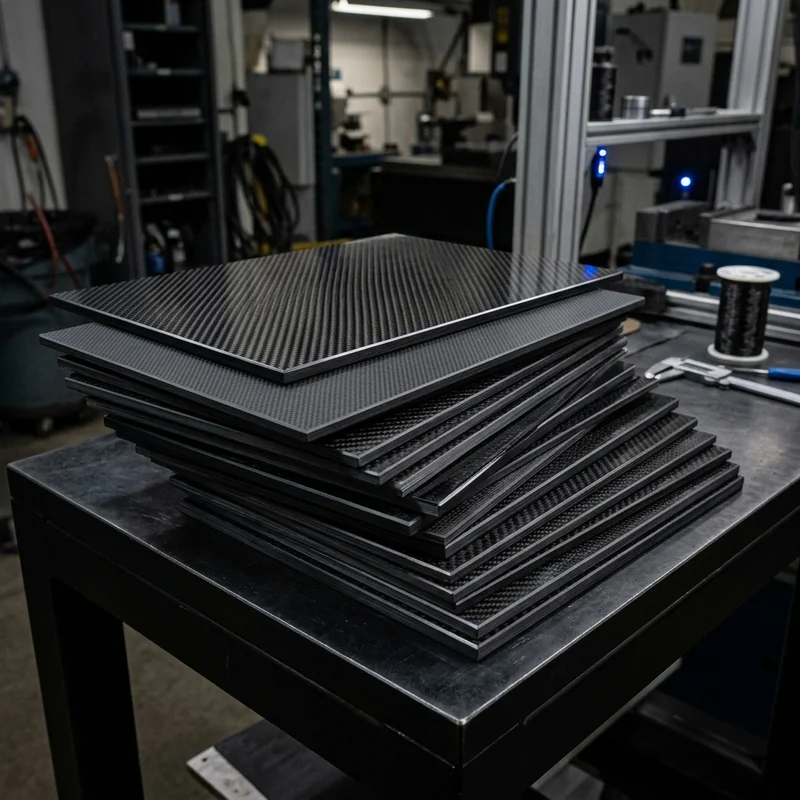
Carbon fiber standard plate-3k stripe
Lightweight, ultra-rigid standard sheets for drone fuselages, robot housings, facades and structural applications.

Carbon Fiber Plate — 3K Twill T700 3.0mm
Medium-thickness 3.0mm carbon fiber plate offering significantly higher load capacity while maintaining attractive 3K twill finish. Suitable for structural brackets, reinforcement plates, and load-bearing panels.

Carbon Fiber Plate — 3K Twill T700 1.5mm
Thin 1.5mm carbon fiber plate with 3K twill weave surface. Lightweight and stiff, commonly used for covers, panels, drone bodies, and applications requiring a premium aesthetic appearance.
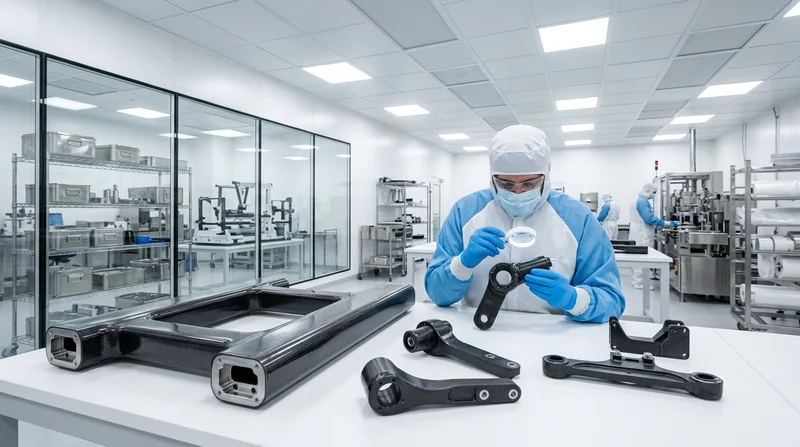
Custom Carbon Fiber Medical Device Components
Medical-grade carbon fiber components manufactured for imaging equipment, surgical instruments, and patient support systems. Carbon fiber's radiolucency (X-ray transparency) and high strength-to-weight ratio make it ideal for CT scanner beds, wheelchair frames, surgical robot arms, and MRI-compatible accessories. Biocompatible resin systems available.

Square Carbon Fiber Tube — 3K Twill T700
Square cross-section carbon fiber tube manufactured with 3K twill weave for torsional strength. Preferred for structural frames, trusses, and support columns where rectangular geometry offers design flexibility.