
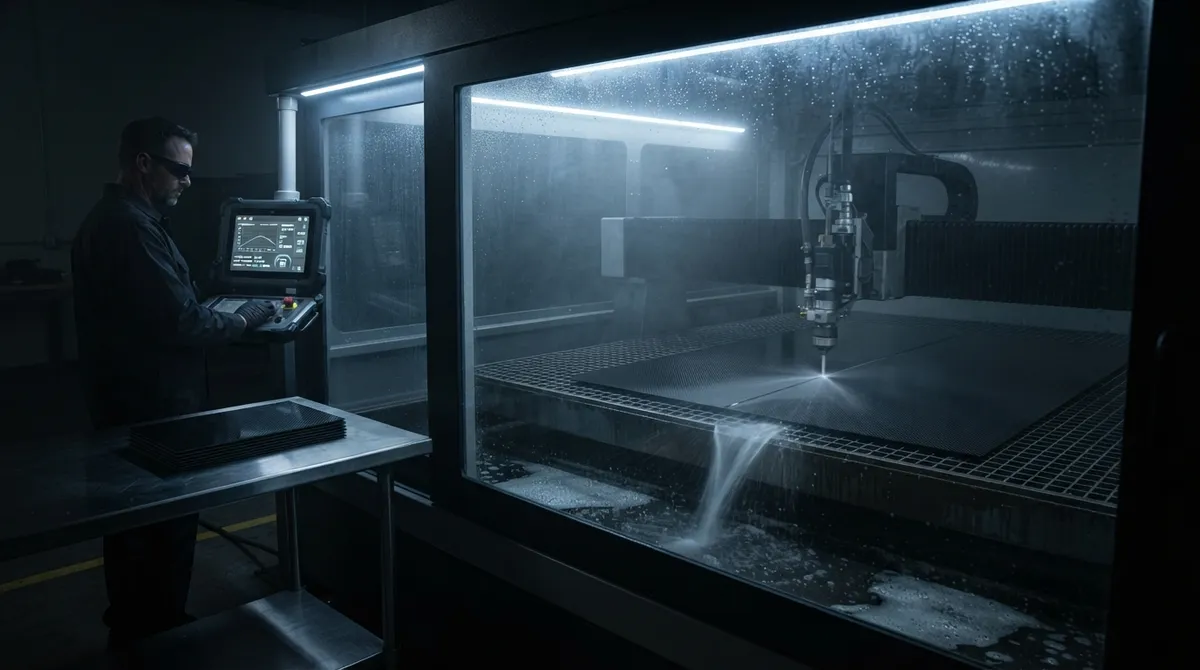
Carbon fiber composites are excellent to use and difficult to cut. The same properties that make a carbon fiber plate strong — hard, abrasive fibers embedded in a tough resin matrix — also make it destructive to conventional tooling. A CNC router cutting carbon fiber wears its carbide o
Introduction
Carbon fiber composites are excellent to use and difficult to cut. The same properties that make a carbon fiber plate strong — hard, abrasive fibers embedded in a tough resin matrix — also make it destructive to conventional tooling. A CNC router cutting carbon fiber wears its carbide or diamond tooling quickly, generates fine conductive dust that is hazardous to electronics and operators, and can delaminate the laminate at the exit side of the cut. Abrasive waterjet cutting sidesteps most of these problems: a high-pressure stream of water mixed with abrasive garnet erodes the material without heat, without tool contact, and with the dust contained in the cutting water.
This article covers the practical engineering of waterjet cutting for carbon fiber: how the process works, how kerf taper and surface quality behave, how it compares with CNC routing on the metrics that matter, and how a small or mid-size fabricator can qualify the process for production.
How Abrasive Waterjet Cutting Works on Carbon Fiber
An abrasive waterjet system pressurizes water to 3,500-6,000 bar (50,000-90,000 psi), forces it through a small orifice to form a high-velocity jet, and then accelerates abrasive garnet particles into the stream inside a mixing tube. The resulting abrasive jet erodes the composite along a narrow path. Because the mechanism is mechanical erosion rather than melting or burning, there is no heat-affected zone, no resin charring, and no thermal stress in the laminate.
- No heat-affected zone: The cut edge is not thermally damaged, so there is no resin degradation or fiber burn at the cut line.
- No tool wear: The abrasive is consumed, not the tool, so cutting cost is predictable and independent of material hardness.
- Dust-free operation: The cutting zone is submerged in the waterjet stream and the catch tank, so airborne carbon dust is essentially eliminated.
- No delamination at entry: Because there is no mechanical tool pushing against the laminate, the top surface stays clean and uncracked.
- Multi-layer capability: A single pass cuts through stacked laminates, sandwich panels, and prepreg stacks without re-fixturing.
The trade-off is that waterjet cutting is not a finishing process. It produces a slightly roughened edge with a measurable taper, which is why the process is usually specified for trimming, blanking, and hole drilling rather than for final machined tolerances.
Kerf Taper: The Geometry Waterjet Leaves Behind
Kerf is the width of the cut slot, and taper is the difference between the width of the cut at the top of the material and the width at the bottom. In abrasive waterjet cutting of carbon fiber, the jet loses energy as it travels through the material, so the bottom of the cut is narrower than the top. For a typical 3 mm carbon fiber laminate, the taper is usually 0.1-0.3 mm across the thickness; for thicker laminates, the taper grows.
| Laminate thickness | Typical kerf width (top) | Typical taper | Edge quality |
|---|---|---|---|
| 1-2 mm | 0.8-1.0 mm | 0.05-0.15 mm | Good, minor striations |
| 3-5 mm | 1.0-1.2 mm | 0.15-0.30 mm | Moderate striations |
| 6-10 mm | 1.2-1.5 mm | 0.30-0.60 mm | Visible taper, rougher bottom |
| 10-20 mm | 1.5-2.0 mm | 0.60-1.20 mm | Requires compensation or secondary trim |
Manufacturers compensate for taper in three ways. The first is to tilt the cutting head by the measured taper angle, so the jet enters at an angle and exits perpendicular. The second is to cut at a slower traverse speed, which reduces taper at the cost of cycle time. The third is to accept the taper and machine the edge afterward with a light CNC trim pass. For most structural carbon fiber parts, a taper of 0.1-0.3 mm is acceptable, but for press-fit or bearing surfaces it must be designed in or machined out.
Surface Quality: Striations, Roughness, and When It Matters
The waterjet-cut edge of a carbon fiber laminate is not smooth like a machined edge. It shows a characteristic pattern of striations — fine wavy lines running down the cut face — and a surface roughness that is typically Ra 3-6 µm for a well-tuned cut. The roughness comes from the abrasive particles eroding the resin and fiber at slightly different rates, and from the jet losing coherence as it travels deeper.
Surface quality matters differently depending on the application. For a part that will be bonded, the roughened edge is actually an advantage: a rougher surface increases the bond area and improves adhesive strength. For a visible edge on a cosmetic part, the striations must be sanded or machined away. For a fatigue-critical aerospace part, the edge is usually trimmed with a secondary operation to remove the striation layer, which can act as a crack-initiation site.
- Bonded joints: Roughened waterjet edges improve adhesive bond strength compared with machined edges.
- Cosmetic edges: Striations are removed with a light sanding or a CNC trim pass.
- Fatigue-critical edges: The striation layer is removed or the edge is inspected for micro-cracks.
- Holes: Waterjet-drilled holes show taper and roughness; reaming or drilling after waterjet is common for fastener holes.
The practical rule is: waterjet for cutting, CNC for finishing. Use the waterjet to cut the blank and the holes, then use a light CNC pass or hand finishing only where the edge is functional or visible.
Waterjet vs CNC Routing: A Practical Comparison
CNC routing is the most common alternative for cutting carbon fiber plate. A router with a diamond-coated or carbide end mill cuts quickly and leaves a smooth, square edge with tight tolerances. But it has three costs that waterjet does not: tool wear, dust, and delamination risk. A single carbon fiber plate can wear out a carbide end mill in hours, and the fine carbon dust produced is conductive, abrasive, and a respiratory hazard that requires extraction and filtration. Delamination at the exit side of the cut is a constant risk, especially on thin laminates.
| Factor | Abrasive waterjet | CNC routing |
|---|---|---|
| Edge quality | Roughened, striated, tapered | Smooth, square, tight tolerance |
| Dust | None airborne; contained in water | Fine carbon dust; requires extraction |
| Tool wear | None (abrasive is consumed) | High; carbide and diamond tools wear fast |
| Delamination risk | Very low | Moderate, especially at exit side |
| Heat-affected zone | None | None if properly cooled |
| Setup cost | High (pump, abrasive, water) | Low (existing CNC machine) |
| Per-part cost | Low at volume; abrasive is the main cost | Low per part, but tooling cost adds up |
| Best for | Blanks, panels, thick stacks, dust-free shops | Finished edges, tight tolerances, small parts |
For a small or mid-size manufacturer, the decision usually comes down to volume and dust. If you cut carbon fiber plate regularly and want a dust-free shop, waterjet is the cleaner choice. If you need tight tolerances and finished edges, CNC routing is the better fit — but you must budget for tooling and dust extraction.
A Practical Guide for Small and Mid-Size Manufacturers
Qualifying waterjet cutting for carbon fiber production follows a repeatable path:
- Step 1 — Test coupons: Cut test coupons at three speeds and two abrasive flow rates, and measure taper, roughness, and edge quality.
- Step 2 — Set the process window: Record the speed, pressure, abrasive flow, and nozzle standoff that give acceptable quality for each laminate thickness.
- Step 3 — Compensate for taper: Either tilt the head, slow the cut, or add a trim allowance for functional edges.
- Step 4 — Control water quality: Filtered, softened water and clean garnet are essential for consistent results.
- Step 5 — Inspect the first parts: Verify edge quality, taper, and any delamination with a simple visual and dimensional check before running a batch.
Most shops find that waterjet cutting pays for itself when carbon fiber cutting is a regular operation, because it eliminates the dust problem, the tooling cost, and the delamination risk in one step.
Frequently Asked Questions
Is waterjet cutting of carbon fiber dust-free?
Yes, in practice. The cutting zone is submerged in the waterjet stream and the catch tank, so airborne carbon dust is essentially eliminated. The water and abrasive slurry is filtered and the solid waste is collected, which is why waterjet is the preferred choice for shops that want to avoid carbon dust exposure.
Does waterjet cutting delaminate carbon fiber?
Very rarely. Because the material is eroded by the abrasive stream rather than pushed by a mechanical tool, there is no mechanical force to separate the plies. Delamination is far more common with CNC routing, especially at the exit side of the cut. The main waterjet risk is edge roughness and taper, not delamination.
Can waterjet cut thick carbon fiber laminates?
Yes, up to 50 mm or more, but the taper and edge quality degrade with thickness. For laminates above 10 mm, expect a visible taper and a rougher bottom edge, and plan for a compensation strategy or a secondary trim pass.
Is waterjet cutting cheaper than CNC routing for carbon fiber?
It depends on volume. The waterjet machine has a higher setup cost, but the per-part cost is low because the abrasive is the only consumable. CNC routing has a lower setup cost but higher per-part cost from tool wear and dust extraction. For regular carbon fiber cutting, waterjet is usually cheaper overall; for occasional small parts, CNC routing is cheaper.
Conclusion
Abrasive waterjet cutting is the cleanest and most predictable way to cut carbon fiber composites. It eliminates the dust problem, the tool-wear problem, and the delamination risk that make CNC routing of carbon fiber so difficult, and it delivers a clean, usable edge in a single pass. The trade-offs — kerf taper and a roughened surface — are well understood and easily managed with head tilt, speed control, or a secondary trim pass. For a small or mid-size manufacturer, the practical rule is simple: waterjet for cutting, CNC for finishing.
Whether you are cutting blanks, panels, or holes, the material you start with matters as much as the process. Explore our carbon fiber fabrics and prepreg materials with consistent batch documentation, or contact our engineering team to discuss material specifications for your cutting program.
Part of topic
Related Articles
- Carbon Fiber Drone Blades and Propellers: Stiffness, Balance and Noise Reduction
- Fiberglass Filament Wound Tubes: Cost-Effective Alternative to Carbon Fiber
- Filament Wound Epoxy Tube Design: Wall Thickness, Fiber Angle and Load Optimization
- Filament Wound Epoxy Tubes: Testing Standards and Quality Assurance
- Filament Wound Epoxy Tubes Manufacturing: Process and Quality Control
- Filament Wound Fiberglass Tube: Process Parameters and Performance vs Carbon Fiber
Interested in Our Products?
Contact our team for competitive pricing and technical specifications.
Get a QuoteRelated Products
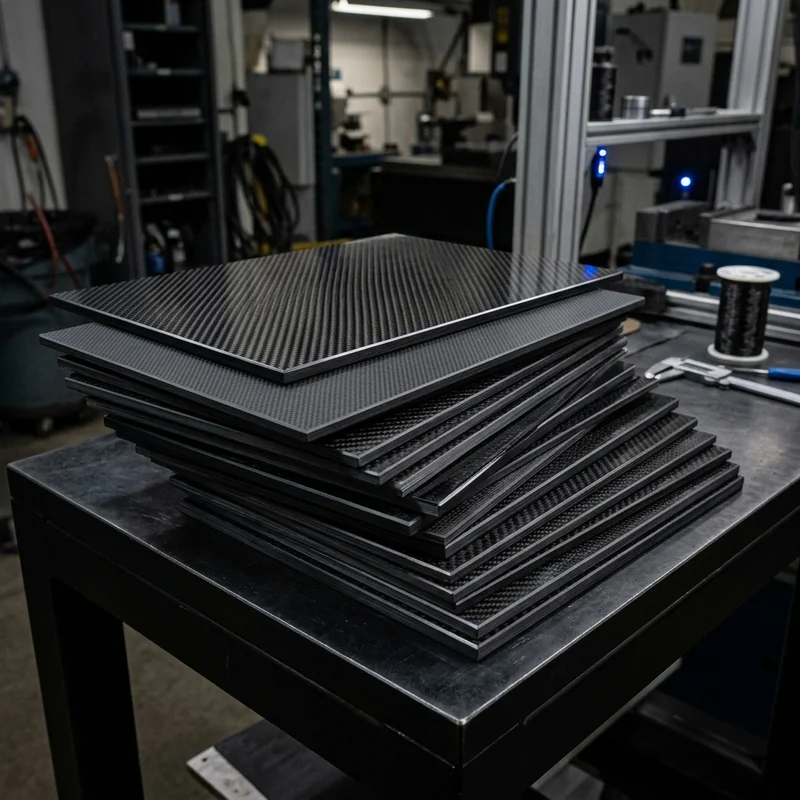
Carbon fiber standard plate-3k stripe
Lightweight, ultra-rigid standard sheets for drone fuselages, robot housings, facades and structural applications.
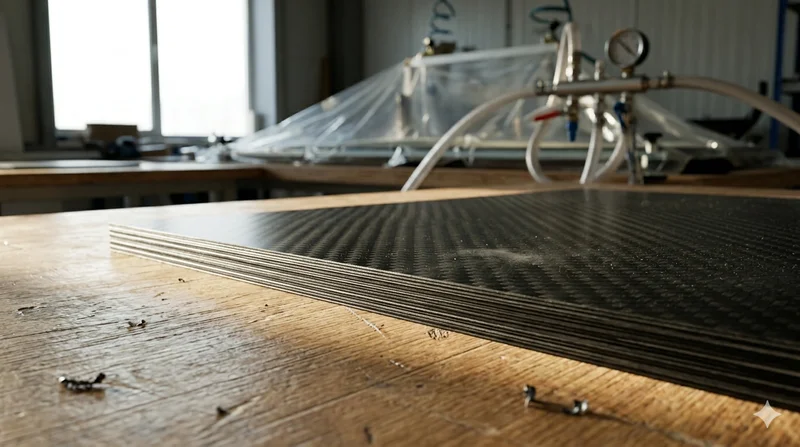
Carbon Fiber Plate — 3K Twill T700 3.0mm
Medium-thickness 3.0mm carbon fiber plate offering significantly higher load capacity while maintaining attractive 3K twill finish. Suitable for structural brackets, reinforcement plates, and load-bearing panels.

Carbon Fiber Plate — 3K Twill T700 1.5mm
Thin 1.5mm carbon fiber plate with 3K twill weave surface. Lightweight and stiff, commonly used for covers, panels, drone bodies, and applications requiring a premium aesthetic appearance.
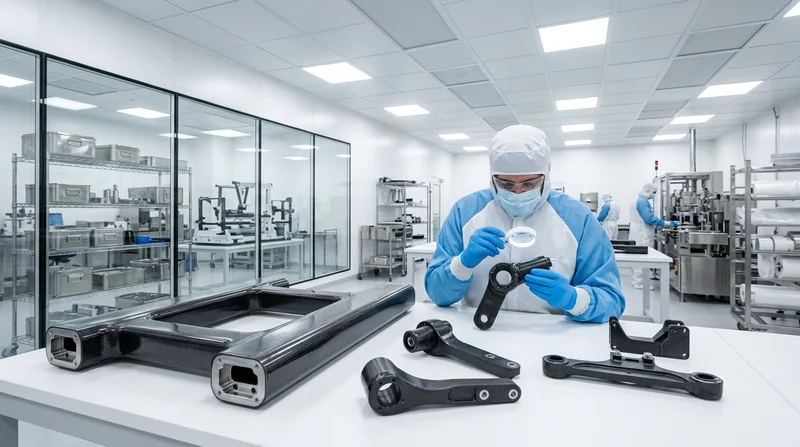
Custom Carbon Fiber Medical Device Components
Medical-grade carbon fiber components manufactured for imaging equipment, surgical instruments, and patient support systems. Carbon fiber's radiolucency (X-ray transparency) and high strength-to-weight ratio make it ideal for CT scanner beds, wheelchair frames, surgical robot arms, and MRI-compatible accessories. Biocompatible resin systems available.
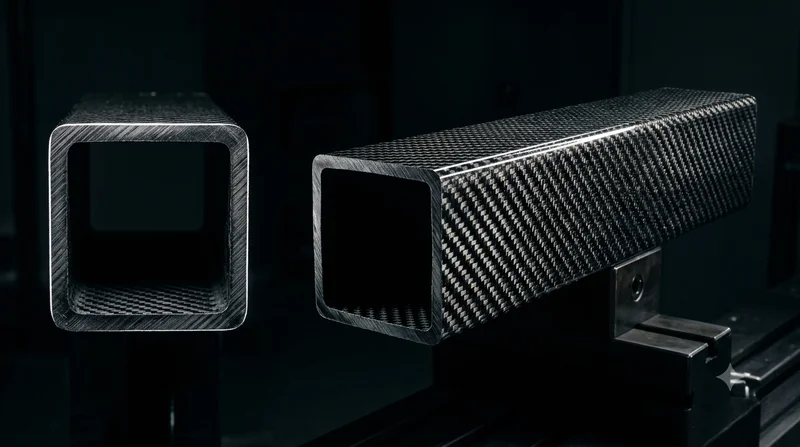
Square Carbon Fiber Tube — 3K Twill T700
Square cross-section carbon fiber tube manufactured with 3K twill weave for torsional strength. Preferred for structural frames, trusses, and support columns where rectangular geometry offers design flexibility.