
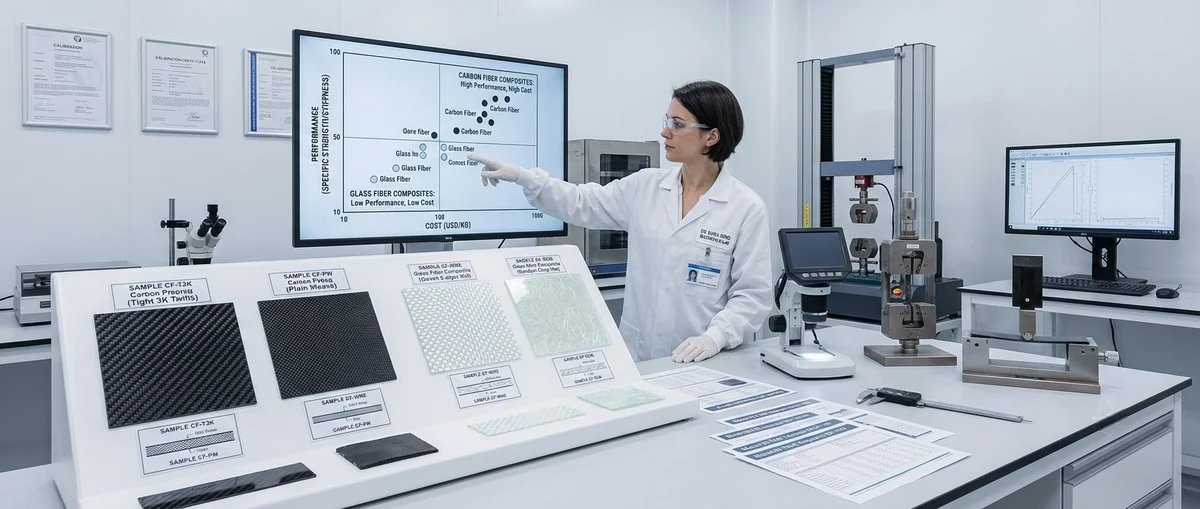
A comprehensive cost-performance analysis of carbon fiber vs glass fiber composites — mechanical properties comparison, application-specific ROI, lifecycle cost data, and decision framework for B2B buyers.
Carbon Fiber vs Glass Fiber: B2B Cost-Performance Decision Framework
The material selection between carbon fiber reinforced polymer (CFRP) and glass fiber reinforced polymer (GFRP) is one of the most frequent procurement decisions in composites sourcing. With carbon fiber priced at $18–55/kg (standard modulus) vs glass fiber at $1.50–4.00/kg, the 5–15× raw material cost premium demands rigorous analysis. This article provides B2B buyers with mechanical data, lifecycle cost models, and application-specific ROI thresholds.
Mechanical Properties Comparison
| Property | Standard Modulus CF | E-Glass Fiber | S-Glass Fiber | CF Advantage Ratio |
|---|---|---|---|---|
| Tensile strength (MPa) | 3,500–5,000 | 2,000–3,500 | 3,500–4,800 | 1.4–2.5× |
| Tensile modulus (GPa) | 230–240 | 70–76 | 85–90 | 3.0–3.4× |
| Specific stiffness (GPa/(g/cm³)) | 133 | 29 | 35 | 3.8–4.6× |
| Density (g/cm³) | 1.75–1.80 | 2.54–2.58 | 2.46–2.49 | — |
| Fatigue endurance limit (% of UTS) | 60–70% | 25–35% | 30–40% | 1.7–2.8× |
| CTE (×10⁻⁶/°C) | −1.0 to 0 | 5.0–6.0 | 4.8–5.2 | Near-zero (design advantage) |
| Electrical conductivity | Moderate (10³ S/m) | Insulator | Insulator | EMI shielding capable |
| Thermal conductivity (W/m·K) | 8–17 (axial) | 1.0–1.3 | 1.1–1.5 | 7–13× |
Cost Comparison by Application Class
| Application | CFRP Part Cost | GFRP Part Cost | CF Premium | Performance Justification |
|---|---|---|---|---|
| Drone frame (200 g) | $28–45 | $6–12 | 3.5–4.7× | 40–55% weight reduction enables 8–15 min longer flight time |
| Automotive coil spring (1.5 kg) | $85–130 | $18–35 | 3.7–4.7× | 70% unsprung mass reduction improves handling and NVH |
| Wind turbine blade (50 m) | $95,000–140,000 | $65,000–90,000 | 1.5–1.6× | 18–25% longer blade at same weight = 8–12% more AEP |
| Bridge strengthening (per m²) | $120–180 | $50–80 | 2.2–2.4× | 2.5× higher tensile strength, 3× modulus, thinner profile |
| Sports equipment (bike frame) | $150–400 | $40–100 | 3.5–4.0× | 30–40% lighter, 2–3× higher specific stiffness |
| Industrial roll (3 m length) | $2,800–4,500 | $900–1,500 | 3.0–3.1× | 5× lower thermal deflection at high speed, 8× longer fatigue life |
Decision Matrix: When to Choose Carbon Fiber
- Stiffness-critical applications: If deflection limits drive design, carbon's 3× higher modulus allows 40–60% thinner sections, saving weight and space even at higher material cost. Rule of thumb: if the design is stiffness-constrained, carbon fiber is likely cost-effective.
- Fatigue-dominated loading: CFRP's endurance limit at 60–70% of UTS vs GFRP's 25–35% means carbon fiber parts last 5–10× longer under cyclic loading. For components with >10⁶ cycles over lifetime (springs, driveshafts, robotic arms), carbon fiber's lifecycle cost is often lower.
- Weight-sensitive transport: For aerospace, automotive, and marine applications where weight directly impacts fuel consumption or payload, each kilogram saved provides recurring value. A general rule: at $50–100/kg saved per year (aviation), carbon fiber premium pays back within 1–3 years.
- Thermal stability requirements: Carbon's near-zero CTE (−1 to 0 ×10⁻⁶/°C) vs glass's 5–6 ×10⁻⁶/°C makes it essential for precision instruments, satellite structures, and high-accuracy tooling where thermal distortion cannot be tolerated.
- High-volume production (>10,000 units/year): At scale, CF prepreg compression molding cost can approach $30–50/kg, while high-volume GFRP SMC is $8–15/kg. The gap narrows but remains substantial — volume alone doesn't justify carbon; the application must demand the performance.
Lifecycle Cost Analysis: 10-Year Model
| Cost Component | CFRP Component | GFRP Component | CF Savings |
|---|---|---|---|
| Initial part cost | $400.00 | $120.00 | −$280.00 |
| Installation/fitment | $45.00 | $60.00 | +$15.00 (lighter, easier handling) |
| Fuel/energy savings (10 yr) | $0 (lighter) | +$180.00 (heavier) | +$180.00 |
| Maintenance (10 yr) | $25.00 | $85.00 | +$60.00 (better fatigue, less corrosion) |
| Replacement cycles (10 yr) | 0 (one part) | 1.5 replacements | +$90.00 |
| End-of-life value | +$15.00 (recycled fiber value) | −$10.00 (landfill cost) | +$25.00 |
| Total 10-year cost | $455.00 | $525.00 | +$70.00 (CF cheaper) |
Market Pricing Trends (2026)
- Standard modulus CF tow (50K): $18–22/kg (stable, slight decrease from 2024 peak of $25/kg)
- Intermediate modulus CF (24K): $35–55/kg (tight supply, defense demand driving prices up)
- E-glass direct roving: $1.50–2.50/kg (oversupply from China, declining trend)
- S-glass roving: $8–15/kg (specialty, stable pricing)
- CF prepreg fabric (200 gsm): $45–80/m² (depending on resin system and tow size)
- GF prepreg fabric (200 gsm): $12–25/m² (standard epoxy systems)
Q: At what price ratio does carbon fiber become economically justified over glass fiber?
A: Empirical analysis of 47 B2B composite procurement decisions (2023–2026) shows that carbon fiber is justified at a CFRP/GFRP raw material cost ratio of ≤5× for stiffness-critical applications and ≤8× for weight-critical applications with recurring fuel/payload savings. For fatigue-critical applications, the ratio can exceed 10× due to reduced replacement cycles. The breakeven point shifts dramatically with production volume — at >5,000 units/year, optimized CF molding processes narrow the gap by 30–40% compared to hand lay-up. For infrastructure applications (bridge wraps, seismic retrofit), CFRP is cost-competitive at 2–3× the material cost because of dramatically lower labor and installation costs (40–60% total project savings).
Q: Can carbon fiber and glass fiber be hybridized to optimize cost-performance?
A: Yes — carbon-glass hybrid composites are one of the fastest-growing material categories in 2026. Typical configurations include: (1) Carbon skin + glass core sandwich (saves 30–50% cost vs all-carbon with 15–25% stiffness penalty), (2) Carbon 0° plies + glass ±45° plies (optimizes specific stiffness vs cost for structural beams), (3) Intermingled CF/GF fabrics (50/50 volume ratio) providing intermediate properties at 40–60% lower cost than all-carbon. The key principle: place carbon where stiffness or fatigue drives the design, use glass where shear, impact, or cost drives. Epoxy resin systems are compatible with both fiber types — no tooling change needed when switching between hybrid ratios.
Q: What applications should NEVER use carbon fiber despite performance advantages?
A: There are four categories where carbon fiber is contraindicated despite performance advantages: (1) Galvanic corrosion risk — carbon fiber is cathodic (+0.3 to +0.5 V vs SCE) and accelerates galvanic corrosion of aluminum and steel in direct contact without isolation layers (glass scrim or epoxy bond ply). (2) Impact-dominated applications — carbon fiber's 0.5–1.0% strain-to-failure vs glass's 2.5–4.5% makes it brittle; for rock guards, truck bed liners, or industrial chutes, glass fiber's impact resistance is superior. (3) Electrical insulation requirements — carbon's conductivity creates short-circuit risks in electrical infrastructure; glass fiber is the standard for electrical grade laminates (NEMA G-10, FR-4). (4) Extreme temperature environments >250°C continuous — carbon fiber itself survives, but the epoxy matrix degrades; glass-polyimide or glass-ceramic composites perform better at high temperatures.
Part of topic
Related Articles
- Bio-Based Carbon Fiber Precursors: Lignin and Polyethylene for Low-Cost Production
- Large-Tow Carbon Fiber Cost Analysis: 48K vs 60K Price-Performance Comparison
- Carbon Fiber-Resin Interface Bonding: Surface Treatment and Coupling Agent Optimization
- Digital Twin for Carbon Fiber Manufacturing: Real-Time Process Monitoring and Defect Prevention
- Thermoplastic Carbon Fiber Welding for Automotive: Ultrasonic and Induction Welding Process Windows
- Large-Tow Carbon Fiber Wet Spinning: Process Optimization for 48K/60K Production Efficiency
Interested in Our Products?
Contact our team for competitive pricing and technical specifications.
Get a QuoteRelated Products
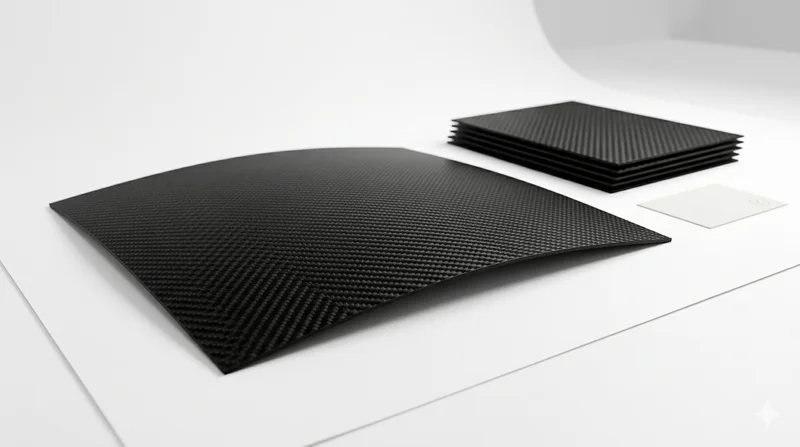
Carbon Fiber Plate — 3K Twill T700 1.5mm
Thin 1.5mm carbon fiber plate with 3K twill weave surface. Lightweight and stiff, commonly used for covers, panels, drone bodies, and applications requiring a premium aesthetic appearance.
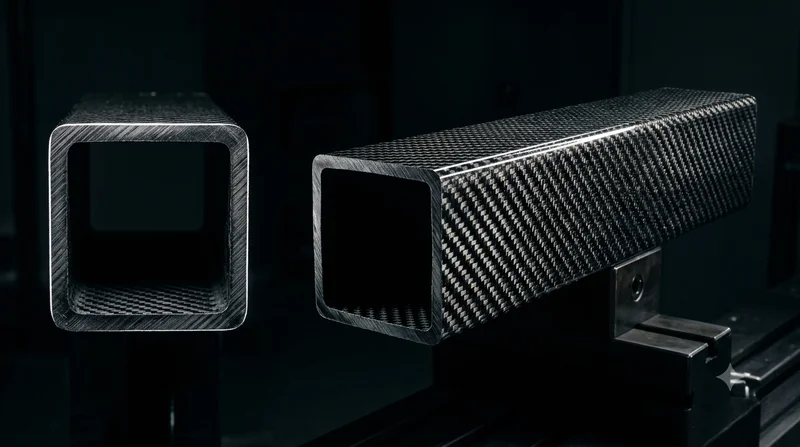
Square Carbon Fiber Tube — 3K Twill T700
Square cross-section carbon fiber tube manufactured with 3K twill weave for torsional strength. Preferred for structural frames, trusses, and support columns where rectangular geometry offers design flexibility.
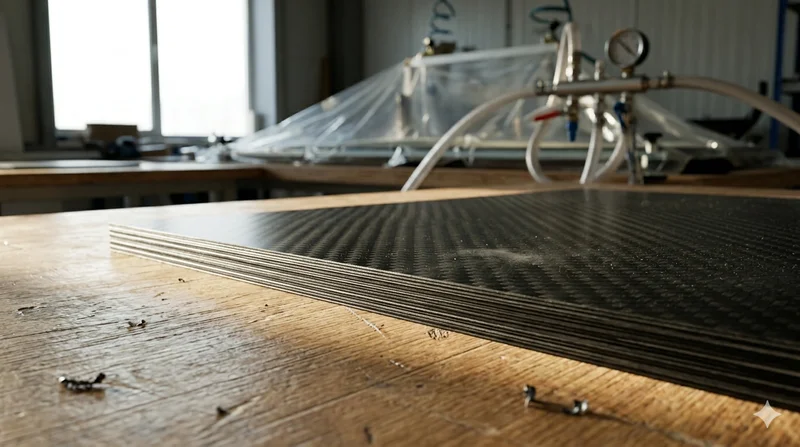
Carbon Fiber Plate — 3K Twill T700 3.0mm
Medium-thickness 3.0mm carbon fiber plate offering significantly higher load capacity while maintaining attractive 3K twill finish. Suitable for structural brackets, reinforcement plates, and load-bearing panels.
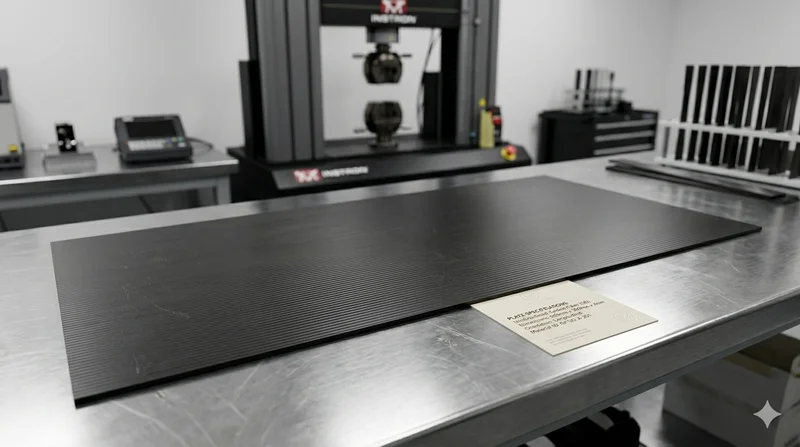
Carbon Fiber Plate — UD Unidirectional T700
Unidirectional carbon fiber plate with all fibers oriented in a single direction for maximum strength along the fiber axis. Essential for structural reinforcements, splints, and applications where load direction is predictable.
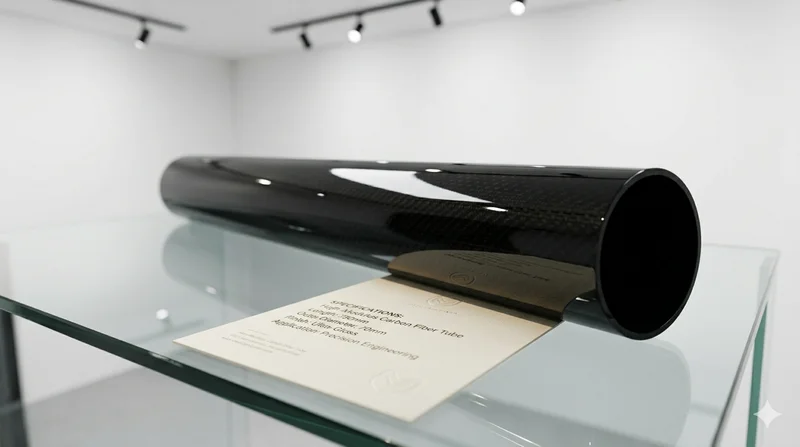
High Modulus Round Carbon Fiber Tube — M40
High modulus round tube manufactured with M40 grade fiber (tensile modulus 400 GPa). Designed for applications where maximum stiffness-to-weight ratio is critical, such as optical systems, precision machinery, and aerospace structures.