
Automated composite manufacturing — automated fiber placement (AFP), filament winding, and braiding — runs on a narrow family of precursor materials. For decades the default was standard unidirectional prepreg slit into tape, or dry tow used with a separate resin injection step. Carbon
Introduction
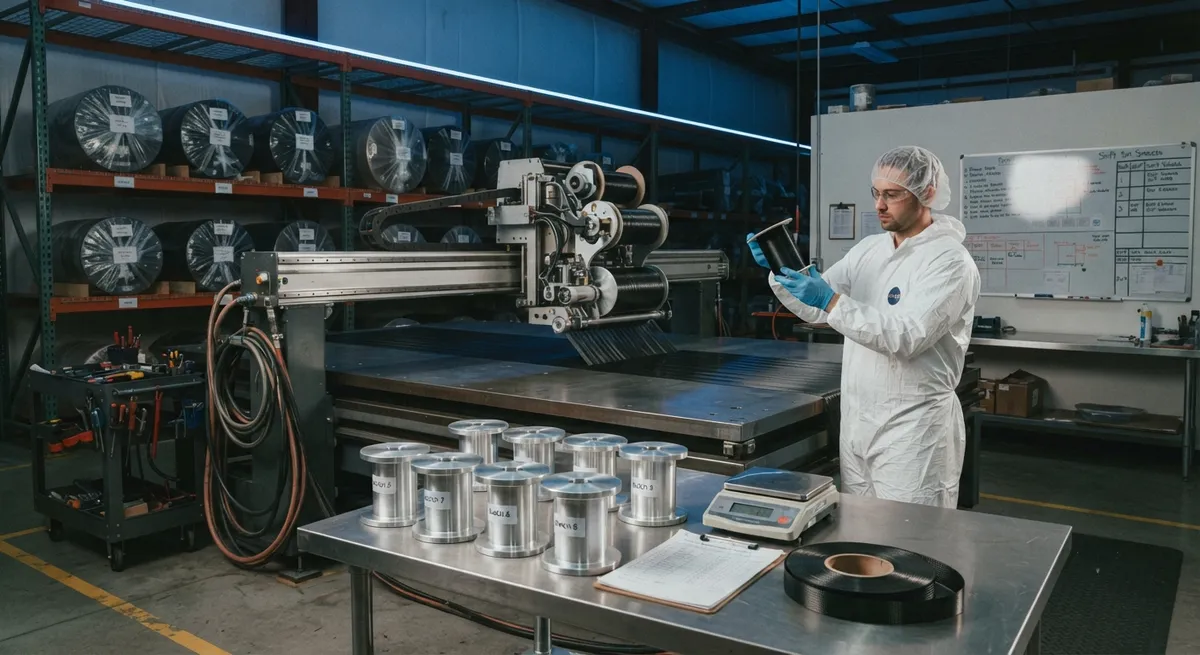
Automated composite manufacturing — automated fiber placement (AFP), filament winding, and braiding — runs on a narrow family of precursor materials. For decades the default was standard unidirectional prepreg slit into tape, or dry tow used with a separate resin injection step. Carbon fiber towpreg, a resin-impregnated tow supplied directly on spools, has emerged as a cost-effective alternative that is quietly reshaping how manufacturers source material for high-rate programs. The difference is not cosmetic: towpreg changes resin content control, tack, out-time, and the capital structure of the entire layup line.
For procurement engineers and process engineers at composite manufacturers, the practical question is whether to standardize on slit prepreg tape, move to towpreg, or run a hybrid. This article breaks down how towpreg and slit tape are made, how they behave in AFP, filament winding, and braiding, and what each route costs — including data on resin content tolerance, out-time, and scrap rates that drive the real cost-per-kilogram of a finished part.
What Are Towpreg and Slit Tape?
Towpreg is a continuous carbon fiber tow (typically 12K or 24K) that has been pre-impregnated with resin before being wound onto a spool. It is produced either by hot-melt impregnation through a resin bath or by a powder-coating line, then spooled with interleaving film to prevent blocking. Towpreg arrives ready to process: no separate resin application step is needed on the factory floor.
Slit tape is produced by taking a standard wide unidirectional prepreg (typically 300 mm or 600 mm wide) and slitting it longitudinally into tapes of 3.2 mm, 6.35 mm, or 12.7 mm width. The prepreg itself is made by impregnating spread carbon fiber tows between resin films on a prepreg machine, then the wide sheet is slit and respooled. Slit tape inherits the tight resin control of wide prepreg but carries an additional slitting step and some edge waste.
The two materials differ most in three properties that matter on the factory floor: resin content control, tack and drape, and shelf life / out-time behavior.
Key Differences: A Data-Driven Comparison
The table below compares towpreg and conventional slit prepreg tape across the properties that determine processability and part quality:
| Property | Towpreg (12K/24K) | Slit Prepreg Tape | Impact |
|---|---|---|---|
| Resin content control | ±1-3% by weight | ±0.5-1.0% by weight | Slit tape holds tighter resin windows for structural parts |
| Typical resin content | 28-40% | 32-42% | Towpreg favored for higher-FVF winding |
| Tack at room temperature | Low to moderate, adjustable | Moderate to high | Towpreg reduces pick-up and rework in AFP |
| Out-time at 21°C | 10-30 days (many systems) | 10-21 days typical | Comparable; resin-system dependent |
| Spool width options | 3.2-12.7 mm standard | 3.2-25.4 mm via slitting | Towpreg more flexible for narrow courses |
| Edge waste during conversion | Negligible | 2-6% slit edge trim | Towpreg wastes less at the slit step |
| Material cost, aerospace grade | $45-90 / kg | $60-120 / kg | Towpreg typically 15-30% cheaper |
| Bulk factor / fiber spreading | Tow spread required for thin plies | Inherently spread, uniform width | Slit tape thinner per course |
The cost gap is driven by process economics: producing towpreg skips the wide-sheet prepreg step and the slitting operation, and it can use lower-cost tow straight from the carbon fiber producer. For high-volume programs where kilograms are counted in tonnes, that 15-30% material cost advantage compounds into meaningful program savings.
Towing the Line: Towpreg in Automated Fiber Placement
In AFP, towpreg is increasingly preferred for three reasons. First, resin-content control at ±1-3% is adequate for most structural laminates and eliminates the tack inconsistency that causes fiber pick-up, tow breaks, and rework on the placement head. Second, low-to-moderate tack means placed courses do not stick to the compaction roller, a failure mode that costs hours of downtime per shift. Third, towpreg spools can be narrow — 3.2 mm and 6.35 mm — which improves gap management and steering accuracy in complex geometries.
Process engineers typically quote the following AFP operating parameters for towpreg:
- Placement speed: 5-15 m/min depending on tow width and head configuration, with hot-tow systems reaching 20 m/min.
- Compaction force: 200-800 N per tow, tuned to resin viscosity at the placement temperature.
- Heater temperature: 40-90°C at the nip point for thermoset towpreg; thermoplastic towpreg is consolidated at 350-400°C with in-situ heating.
- Typical layup defect rate: 0.5-2 defects per placed course versus 1-4 for standard prepreg tape, largely from improved tack control.
Thermoplastic towpreg (PEEK, PEKK, or PAEK) deserves special mention: it enables in-situ consolidation, meaning the part is consolidated and ready for final shaping directly off the placement head, eliminating the autoclave step for many components.
Filament Winding and Braiding with Towpreg
Filament winding has historically used wet winding (tow plus liquid resin bath) or dry tow for later infusion. Towpreg removes the resin bath entirely: the tow is already at the correct resin content, so winding runs cleaner, faster, and with fewer voids. Typical results on pressure vessels and drive shafts show void contents below 1.5% with towpreg versus 2-4% in wet winding, at the cost of higher material price per kilogram.
Braiding with towpreg is a newer but fast-growing combination, particularly for preforms that will later be over-braided or consolidated. The pre-impregnated tow braids cleanly, holds its cross-section, and produces preforms with controlled resin distribution. This makes towpreg the material of choice for braided reinforcement of drive shafts, pressure vessels, and structural tubes where dry braid would require a separate resin transfer step.
How to Choose Between Towpreg and Slit Tape
Selection guidance is best expressed as a decision flow:
- Thin, tightly tolerance-controlled structural laminates (aerospace skins, stiffened panels) — slit prepreg tape holds the tightest resin windows (±0.5-1.0%) and thinnest per-course ply; choose slit tape.
- High-volume AFP programs with cost pressure — towpreg at 15-30% lower material cost with adequate resin control wins.
- Filament winding and braiding — towpreg is the clear choice; it eliminates the resin bath and improves void content.
- Thermoplastic matrix parts with in-situ consolidation — thermoplastic towpreg is the only practical route today.
- Existing infrastructure — if your line is already qualified on slit tape, requalification cost for towpreg should be factored into the switch decision.
Many manufacturers run a hybrid: slit tape for the outer structural plies and towpreg for the bulk of the laminate, capturing both the tight tolerance and the cost saving.
Frequently Asked Questions
Is towpreg cheaper than slit prepreg tape?
Typically yes, by 15-30% on material cost for equivalent fiber and resin systems. Towpreg skips the wide-sheet prepreg coating step and the slitting operation, and can be produced directly from lower-cost tow. The trade-off is slightly looser resin content control (±1-3% versus ±0.5-1.0% for slit tape), which matters mainly for thin, highly tolerance-critical structural laminates. When out-time, tack, and defect rates are factored in, towpreg often delivers a lower overall cost per part in high-volume programs.
Can towpreg be used for structural aerospace parts?
Yes. Towpreg is qualified for structural applications including pressure vessels, drive shafts, and AFP-laid aircraft components. The key is matching the resin system and resin content to the application: ±1-3% resin control is adequate for most structural laminates, and parts are verified through the same NDT and mechanical testing used for prepreg tape parts. For the most tolerance-critical thin skins, engineers may prefer slit tape or hybrid designs with towpreg bulk plies.
What is the difference between towpreg and dry tow?
Dry tow is bare carbon fiber with no resin, used in wet winding (with a resin bath) or for resin infusion processes. Towpreg arrives pre-impregnated with a controlled amount of resin. Dry tow is cheaper and gives processors full control over resin formulation, but requires a resin application step and produces more voids in winding. Towpreg costs more per kilogram but eliminates the resin bath, improves void content, and speeds up the process. For braiding and AFP, towpreg's pre-set resin content is a decisive practical advantage.
Conclusion
Towpreg and slit tape are not competing technologies so much as two rungs on the same automation ladder. Slit prepreg tape remains the reference for the tightest resin control and thinnest courses in critical aerospace laminates, while towpreg delivers a 15-30% material cost advantage, cleaner winding and braiding, better AFP tack behavior, and the only practical route to thermoplastic in-situ consolidation. The right answer for most programs is a deliberate mix that matches material form to each part's tolerance, volume, and process requirements.
For engineers planning an AFP, filament winding, or braiding line, the material decision should come before the equipment decision — it drives everything downstream. Review our carbon fiber tow and reinforcement range, or talk to our engineering team about tow specifications, resin compatibility, and sourcing for your process.
Part of topic
Related Articles
- Carbon Fiber Drone Blades and Propellers: Stiffness, Balance and Noise Reduction
- Fiberglass Filament Wound Tubes: Cost-Effective Alternative to Carbon Fiber
- Filament Wound Epoxy Tube Design: Wall Thickness, Fiber Angle and Load Optimization
- Filament Wound Epoxy Tubes: Testing Standards and Quality Assurance
- Filament Wound Epoxy Tubes Manufacturing: Process and Quality Control
- Filament Wound Fiberglass Tube: Process Parameters and Performance vs Carbon Fiber
Interested in Our Products?
Contact our team for competitive pricing and technical specifications.
Get a QuoteRelated Products
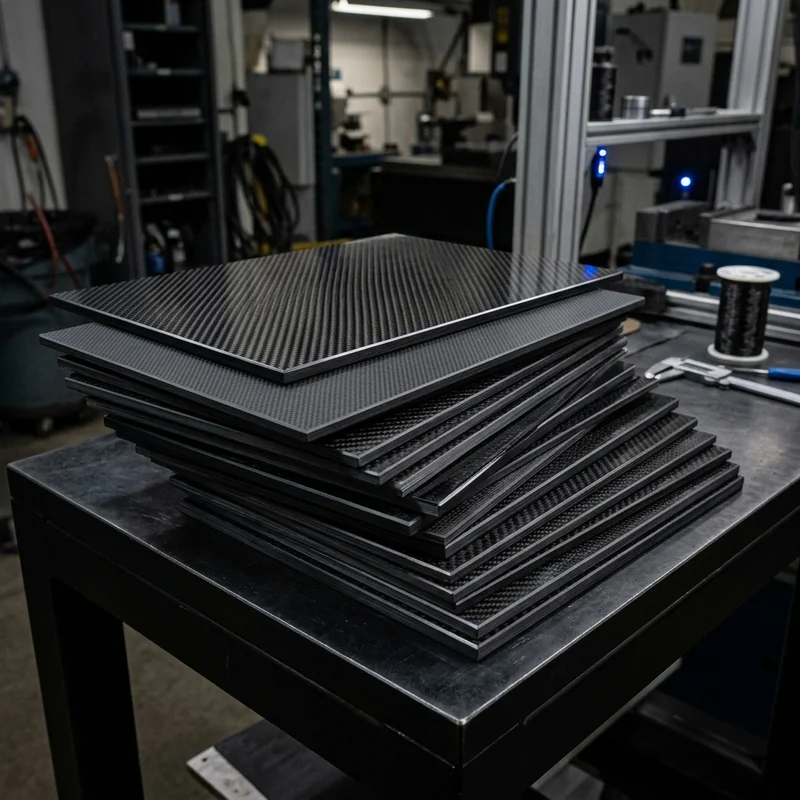
Carbon fiber standard plate-3k stripe
Lightweight, ultra-rigid standard sheets for drone fuselages, robot housings, facades and structural applications.

Carbon Fiber Plate — 3K Twill T700 3.0mm
Medium-thickness 3.0mm carbon fiber plate offering significantly higher load capacity while maintaining attractive 3K twill finish. Suitable for structural brackets, reinforcement plates, and load-bearing panels.

Carbon Fiber Plate — 3K Twill T700 1.5mm
Thin 1.5mm carbon fiber plate with 3K twill weave surface. Lightweight and stiff, commonly used for covers, panels, drone bodies, and applications requiring a premium aesthetic appearance.

Custom Carbon Fiber Medical Device Components
Medical-grade carbon fiber components manufactured for imaging equipment, surgical instruments, and patient support systems. Carbon fiber's radiolucency (X-ray transparency) and high strength-to-weight ratio make it ideal for CT scanner beds, wheelchair frames, surgical robot arms, and MRI-compatible accessories. Biocompatible resin systems available.

Square Carbon Fiber Tube — 3K Twill T700
Square cross-section carbon fiber tube manufactured with 3K twill weave for torsional strength. Preferred for structural frames, trusses, and support columns where rectangular geometry offers design flexibility.