
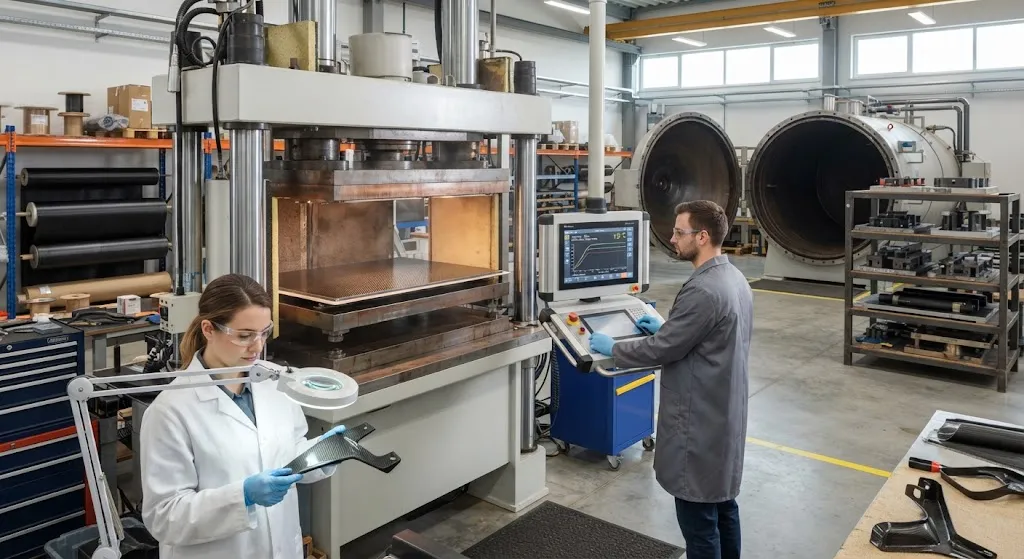
Thermoplastic composites have gained ground in aerospace, automotive, and industrial applications because they offer a fundamentally different processing route than conventional thermosets: instead of a long chemical cure in an autoclave, a thermoplastic part is melted under heat and pr
Introduction
Thermoplastic composites have gained ground in aerospace, automotive, and industrial applications because they offer a fundamentally different processing route than conventional thermosets: instead of a long chemical cure in an autoclave, a thermoplastic part is melted under heat and pressure and solidifies as it cools, in minutes rather than hours. The material that enables this is thermoplastic prepreg — a carbon fiber fabric or unidirectional tape pre-impregnated with a polymer such as polyetheretherketone (PEEK), polyetherketoneketone (PEKK), or polyamide 6 (PA6). The economics of choosing thermoplastic prepreg depend on a detailed cost model that compares press-forming against autoclave curing, because the two routes have very different cost structures.
This article develops a transparent cost model for the two primary manufacturing routes — press-forming (also called compression molding or stamping) and autoclave curing — and shows how part volumes, cycle times, energy, tooling, and material price interact to determine which process is more economical. It is written for procurement managers, manufacturing engineers, and program leads who need to justify a materials and process decision with concrete numbers.
Cost Drivers: The Two Routes Compared
The fundamental difference between the two routes is the shape of their cost curves. Autoclave curing is a batch process with long cycle times and high energy costs per part, but it uses established, low-risk tooling and accepted aerospace certification. Press-forming is a fast, high-throughput process with low cycle cost per part, but it requires expensive matched metal tooling and a capital-intensive press. The cost per part for each route is the sum of several terms:
| Cost Driver | Press-Forming | Autoclave Curing | Impact on Economics |
|---|---|---|---|
| Cycle time per part | 5-30 minutes | 1-4 hours (includes heat-up and cooldown) | Drives throughput; faster cycle lowers per-part labor and capital amortization |
| Energy per part | Low-moderate (electric press, local heating) | High (large heated vessel, long soak) | Autoclave energy cost can be 3-10x higher per part |
| Tooling cost | Expensive (hardened matched metal dies) | Moderate (toughened tooling or composite tooling) | Press tooling $50k-500k+; autoclave tooling lower but still significant |
| Material cost | Higher (thermoplastic prepreg + consolidation allowance) | Wider choice (thermoset or thermoplastic prepreg) | Thermoplastic prepreg typically 1.5-3x thermoset prepreg price |
| Capital equipment | High (hydraulic press, heating/cooling platen) | Very high (autoclave vessel + ancillaries) | Both capital-intensive; utilization drives per-part cost |
| Scrap and waste | Low (flash and trim, outpouching manageable) | Higher (bagging consumables, cure wastage) | Press forming produces less consumable waste per part |
The table makes clear that press-forming wins on cycle time, energy, and consumable waste, while autoclave curing wins on tooling cost. The crossover depends on how many parts are produced against how much tooling cost is amortized — which is ultimately a volume and program-lifetime question.
Building the Per-Part Cost Model
A practical per-part cost model adds four cost components: material, labor, energy, and capital amortization (tooling plus equipment share). Omitting any one of them leads to a misleading comparison. A representative model for a mid-size thermoplastic panel might look as follows, with the caveat that these are illustrative mid-range figures to be replaced with project-specific data:
- Material: Thermoplastic prepreg (e.g., CF/PEEK) at $80-150/kg with a typical fiber volume of 55-60%, compared with thermoset prepreg at $40-80/kg. Material is often the single largest line item, at 40-70% of part cost.
- Labor: Press-forming is more automatable and has shorter cycle time, reducing labor per part; autoclave requires manual layup and bagging for each cycle, so labor scales with the number of plies and cycles.
- Energy: An autoclave heating a large volume of nitrogen over a 2-4 hour cycle uses substantially more energy than a press heating only the part and platens for 5-30 minutes. Energy can be 5-15% of part cost for autoclave and 1-5% for press-forming.
- Capital amortization: Both the press and the autoclave are expensive, so the per-part share depends on utilization. A press that forms one part every 10 minutes at high utilization amortizes its cost across far more parts than an autoclave that processes one batch every few hours.
The model reveals the central rule of thumb: autoclave curing tends to be cheaper in very low volumes (dozens to low-hundreds of parts per year), while press-forming becomes cheaper once volumes exceed a crossover point typically in the low thousands of parts per year, because tooling and capital costs are spread over more parts and the cycle-time and energy advantages compound with volume.
Volume-Dependence and the Crossover Point
The crossover volume is the single most important number in a thermoplastic prepreg cost model. At low volume, the high fixed cost of matched-metal press tooling and the press itself outweigh the per-part savings, so autoclave with its lower tooling cost wins. As volume rises, the fast cycle time and low energy of press-forming dominate. The crossover depends on the specific part, but typical analysis shows:
- Prototype and low-rate (1-200 parts/yr): Autoclave curing is usually more economical because tooling cost is low and only a few parts need to bear it. Material premiums and long cycles matter less at tiny volumes.
- Mid-rate (200-2,000 parts/yr): The crossover typically falls here. As volumes approach the low thousands, press-forming unit cost falls below autoclave because the fast cycle multiplies the number of parts a single workcell can produce.
- High-rate (2,000+ parts/yr): Press-forming is clearly favored for cost, and for automotive-style production it is often the only route that can meet takt time at acceptable cost per part.
Engineers should run the model with the projected program volume and lifetime, not a single nominal rate, because tooling is a one-time investment amortized over the whole program. A program that will never exceed a few hundred parts should not pay for hardened matched-metal tooling; a program scaling toward tens of thousands should not accept autoclave cycle times as a bottleneck.
When Thermoplastic Prepreg Is Worth the Premium
Thermoplastic prepreg costs more per kilogram than thermoset prepreg, so the process economics must justify the material premium. The premiums are recovered when the application benefits from properties that only thermoplastics provide:
- Weldability and joining: Thermoplastics can be induction-welded, resistance-welded, and re-formed, eliminating adhesives and fasteners in assembly and reducing part count and weight.
- Recyclability and reduced scrap: Offcuts and flash can be chopped and reused, and end-of-life parts can be reclaimed — increasingly valuable under circular-economy regulations and aerospace sustainability targets.
- Toughness and impact resistance: PEEK and PEKK matrix systems offer exceptional fracture toughness and damage tolerance compared with many thermosets.
- Fast, scalable processing: Short cycle time supports the production volumes needed for automotive and high-rate aerospace, where an autoclave is a throughput wall.
The decision rule follows from the cost model: choose thermoplastic prepreg with press-forming when volume is high enough that cycle time and energy savings outweigh the material and tooling premium, and when the part or assembly benefits from thermoplastic joining or toughness. For very low volumes or parts that do not need those properties, thermoset with autoclave may remain the lower-cost, lower-risk choice.
Practical Cost-Reduction Levers
Once the model identifies thermoplastic prepreg and press-forming as the right route, several levers reduce the per-part cost further:
- Optimize the laminate for consolidation: Minimizing the number of plies and using out-of-autoclave-consistent consolidation allowances reduces material buy and defects.
- Use film-stacked or powder-impregnated forms where acceptable: Lower-cost intermediate forms can consolidate to similar quality at lower material cost, trading some through-thickness quality for price.
- Design for high press utilization: Scheduling multiple dies or sharing a single press across several part geometries raises utilization and lowers amortized capital.
- Recover and reuse trim and flash: Chopped reclaim can be used for compression-molded inserts, reducing net material cost.
In practice, the biggest lever is often throughput — raising press utilization and shortening cycle time reduces both labor and capital amortization per part, and compounding those savings is what finally tips the balance in favor of thermoplastic press-forming.
Frequently Asked Questions
At what production volume does thermoplastic press-forming become cheaper than autoclave curing?
There is no universal number, but the crossover typically falls in the range of several hundred to a few thousand parts per year for a typical mid-size composite component. Below that range, the expensive matched-metal press tooling and the press's capital cost are not spread over enough parts, so autoclave curing with its lower tooling cost is usually more economical despite longer cycles. Above the crossover, the fast, low-energy press cycle compounds with volume and press-forming wins on per-part cost. The exact point depends on part size, material price, cycle times, and the specific tooling and equipment costs, so it must be calculated with a project-specific model rather than assumed.
Why is thermoplastic prepreg so much more expensive than thermoset prepreg?
Thermoplastic prepreg costs roughly 1.5-3 times more per kilogram than thermoset prepreg for several reasons. The polymer matrices (PEEK, PEKK) are more expensive to manufacture than epoxy, and achieving good fiber impregnation into a highly viscous thermoplastic melt requires specialized, slower processes such as slit-tape or powder coating rather than simple solvent-based coating. Lower production volumes than thermoset also keep unit costs higher. The economics only work when the process premium — faster cycle, weldability, impact toughness, recyclability — is captured in the final part and assembly, or when volume is high enough that the processing savings outweigh the material premium.
Is press-forming limited to simple flat or slightly curved parts?
No, but it favors certain geometries. Press-forming handles moderately complex, shell-like parts with draft angles and shallow features well, and is widely used for aircraft ribs, seat structures, automotive underbody panels, and panels with integral stiffening. Very deep draws, undercuts, and thick sections are harder because they require matched tooling with careful melt-flow control and may force longer cycle times that erode the cost advantage. A design-for-manufacturing review early in the program determines whether a part is press-formable economically, or whether a hybrid approach combining press-formed panels with other joining methods is preferable.
Conclusion
Thermoplastic prepreg and press-forming offer a compelling cost story when the processing advantages are matched to the right production volume. The decisive factor is not material price alone but the full per-part cost model — material, labor, energy, and capital amortization — set against the number of parts a program will produce. For high-rate applications that can exploit fast cycles, low energy, weldability, and recyclability, thermoplastic press-forming beats autoclave curing on unit cost; for very low volumes the lower tooling cost of autoclave still wins. Running the model with realistic program volumes is the fastest way to a defensible decision.
For program teams evaluating thermoplastic prepreg, the right starting point is a structured cost model built on accurate material, tooling, and cycle-time inputs. Explore our carbon fiber prepreg and unidirectional tape options, or contact our technical team for help building a process cost model for your specific part and volume.
Part of topic
Related Articles
- Bio-Based Carbon Fiber Precursors: Lignin and Polyethylene for Low-Cost Production
- Large-Tow Carbon Fiber Cost Analysis: 48K vs 60K Price-Performance Comparison
- Carbon Fiber-Resin Interface Bonding: Surface Treatment and Coupling Agent Optimization
- Digital Twin for Carbon Fiber Manufacturing: Real-Time Process Monitoring and Defect Prevention
- Thermoplastic Carbon Fiber Welding for Automotive: Ultrasonic and Induction Welding Process Windows
- Large-Tow Carbon Fiber Wet Spinning: Process Optimization for 48K/60K Production Efficiency
Interested in Custom Carbon Fiber Products?
Contact our team for competitive pricing and technical specifications.
Get a QuoteRelated Products
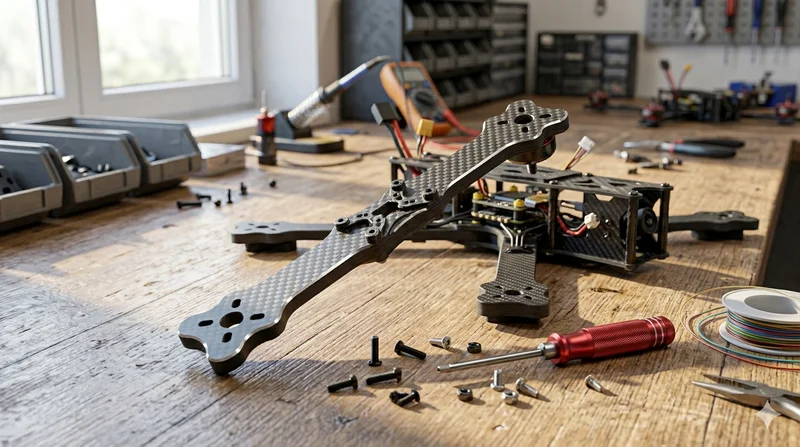
Carbon Fiber Drone Arm
Precision-molded carbon fiber drone arm combining unidirectional fiber for stiffness and woven layers for torsional strength. Designed for FPV, photography, and industrial drone platforms. Each arm is CNC-machined to exact specifications.
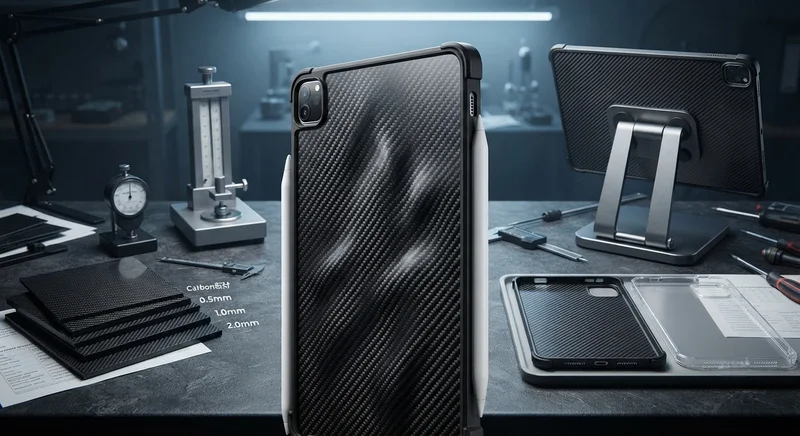
Carbon Fiber Tablet Case — Ultra-Light Protective Shell
Lightweight carbon fiber protective case for tablets and iPads. Molded from T700 3K prepreg with reinforced corner protection. Adds minimal weight while providing superior rigidity and drop protection compared to polycarbonate or silicone cases. Ideal for field workers, enterprise deployments, and professionals requiring durable tablet protection.
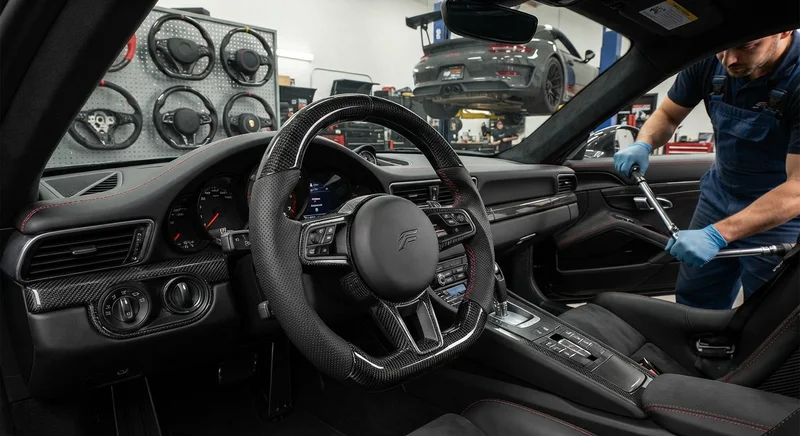
Carbon Fiber Steering Wheel — Custom Leather-Wrapped with CF Inlay
Custom carbon fiber steering wheel with genuine leather wrapping and carbon fiber inlay sections. Molded from T700 3K prepreg for maximum rigidity with a 30% weight reduction over OEM wheels. Available in D-shape (flat bottom) and round profiles. Direct bolt-on fitment for popular sports car and performance vehicle models. Custom stitching color and leather grade available.
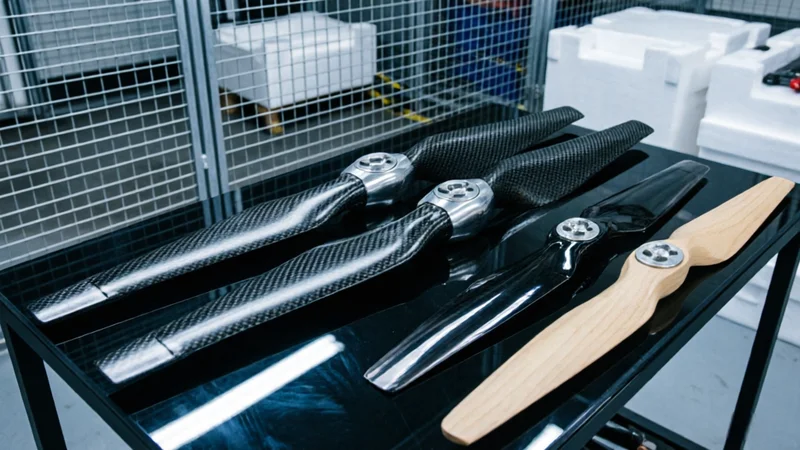
Carbon Fiber Drone Propeller — High-Performance Prepreg Molded
Prepreg-molded carbon fiber propellers for industrial and racing drones. Optimized airfoil design with balanced blade geometry for maximum thrust efficiency. 3-5× stiffer than nylon/plastic props, reducing blade flutter and improving flight stability. Available in common sizes or custom diameter/pitch.