
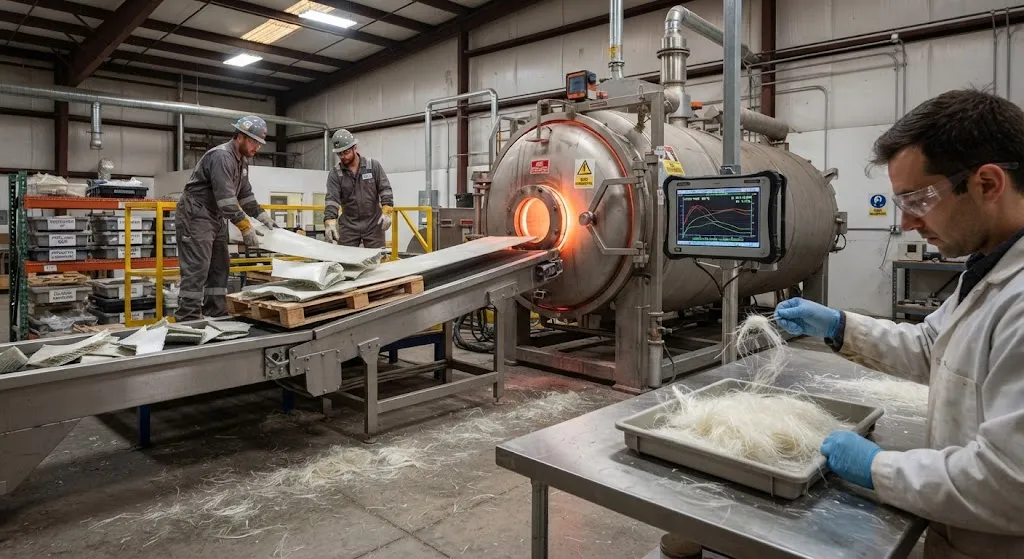
The glass fiber industry has a disposal problem the size of a wind farm. A modern utility-scale blade is between 85 and 95 percent glass fiber reinforcement by weight, embedded in epoxy or polyester resin, and the installed base now reaching end of life was manufactured before recycling
Introduction
The glass fiber industry has a disposal problem the size of a wind farm. A modern utility-scale blade is between 85 and 95 percent glass fiber reinforcement by weight, embedded in epoxy or polyester resin, and the installed base now reaching end of life was manufactured before recycling was a design criterion. Landfill and cement co-processing remain the dominant routes, yet neither recovers the fiber value. Thermolysis changes that calculus: it burns off the organic resin under controlled, oxygen-limited conditions and leaves the glass fiber intact, chemically clean, and free of residual carbon.
The reason this matters is timing. European blade waste is projected to grow sharply through the next decade, and the Netherlands alone hosts several thousand megawatts of offshore turbines whose blades will be decommissioned in the same window. The CIRCLE4WIN project, coordinated by TNO with an industrial consortium, is the closest thing to an answer at industrial scale. Having already produced roughly 60 kilograms of reclaimed glass fiber from two separate blade feedstock sources with no material red flags in characterization, the project is now engineering a demonstrator plant designed for about 10,000 tonnes of blade mass per year — a capacity that could process the entire Prinses Amalia wind farm in a single month.
How Thermolysis Reclaims Glass Fiber
Thermolysis sits in the middle of the composite recycling process matrix. At temperatures of roughly 450-550 degrees Celsius in an inert or partially oxidized atmosphere, the resin matrix depolymerizes into hydrocarbon gases and char while the glass fibers remain solid. Unlike mechanical grinding, which shortens fibers and contaminates the output with resin dust, thermolysis preserves fiber length and removes the organic fraction almost completely. The key acceptance criterion for recycled glass fiber is carbon content on the fiber surface: residual char interferes with fiber-matrix adhesion when the material is reused as reinforcement, and it contaminates glass furnaces if the fiber is remelted.
Two outputs define the value of the process. First, a clean reinforcement-grade rGF that can be sized and recompounded into new laminates for non-critical and semi-structural applications. Second, a resin pyrolysis product stream — oils and gases — that can be combusted to supply the process heat or refined. CIRCLE4WIN has designed its pilot campaign specifically to prove both outputs at the material level: the 60 kilograms produced to date came from two different blade sources, and characterization of both batches reported no red flags in fiber chemistry, residual carbon, or mechanical retention.
The Process Matrix Comparison
Thermolysis competes with four other routes, each with different output quality, energy demands, and maturity. The table below positions thermolysis against the alternatives on the criteria that matter to a blade recycler:
| Route | Fiber output | Resin handling | Fiber length | Energy demand | Maturity |
|---|---|---|---|---|---|
| Mechanical grinding | Powder and short fiber, resin dust | Remains mixed | Millimeters | Low | Commercial |
| Cement kiln co-processing | None (mineral filler) | Combusted as fuel | None | Low (uses kiln heat) | Commercial |
| Fluidized bed | Clean short fiber | Combusted for heat | 5-20 mm | Medium | Demonstration |
| Thermolysis / pyrolysis | Carbon-free rGF | Recovered as oil and gas | 20-100 mm | Medium | Demonstration to commercial |
| Solvolysis | Clean fiber, quality resin | Recovered as monomers | Full tow length | High (solvent) | Research |
The trade-off is visible: thermolysis trades some fiber length for the strongest combination of clean output and process simplicity at industrial throughput. That is exactly the profile a 10,000-tonne plant needs.
Furnace-Ready Inputs and Why Carbon Content Matters
The most ambitious route for reclaimed glass fiber is remelting it in a glass furnace, which would close the loop perfectly — new glass fiber drawn from old blade fiber. Glass furnaces are extremely sensitive to contamination, and carbon in particular creates defects in the molten glass. This is why the carbonate-free, carbon-free specification of CIRCLE4WIN output is not a minor detail; it is the difference between a reinforcement-grade byproduct and a true furnace-ready raw material. E-glass reclaimed from blades has a compatible oxide chemistry, so the technical hurdle is entirely about cleanliness and residual carbon rather than composition.
Until furnace remelting is qualified at scale, the nearer-term market is reinforcement reuse:
- Non-structural composites: pultruded profiles, cable trays, automotive underbody panels, and building panels where modulus-driven design tolerates shorter fiber.
- Thermoplastic compounds: rGF pellets for injection molding, where 20-40 percent recycled content is already accepted in several European automotive programs.
- Construction and infrastructure: geotextiles, drainage, and repair mortar reinforcement, all growing applications for recycled glass fiber.
Each of these markets sets its own price signal, and together they establish a revenue floor that a large-scale thermolysis plant can build its business model on.
In production, quality control of the rGF output follows a defined sequence. Loss-on-ignition testing quantifies residual carbon within hours of each batch, thermogravimetric analysis confirms removal of the organic fraction, and fiber length distribution is measured on samples from every campaign. Reapplication of sizing — a silane-based coating that restores fiber-matrix coupling — is the final step before the material is packed for its targeted market. These controls are what allow recyclers to quote a specification rather than a tendency, which is the difference between a recycled material that competes as a commodity and one that circulates as a niche curiosity.
The 10,000-Tonne Demonstrator
The CIRCLE4WIN demonstrator is sized around a specific, verifiable goal: processing about 10,000 tonnes of blade material per year, which corresponds to roughly one month of operation to consume all blades from the 120-megawatt Prinses Amalia wind farm. That framing is deliberate — it converts an abstract annual capacity into a concrete reference any offshore operator can understand. At that scale the plant economics change qualitatively: fixed costs amortize across far more tonnes, the oil and gas byproduct stream becomes a serious energy input or revenue line, and offtake agreements with fiber compounding companies become bankable.
Feedstock aggregation is the operational challenge. A single wind farm provides several hundred tonnes at demolition, but a plant of this size needs a continuous stream, which means contracting with farm owners, blade manufacturers, and waste processors across a region. The project's further step is standardization: recyclers need consistent blade chemistry and a documented feedstock specification so that output quality does not drift between demobilization campaigns.
Frequently Asked Questions
How strong is thermolysis-reclaimed glass fiber compared to virgin glass fiber?
Characterization data from pilot campaigns typically show tensile strength retention of 60-85 percent of virgin E-glass, with modulus nearly unchanged because modulus is governed by the glass chemistry rather than fiber length or surface state. The loss comes mainly from surface defects and handling damage during the thermolysis and downstream processing steps. For non-structural and semi-structural applications this retention is entirely adequate; for critical load paths, designers usually derate or blend rGF with virgin material.
Why is "carbon-free" specification so important for reclaimed glass fiber?
Residual carbon has two failure modes. In reinforcement reuse, char on the fiber surface weakens fiber-matrix adhesion, reducing composite strength even when the fiber itself is sound. In furnace remelting, carbon creates bubbles and defects in the molten glass, which can ruin a furnace batch costing hundreds of thousands of euros. A carbon-free specification is therefore the single most important quality gate for a thermolysis process targeting both markets.
How does thermolysis compare economically with cement kiln co-processing?
Cement co-processing is cheaper per tonne upfront because it uses existing kiln infrastructure and pays a gate fee, but it destroys the fiber and recovers no material value. Thermolysis requires capital investment in a dedicated plant — the same reason the CIRCLE4WIN demonstrator is a funded scale-up — but it produces a sellable reinforcement and energy products. At the 10,000-tonne scale, modeling by recyclers suggests the material revenue plus lower disposal cost can offset the capital burden over the plant lifetime.
Conclusion
Thermolysis is the process that converts wind turbine blades from a disposal liability into a glass fiber resource. The CIRCLE4WIN results — 60 kilograms of carbon-free reclaimed glass fiber from two independent blade sources, with clean characterization — de-risk the chemistry, while the planned 10,000-tonne demonstrator confronts the real question of scale economics. For composite buyers, the practical takeaway is that recycled reinforcement with documented properties is becoming a quotable, contractable material rather than a research curiosity.
For manufacturers weighing recycled or virgin reinforcement options, browse our carbon and glass fiber fabric range covering both virgin and recycled-input specifications, or contact our engineering team to discuss material qualification for your application.
Related Articles
- Bio-Based Carbon Fiber Precursors: Lignin and Polyethylene for Low-Cost Production
- Large-Tow Carbon Fiber Cost Analysis: 48K vs 60K Price-Performance Comparison
- Carbon Fiber-Resin Interface Bonding: Surface Treatment and Coupling Agent Optimization
- Digital Twin for Carbon Fiber Manufacturing: Real-Time Process Monitoring and Defect Prevention
- Thermoplastic Carbon Fiber Welding for Automotive: Ultrasonic and Induction Welding Process Windows
- Large-Tow Carbon Fiber Wet Spinning: Process Optimization for 48K/60K Production Efficiency
Interested in Our Products?
Contact our team for competitive pricing and technical specifications.
Get a QuoteRelated Products
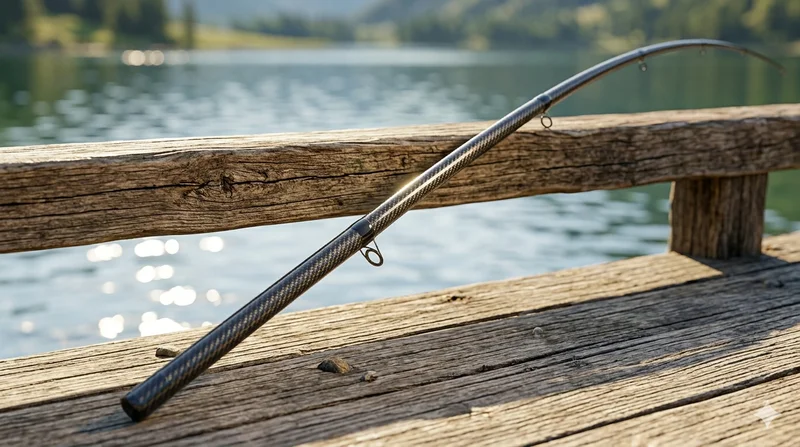
Carbon Fiber Fishing Rod Blank
High-quality carbon fiber fishing rod blank manufactured from multiple grades of Toray carbon fiber cloth. Available in a wide range of lengths, powers, and actions for freshwater and saltwater applications. Suitable for OEM rod building.
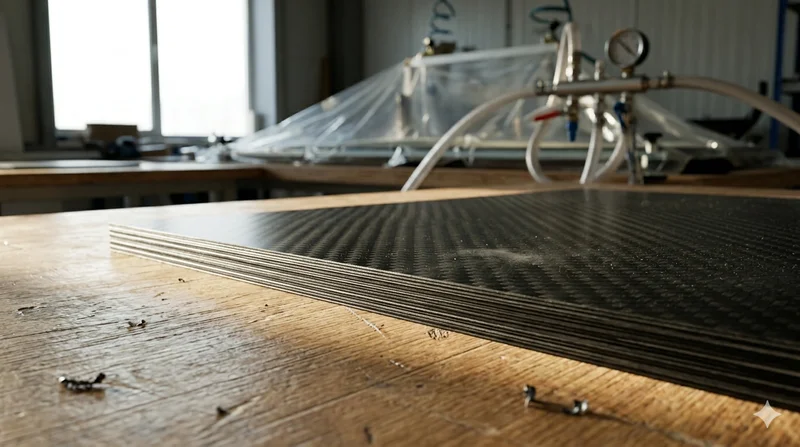
Carbon Fiber Plate — 3K Twill T700 3.0mm
Medium-thickness 3.0mm carbon fiber plate offering significantly higher load capacity while maintaining attractive 3K twill finish. Suitable for structural brackets, reinforcement plates, and load-bearing panels.
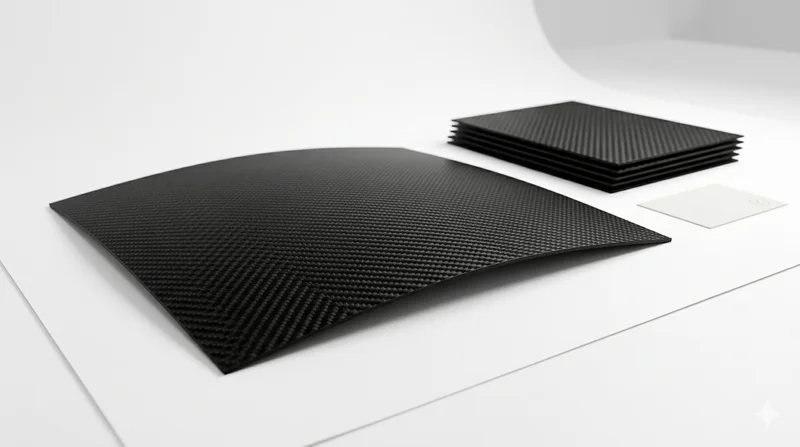
Carbon Fiber Plate — 3K Twill T700 1.5mm
Thin 1.5mm carbon fiber plate with 3K twill weave surface. Lightweight and stiff, commonly used for covers, panels, drone bodies, and applications requiring a premium aesthetic appearance.
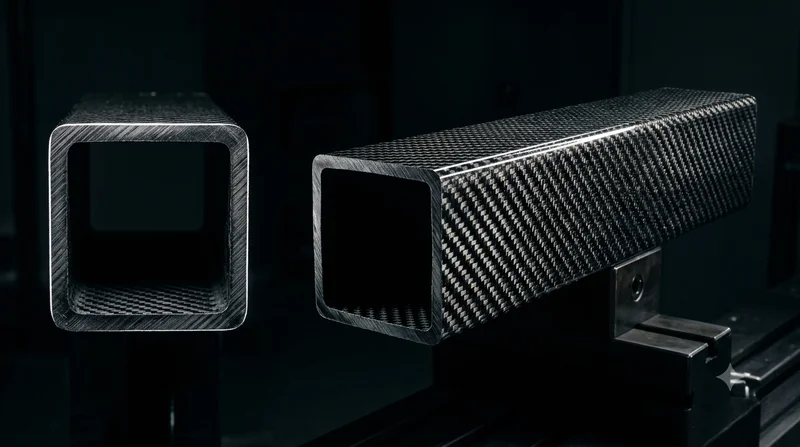
Square Carbon Fiber Tube — 3K Twill T700
Square cross-section carbon fiber tube manufactured with 3K twill weave for torsional strength. Preferred for structural frames, trusses, and support columns where rectangular geometry offers design flexibility.
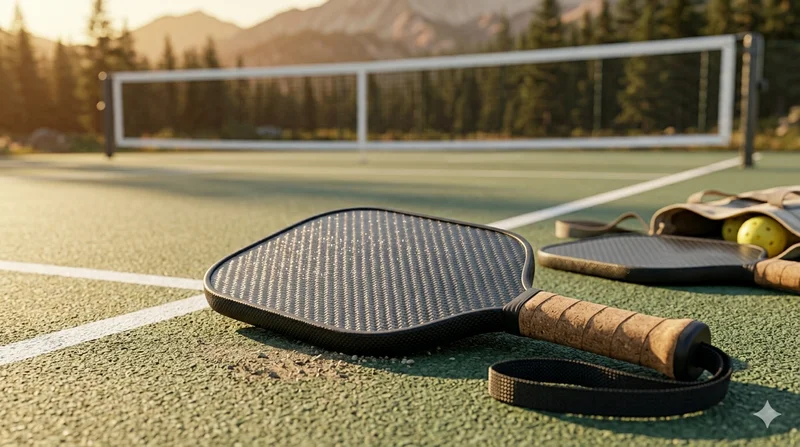
Carbon Fiber Pickleball Paddle
High-performance pickleball paddle with Toray T700 carbon fiber face and polypropylene honeycomb core. Delivers excellent power-to-weight ratio, spin generation, and vibration dampening for competitive play.