
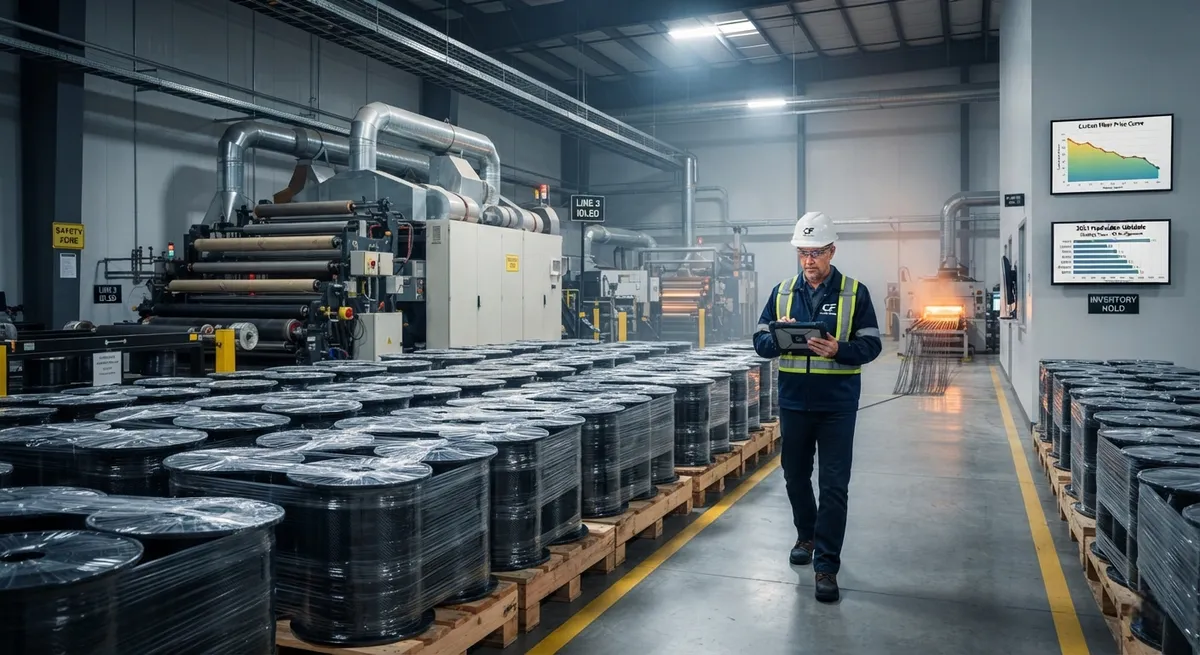
The Western carbon fiber industry is going through its most significant restructuring in a decade. The trigger is well documented in the ATA 2025 annual market report: Chinese operational capacity reached 171,080 tonnes — 52.5% of the global total — and Jilin Chemical Fiber overtook Tor
Introduction
The Western carbon fiber industry is going through its most significant restructuring in a decade. The trigger is well documented in the ATA 2025 annual market report: Chinese operational capacity reached 171,080 tonnes — 52.5% of the global total — and Jilin Chemical Fiber overtook Toray to become the world's largest producer. Faced with abundant commodity supply from China and an aerospace demand recovery that has been slower and shallower than expected, the established Western producers are responding in different ways. Teijin is pausing capacity, Toray is repricing its portfolio, and SGL is exiting parts of the fiber business altogether.
These are not routine operational adjustments. Together they change the geography of supply, the direction of pricing, and the level of risk in aerospace and defense sourcing programs that have depended on Western fiber for decades. This article reviews each company's move, compares them, and draws out the practical implications for buyers and specifiers.
Teijin: A Temporary Shutdown in Greenwood
Teijin Carbon Fibers, the carbon fiber division of Japan's Teijin Group, announced a temporary suspension of production at its Greenwood, South Carolina plant, its main production base in the United States. The company cited two compounding factors: aerospace demand recovering more slowly than planned, and intensifying competition from Chinese producers that has compressed pricing in volume grades. Greenwood supplies carbon fiber into aerospace and industrial markets, and the suspension is designed to align output with order intake while the plant remains available for a restart when demand conditions improve.
The Greenwood move is characteristic of Teijin's position in the market. As one of the world's largest carbon fiber producers, Teijin has anchored its strategy in aerospace-grade fiber, where qualification requirements protect margins but volumes are recovering gradually. A temporary idling lets the company preserve a qualified asset without flooding a market already oversupplied by new Chinese capacity. The key signal for buyers is the word temporary: Teijin is managing the cycle rather than abandoning the business, and aerospace-qualified Teijin fiber remains available through existing contracts and inventory.
Toray: Raising Prices and Shifting the Mix
Toray, the long-time global leader in carbon fiber capacity until being overtaken by Jilin Chemical Fiber in 2025, responded to the same pressures from the pricing side. In January 2026 the company announced price increases of 10-20% across its carbon fiber product portfolio, citing rising energy and raw material costs, and signaled a strategic shift toward higher-value applications. The move is deliberate: rather than defending commodity volumes against lower-cost Chinese competition, Toray is rebalancing its mix toward aerospace, pressure vessels, and other performance-critical segments where its grades, qualification data, and supply reliability command a premium.
The price hike carries a broader message for the market. Toray is effectively communicating that standard-modulus, commodity-grade fiber sold at wind-market prices is no longer an acceptable business line, and that customers wanting Toray's aerospace and specialty grades should expect the premium to widen. For buyers, the practical consequence is that Western fiber is becoming more expensive at the same time that Chinese fiber becomes more available — which makes source qualification decisions more consequential, not less.
SGL Carbon: Exiting PAN Precursor and Closing Plants
SGL Carbon, the German carbon and graphite group, has gone furthest in restructuring: the company is closing carbon fiber production sites in Portugal and the United States and stopping its PAN precursor production. SGL's fiber business had been under sustained pressure from low-cost Asian competition, and the company has chosen to concentrate on its higher-margin businesses in graphite, silicon carbide, and battery materials rather than continue subsidizing commodity fiber production. The closures remove a significant share of Western PAN-based carbon fiber capacity from the market.
SGL's exit is strategically different from Teijin's temporary suspension. Teijin is idling capacity with a view to restart; SGL is permanently removing capacity and upstream precursor capability. The difference matters for supply planning: closed PAN precursor lines are not quickly restarted, and the Western supply base for aerospace and industrial carbon fiber is structurally smaller than it was two years ago. The table below compares the three restructuring moves:
| Company | Action | Primary driver | Supply implication |
|---|---|---|---|
| Teijin | Temporary shutdown, Greenwood SC plant | Slow aerospace recovery, Chinese competition | US capacity idled but restartable; existing contracts honored |
| Toray | 10-20% price increases; mix shift to high-value applications | Rising energy/raw material costs, commodity margin pressure | Western premium grades more expensive; commodity exposure reduced |
| SGL Carbon | Closure of Portugal and US plants; end of PAN precursor production | Sustained losses from low-cost Asian competition | Permanent removal of Western capacity and precursor capability |
What the Restructuring Means for the Supply Chain
Looked at together, the three moves describe a Western industry stepping back from commodity volume and consolidating around high-value niches. The consequences for buyers are concrete:
- Western aerospace fiber is tightening: Permanent closures and idled capacity reduce the pool of qualified Western fiber just as commercial aviation demand slowly recovers. Aerospace programs should reassess inventory levels and dual-source commitments.
- Price direction is now split: Chinese commodity capacity keeps standard-modulus pricing flat or falling, while Western producers push prices up 10-20% on premium grades. The two markets are diverging, not converging.
- Qualification is the real currency: With fewer qualified Western sources, an approved second source becomes a strategic asset. Buyers who qualified Chinese fiber against a Western benchmark have more options than those locked to a single qualified supplier.
- PAN precursor is a bottleneck: SGL's exit from precursor production, on top of earlier capacity decisions, makes precursor a structural constraint for new Western fiber capacity — any future restart or expansion must secure precursor supply first.
- Lead times deserve scrutiny: with permanent closures and idled lines in the market, nominal capacity no longer equals deliverable volume. Buyers should renegotiate lead-time commitments, hold buffer inventory for qualified grades, and lock contract volume earlier than the industry has been used to.
Frequently Asked Questions
Is Teijin's Greenwood shutdown permanent?
No. Teijin has described the suspension as temporary, designed to align production with order intake while aerospace demand recovers. The plant, tooling, and workforce infrastructure remain in place for a restart. The distinction matters: temporary idling preserves qualified capacity and existing supply commitments, whereas SGL's plant closures are permanent removals of capacity from the market.
Will Toray's 10-20% price increase spread to all carbon fiber?
Not uniformly. Toray's increase applies to its own portfolio and is a signal about premium grades — aerospace, pressure vessel, and specialty fiber where performance and qualification command a premium. Commodity standard-modulus grades are under the opposite pressure from Chinese capacity, which keeps prices flat or declining. The realistic outlook is a widening spread: rising prices for qualified high-performance fiber, flat-to-falling prices for interchangeable commodity grades.
How should a buyer respond to Western restructuring?
Diversify qualified sources, secure contract volume early, and treat qualification data as a strategic asset. With Western capacity shrinking and Chinese capacity expanding, the strongest position is a dual-sourced supply chain where the second source is already qualified and tested. Buyers should also review inventory and lead-time assumptions, because permanent closures and idled lines reduce the industry's ability to absorb a sudden demand upturn.
Will restructuring affect lead times and availability of Western fiber?
Yes, and the effect is asymmetric. Commodity standard-modulus fiber remains readily available because Chinese capacity is abundant and expanding. Qualified Western aerospace and specialty grades are the tightening segment: permanent closures remove capacity that will not return, while idled lines such as Teijin's Greenwood plant need several months to restart even when demand justifies it. The practical response is to hold buffer inventory for qualified grades, convert spot purchasing into contract volume, and qualify a second source before it becomes urgent.
Conclusion
The restructuring at Teijin, Toray, and SGL marks the end of an era in which Western producers dominated global carbon fiber supply. Teijin is idling capacity, Toray is repricing toward value, and SGL is exiting fiber entirely — each a different answer to the same structural change: a Chinese industry that now holds a majority of world capacity and a commodity market where volume leadership no longer earns a premium. For buyers, the takeaways are clear: qualified sources are becoming scarcer and more valuable, premium grades are getting more expensive, and dual sourcing is the most effective hedge.
If your program relies on aerospace-grade or specialty carbon fiber, reviewing your qualified source list and qualification pipeline is a worthwhile investment. Browse our carbon fiber and composite material range, or contact our engineering team to discuss fiber grades, certification data, and dual-source qualification planning.
Related Articles
- Carbon Fibre Sheet Supplier UK: Sourcing Options and Specification Checklist
- Carbon Fiber Sheets Near Me Suppliers: Local Stock vs Factory Direct
- Filament Wound Epoxy Tubes: Industry Standards and Compliance Requirements
- Carbon Fiber Dealers Near Me: What a Good Dealer Actually Adds
- Carbon Fiber Supplies Near Me: Local Sourcing Without Compromising Spec
- Carbon Fiber for Sale: Online Platforms and Direct Sales Channel Comparison
Interested in Our Products?
Contact our team for competitive pricing and technical specifications.
Get a QuoteRelated Products

Carbon Fiber Fishing Rod Blank
High-quality carbon fiber fishing rod blank manufactured from multiple grades of Toray carbon fiber cloth. Available in a wide range of lengths, powers, and actions for freshwater and saltwater applications. Suitable for OEM rod building.

Carbon Fiber Plate — 3K Twill T700 1.5mm
Thin 1.5mm carbon fiber plate with 3K twill weave surface. Lightweight and stiff, commonly used for covers, panels, drone bodies, and applications requiring a premium aesthetic appearance.

Carbon Fiber Plate — 3K Twill T700 3.0mm
Medium-thickness 3.0mm carbon fiber plate offering significantly higher load capacity while maintaining attractive 3K twill finish. Suitable for structural brackets, reinforcement plates, and load-bearing panels.
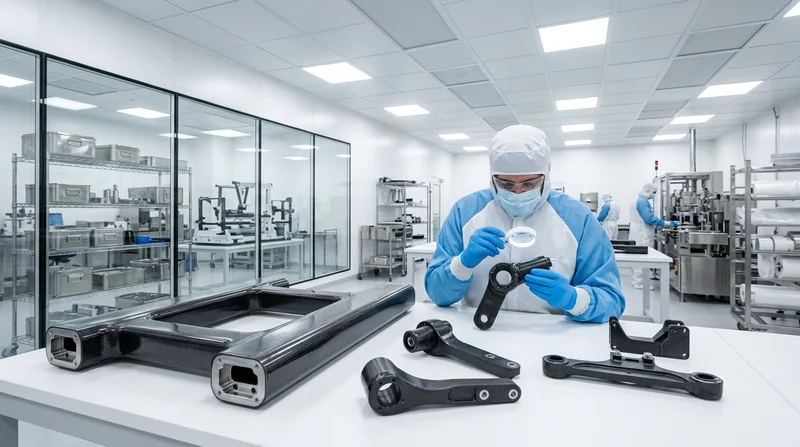
Custom Carbon Fiber Medical Device Components
Medical-grade carbon fiber components manufactured for imaging equipment, surgical instruments, and patient support systems. Carbon fiber's radiolucency (X-ray transparency) and high strength-to-weight ratio make it ideal for CT scanner beds, wheelchair frames, surgical robot arms, and MRI-compatible accessories. Biocompatible resin systems available.

Square Carbon Fiber Tube — 3K Twill T700
Square cross-section carbon fiber tube manufactured with 3K twill weave for torsional strength. Preferred for structural frames, trusses, and support columns where rectangular geometry offers design flexibility.