
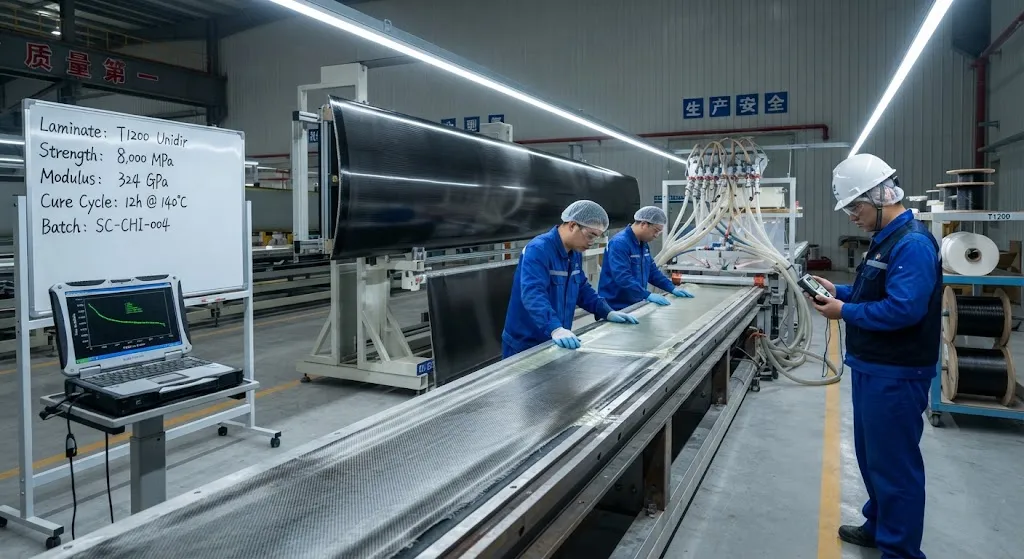
Spar caps are the load-carrying backbone of a wind turbine blade. These long carbon fiber laminates, bonded inside the blade shell on both the pressure and suction sides, take the full bending moment of the blade as it sweeps through the wind. For three decades, that role was filled by
Introduction
Spar caps are the load-carrying backbone of a wind turbine blade. These long carbon fiber laminates, bonded inside the blade shell on both the pressure and suction sides, take the full bending moment of the blade as it sweeps through the wind. For three decades, that role was filled by T700-class fibers, with T800 and T1100 grades appearing in high-performance aircraft parts but rarely in blade production, where cost per gigapascal matters more than peak strength.
The 2026 entries change that balance. Zhongfu Shenying's SYT80, a T1200-class fiber launched globally at Beijing and the Paris JEC in March 2026, entered batch application in spar caps of 4-16 MW offshore blades — the first time T1200-grade fiber has been loaded serially into wind turbines. With wind power consuming roughly 100,000 tonnes of carbon fiber worldwide in 2025 and China supplying the largest share, the engineering question is now practical: what does T1200 strength do for spar cap design, for the fatigue case, and for the cost of carbon per blade? This article works through the numbers.
What T1200-Grade Fiber Brings to the Table
T1200 is the current top of the commercial carbon fiber ladder. Toray announced its T1200 development at the Ehime plant in late 2023 with 8,000 MPa tensile strength and 315 GPa modulus; Zhongfu Shenying's SYT80 meets the same strength class at 8,000 MPa with 324 GPa modulus and an elongation of 2.5 percent, and it has reached hundred-tonne-scale engineering production. The table below compares T1200-class fibers with the grades spar caps have historically used:
| Property | T700-class (baseline) | T800-class | SYT80 (T1200-class) | Toray T1200 (announced) |
|---|---|---|---|---|
| Tensile strength (MPa) | 4,900 | 5,880 | 8,000 | 8,000 |
| Tensile modulus (GPa) | 230 | 294 | 324 | 315 |
| Elongation at break (%) | 2.1 | 2.0 | 2.5 | 2.5 |
| Density (g/cm³) | 1.80 | 1.80 | 1.79 | 1.82 |
| Serial wind production | Decades | Select programs | Batch, 4-16 MW blades | Not in volume production |
Two numbers matter for spar caps. The strength of 8,000 MPa is roughly 63 percent above T700, which converts directly into a higher allowable laminate stress. The modulus of 324 GPa, about 41 percent above T700, stiffens the cap against buckling and deflection. Both gains act on the same laminate weight, so the design question is whether to keep the laminate at current thickness and carry more load, or thin it down and keep the load case — the classic trade a spar cap designer makes.
The Spar Cap Weight Case
In a spar cap, the governing failure mode is compression on the suction side of the blade, where the laminate must resist buckling before fiber strength is reached. Because of this, higher stiffness improves the weight case as much as higher strength does: a stiffer laminate buckles later, allowing fewer plies at the same design envelope. Working with a T1200-class fiber, cap designers can reduce the laminate thickness by 15-25 percent against a T700 baseline while holding the same ultimate load and deflection limits.
The blade-level consequence compounds the laminate saving. A carbon spar cap typically accounts for 20-30 percent of a large blade's structural weight, and every kilogram saved at the cap root reduces the centrifugal and flapwise loads that the blade root bolts, pitch bearings and hub must carry. The cascade is worth more than the cap itself:
- Lighter cap: 10-12 tonnes removed from a 100-meter-class blade using a reduced-thickness T1200 laminate.
- Smaller root joint: the bolt circle and T-bolt count shrink with the reduced root bending moment.
- Lower hub and tower top mass: iterative savings that reduce cost of energy beyond the purchase price of the fiber.
- Better fatigue life: lower operating strain amplitude in the compression plies extends the damage-tolerant design envelope.
For an OEM, the trade is between paying a premium for T1200-class fiber and buying back structural mass elsewhere in the turbine. The accounting only works if the fiber premium per kilogram bought the laminate is offset by the mass that no longer needs to be built, tested and installed — which favors large rotors where savings scale with blade length.
Fatigue Margin Under Real Loading
Fatigue, not static strength, dominates blade design, and this is where T1200-grade fiber shows a subtler advantage. Offshore blades accumulate roughly 10^8-10^9 load cycles over a 25-year design life, with the flapwise bending spectrum concentrated near the blade natural frequency. The fatigue behavior of a spar cap depends on the strain range the laminate sees in each cycle: halving the operating strain roughly multiplies the cycles to failure by an order of magnitude in the S-N relationship.
Because T1200 allows a thinner cap for the same stiffness, the stress in each ply does not simply scale with the strength increase; the designer can choose a lower strain level at the same thickness, trading some of the strength gain for a larger static-to-operating margin. In practical terms, spar caps designed with SYT80-type material can hold operating compressive strain below 0.45 percent while T700 designs typically run at 0.5-0.6 percent. That margin shift moves the fatigue spectrum into a gentler part of the S-N curve, extending the high-cycle damage tolerance that offshore certification requires under IEC 61400 load cases.
The practical beneficiary is the O&M engineer: a deeper fatigue margin means fewer critical locations flagged in certification inspection, wider inspection intervals, and a smaller chance that a repair campaign interrupts turbine availability in the first ten years of operation.
Manufacturing and Qualification Reality
Serial adoption of a new fiber grade in structural blade parts is cautious for good reason. The laminate system — fiber, resin, sizing, and the infusion process on a 40-meter spar cap tool — must requalify together, and defects found late in a blade program are expensive. The SYT80 path shows what the qualification package looks like for a T1200-class entry:
- Standardized test matrix: UD laminate coupons in tension, compression, in-plane shear and open-hole compression, sampled across production batches.
- Combined with classic infusion: the fiber is processed through the same vacuum infusion and blade cure routes already used on T700 caps, avoiding a new resin chemistry.
- Batch traceability: hundred-tonne-scale production means carbonization loops run continuously, giving OEMs statistically meaningful batch-to-batch data instead of lab-scale promise.
- Sub-nanometer defect control: the fiber supplier's molecular-structure control, described as defect control at sub-nanometer scale, narrows the strength scatter that traditionally forces conservative design allowables.
For blade OEMs, the qualification cost is the real gate. The resin system and process stay the same as T700 runs, which removes the most expensive requalification steps, but the coupon and structural laminate test program still takes six to twelve months. That timeline is why the first T1200 blade applications arrived in 4-16 MW classes where the weight savings justify the qualification spend, rather than in commodity rotor sizes.
Frequently Asked Questions
How much blade weight does a T1200-class spar cap actually save?
Against a T700 baseline with the same load and deflection envelope, a T1200-class laminate can be 15-25 percent thinner. On a 100-meter-class blade, where the carbon spar cap weighs on the order of 40-50 tonnes, that translates to roughly 10-12 tonnes removed from the cap itself, before the cascading savings in blade root bolts, hub and tower top structure. The blade-level number depends on the specific rotor and load case, but the laminate-level reduction is the consistent part of the equation.
Is T1200-grade fiber more expensive than T700, and does the weight case pay for it?
Yes, T1200-class fiber carries a premium per kilogram, and the economics only close when the mass savings scale with rotor size. On large offshore blades, the premium on the cap laminate is offset by the structural mass that no longer has to be manufactured, transported and installed. The economics are more favorable at 4-16 MW classes and above; for commodity rotors where blade weight is less critical, T700 remains cost-efficient. Serial production volumes, like the hundred-tonne scale of SYT80, are what keep the price from ballooning to aircraft-grade levels.
What does the higher elongation of T1200-grade fiber mean for spar cap reliability?
The 2.5 percent elongation at break, higher than the 2.0-2.1 percent of T700/T800, means the fiber accommodates more strain before failure, which improves tolerance of handling-induced defects and local load concentrations in the laminate. Combined with the lower operating compressive strain enabled by a stiffer cap, this widens the gap between design loads and ultimate capability — the static margin that certification bodies and operators both value. The practical effect is fewer strain-critical locations and a more forgiving inspection envelope over the blade's design life.
Conclusion
T1200-grade carbon fiber changes the spar cap equation in a way that earlier high-strength grades never did in production: batch-loaded, serial, and qualified inside the wind supply chain. Zhongfu Shenying's SYT80 at 8,000 MPa and 324 GPa has moved T1200-class material from fiber catalogues into 4-16 MW blade spar caps, and the design levers it opens — a 15-25 percent thinner laminate, a larger fatigue margin, and cascading mass savings through the root joint and tower — are exactly the levers offshore OEMs are pushing to cut cost of energy.
For blade designers and procurement teams evaluating the switch, the qualification package is straightforward because the resin and infusion process do not change; the decision rests on rotor size, load case and fiber pricing. Explore our high-modulus carbon fiber profiles for spar cap and structural applications, or contact our engineering team to discuss laminate design support for your next offshore blade program.
Part of topic
Related Articles
- Bio-Based Carbon Fiber Precursors: Lignin and Polyethylene for Low-Cost Production
- Large-Tow Carbon Fiber Cost Analysis: 48K vs 60K Price-Performance Comparison
- Carbon Fiber-Resin Interface Bonding: Surface Treatment and Coupling Agent Optimization
- Digital Twin for Carbon Fiber Manufacturing: Real-Time Process Monitoring and Defect Prevention
- Thermoplastic Carbon Fiber Welding for Automotive: Ultrasonic and Induction Welding Process Windows
- Large-Tow Carbon Fiber Wet Spinning: Process Optimization for 48K/60K Production Efficiency
Interested in Our Products?
Contact our team for competitive pricing and technical specifications.
Get a QuoteRelated Products
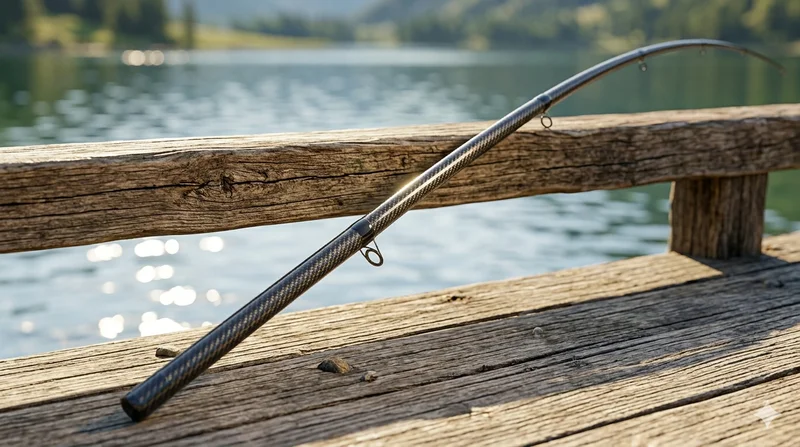
Carbon Fiber Fishing Rod Blank
High-quality carbon fiber fishing rod blank manufactured from multiple grades of Toray carbon fiber cloth. Available in a wide range of lengths, powers, and actions for freshwater and saltwater applications. Suitable for OEM rod building.

Carbon Fiber Plate — 3K Twill T700 3.0mm
Medium-thickness 3.0mm carbon fiber plate offering significantly higher load capacity while maintaining attractive 3K twill finish. Suitable for structural brackets, reinforcement plates, and load-bearing panels.

Carbon Fiber Plate — 3K Twill T700 1.5mm
Thin 1.5mm carbon fiber plate with 3K twill weave surface. Lightweight and stiff, commonly used for covers, panels, drone bodies, and applications requiring a premium aesthetic appearance.

Square Carbon Fiber Tube — 3K Twill T700
Square cross-section carbon fiber tube manufactured with 3K twill weave for torsional strength. Preferred for structural frames, trusses, and support columns where rectangular geometry offers design flexibility.
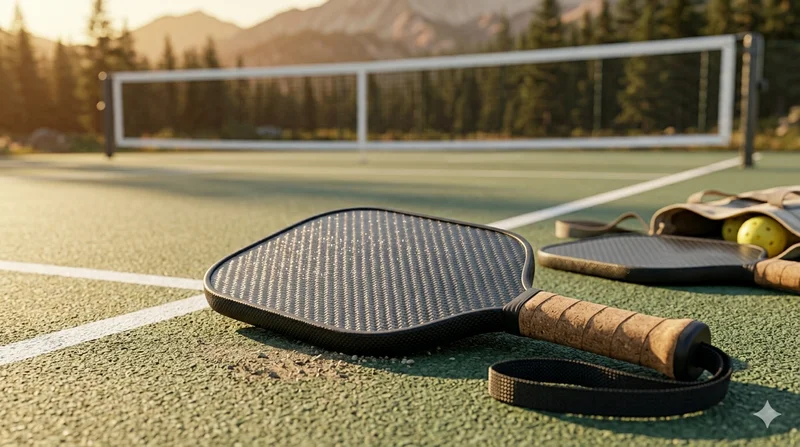
Carbon Fiber Pickleball Paddle
High-performance pickleball paddle with Toray T700 carbon fiber face and polypropylene honeycomb core. Delivers excellent power-to-weight ratio, spin generation, and vibration dampening for competitive play.