
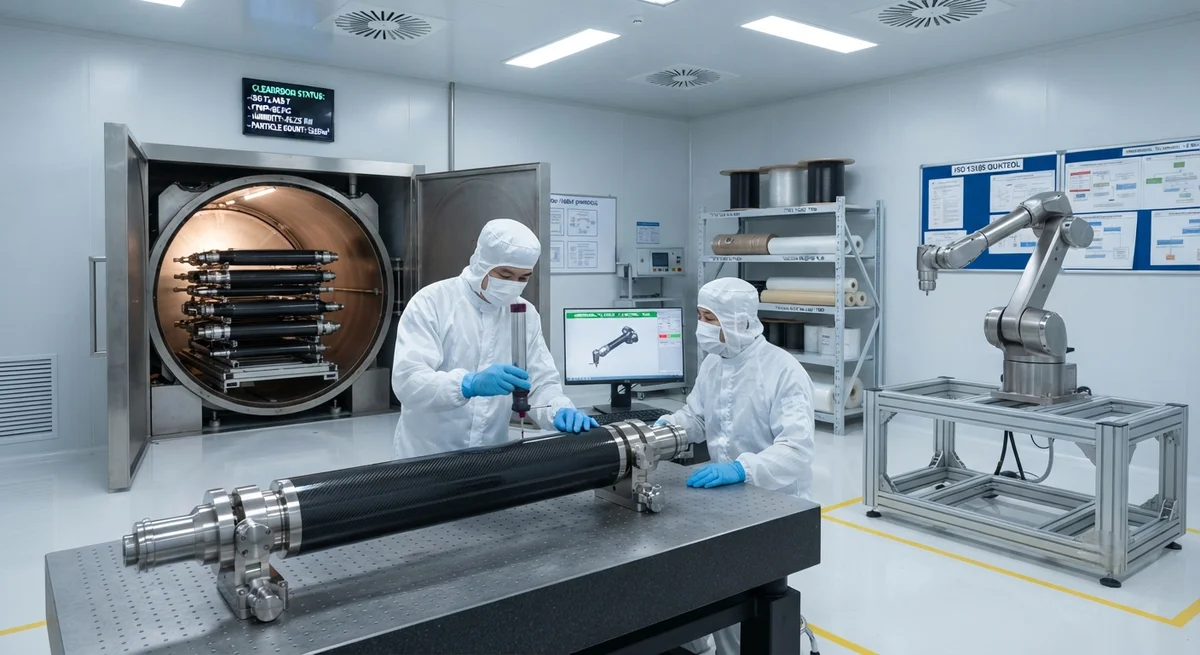
Surgical robots demand materials that combine extreme precision, repeated sterilization tolerance, and lightweight strength. This article examines carbon fiber composite components in robotic surgical systems — arm segments, end-effector mounts, and instrument guides — comparing material properties against aluminum and stainless steel alternatives. We analyze autoclave sterilization cycles, radiation resistance, and the specific CFRP grades that meet ISO 13485 and FDA requirements for Class II and Class III medical devices.
The Unique Material Demands of Surgical Robotics
The global surgical robotics market reached $9.8 billion in 2025 and is projected to grow at 17.3% CAGR through 2032 according to Grand View Research. This rapid expansion places unprecedented demands on component material suppliers. Surgical robot arms must articulate loads of 5-15 kg with positional repeatability under 0.1 mm while being subjected to repeated sterilization cycles that degrade conventional metals within months of clinical use.
Carbon fiber reinforced polymer (CFRP) composites offer a unique combination of properties that address these demands simultaneously. Unlike aluminum 7075-T6, which has been the traditional material of choice for robotic arm segments, CFRP provides a 45-55% weight reduction for equivalent structural stiffness. For a six-axis surgical robot with a total arm mass of 12-18 kg, switching to CFRP arm segments reduces the moving mass to 6-9 kg — a difference that enables smaller, more agile base actuators and improved patient-side positioning accuracy measured in sub-millimeter increments.
Material Comparison: CFRP vs. Metals
The selection of structural materials for surgical robot components involves several competing requirements: specific stiffness, fatigue resistance, sterilization tolerance, and machining precision.
| Property | CFRP (T700/Epoxy) | Aluminum 7075-T6 | Stainless 316L |
|---|---|---|---|
| Density (g/cm³) | 1.55-1.60 | 2.81 | 7.98 |
| Tensile modulus (GPa) | 125-145 | 71.7 | 193 |
| Specific stiffness (GPa/(g/cm³)) | 78-93 | 25.5 | 24.2 |
| Fatigue endurance (% of UTS) | 60-70% | 25-35% | 40-50% |
| Autoclave cycle tolerance | 500-1000+ cycles | 200-400 cycles | 500-800 cycles |
| CTE (ppm/°C) | -0.5 to 1.0 | 23.1 | 16.5 |
| Machining tolerance (μm) | ±10-25 | ±5-10 | ±5-10 |
The specific stiffness advantage of CFRP — 78-93 GPa/(g/cm³) versus 25.5 for aluminum and 24.2 for stainless steel — is the single most important metric for surgical robot arm design. Higher specific stiffness means the arm experiences less deflection under load, translating directly to better positional accuracy at the instrument tip without increasing mass. CFRP also offers near-zero thermal expansion, critical for maintaining calibration during lengthy surgical procedures where operating room temperatures may fluctuate.
Sterilization Compatibility
Surgical robot components must endure repeated sterilization without degradation of mechanical properties or surface finish. Three primary sterilization methods are used in operating environments, and CFRP has unique interactions with each:
- Steam autoclave (121-134°C, 15-30 min): Standard medical-grade epoxy resin systems absorb 0.3-0.8% moisture per cycle, which can plasticize the matrix and reduce glass transition temperature by 10-15°C over 500 cycles. Bismaleimide (BMI) resin systems provide superior moisture resistance, with less than 0.2% moisture absorption and Tg retention above 280°C after 1000 cycles. Toray 3900-2B and Hexcel M21 are two commercially available BMI prepreg systems validated for surgical instrument applications.
- Ethylene oxide (EtO) gas sterilization: CFRP components are fully compatible with EtO sterilization protocols at 37-63°C. The low-temperature process does not approach the Tg of standard epoxy or BMI systems. However, the vacuum-purge cycle required for EtO must be factored into laminate design to prevent micro-cracking in thick-walled sections.
- Gamma radiation (25-50 kGy): Standard epoxy systems undergo chain scission at doses above 25 kGy, losing 10-20% of flexural strength after cumulative doses of 100 kGy. Radiation-resistant epoxy formulations, such as those used in aerospace wiring insulation, can withstand cumulative doses up to 500 kGy with less than 5% strength degradation, making them strongly recommended for components expected to undergo 500+ sterilization cycles.
Precision Machining and Regulatory Pathway
The machining tolerances required for surgical robot components — typically ±10-25 μm for mating surfaces and ±50 μm for general dimensions — are achievable with CFRP when proper tooling and process parameters are employed. Diamond-coated polycrystalline diamond (PCD) tooling achieves 500-1000 meters of useful cut length versus 10-20 meters for carbide tools, with consistent dimensional accuracy across production runs. Feed rates of 0.05-0.15 mm/rev at spindle speeds of 10,000-20,000 RPM minimize delamination at hole exits. Surface finish of Ra 0.4-0.8 μm is achievable with PCD tools, meeting the requirements for sliding interfaces with surgical instrument guides.
Regulatory classification follows a tiered approach: Class I (instrument guides, positioning aids) requires general controls and ISO 10993-5/10/11 biocompatibility testing without 510(k) submission unless novel features are present. Class II (instrument holders, end-effector interfaces) requires special controls per ASTM F3069-14 including sterilization validation per ANSI/AAMI/ISO 17664, and a 510(k) premarket notification referencing predicate devices with similar material composition. Class III (implantable components, tissue-contacting devices) requires full Premarket Approval (PMA) including 10-million-cycle mechanical fatigue testing and clinical data demonstrating long-term stability.
Supply Chain and Cost Analysis
For B2B buyers evaluating CFRP surgical robot components, the total cost of ownership compares favorably with metal alternatives when full lifecycle costs are considered:
| Cost Factor | CFRP Arm Segment | Aluminum 7075 | Stainless 316L |
|---|---|---|---|
| Unit cost (500-unit batch) | $1,200-1,800 | $850-1,200 | $1,100-1,600 |
| Weight per arm segment (kg) | 0.8-1.2 | 1.6-2.2 | 4.2-5.8 |
| Sterilization life (cycles before replacement) | 800-1200 | 200-400 | 500-800 |
| Replacement cost per 1000 cycles | $1,800-2,700 | $2,550-4,800 | $2,200-3,200 |
While CFRP carries a 30-50% unit cost premium over aluminum, the 3-4x longer sterilization life and reduced downtime make CFRP cost-neutral within 12-18 months of clinical use. For robotic systems with 5-7 arms per unit, total lifecycle savings can reach $15,000-25,000 per system over a 5-year operating period.
Frequently Asked Questions
Can carbon fiber surgical robot arms be repaired if damaged?
CFRP structural components can be repaired using bonded patch techniques developed by the aerospace industry. Damage is assessed in three zones: Zone 1 (cosmetic surface damage, no fiber breakage) can be repaired by cleaning and recoating with medical-grade epoxy. Zone 2 (minor fiber breakage affecting less than 10% of the cross-section) can be repaired using a scarf patch with vacuum-bag consolidation, restoring 85-95% of original strength. Zone 3 (structural damage over 10% of the cross-section) typically requires full replacement. The cost of a bonded patch repair is typically 15-25% of a replacement component but must be validated per the manufacturer's quality protocols.
What CFRP specifications should my RFQ include for surgical robot arms?
A well-structured RFQ should specify: fiber type T700S 12K or IM7 12K intermediate modulus, BMI resin system for high sterilization tolerance, fiber volume fraction 60-65%, quasi-isotropic [0/±45/90]s ply orientation with tailored 0° plies along the primary load axis, surface finish Ra ≤ 0.8 μm for mating surfaces, minimum 500 autoclave cycles validation at 134°C, ISO 10993-5 and 10993-10 biocompatibility test reports, and ultrasonic C-scan NDT per ASTM E2580. These specifications ensure accurate cost comparison between bidders.
How does CFRP conductivity affect MRI or electrosurgical environments?
Carbon fiber is approximately 10,000 times more conductive than epoxy resin. However, CFRP's diamagnetic susceptibility (-6.0×10⁻⁶ SI for PAN-based fiber) is substantially lower than stainless steel's paramagnetic susceptibility (1.0-4.0×10⁻³ SI), producing significantly less MRI field distortion at equivalent mass. For electrosurgical environments, an insulating dielectric layer of 0.2-0.5 mm polyimide film at patient-contacting interfaces provides safe electrical isolation between the CFRP component and the patient circuit path.
Part of topic
Related Articles
- Recycled Carbon Fiber Market Forecast 2030: Technology Maturity and Commercialization Path
- South Korea Carbon Fiber Market 2026: Hydrogen Economy and Shipbuilding Innovation
- Wind Turbine Blade Leading Edge Protection 2026: Polyurethane, Tape, and Metallic Shield Solutions
- China Carbon Fiber Overcapacity 2026: Price War Impact and Industry Consolidation
- India Carbon Fiber Market 2026: Wind Energy, Aerospace, and Defense Expansion
- PAN Precursor Market 2026: Acrylonitrile Supply and Carbon Fiber Cost Structure
Interested in Our Products?
Contact our team for competitive pricing and technical specifications.
Get a QuoteRelated Products
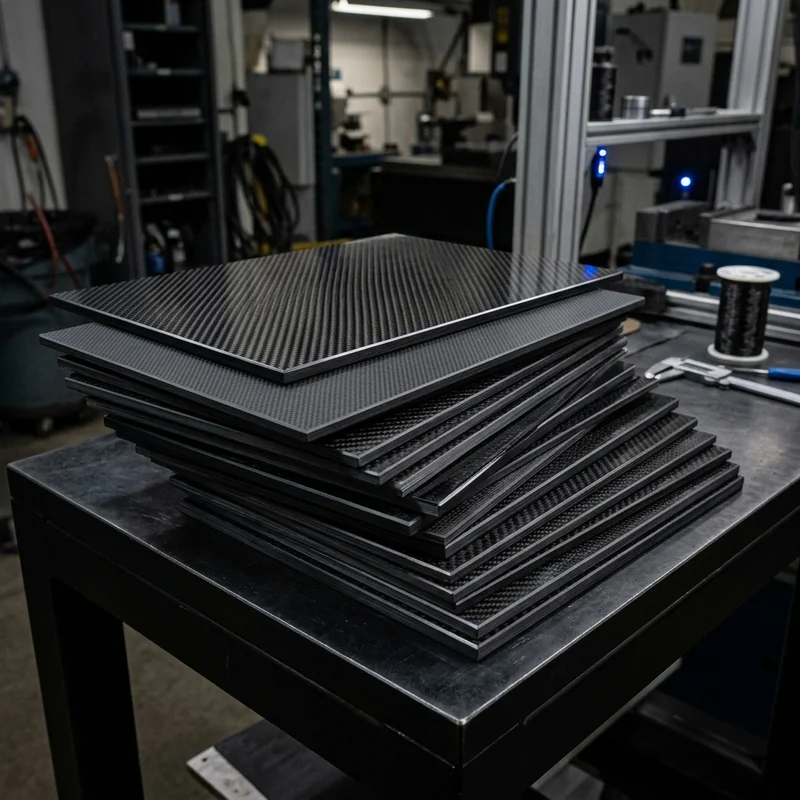
Carbon fiber standard plate-3k stripe
Lightweight, ultra-rigid standard sheets for drone fuselages, robot housings, facades and structural applications.

Carbon Fiber Plate — 3K Twill T700 3.0mm
Medium-thickness 3.0mm carbon fiber plate offering significantly higher load capacity while maintaining attractive 3K twill finish. Suitable for structural brackets, reinforcement plates, and load-bearing panels.

Carbon Fiber Plate — 3K Twill T700 1.5mm
Thin 1.5mm carbon fiber plate with 3K twill weave surface. Lightweight and stiff, commonly used for covers, panels, drone bodies, and applications requiring a premium aesthetic appearance.
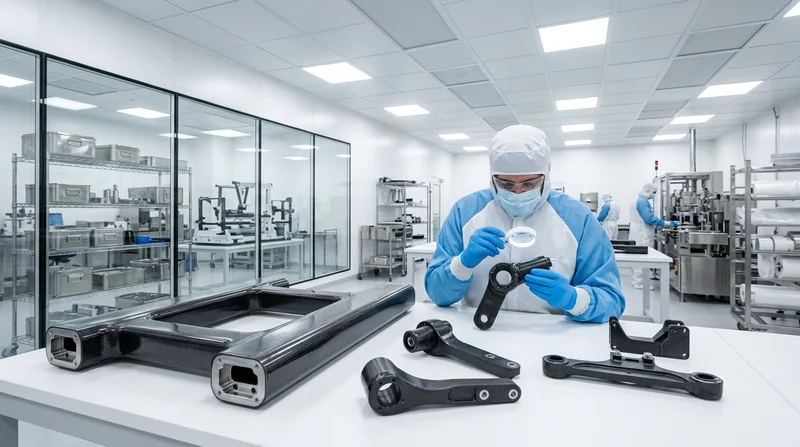
Custom Carbon Fiber Medical Device Components
Medical-grade carbon fiber components manufactured for imaging equipment, surgical instruments, and patient support systems. Carbon fiber's radiolucency (X-ray transparency) and high strength-to-weight ratio make it ideal for CT scanner beds, wheelchair frames, surgical robot arms, and MRI-compatible accessories. Biocompatible resin systems available.

Square Carbon Fiber Tube — 3K Twill T700
Square cross-section carbon fiber tube manufactured with 3K twill weave for torsional strength. Preferred for structural frames, trusses, and support columns where rectangular geometry offers design flexibility.