
Class-A is the automotive industry's shorthand for a surface good enough for the showroom: no visible waviness, no orange peel, perfect gloss and distinctness of image. Steel, aluminum, and thermoset panels have all met that bar for decades; carbon fiber panels must meet it too, but car
Introduction
Class-A is the automotive industry's shorthand for a surface good enough for the showroom: no visible waviness, no orange peel, perfect gloss and distinctness of image. Steel, aluminum, and thermoset panels have all met that bar for decades; carbon fiber panels must meet it too, but carbon brings a second question that metal never asks: should the weave be seen? An exposed carbon exterior panel is a deliberate aesthetic — visible twill weave sealed under clear coat — while a painted carbon panel is a structural decision wearing a paint-shop disguise. The two routes share the same composite core and diverge almost completely in surface engineering.
This article explains what Class-A means in measured terms, why exposed carbon finish is so much harder than it looks, where painted composite buys process margin, and which process options — autoclave prepreg, resin transfer molding, out-of-autoclave — serve each finish. For suppliers and buyers, the finish choice determines not only the look of the car but the yield, the rework load, and the cost structure of the panel line.
What Class-A Actually Measures
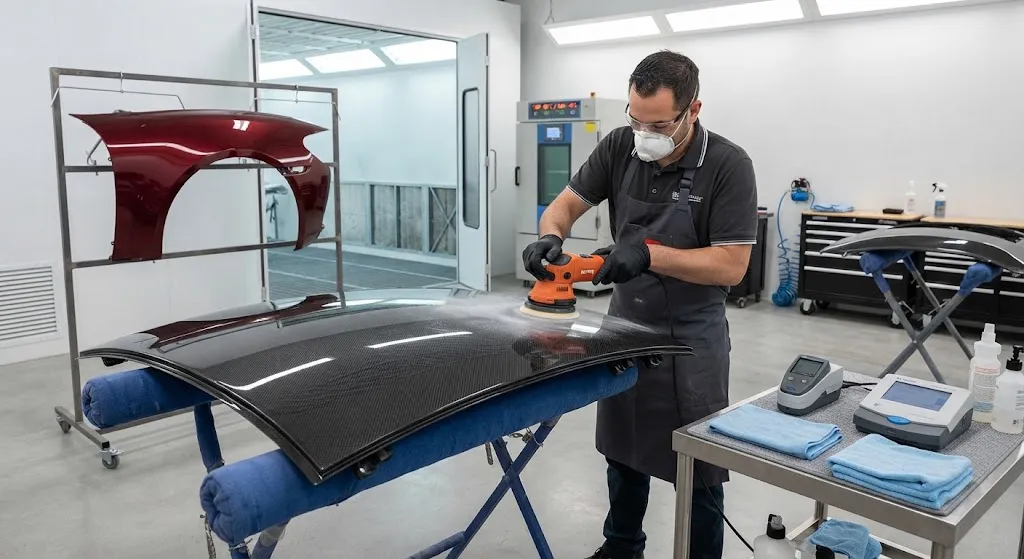
Class-A surface quality is quantified, not felt. The automotive standard checklist runs on three instruments: a gloss meter, which measures specular reflection in gloss units; a wave-scan instrument, which separates long-wavelength waviness from short-wavelength orange peel; and a distinctness-of-image measurement, which captures how sharply a reflection stays defined on the surface. Typical automotive acceptance targets sit at or above 90 gloss units at a 60-degree angle, with DOI values above 85-90 and waviness readings inside paint-shop windows — targets originally calibrated on steel panels with modern paint systems.
Carbon fiber panels start with two disadvantages. The cured composite surface is never as smooth as a steel panel because the resin-rich surface layer is thin relative to the tool, and the panel flexes differently during handling and curing. The finish process then has to carry the composite surface up to the paint-shop bar, through multiple primer, sand, and topcoat stages, or through a clear-coat system engineered for exposed weave. Every stage that fails shows up as a reject at the gloss meter — and exposed carbon has no paint to hide behind.
Exposed Carbon Weave: The Physics of Print-Through
Exposed carbon is the authentic look: a twill or plain-weave surface ply, usually 1K or 3K fabric for visual resolution, laid up wet or as prepreg, cured, and sealed with a UV-stable clear coat. The engineering challenge is that the weave never stays flat. Fiber bundles sit below a thin resin-rich layer, and the cured resin expands and contracts with temperature at a different rate than the fiber. Over thermal cycles — sun, brakes, engine heat — the differential movement telegraphs the weave pattern through the surface. Print-through, as it is called, turns a showroom-perfect panel into a visibly wavy one within weeks of real use if the resin system shrinks too much or the surface layer is too thin.
Manufacturers fight print-through with a layered strategy. Moderately low cure temperatures limit resin shrinkage; high-Tg systems keep the surface stiff against dimpling; a non-woven veil ply or a co-cured film can sit directly below the clear coat to decouple the weave from the surface; and the clear coat itself is carefully formulated to cure with minimal shrinkage. Pinholes are the second enemy — micro-porosity in the surface resin that opens during cure. They are prevented at the layup stage, by vacuum consolidation, and at the process stage, by autoclave pressure of 6-7 bar that crushes residual voids before the resin gels. Edge and trim details matter equally: cut edges expose fiber and spoil the silhouette, so prepreg edges are knife-trimmed and capped before final coat. Brands like Pagani and Koenigsegg built their identity on getting this chain right; the same physics explains why the visible-weave exterior is offered as a premium option by McLaren, Lamborghini, and Ferrari rather than a default.
Painted Composite: Process Forgiveness for Hire
Painted composite exterior panels keep the weight saving and donate the surface problem to the paint shop. The panel is molded to a nominal surface, then a primer-surfacer fills the residual waviness, the sanding stages flatten it, and the topcoat delivers the gloss. Primers are formulated to sanded to flatness at tolerances the composite surface cannot reach unassisted, which means the painted route tolerates slightly lower molding quality — the part can be produced on faster, lower-pressure processes and still finish Class-A.
Resin transfer molding with a high-gloss gel coat on the tool face is the fast route for painted Class-A panels: injection cycles of minutes, mold-surface finish transferred directly to the part, and only light sanding plus clear coat needed afterwards. For lower volumes, prepreg and autoclave still produce the panel before paint. The trade is weight and texture: a complete automotive paint system adds roughly 3-6 kilograms across a body-in-white, whereas a clear coat over exposed weave adds a fraction of that, and the painted panel loses the weave aesthetic that some buyers specifically want — the exposed roof, the rear deck, the aero blade that stay bare.
Exposed vs Painted: The Decision Table
| Property | Exposed Carbon Weave | Painted Composite |
|---|---|---|
| Surface prep labor per panel | High, clear-coat chain | Moderate, primer-surfacer plus paint |
| Reject rate drivers | Pinholes, print-through, weave read-out | Pinholes much less visible under paint |
| UV durability | Clear coat grade critical | Standard automotive paint systems |
| Repair | Difficult, weave must match | Standard refinishing practice |
| Added weight per vehicle | 0.5-1.5 kg clear-coat system | 3-6 kg full paint system |
| Customer premium | USD 10-25k visible-weave options | None, standard finish |
| Process flexibility | Autoclave prepreg strongly preferred | RTM, out-of-autoclave, compression molding viable |
The premium numbers explain the strategy: visible weave is a selling feature that carries its own margin, and the process cost of achieving it is recovered in the option price. Painted composite is the rational default for volume, for repairability, and for programs where the exterior must read as a solid color.
Process Options and Quality Gates
Process choice tracks finish choice. Exposed carbon panels favor autoclave prepreg — 6-7 bar consolidation, controlled heating ramp, and full part certification — because the visible surface tolerates no porosity. Painted panels can step down to resin transfer molding with gel coat or to out-of-autoclave prepreg, which keeps cycle cost low without compromising the finished surface. Compression molding handles inner panels and hidden structures where Class-A never reaches.
- Pinhole control: vacuum-consolidated layups and autoclave pressure keep surface porosity below certified limits.
- Surface metrology: gloss above 90 GU and DOI above 85 measured on every painted or clear-coated panel.
- Thermal cycling: panels pass repeated hot-cold cycles before approval to expose print-through early.
- Ultrasonic inspection: porosity and delamination checks before the panel reaches surface finishing.
- Edge closure: knife-trimmed, capped edges on exposed structures so no fiber trail spoils the silhouette.
The quality gates are where brands earn their reputations: a Class-A exposed panel that survives thermal cycling is a process achievement, not an accident.
Frequently Asked Questions
Why does exposed carbon develop a wavy weave pattern over time?
The weave readout, usually called fiber print-through, comes from differential thermal expansion between the fiber bundles and the resin-rich surface layer above them. When the panel heats and cools in use, the resin layer expands and contracts more than the fiber, and over cycles the pattern of the weave telegraphs through the clear coat. Mitigations are a moderately low cure temperature to limit resin shrinkage, a veil or film layer between weave and surface, a high-Tg resin system, and a clear coat formulated for minimal cure shrinkage.
Can resin transfer molding produce exposed Class-A carbon?
It can, but it is harder than prepreg in an autoclave. RTM relies on the tool surface for finish and cycle speed, and the exposed weave needs porosity-free surface quality that infusion processes struggle to guarantee without autoclave pressure. RTM with a high-gloss gel coat is an established route for painted Class-A panels; for visible weave, most manufacturers prefer autoclave prepreg and accept the longer cycle for the surface certainty.
Is exposed carbon actually stronger, or purely cosmetic?
Purely cosmetic in finish, but the finish decision influences the engineering. The visible-weave surface ply is usually a light 1K or 3K fabric that adds little strength; the structural laminate sits below it. Paint adds mass without adding stiffness, which is why weight-conscious builds favor exposed carbon. The strength story is the same for both finishes — the difference is mass, repairability, and the aesthetic premium, not mechanical capability.
Conclusion
The Class-A decision for supercar exteriors is a discipline test more than a material test. Exposed carbon weave demands porosity-free molding, print-through engineering, and a clear-coat chain capable of matching the gloss of a painted panel — and it charges USD 10-25k for the privilege. Painted composite trades the aesthetic for process margin: faster molding, easier repair, standard paint systems, and the weight of a full paint job. Both routes meet the same metrology bar; they diverge in cost structure, in yield, and in what the buyer sees in the showroom.
For programs weighing exterior finish strategy, the composite core is the common foundation. Explore our carbon fiber fabrics and prepreg materials, or contact our engineering team to qualify molding and surface systems for your panel program.
Part of topic
Related Articles
- Carbon Fiber Plate Amazon: Complete Guide
- Carbon Fiber And PU Case: Complete Guide
- Carbon Fiber Parts For Cars: Complete Guide
- Carbon Fiber Manufacturing Companies: Complete Guide
- Carbon Fiber Parts Manufacturing: Complete Guide
- Carbon Fiber Sheets for Sale: A Buyer Checklist for Thickness, Weave and Finish
Interested in Our Products?
Contact our team for competitive pricing and technical specifications.
Get a QuoteRelated Products

Carbon Fiber Plate — 3K Twill T700 3.0mm
Medium-thickness 3.0mm carbon fiber plate offering significantly higher load capacity while maintaining attractive 3K twill finish. Suitable for structural brackets, reinforcement plates, and load-bearing panels.

Carbon Fiber Plate — 3K Twill T700 1.5mm
Thin 1.5mm carbon fiber plate with 3K twill weave surface. Lightweight and stiff, commonly used for covers, panels, drone bodies, and applications requiring a premium aesthetic appearance.

Square Carbon Fiber Tube — 3K Twill T700
Square cross-section carbon fiber tube manufactured with 3K twill weave for torsional strength. Preferred for structural frames, trusses, and support columns where rectangular geometry offers design flexibility.
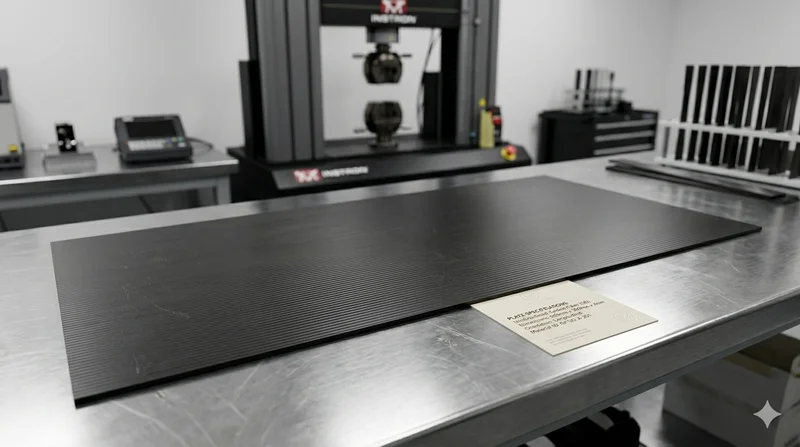
Carbon Fiber Plate — UD Unidirectional T700
Unidirectional carbon fiber plate with all fibers oriented in a single direction for maximum strength along the fiber axis. Essential for structural reinforcements, splints, and applications where load direction is predictable.
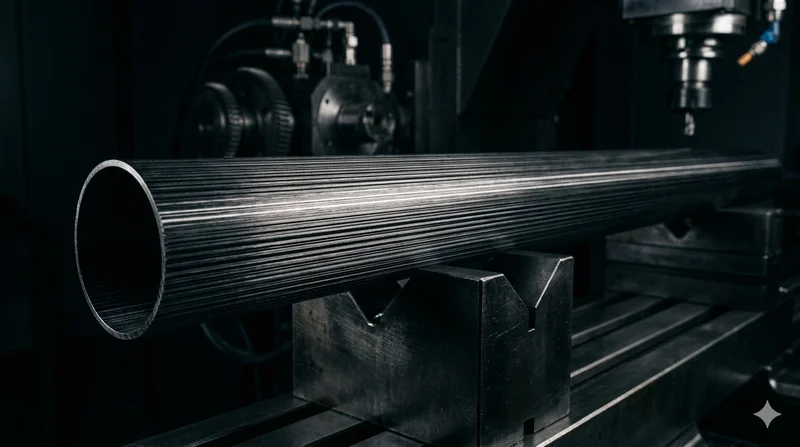
Round Carbon Fiber Tube — UD Unidirectional T700
Unidirectional (UD) round tube with all fibers aligned axially for maximum longitudinal stiffness. Ideal for applications requiring high bending rigidity with minimal weight, such as shafts, struts, and structural reinforcements.