

A practical guide for B2B buyers selecting carbon fiber OEM suppliers for sporting goods manufacturing — covering quality verification, lead time management, minimum order quantities, and supplier qualification frameworks.
Introduction
The sporting goods industry represents one of the largest commercial markets for carbon fiber composites, consuming approximately 12–15% of global carbon fiber production annually. From bicycle frames and tennis rackets to golf shafts and hockey sticks, carbon fiber has become the defining material of premium sports equipment. For OEM buyers — bicycle brands, golf equipment manufacturers, fitness equipment companies, and sporting goods distributors — selecting the right carbon fiber OEM supplier is a critical business decision that directly impacts product quality, time-to-market, and profit margins.
The global carbon fiber sporting goods market is valued at approximately USD 3.2 billion in 2026, with China accounting for 60–65% of global carbon fiber sporting goods OEM production, primarily concentrated in Guangdong, Shandong, and Fujian provinces.
| Evaluation Criteria | Weight | Verification Method | Threshold |
|---|---|---|---|
| Quality Management System | 25% | ISO 9001:2015 + on-site audit | Score ≥80/100 |
| Process Capability | 20% | Cpk analysis | Cpk ≥1.33 |
| Lead Time Reliability | 20% | 12-month OTIF record | OTIF ≥92% |
| Carbon Fiber Sourcing | 15% | Fiber grade certification | Traceable batch records required |
| Testing & Validation | 10% | In-house NDT capability | UT on ≥95% production |
Quality Assurance Framework
- Raw Material Verification: Request fiber grade certificate for every production lot. Verify FAW — typical 100–250 g/m² with ±3% tolerance.
- Process Control: Review PCP and FMEA. Automated ply cutting and laser projection achieve 0.3–0.8% defect rates vs 2–5% for manual layup.
- NDT: Require 100% UT on critical structural components. Shearography recommended for honeycomb sandwich structures.
Lead Time Management
- Tooling: 45–90 days for compression molds, 30–60 days for bladder molds. Budget $15,000–$60,000.
- Production: 30–60 days from PO. Seasonal peaks require orders 4–6 months ahead.
MOQ Considerations
- Bicycle Frames: 200–500 units/model/size. Lower MOQs (50–100) at 20–40% premium.
- Golf Shafts: 500–2,000 shafts per spec. Custom graphics add 500–1,000 units.
- Tennis Rackets: 1,000–3,000 units per model.
Frequently Asked Questions
How to verify supplier quality before ordering?
Request ISO certificate, sample products for testing, process documentation, three client references, and FAI report. Pre-audit cost ($2,000–$5,000) is negligible vs quality failure cost.
Typical payment terms?
30% deposit + 40–50% progress + 20–30% before shipment. New suppliers: 50–80% upfront. Established relationships: 30–40% deposit / 60–70% after inspection.
How to protect IP with OEM suppliers?
Register design patents in China, split manufacturing across suppliers, sign NDA/non-compete, use proprietary resin formulations, implement serialized anti-counterfeiting labels.
Part of topic
Related Articles
- Recycled Carbon Fiber Market Forecast 2030: Technology Maturity and Commercialization Path
- South Korea Carbon Fiber Market 2026: Hydrogen Economy and Shipbuilding Innovation
- Wind Turbine Blade Leading Edge Protection 2026: Polyurethane, Tape, and Metallic Shield Solutions
- China Carbon Fiber Overcapacity 2026: Price War Impact and Industry Consolidation
- India Carbon Fiber Market 2026: Wind Energy, Aerospace, and Defense Expansion
- PAN Precursor Market 2026: Acrylonitrile Supply and Carbon Fiber Cost Structure
Interested in Our Products?
Contact our team for competitive pricing and technical specifications.
Get a QuoteRelated Products
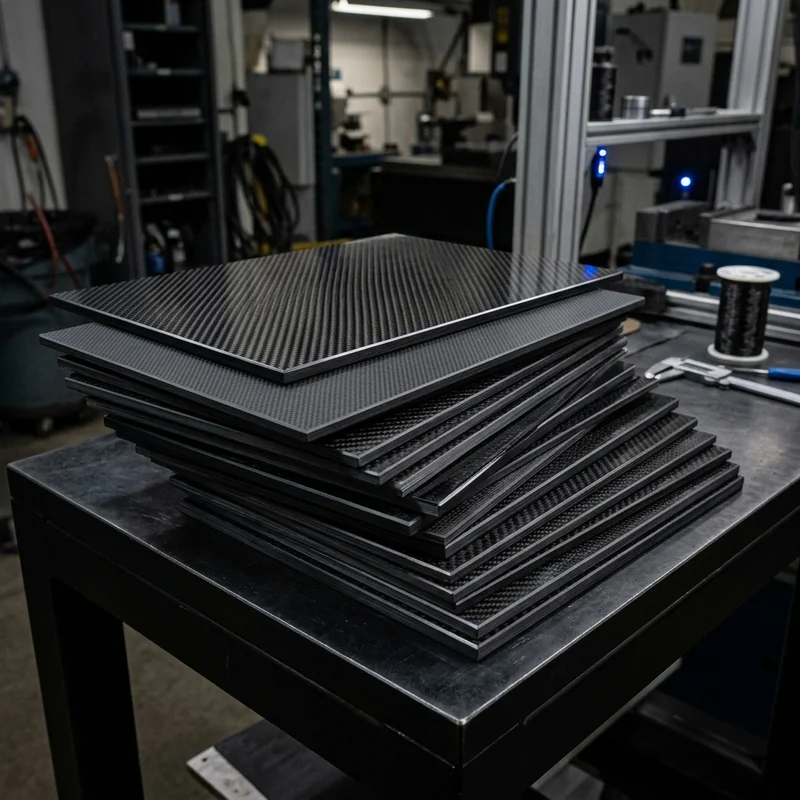
Carbon fiber standard plate-3k stripe
Lightweight, ultra-rigid standard sheets for drone fuselages, robot housings, facades and structural applications.

Carbon Fiber Plate — 3K Twill T700 1.5mm
Thin 1.5mm carbon fiber plate with 3K twill weave surface. Lightweight and stiff, commonly used for covers, panels, drone bodies, and applications requiring a premium aesthetic appearance.

Square Carbon Fiber Tube — 3K Twill T700
Square cross-section carbon fiber tube manufactured with 3K twill weave for torsional strength. Preferred for structural frames, trusses, and support columns where rectangular geometry offers design flexibility.

Carbon Fiber Plate — 3K Twill T700 3.0mm
Medium-thickness 3.0mm carbon fiber plate offering significantly higher load capacity while maintaining attractive 3K twill finish. Suitable for structural brackets, reinforcement plates, and load-bearing panels.
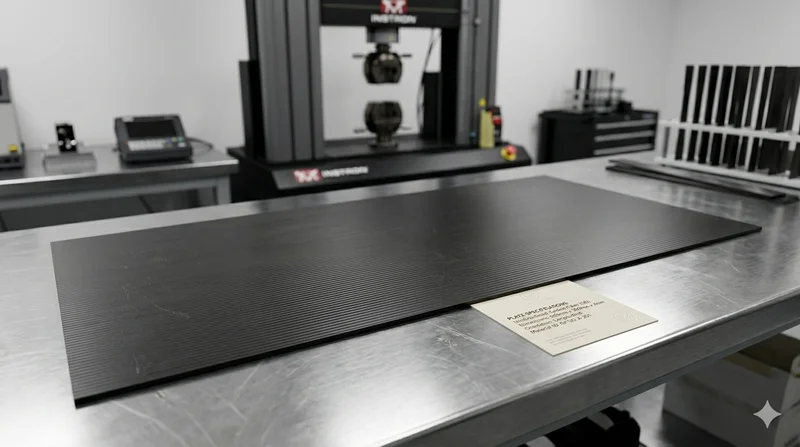
Carbon Fiber Plate — UD Unidirectional T700
Unidirectional carbon fiber plate with all fibers oriented in a single direction for maximum strength along the fiber axis. Essential for structural reinforcements, splints, and applications where load direction is predictable.