

The global carbon fiber industry faces an escalating demand for supply chain traceability driven by aerospace qualification standards (AS9100, NADCAP), defense procurement regulations (ITAR, EAR), and increasingly stringent customer audit requirements. Every carbon fiber tow, prepreg roll, and finis
Introduction
The global carbon fiber industry faces an escalating demand for supply chain traceability driven by aerospace qualification standards (AS9100, NADCAP), defense procurement regulations (ITAR, EAR), and increasingly stringent customer audit requirements. Every carbon fiber tow, prepreg roll, and finished composite part must carry a verifiable chain of custody from precursor chemical to final structural component. RFID (Radio Frequency Identification) technology has emerged as the leading solution for achieving this traceability at industrial scale, replacing manual barcode tracking with automated, contactless data capture that integrates directly into manufacturing execution systems.
Carbon fiber supply chains are uniquely challenging to trace because materials pass through multiple transformation steps — precursor production, carbonization, surface treatment, sizing, weaving or prepreg production, layup, curing, and finishing — each controlled by different organizations across different geographies. A single aerospace-grade carbon fiber tow may change hands five to eight times before becoming a finished wing spar, with each handover requiring material certification transfer. RFID tracking eliminates the gaps and errors inherent in paper-based traceability systems, providing real-time visibility from fiber production through final part acceptance. This article explains the technical foundations, integration strategies, and practical deployment considerations for RFID-enabled carbon fiber supply chain traceability.
RFID Technology Fundamentals for Composite Materials
RFID systems for carbon fiber traceability operate across two frequency bands, each with distinct advantages for different supply chain stages:
- UHF (860-960 MHz) passive tags: Long read range (up to 12 meters), fast bulk reading (200+ tags per second), and low per-tag cost ($0.05-0.15) make UHF ideal for warehouse receiving, shipping verification, and inventory management. UHF tags are attached to pallets, cartons, or individual prepreg rolls using heat-resistant adhesives that withstand autoclave temperatures up to 180°C.
- HF/NFC (13.56 MHz) tags: Shorter read range (up to 10 cm) but superior performance near carbon fiber materials, which can detune UHF antennas. HF tags are preferred for item-level tracking of individual prepreg plies, cut kits, and finished parts where the tag is in direct proximity to carbon fiber content.
- Active RFID/BLE beacons: Battery-powered tags with 50-100 meter range for real-time location tracking of large composite assemblies (wing panels, fuselage sections) during factory transport and cure cycle monitoring.
The key technical challenge for RFID in carbon fiber applications is antenna performance degradation. Carbon fiber is electrically conductive — typical resistivity of 1-10 × 10⁻³ Ω·m — which detunes conventional RFID antennas and reduces read range by 40-70% compared to tagging non-conductive materials like plastics or wood. This requires specialized antenna designs: spacer-based antennas that maintain a minimum 5 mm air gap between the tag and the carbon fiber surface, or antennas tuned to compensate for the conductive loading effect of nearby CFRP.
Integration with Manufacturing Execution Systems
RFID data only delivers traceability value when integrated into the manufacturing execution system (MES) that governs composite production. The integration architecture must handle four critical data flows:
| Data Flow | RFID Trigger Point | MES Integration | Traceability Outcome |
|---|---|---|---|
| Material receipt | UHF gate at receiving dock | Auto-create material lot record with supplier COC | Digitized inbound chain of custody |
| Cut kit issue | HF reader at cutting table | Link plies to parent roll and work order | Ply-level material genealogy |
| Layup confirmation | HF reader at layup station | Verify correct ply type, orientation, and sequence | Pre-cure quality gate |
| Cure cycle tracking | Active tag with temperature sensor | Record time-temperature profile per part | Process parameter traceability |
| Final inspection | UHF portal at shipping dock | Generate digital part certificate with full genealogy | Complete material-to-part traceability |
The MES integration requires standardized data formats — typically GS1 EPCIS 2.0 for event capture — and bidirectional communication with enterprise resource planning (ERP) systems. For aerospace applications, the traceability record must be maintained for the entire service life of the aircraft (30+ years), creating long-term data archival requirements that influence both storage architecture and data format choices.
Data Management and Digital Thread Architecture
A complete RFID-enabled traceability system generates 50-200 data events per composite part across its manufacturing lifecycle. Managing this data volume requires a digital thread architecture that links every event to a unique part identifier:
- Unique identification: Each composite part receives a unique RFID-encoded identifier (typically a GS1 SGTIN-96 or DoD-96 format) at the first manufacturing step. This identifier persists through all subsequent operations and becomes the key for linking material records, process parameters, and inspection results.
- Event capture: RFID read events are timestamped, geotagged (zone-level location within the factory), and linked to the manufacturing work order, operator ID, and equipment ID. The EPCIS event model captures four dimensions: what (tag ID), when (timestamp), where (location), and why (business context).
- Data aggregation: Child-to-parent relationships are recorded as parts are assembled into larger structures. A wing skin panel's RFID links to the prepreg rolls it contains, which link to the carbon fiber tows in those rolls, creating a complete genealogy tree traceable back to the PAN precursor batch.
- Long-term archival: Aerospace traceability records must be retained for 30+ years. This requires immutable storage (write-once databases or blockchain-anchored hashes), format migration planning, and accessibility guarantees that survive technology obsolescence.
Leading carbon fiber manufacturers are implementing blockchain-anchored traceability, where each RFID event generates a hash that is recorded on a permissioned blockchain. This provides tamper-evident proof of chain of custody without the overhead of storing all data on-chain, addressing customer audit requirements for material authenticity verification.
Deployment Considerations and ROI
RFID deployment in carbon fiber facilities requires careful planning to address the unique environmental and material challenges:
- Tag placement strategy: Tags must be positioned where they are readable but protected from manufacturing damage. For prepreg rolls, tags are typically embedded in the core end cap or applied to the outer wrap under a protective film. For cut kits, tags are attached to carrier paper that accompanies the kit through layup.
- Reader infrastructure: UHF portal readers at dock doors and conveyor transitions provide bulk reading capability. Handheld readers at workstations enable manual verification. The reader network must be designed to avoid interference from metal equipment and electromagnetic sources in the factory environment.
- ROI drivers: The primary return on investment comes from eliminating manual data entry (reducing labor by 60-80% for material tracking), preventing material mix-ups (which can cause $50,000-500,000 in scrap and rework per incident in aerospace), and enabling rapid root-cause investigation for quality escapes (reducing investigation time from days to hours).
Typical deployment costs for a mid-size carbon fiber prepreg facility range from $150,000-400,000 for infrastructure (readers, antennas, network, MES integration) and $0.10-0.30 per tag at volume. Payback periods of 12-18 months are common when material mix-up prevention and labor savings are quantified.
Frequently Asked Questions
Can RFID tags survive autoclave cure cycles for carbon fiber composites?
Yes, specially designed RFID tags can survive autoclave cure cycles. The key requirements are temperature resistance (typical autoclave cycles reach 120-180°C for 2-8 hours) and pressure resistance (3-7 bar). RFID tag manufacturers offer encapsulated tags rated for autoclave use, with ceramic or silicone encapsulation protecting the chip and antenna from heat and pressure. For out-of-autoclave (OOA) processes like vacuum infusion, tag requirements are less stringent — standard industrial tags rated to 85°C are often sufficient. The tag must also be positioned to avoid direct contact with resin flow, which can encapsulate and permanently bond the tag to the part, making it unreadable after cure.
How does carbon fiber's conductivity affect RFID read performance?
Carbon fiber's electrical conductivity (1-10 × 10⁻³ Ω·m) significantly degrades RFID antenna performance by detuning the antenna resonant frequency and absorbing electromagnetic energy. UHF tags read near carbon fiber experience 40-70% range reduction compared to free-space performance. Mitigation strategies include: using spacer-based tag designs that maintain a minimum 5 mm air gap, deploying HF/NFC tags (13.56 MHz) which are less affected by conductive materials, using antenna designs specifically tuned for conductive substrates, and positioning tags at locations where carbon fiber content is lowest (e.g., near resin-rich edges or core material sections). Some manufacturers embed RFID tags during layup, sandwiching them between non-conductive glass fiber plies to create an isolation zone.
What data standards govern RFID traceability for aerospace carbon fiber?
Aerospace RFID traceability is governed by several overlapping standards. AS9100 quality management system requirements mandate material traceability throughout the supply chain. ATA Spec 2000 Chapter 9 defines RFID usage for aircraft parts tracking. GS1 EPCIS 2.0 provides the data model for capturing and sharing RFID event data. The Department of Defense (DoD) requires specific tag formats (DoD-96) and data content for defense procurement. SAE AS6496 specifies RFID tag performance requirements for aerospace composites. NADCAP special process accreditation adds additional traceability requirements for composite processing. Companies must design their traceability systems to satisfy the most stringent applicable standard across their customer base, typically resulting in a superset data model that exceeds individual standard requirements.
Conclusion
RFID tracking has moved from anice-to-have to a necessity for carbon fiber supply chain traceability, driven by aerospace qualification requirements, defense procurement regulations, and customer audit expectations. The technology's ability to provide automated, contactless, item-level data capture eliminates the gaps and errors inherent in manual tracking systems, while integration with MES platforms creates a complete digital thread from precursor to finished part. For carbon fiber manufacturers and their customers, RFID-enabled traceability is no longer optional — it is the foundation of quality assurance in modern composite supply chains.
For supply chain managers evaluating RFID traceability solutions, the critical success factors are antenna design for conductive materials, MES integration architecture, and long-term data archival strategy. Explore our carbon fiber material traceability solutions or contact our engineering team to discuss RFID integration for your composite manufacturing operations.
Part of topic
Related Articles
- Carbon Fiber Bio-Composites: Natural Fiber Hybrid Reinforcement for Sustainable Applications
- Infrared Heating for Carbon Fiber Cure: Energy Efficiency and Cycle Time Reduction
- Out-of-Autoclave Carbon Fiber Processing: OoA Certification and Aerospace Qualification
- Carbon Fiber Polymer Matrix Composite Fire Resistance: Intumescent Coatings and Fire-Barrier Solutions
- Carbon Fiber HP-RTM Cycle Time Optimization: High-Pressure Resin Transfer Molding for Automotive
- Continuous Fiber Reinforced Thermoplastics: CFRT vs Thermoset Processing and Applications
Interested in Our Products?
Contact our team for competitive pricing and technical specifications.
Get a QuoteRelated Products

Carbon Fiber Fishing Rod Blank
High-quality carbon fiber fishing rod blank manufactured from multiple grades of Toray carbon fiber cloth. Available in a wide range of lengths, powers, and actions for freshwater and saltwater applications. Suitable for OEM rod building.

Carbon Fiber Plate — 3K Twill T700 1.5mm
Thin 1.5mm carbon fiber plate with 3K twill weave surface. Lightweight and stiff, commonly used for covers, panels, drone bodies, and applications requiring a premium aesthetic appearance.
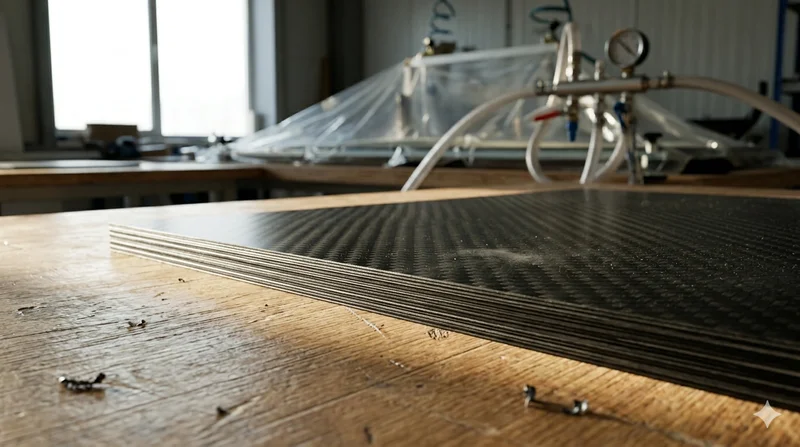
Carbon Fiber Plate — 3K Twill T700 3.0mm
Medium-thickness 3.0mm carbon fiber plate offering significantly higher load capacity while maintaining attractive 3K twill finish. Suitable for structural brackets, reinforcement plates, and load-bearing panels.

Carbon Fiber Trekking Pole
Lightweight carbon fiber trekking pole manufactured from high-grade carbon fiber tube. Weighs only 160g per pole while providing superior shock absorption and durability for hiking, trail running, and backpacking.
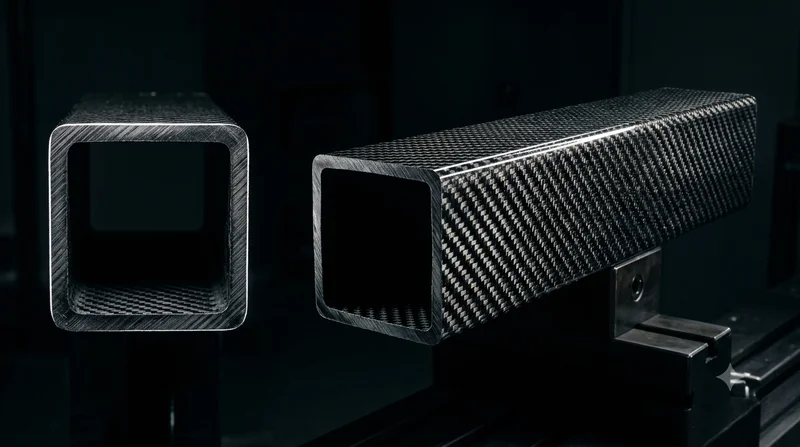
Square Carbon Fiber Tube — 3K Twill T700
Square cross-section carbon fiber tube manufactured with 3K twill weave for torsional strength. Preferred for structural frames, trusses, and support columns where rectangular geometry offers design flexibility.