
The global recycled carbon fiber market is projected to grow from $215 million in 2025 to $1.8 billion by 2034 at a CAGR of 23.7%, driven by automotive closed-loop programs, aerospace scrap-reduction mandates, and wind blade end-of-life recycling — but quality consistency and certification remain the critical bottlenecks for structural-grade adoption.
Market Overview: The Second Life of Carbon Fiber
Recycled carbon fiber (rCF) has transitioned from a niche sustainability curiosity to a $215 million global market in 2025, with projections reaching $1.8 billion by 2034 at a compound annual growth rate (CAGR) of 23.7%. Three structural drivers underpin this growth: (1) mandatory end-of-life recycling regulations in the European Union's Waste Framework Directive and France's REP law for composite products; (2) the voluntary commitment by major OEMs — including BMW, Toray, and Vestas — to closed-loop carbon fiber supply chains by 2035; and (3) the economic reality that virgin carbon fiber prices ($18–45/kg for standard modulus) create a natural price floor above which recycled fiber becomes commercially attractive at $8–22/kg.
Despite this momentum, the rCF market faces a persistent structural challenge: quality consistency. While recycled short fibers and milled grades have found established markets in non-structural applications — injection-moulded automotive components, ESD flooring, thermal insulation felts, and concrete reinforcement — the penetration of rCF into structural applications (automotive structural parts, wind blade spar caps, pressure vessels, aerospace secondary structures) remains below 12% of total rCF end-use. This article examines the market size projections, the technology landscape, and the critical quality barriers that must be overcome for rCF to achieve structural-grade certification.
Market Size Forecast by Application (2025–2034)
| Application Segment | 2025 Market ($M) | 2030 Forecast ($M) | 2034 Forecast ($M) | CAGR (2025–34) |
|---|---|---|---|---|
| Automotive (non-structural) | 68 | 185 | 380 | 21.1% |
| Automotive (structural/semi-structural) | 12 | 62 | 195 | 36.3% |
| Aerospace & defense | 8 | 35 | 95 | 31.6% |
| Wind energy (blade recycling) | 15 | 110 | 310 | 40.1% |
| Consumer electronics & E&E | 42 | 102 | 215 | 19.9% |
| Construction & infrastructure | 35 | 88 | 170 | 19.2% |
| Sports & leisure | 22 | 45 | 72 | 14.1% |
| Other (marine, rail, etc.) | 13 | 42 | 103 | 25.9% |
| Total | $215 | $669 | $1,810 | 23.7% |
Recycling Technology Comparison
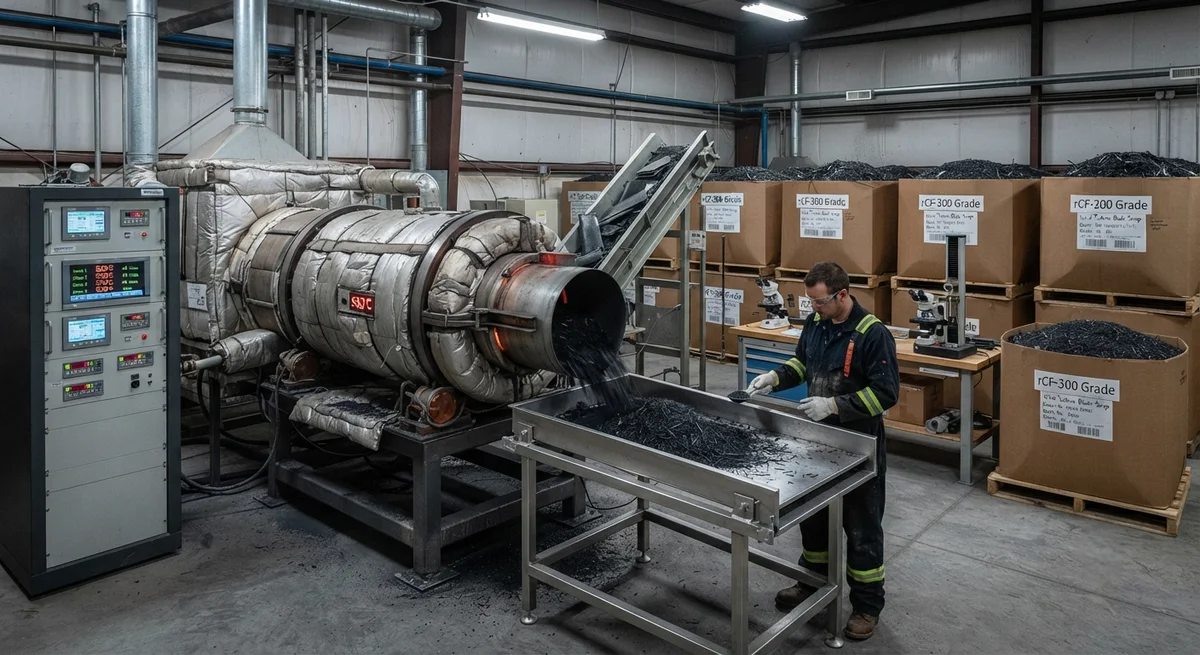
The recycled carbon fiber market is divided by three primary recycling technologies, each producing fiber with distinctly different mechanical properties, surface chemistry, and cost profiles.
| Technology | Process Temperature | Fiber Length Retention | Tensile Strength Retention | Tensile Modulus Retention | Cost ($/kg rCF) | TRL |
|---|---|---|---|---|---|---|
| Pyrolysis (fluidised bed) | 450–700°C | 20–60 mm (chopped) | 75–85% | 95–100% | $6–12 | 9 |
| Pyrolysis (static/microwave) | 350–550°C | 6–50 mm | 80–95% | 95–100% | $8–18 | 8 |
| Solvolysis (subcritical water) | 250–350°C, 5–20 MPa | 50–200 mm (continuous possible) | 85–98% | 98–100% | $15–35 | 6–7 |
| Solvolysis (catalytic) | 180–280°C, atmospheric | 50–200 mm | 90–99% | 99–100% | $12–25 | 5–6 |
| Electro-thermal fluidised bed | 500–650°C (electrical) | 20–60 mm | 80–90% | 95–100% | $5–10 | 7 |
| Milling (post-pyrolysis) | Ambient | 0.1–2.0 mm (milled) | As per parent pyrolysis process | As per parent pyrolysis process | $4–10 | 9 |
Quality Challenges for Structural-Grade rCF
The single greatest barrier to rCF adoption in load-bearing applications is the lack of standardised quality certification frameworks analogous to those that exist for virgin carbon fiber. Six specific challenges define the quality gap:
- Fibre length distribution variability: Unlike virgin continuous tow, rCF is inherently discontinuous. Typical pyrolysis processes yield fiber lengths of 6–60 mm with coefficients of variation (CV) of 40–70% in fibre length distribution. This variability translates directly to large scatter in mechanical properties of rCF-reinforced composites — a CV of 15–25% in tensile strength versus 3–6% for virgin continuous-fiber laminates. For structural applications where design allowables are based on B-basis statistics (95% survival probability with 95% confidence), this scatter requires significantly larger knockdown factors that erode the weight-saving advantage of carbon fiber.
- Surface chemistry degradation: The high-temperature pyrolysis environment removes not only the epoxy matrix but also the commercial sizing applied to virgin fibers during manufacture. Virgin carbon fiber sizing — typically 0.5–2.0% by weight of epoxy-compatible or thermoplastic-compatible polymeric coatings — is essential for fiber-matrix adhesion and composite mechanical performance. Post-pyrolysis rCF surfaces have 60–80% lower oxygen-to-carbon (O/C) ratio compared to virgin sized fiber, resulting in 30–50% lower interfacial shear strength (IFSS) in epoxy composites unless a re-sizing step is applied. Re-sizing adds $2–5/kg to rCF cost and introduces its own quality control challenges.
- Contamination and foreign object debris (FOD): Recycled carbon fiber feedstocks — end-of-life wind blades, decommissioned aircraft parts, automotive scrap — contain varying levels of metallic inserts, foam cores, honeycomb cores, and bolt inserts that must be removed before or during the recycling process. Inadequate FOD removal can result in hard inclusions that act as stress raisers in structural composite parts, reducing fatigue life by 40–60% in demanding applications. Current FOD detection and removal technology (magnetic separation, density separation, manual inspection) achieves 95–98% removal efficiency — insufficient for aerospace-grade certification which typically requires zero detectable FOD above 500 µm.
- Batch-to-batch consistency: Virgin carbon fiber production is a tightly controlled continuous process with well-defined process windows for precursor oxidation, carbonisation, and surface treatment. A typical T700-grade fiber from Toray has a batch-to-batch tensile strength CV of less than 3%. By contrast, rCF from mixed-feedstock recycling facilities shows batch-to-batch strength CV of 8–12% even from single-feedstock streams, and 15–25% when feedstocks are mixed. Without statistically-driven quality assurance protocols — including real-time near-infrared (NIR) feedstock sorting and lot-specific mechanical test certification — rCF cannot meet the repeatability requirements of structural design standards such as ASTM D6856 or MIL-HDBK-17.
- Fibre orientation and formability: Most rCF is produced as chopped or milled fiber, which cannot achieve the high fibre volume fractions (55–65%) and controlled fibre orientation required for primary structural components. Nonwoven rCF mats typically achieve fibre volume fractions of 20–35% with random-in-plane orientation. Emerging technologies — including wet-laid nonwoven processes, paper-making process adaptations, and aligned discontinuous fiber (ADF) processes pioneered at the University of Bristol and Oak Ridge National Laboratory — can achieve alignment ratios above 85% and fibre volume fractions of 40–50%, but these technologies are at TRL 5–6 and are not yet commercially available at scale.
- Certification and standards gap: No industry-wide standard exists for recycled carbon fiber quality grades analogous to the classification systems for virgin fiber (e.g., Toray's T700/800/1000 series or Hexcel's AS4/IM7/PV3). The ASTM D30 committee on Composite Materials has initiated a task group (WK78825) for rCF classification, but a published standard is not expected before 2028–2029. In the interim, individual OEMs including BMW, Toray, and Mitsubishi Chemical have developed proprietary quality specifications — none of which are publicly shared or harmonised, fragmenting the market and preventing rCF producers from standardising their production lines.
Regional Market Breakdown (2034 Forecast)
| Region | 2034 Market ($M) | Share (%) | Key Drivers |
|---|---|---|---|
| Europe | 780 | 43.1% | EU Waste Framework Directive, wind blade recycling mandate (2027), automotive ELV Directive |
| North America | 540 | 29.8% | DOE Composite Recycling R&D, Boeing/Virgin Galactic recycling partnerships, automotive CAFE compliance |
| Asia-Pacific | 380 | 21.0% | China's 14th Five-Year Plan for composites recycling, Japan's carbon fiber recycling consortium, Toray's closed-loop expansion |
| Rest of World | 110 | 6.1% | Middle East oil & gas composite pipe recycling, Turkey automotive export market |
Industry Initiatives Addressing the Quality Gap
- CETIA (Centre for Technology Transfer in Industrial Eco-Technologies), France: Operating a semi-industrial solvolysis pilot line producing 50 tonnes/year of rCF with ≥95% tensile strength retention. CETIA's process uses subcritical water at 300°C/15 MPa with a residence time of 45 minutes, yielding clean fiber with O/C ratios within 85% of virgin-sized fiber. Output is being qualified for automotive semi-structural applications under the CETIA Automotive Consortium program with Renault and Forvia.
- Vestas Blade Recycling Partnership (CETEC): A consortium of Vestas, Olin Epoxy, and the Danish Technological Institute demonstrating a chemical dissolution process that separates epoxy matrix from carbon fiber in end-of-life wind blades. The process, operating at 80–120°C using a proprietary solvent system at atmospheric pressure, claims >99% carbon fiber recovery with 90–95% tensile strength retention. Pilot-scale output (200 tonnes/year) is being evaluated for wind blade spar cap and automotive structural applications.
- Toray Group rCF Quality Standard (TQRS-001): In 2025, Toray released its proprietary internal standard for recycled carbon fiber quality, defining four grades — rCF-100 (premium structural, ≥95% strength retention, ≤5% CV), rCF-200 (semi-structural, ≥85% strength retention, ≤10% CV), rCF-300 (non-structural, ≥75% strength retention, ≤15% CV), and rCF-400 (milled, ≥60% strength retention). Toray has committed to publishing TQRS-001 as an open standard by 2027 in collaboration with ASTM International.
- European CFRP Recycling Standardisation (CEN/TC 249/WG 26): A working group within the European Committee for Standardisation (CEN) is developing a harmonised classification and test method standard for recycled carbon fibers. The draft standard, expected by late 2027, defines three classes based on fibre length distribution, tensile strength retention, and surface activity (O/C ratio). Adoption of the CEN standard could unlock EU-wide certification pathways for structural-grade rCF.
Frequently Asked Questions
What is the price gap between recycled and virgin carbon fiber, and how is it expected to evolve?
The current price range for recycled carbon fiber is $6–22/kg depending on quality grade and form (chopped, milled, or nonwoven mat), compared to $18–45/kg for standard-modulus virgin carbon fiber and $45–150/kg for intermediate and high-modulus grades. The price premium for virgin fiber is expected to narrow as: (1) economies of scale in recycling reduce rCF production costs by an estimated 30–40% by 2030; (2) EU carbon border adjustment mechanisms (CBAM) add an estimated $2–6/kg carbon cost to virgin fiber production; (3) growing feedstock volumes from wind blade decommissioning (an estimated 8,000–10,000 tonnes/year of carbon fiber waste by 2027) reduce the feedstock cost component of rCF. By 2034, the effective price gap between virgin standard-modulus and recycled structural-grade carbon fiber is projected to narrow from the current 2.5–3.0× to 1.2–1.5×.
Which applications currently represent the largest end-use market for recycled carbon fiber?
Non-structural automotive components (interior parts, underbody shields, acoustic insulation) represent the largest current market at $68 million in 2025 (31.6% of total rCF consumption), followed by consumer electronics and electrical/electronic enclosures ($42M, 19.5%) and construction/infrastructure ($35M, 16.3%). However, the fastest-growing segments are automotive structural/semi-structural (CAGR 36.3%) and wind energy blade recycling (CAGR 40.1%), driven by regulatory mandates and OEM closed-loop commitments.
How does pyrolysis compare to solvolysis for producing structural-grade recycled fiber?
Pyrolysis is the dominant commercial technology today (approximately 75% of total rCF production) due to its maturity (TRL 9), lower cost ($6–18/kg), and ability to handle mixed-feedstock waste streams. However, pyrolysis degrades fiber surface chemistry (60–80% O/C ratio reduction) and produces primarily short discontinuous fiber (6–60 mm). Solvolysis, while more expensive ($12–35/kg) and at lower TRL (5–7), offers two critical advantages for structural applications: higher tensile strength retention (85–99% vs 75–95%) and the potential to recover continuous tows when input material is continuous-fiber waste. For structural-grade applications requiring ≥90% strength retention and fiber lengths exceeding 30 mm, solvolysis is likely to become the preferred technology as process scale-up reduces its cost premium.
What quality testing is required to certify recycled carbon fiber for automotive structural applications?
For semi-structural and structural automotive applications (e.g., seat structures, bumper beams, floor modules), rCF certification typically requires: (1) fibre tensile testing per ASTM D4018 or ISO 11566 on a minimum of 30 individual fibre samples per batch; (2) laminate tensile, flexural, and shear testing per ASTM D3039, D7264, and D7078 on nonwoven rCF mat/epoxy panels; (3) surface chemistry analysis via XPS (X-ray photoelectron spectroscopy) to quantify O/C ratio and functional group distribution; (4) fibre length distribution analysis via image analysis or laser diffraction; (5) contamination analysis via micro-CT scanning or thermogravimetric analysis (TGA) to quantify residual char and inorganic content. The BMW Group's rCF qualification standard additionally requires a 500-hour environmental conditioning cycle (85°C/85% RH) followed by a 10,000-cycle accelerated fatigue test at 0.5 Hz and R=0.1.
Will recycled carbon fiber eventually replace virgin fiber in primary aerospace structures?
It is unlikely in the foreseeable future (before 2040) that rCF will replace virgin fiber in primary aerospace structures such as wing spars, fuselage barrel sections, or flight-critical control surfaces. The stringency of aerospace certification (FAR Part 25, MIL-HDBK-17, NADCAP) requires defect-free, traceable material with batch-to-batch CV below 5% in all mechanical properties — a threshold that no current rCF production process can demonstrate at scale. The most realistic near-term pathway for rCF in aerospace is in tertiary structures (cabin interior panels, cargo liners, floor panels, non-structural fairings) where quality requirements are less stringent. Secondary aerospace structures (flight control surfaces, landing gear doors) may become viable for rCF in the 2035–2040 timeframe if solvolysis technology achieves TRL 9 with demonstrated batch-to-batch CV below 8%.
What role does the wind blade end-of-life wave play in rCF supply growth?
The first generation of large commercial wind turbines (2000–2010 installations) incorporating carbon fiber in their blades — primarily Vestas V90-3.0 MW, Siemens SWT-3.6-107, and Gamesa G128-4.5 MW — is approaching decommissioning age (20–25 year design life). By 2027–2028, an estimated 8,000–12,000 tonnes per year of carbon fiber composite waste from wind blades will enter the recycling stream, increasing to 25,000–40,000 tonnes/year by 2032–2034 as newer, larger blades (80–120 metre length, 10–15 MW rating) are decommissioned. This wave represents a step-change in rCF feedstock availability, potentially reducing rCF prices by 40–50% versus 2025 levels and making rCF cost-competitive with virgin E-glass fiber in hybrid laminate applications.
Part of topic
Related Articles
- Recycled Carbon Fiber Market Forecast 2030: Technology Maturity and Commercialization Path
- South Korea Carbon Fiber Market 2026: Hydrogen Economy and Shipbuilding Innovation
- Wind Turbine Blade Leading Edge Protection 2026: Polyurethane, Tape, and Metallic Shield Solutions
- China Carbon Fiber Overcapacity 2026: Price War Impact and Industry Consolidation
- India Carbon Fiber Market 2026: Wind Energy, Aerospace, and Defense Expansion
- PAN Precursor Market 2026: Acrylonitrile Supply and Carbon Fiber Cost Structure
Interested in Our Products?
Contact our team for competitive pricing and technical specifications.
Get a QuoteRelated Products
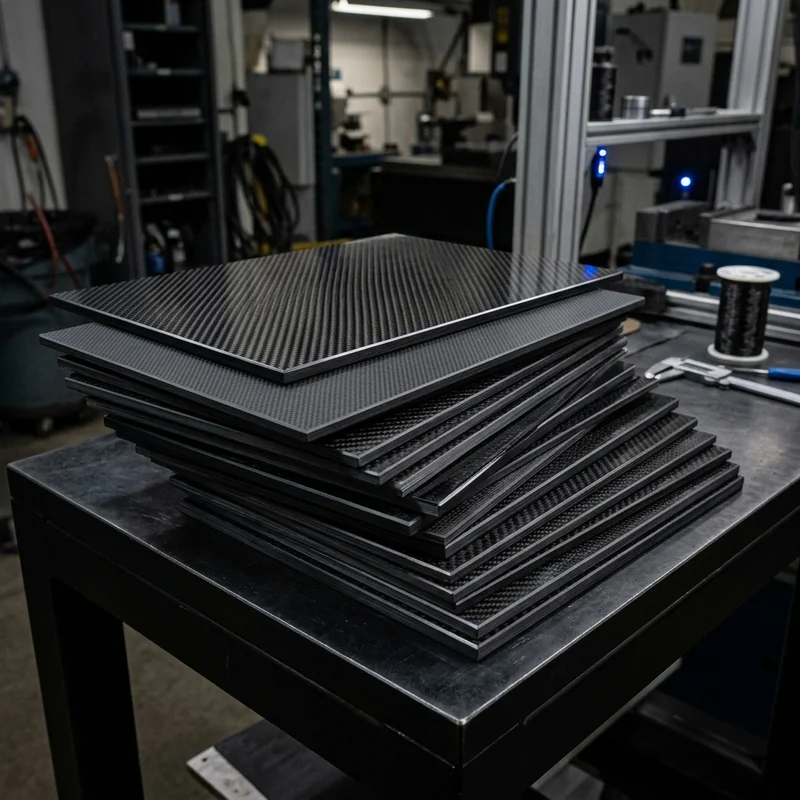
Carbon fiber standard plate-3k stripe
Lightweight, ultra-rigid standard sheets for drone fuselages, robot housings, facades and structural applications.

Carbon Fiber Plate — 3K Twill T700 1.5mm
Thin 1.5mm carbon fiber plate with 3K twill weave surface. Lightweight and stiff, commonly used for covers, panels, drone bodies, and applications requiring a premium aesthetic appearance.

Square Carbon Fiber Tube — 3K Twill T700
Square cross-section carbon fiber tube manufactured with 3K twill weave for torsional strength. Preferred for structural frames, trusses, and support columns where rectangular geometry offers design flexibility.

Carbon Fiber Plate — 3K Twill T700 3.0mm
Medium-thickness 3.0mm carbon fiber plate offering significantly higher load capacity while maintaining attractive 3K twill finish. Suitable for structural brackets, reinforcement plates, and load-bearing panels.
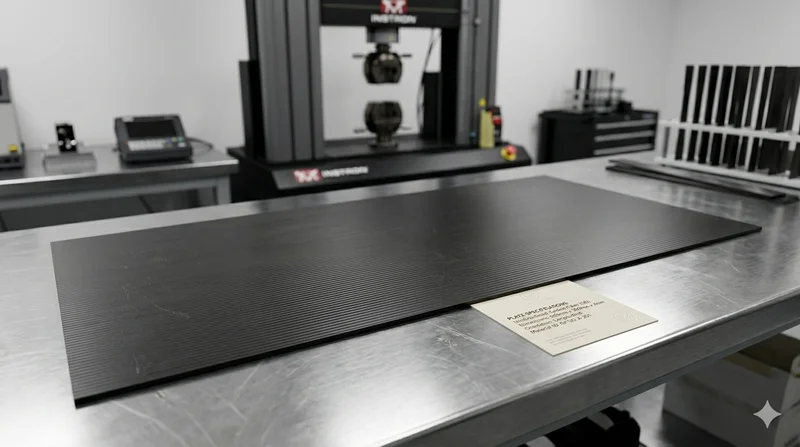
Carbon Fiber Plate — UD Unidirectional T700
Unidirectional carbon fiber plate with all fibers oriented in a single direction for maximum strength along the fiber axis. Essential for structural reinforcements, splints, and applications where load direction is predictable.