
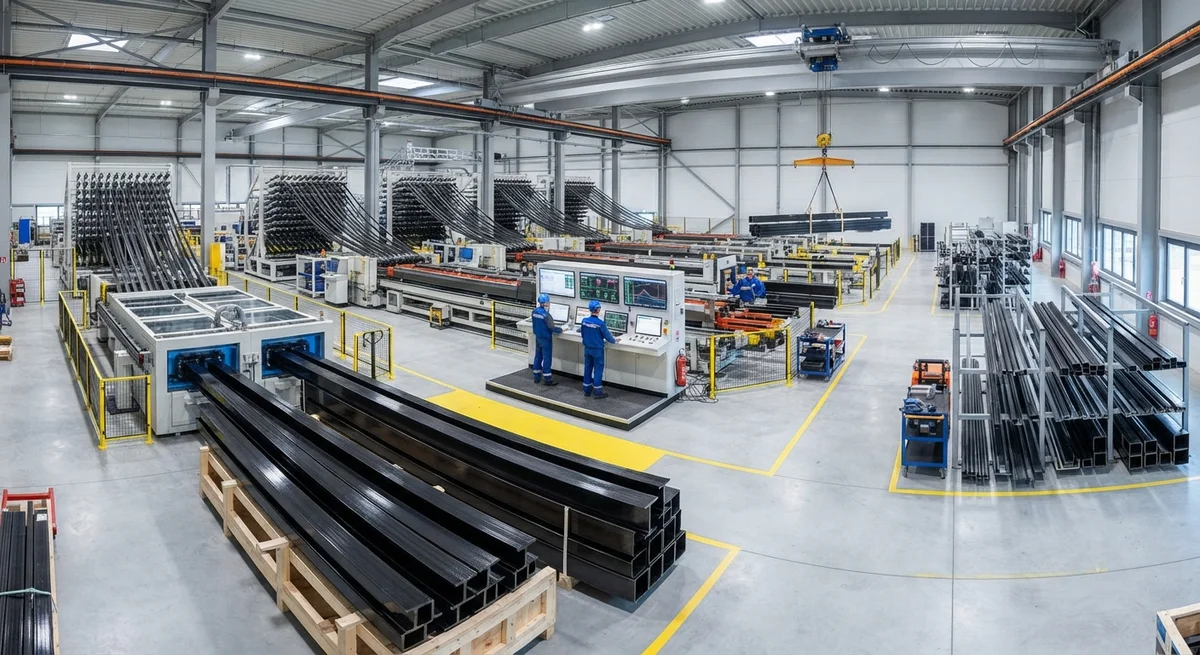
A comprehensive market analysis of the global pultrusion market with projections to 2034 — covering carbon fiber's expanding role in construction reinforcement, wind turbine blade manufacturing, bridge infrastructure, and the key market segments driving double-digit growth across North America, Europe, and Asia-Pacific.
Introduction
The global pultrusion market is experiencing a structural transformation, driven by the increasing adoption of carbon fiber reinforced polymer (CFRP) profiles across construction, wind energy, and civil infrastructure. According to the latest industry forecasts, the pultrusion market — encompassing both glass fiber and carbon fiber profiles — is projected to grow from approximately $2.6 billion in 2026 to $4.8 billion by 2034, registering a compound annual growth rate (CAGR) of 8.1%. Within this market, the carbon fiber pultrusion segment is growing at a significantly faster rate of 14.2% CAGR, as engineers and specifiers increasingly recognize the superior mechanical properties, corrosion resistance, and long-term cost efficiency of pultruded carbon fiber profiles over traditional steel, aluminum, and glass fiber alternatives.
For B2B buyers in construction, energy, and infrastructure sectors, understanding the technical and economic case for pultruded carbon fiber is essential for strategic material specification. This article provides a detailed analysis of the key end-use segments driving pultrusion market growth, the technical advantages of carbon fiber pultrusion over competing materials, regional market dynamics, and actionable insights for carbon fiber suppliers targeting this rapidly expanding market. The carbon fiber pultrusion segment alone is projected to consume 8,500 metric tons of carbon fiber by 2034, up from 2,800 metric tons in 2026, representing a tripling of demand over the forecast period.
| Market Segment | 2026 Value ($M) | 2034 Value ($M) | CAGR | CF Consumption 2034 (MT) |
|---|---|---|---|---|
| Construction & Building | 780 | 1,520 | 8.7% | 2,800 |
| Wind Energy (Blade Spars) | 620 | 1,350 | 10.2% | 3,200 |
| Bridge & Infrastructure | 340 | 820 | 11.6% | 1,400 |
| Transportation | 290 | 510 | 7.3% | 480 |
| Electrical & Corrosion-Resistant | 260 | 370 | 4.5% | 220 |
| Marine & Offshore | 155 | 230 | 5.1% | 180 |
| Other (Sports, Medical, etc.) | 155 | 200 | 3.2% | 220 |
| Total Pultrusion Market | 2,600 | 4,800 | 8.1% | 8,500 |
Construction and Building: Rebar Replacement and Structural Profiles
The construction segment represents the single largest application area for pultruded carbon fiber profiles, driven by the growing need for corrosion-resistant reinforcement in concrete structures. Carbon fiber reinforced polymer (CFRP) rebar — produced via pultrusion — offers a compelling alternative to traditional steel reinforcement, particularly in environments where chloride-induced corrosion of steel rebar leads to premature structural failure. Bridges, parking garages, marine structures, and chemical processing facilities are increasingly specifying CFRP rebar for new construction and rehabilitation projects.
Key technical advantages of pultruded carbon fiber rebar over steel reinforcement include:
- Corrosion resistance: CFRP rebar is impervious to chloride ions and de-icing salts, eliminating the primary failure mechanism in steel-reinforced concrete. Service life projections for CFRP-reinforced concrete structures exceed 100 years, compared to 40–60 years for steel-reinforced structures in aggressive environments.
- Weight reduction: Pultruded CFRP rebar weighs approximately 75–80% less than equivalent steel rebar — 1.9 kg/m³ versus 7.85 kg/m³. This translates to significantly lower transportation costs, reduced labor requirements, and the ability to reinforce thinner structural elements.
- Tensile strength: CFRP rebar offers tensile strengths of 1,200–2,400 MPa — 3–6 times higher than Grade 60 steel rebar (420 MPa yield). This allows for reduced reinforcement ratios and simplified detailing in congested reinforcement zones.
- Electromagnetic neutrality: CFRP rebar is non-conductive and magnetically transparent, critical for structures housing sensitive electronic equipment such as MRI facilities, research laboratories, and high-voltage substations.
The economic case for CFRP rebar is strongest in harsh environments where lifecycle cost analysis favors the higher initial material cost ($8–$22 per linear meter for 12 mm CFRP rebar versus $1.50–$3.00 for steel) against a 2.5–3.5× longer service life with zero maintenance costs. For bridge decks in cold climates subject to de-icing salt exposure, the lifecycle cost of CFRP reinforcement is typically 20–35% lower than epoxy-coated steel over a 75-year design life.
Wind Energy: Pultruded Carbon Fiber Spar Caps
The wind energy sector is the fastest-growing application for pultruded carbon fiber, driven by the relentless push toward larger turbine rotors and longer blades. Modern onshore wind turbines now feature rotor diameters exceeding 170 meters, while offshore turbines reach 250+ meter diameters. At these scales, blade stiffness becomes the limiting design constraint — glass fiber blades would require excessive thickness and weight to achieve the necessary stiffness, making carbon fiber pultrusions the material of choice for blade spar caps, shear webs, and root reinforcement.
Pultruded carbon fiber spar caps offer several critical advantages for wind blade manufacturers:
- Specific stiffness: Pultruded unidirectional carbon fiber profiles achieve a specific modulus of 120–140 GPa·cm³/g, compared to 25–30 GPa·cm³/g for glass fiber. This enables 30–40% longer blades at the same root bending moment, directly increasing annual energy production (AEP) per turbine.
- Manufacturing efficiency: Pultrusion enables continuous production of constant-cross-section spar caps at rates of 0.5–1.5 meters per minute, with fiber volume fractions of 60–68% — higher than hand layup or vacuum infusion processes. A single pultrusion line can produce spar caps for 200–300 turbine blades annually.
- Fatigue performance: Pultruded carbon fiber demonstrates exceptional fatigue resistance, with S-N curves showing less than 15% degradation after 10⁷ cycles at 60% of ultimate tensile strength.
- Gearbox and drivetrain lightweighting: Beyond blades, pultruded carbon fiber profiles are increasingly used in wind turbine nacelle structures, reducing total nacelle mass by up to 25%.
| Property | Pultruded CFRP Spar Cap | Glass/Epoxy Infusion | Steel (Conventional) |
|---|---|---|---|
| Tensile Modulus (0°) | 145 GPa | 42 GPa | 200 GPa |
| Tensile Strength (0°) | 2,100 MPa | 850 MPa | 550 MPa |
| Density | 1.55 g/cm³ | 1.90 g/cm³ | 7.85 g/cm³ |
| Specific Modulus | 93.5 GPa·cm³/g | 22.1 GPa·cm³/g | 25.5 GPa·cm³/g |
| Fatigue Life (10⁷ cycles @ 60% UTS) | 85% retained strength | 70–75% retained | Not applicable |
| Corrosion Resistance | Excellent | Good | Poor (requires coating) |
| Thermal Conductivity | 3–8 W/m·K | 0.3–0.5 W/m·K | 50 W/m·K |
| CTE | −0.3 to 0.5 ppm/°C | 8–12 ppm/°C | 12 ppm/°C |
| Production Rate | 0.5–1.5 m/min | 2–4 hours per blade half | N/A (assembly) |
Bridge and Infrastructure: Retrofitting and New Construction
Civil infrastructure represents one of the highest-growth opportunities for pultruded carbon fiber, driven by the global infrastructure maintenance backlog. The American Society of Civil Engineers (ASCE) estimates that 42% of U.S. bridges are over 50 years old and 7.5% are structurally deficient. Pultruded CFRP profiles are being deployed in three primary infrastructure applications: bridge deck replacement, external strengthening of existing structures, and all-composite pedestrian and vehicular bridges. Pultruded carbon fiber bridge decks offer a 60–75% weight reduction compared to conventional reinforced concrete decks. All-composite bridges — such as the No-Name Creek Bridge in Kansas (the first all-CFRP vehicular bridge in the U.S., constructed in 2021 using pultruded carbon fiber I-beams) — demonstrate the viability of carbon fiber pultrusions as primary structural elements.
The cost trajectory for CFRP bridge components is favorable: pultruded carbon fiber I-beams (300 mm × 150 mm) have declined from $185 per linear meter in 2018 to approximately $115 per linear meter in 2026, with projections of $85 per linear meter by 2030 as large-tow carbon fiber production scales.
Regional Market Dynamics
- North America (35% market share): The largest regional market, driven by bridge infrastructure spending ($1.2 trillion authorized under the Infrastructure Investment and Jobs Act), aggressive wind energy deployment targets, and widespread adoption of CFRP rebar in transportation infrastructure.
- Europe (30% market share): Benefits from the EU's Green Deal (300 GW offshore wind by 2050), rigorous building codes mandating lifecycle carbon accounting, and a well-established pultrusion supply chain concentrated in Germany, Italy, and the UK.
- Asia-Pacific (28% market share): China is the fastest-growing pultrusion market, driven by massive infrastructure spending and the world's largest wind energy installation program (120 GW of new wind capacity annually).
- Middle East & Africa (5%): Growing demand for corrosion-resistant materials in desert and coastal environments. UAE's Masdar City and Saudi Arabia's NEOM project specify CFRP reinforcement.
- Latin America (2%): Emerging market with significant growth potential in Brazil and Chile.
Manufacturing Technology Developments
The economics of carbon fiber pultrusion are benefiting from several technological innovations. Heated die pultrusion systems now incorporate segmented temperature control with PID regulation to ±1°C, enabling optimized cure profiles that increase line speeds by 30–50%. Resin injection pultrusion eliminates the need for pre-impregnated materials and reduces resin waste by 15–20%. Pull-force monitoring systems with real-time feedback loops enable predictive maintenance and reduce downtime.
Frequently Asked Questions
What is the difference between pultruded and pull-wound carbon fiber profiles?
Pultrusion produces linear, constant-cross-section profiles by pulling fiber reinforcement through a heated die. Pull-winding adds a circumferential winding head that wraps fiber at ±45° to ±75° angles, producing tubular profiles with enhanced torsional strength. For most construction and wind energy applications, standard pultrusion is sufficient.
What carbon fiber grades are typically used in pultruded profiles?
The pultrusion industry primarily uses T300-class fiber (3.5 GPa tensile strength) for cost-sensitive construction applications. T700-class (4.9 GPa) is specified for wind blade spar caps. IM7-class (276 GPa modulus) is used for exceptional stiffness requirements. Preferred tow sizes are 24K, 48K, and 60K large-tow fibers offering 25–40% lower cost per unit strength than 12K tows.
What are the key barriers to wider adoption of pultruded carbon fiber in construction?
Four primary barriers: (1) Material cost — 4–8× more expensive than steel per unit length; (2) Lack of standardized design codes — ACI 440.1R, fib Bulletin 90, and CSA S806 provide guidance but local adoption is inconsistent; (3) Connection detailing — bolted and bonded connections require different design approaches than steel; (4) Fire performance — CFRP loses structural capacity above 300°C, requiring intumescent coatings or cementitious fireproofing.
Part of topic
Related Articles
- Recycled Carbon Fiber Market Forecast 2030: Technology Maturity and Commercialization Path
- South Korea Carbon Fiber Market 2026: Hydrogen Economy and Shipbuilding Innovation
- Wind Turbine Blade Leading Edge Protection 2026: Polyurethane, Tape, and Metallic Shield Solutions
- China Carbon Fiber Overcapacity 2026: Price War Impact and Industry Consolidation
- India Carbon Fiber Market 2026: Wind Energy, Aerospace, and Defense Expansion
- PAN Precursor Market 2026: Acrylonitrile Supply and Carbon Fiber Cost Structure
Interested in Our Products?
Contact our team for competitive pricing and technical specifications.
Get a QuoteRelated Products
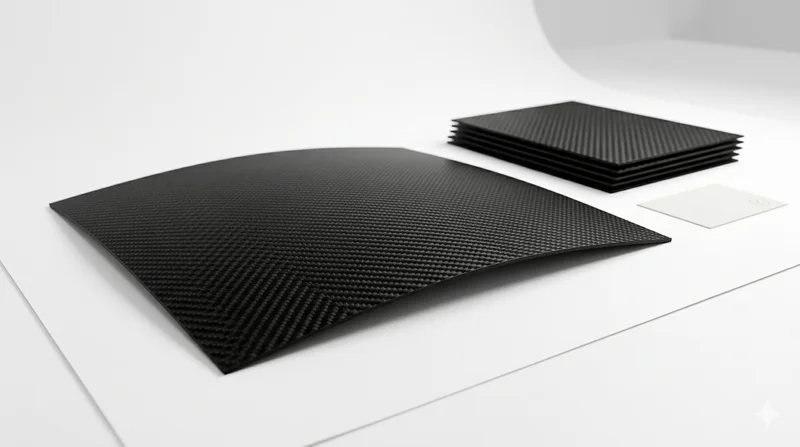
Carbon Fiber Plate — 3K Twill T700 1.5mm
Thin 1.5mm carbon fiber plate with 3K twill weave surface. Lightweight and stiff, commonly used for covers, panels, drone bodies, and applications requiring a premium aesthetic appearance.
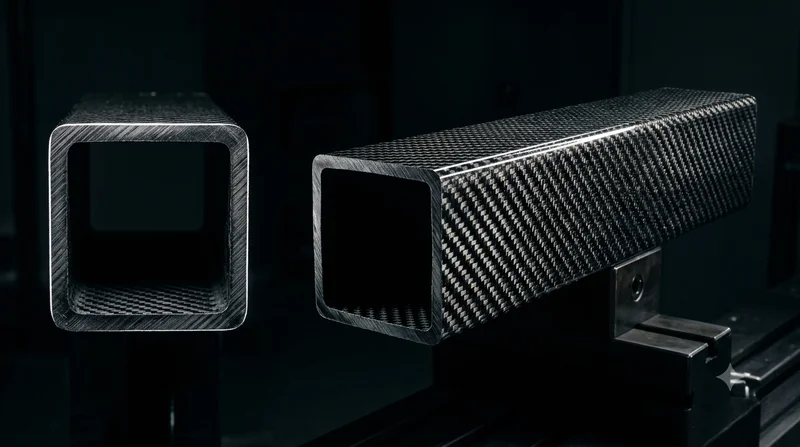
Square Carbon Fiber Tube — 3K Twill T700
Square cross-section carbon fiber tube manufactured with 3K twill weave for torsional strength. Preferred for structural frames, trusses, and support columns where rectangular geometry offers design flexibility.
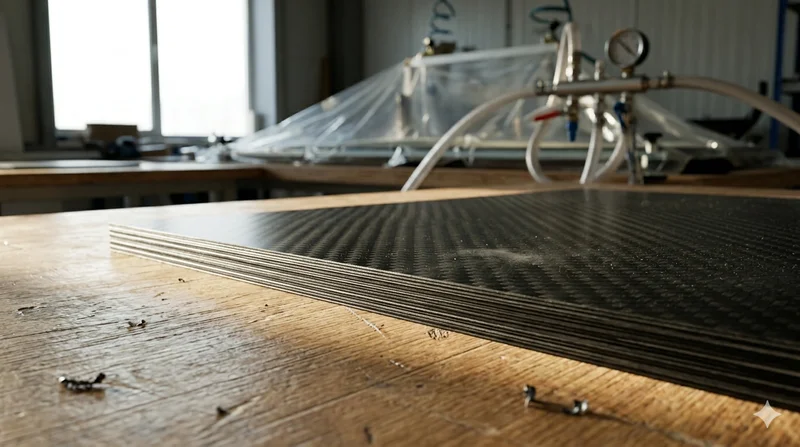
Carbon Fiber Plate — 3K Twill T700 3.0mm
Medium-thickness 3.0mm carbon fiber plate offering significantly higher load capacity while maintaining attractive 3K twill finish. Suitable for structural brackets, reinforcement plates, and load-bearing panels.
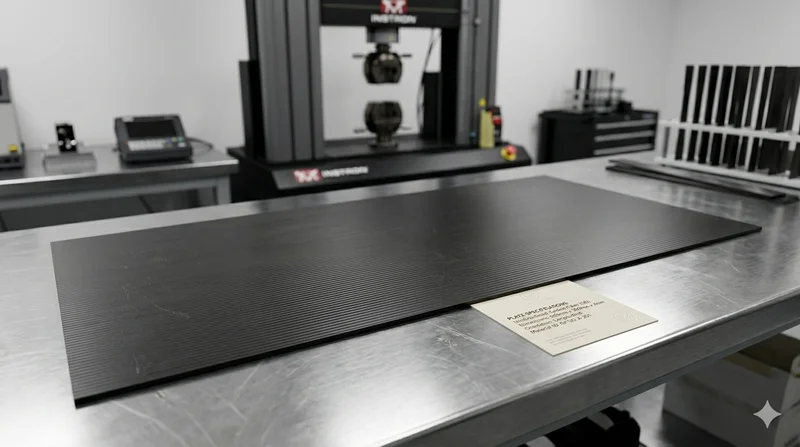
Carbon Fiber Plate — UD Unidirectional T700
Unidirectional carbon fiber plate with all fibers oriented in a single direction for maximum strength along the fiber axis. Essential for structural reinforcements, splints, and applications where load direction is predictable.
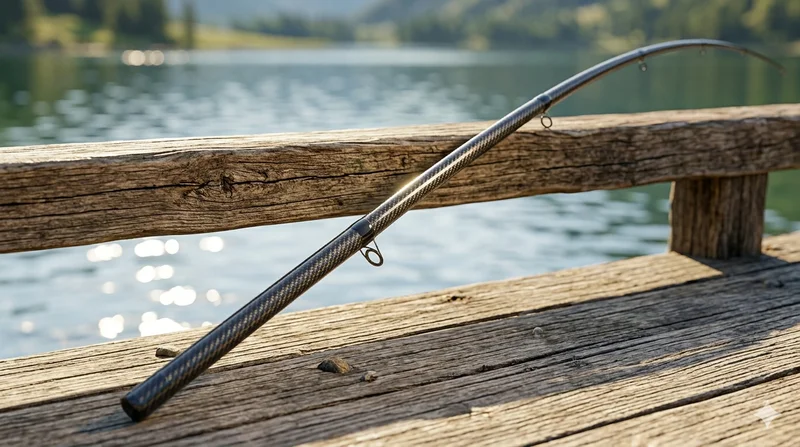
Carbon Fiber Fishing Rod Blank
High-quality carbon fiber fishing rod blank manufactured from multiple grades of Toray carbon fiber cloth. Available in a wide range of lengths, powers, and actions for freshwater and saltwater applications. Suitable for OEM rod building.