

A comprehensive technical guide to prepreg tack life management covering the physics of tack, storage and out-time protocols, measurement methods, and best practices for both manual and automated layup operations in composite manufacturing.
In carbon fiber composite manufacturing, a prepreg's tack — its ability to adhere to itself and to mold surfaces during layup — determines whether a complex aerospace component can be reliably fabricated or whether delamination, ply slippage, or porosity defects will compromise structural integrity. Yet tack remains one of the least standardized and most poorly controlled parameters in production environments. A prepreg that is too tacky will trap air and create wrinkles; one that is insufficiently tacky will fail to hold its shape during layup, leading to gaps and fiber misalignment.
This article consolidates industry best practices from aerospace, automotive, and wind energy manufacturing sectors, drawing on published research, NADCAP guidelines, and established process control standards. The guidance is structured for quality engineers, production managers, and procurement professionals.
The Physics of Prepreg Tack
Tack in prepreg materials is governed by three interacting physical phenomena: resin viscosity, surface energy, and molecular diffusion. At the time of manufacture, the epoxy resin is formulated to a specific B-stage advancement — a partially cured state with a paste-like viscosity of 100–10,000 Pa·s at room temperature.
The tack level changes over time because the epoxy resin continues to advance even at freezer storage temperatures. At −18°C, the crosslinking rate is slowed to approximately 1–3% per month. At room temperature (21–24°C), the reaction accelerates dramatically — 5–15 days of room temperature exposure can advance the resin as much as 12 months of freezer storage.
| Temperature | Resin Advancement Rate | Tack Life Window | Recommended Max Out-Time |
|---|---|---|---|
| −18°C (freezer) | 1–3% per month | 6–12 months | 12–18 months |
| 4°C (refrigerated) | 2–4% per week | 2–6 weeks | 3–4 weeks |
| 21°C (room temp) | 5–15 days = 12 mo evolution | 10–30 days | 10–15 days |
| 27°C (warm workshop) | 5–8 days = 12 mo evolution | 5–15 days | 5–8 days |
| 35°C+ (hot climate) | 2–4 days = 12 mo evolution | 1–5 days | 1–3 days |
Tack Life Measurement Methods
Three primary measurement methods are used: peel force testing (0.5–3.0 N/25mm acceptable for manual layup), probe tack testing (0.2–1.5 N for aerospace prepregs), and empirical finger tack assessment by trained operators.
Storage and Out-Time Management
- Receiving inspection and freezer storage: −18°C ± 3°C in continuously monitored freezers.
- Thawing protocol: Sealed moisture-barrier bags; 4–24 hours depending on roll size.
- Out-time tracking: Digital barcode or RFID tracking at each workstation.
- Environmental conditions: 21°C ± 2°C and 30–55% relative humidity.
- Material rotation: First-expiry-first-out (FEFO) principles.
Tack Management for Manual Layup
Operators should use a sequential compaction approach — applying pressure from the center outward. Soft rubber squeegees (Shore A 40–60) are preferred. For laminates exceeding 8–12 plies, intermediate vacuum debulking is necessary.
Tack Management for AFP/ATL
| Parameter | Manual Layup | AFP | ATL |
|---|---|---|---|
| Optimal peel tack (N/25mm) | 0.5–3.0 | 1.0–4.0 | 1.5–5.0 |
| Required compaction force (N) | 5–15 per cm roller | 50–500 per tow | 200–2,000 per tape |
| Max out-time before issues | 10–15 days | 5–10 days | 3–7 days |
Frequently Asked Questions
Q: Can prepreg that has exceeded its tack life be restored?
A: No. Once a prepreg has exceeded its specified tack life, the resin has advanced beyond the designed processing window and cannot be restored. Parts may exhibit 15–30% reduction in interlaminar shear strength and increased porosity (>2% void content). Most aerospace OEM specifications strictly prohibit use of expired prepreg for primary and secondary structures.
Q: What is the difference between shelf life and out-time?
A: Shelf life is total time at −18°C (6–12 months). Out-time is cumulative time above −10°C (10–30 days). Out-time is cumulative — briefly warming and refreezing does not reset the clock.
Q: How does humidity affect prepreg tack?
A: Humidity above 60% causes moisture absorption that creates porosity during cure. Below 20% RH promotes electrostatic discharge. The ideal range is 30–55% RH. Layup should be suspended if RH exceeds 65% or falls below 20%.
Q: What is the effect of multiple freeze-thaw cycles?
A: Most manufacturers permit 3–5 freeze-thaw cycles. After 5+ cycles, microscopic debonding can reduce interlaminar shear strength by 5–10%. We recommend limiting to 3 cycles or fewer.
Q: How do different resin systems compare in tack life?
A: 120°C-cure epoxy: 15–30 days. 180°C-cure toughened: 10–20 days. BMI: 3–7 days. Cyanate ester: 20–40 days. Low-temperature cure: 30–60 days. Match the tack life to the expected layup duration.
Conclusion
Prepreg tack life management is a critical process control parameter that directly affects manufacturing yield, laminate quality, and structural performance. Effective tack management requires proper freezer storage, disciplined out-time tracking, environmental control in the layup cleanroom, and operator training. For B2B buyers, understanding tack life characteristics is as important as specifying mechanical properties.
Part of topic
Related Articles
- Bio-Based Carbon Fiber Precursors: Lignin and Polyethylene for Low-Cost Production
- Large-Tow Carbon Fiber Cost Analysis: 48K vs 60K Price-Performance Comparison
- Carbon Fiber-Resin Interface Bonding: Surface Treatment and Coupling Agent Optimization
- Digital Twin for Carbon Fiber Manufacturing: Real-Time Process Monitoring and Defect Prevention
- Thermoplastic Carbon Fiber Welding for Automotive: Ultrasonic and Induction Welding Process Windows
- Large-Tow Carbon Fiber Wet Spinning: Process Optimization for 48K/60K Production Efficiency
Interested in Our Products?
Contact our team for competitive pricing and technical specifications.
Get a QuoteRelated Products

Carbon Fiber Plate — 3K Twill T700 1.5mm
Thin 1.5mm carbon fiber plate with 3K twill weave surface. Lightweight and stiff, commonly used for covers, panels, drone bodies, and applications requiring a premium aesthetic appearance.
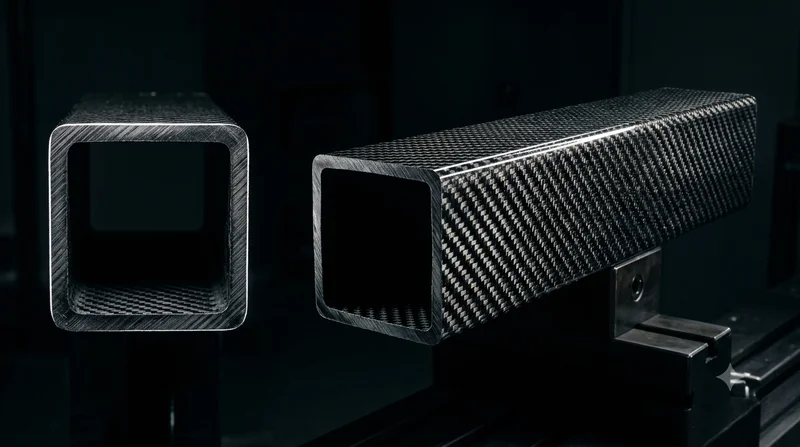
Square Carbon Fiber Tube — 3K Twill T700
Square cross-section carbon fiber tube manufactured with 3K twill weave for torsional strength. Preferred for structural frames, trusses, and support columns where rectangular geometry offers design flexibility.
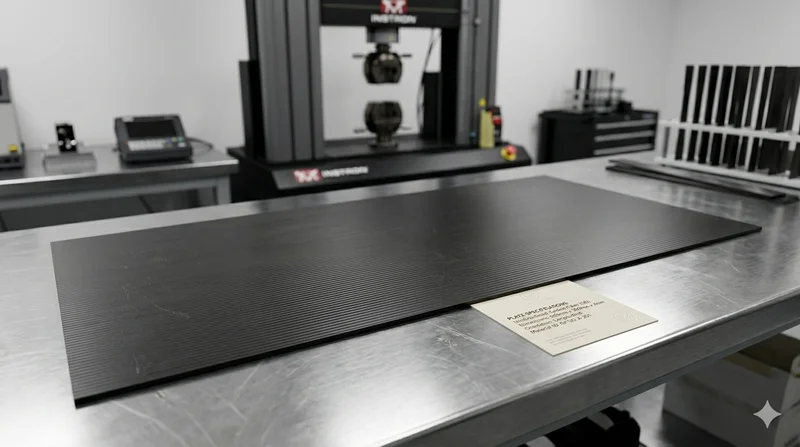
Carbon Fiber Plate — UD Unidirectional T700
Unidirectional carbon fiber plate with all fibers oriented in a single direction for maximum strength along the fiber axis. Essential for structural reinforcements, splints, and applications where load direction is predictable.
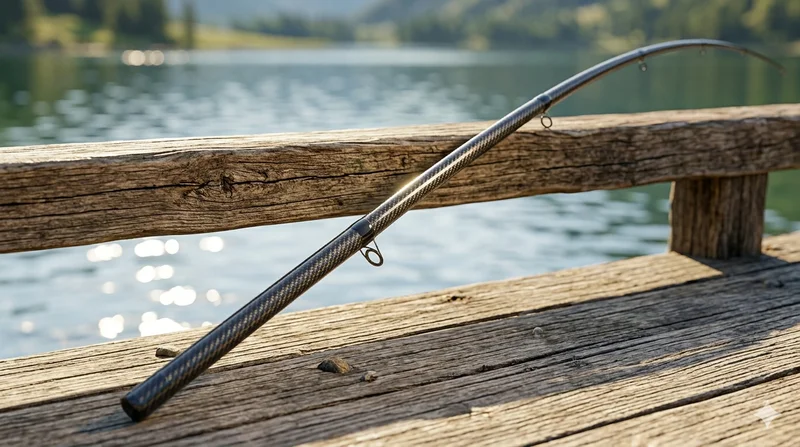
Carbon Fiber Fishing Rod Blank
High-quality carbon fiber fishing rod blank manufactured from multiple grades of Toray carbon fiber cloth. Available in a wide range of lengths, powers, and actions for freshwater and saltwater applications. Suitable for OEM rod building.
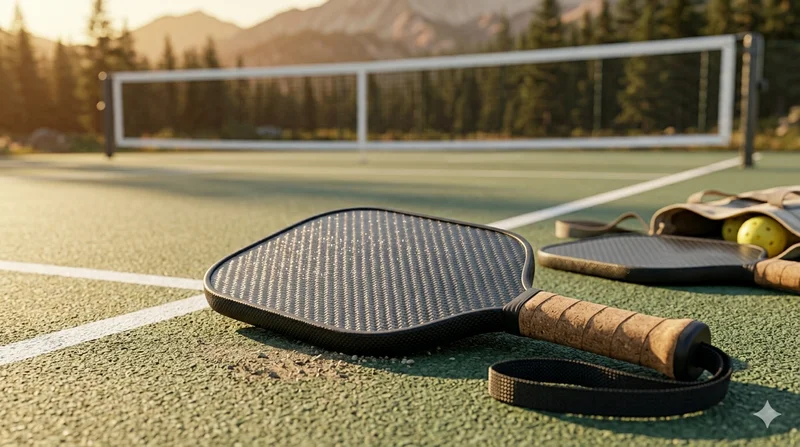
Carbon Fiber Pickleball Paddle
High-performance pickleball paddle with Toray T700 carbon fiber face and polypropylene honeycomb core. Delivers excellent power-to-weight ratio, spin generation, and vibration dampening for competitive play.