
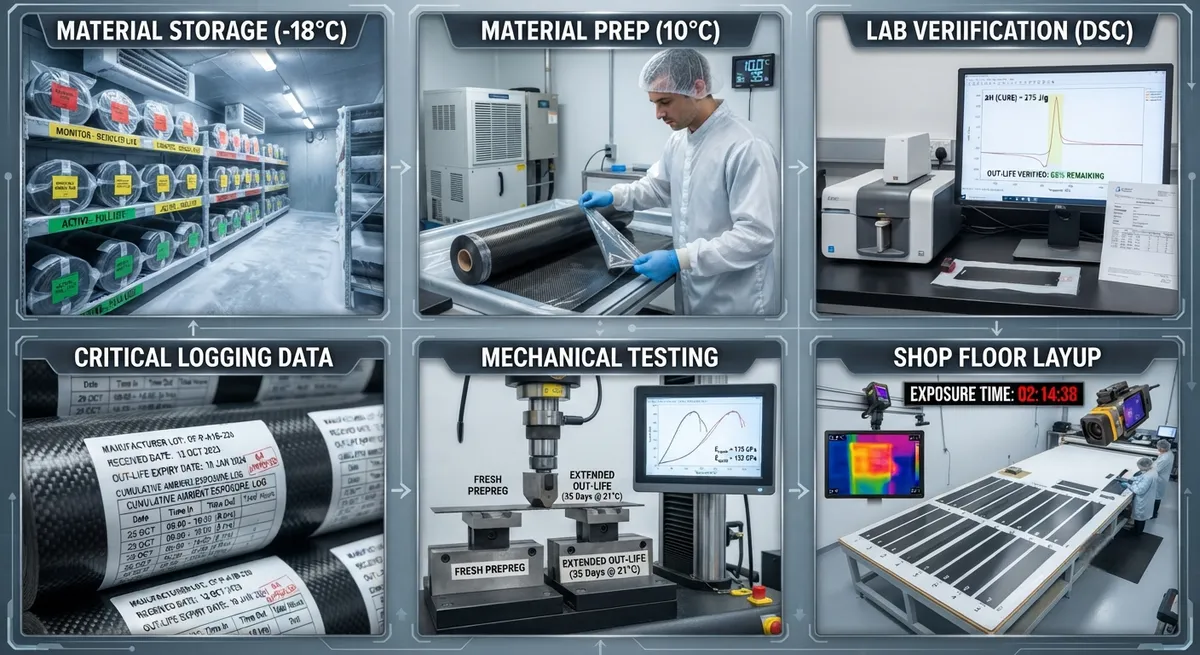
A comprehensive technical guide to maximizing prepreg out-life in composite manufacturing. Learn about cold chain management, ambient-condition working time extension techniques, DSC re-testing protocols, and practical shop-floor strategies that reduce material waste without compromising part quality.
Understanding Prepreg Out-Life and Tack Life
Prepreg — pre-impregnated carbon fiber reinforcement combined with a partially cured epoxy resin — is a high-value engineered material with a limited usable window outside controlled cold storage. Two distinct shelf-life parameters govern prepreg usability: out-life (or handling life, typically 10–30 days at 21°C) and tack life (the period during which the prepreg retains sufficient surface stickiness for layup). Exceeding either parameter risks incomplete curing, porosity in the final part, and compromised mechanical properties.
For composite manufacturers working with expensive aerospace-grade or automotive prepregs ($50–$200 per kg), maximizing out-life is a direct cost-saving measure. This guide covers proven strategies for extending usable life, managing shop-floor material rotation, and qualifying extended material through analytical re-testing.
Prepreg Shelf-Life Classification
| Grade | Typical Resin System | Storage Temp | Manufacturer Out-Life (21°C) | Extended Out-Life (Proven) | Typical Cost/kg |
|---|---|---|---|---|---|
| Aerospace (350°F cure) | BMI / Epoxy | −18°C | 10–15 days | 20–25 days | $80–$200 |
| Aerospace (250°F cure) | Epoxy (3501-6 type) | −18°C | 15–20 days | 28–35 days | $60–$150 |
| Automotive (fast cure) | Epoxy (ER450 type) | −18°C | 20–30 days | 35–45 days | $40–$80 |
| Industrial / Wind | Epoxy (low-cost) | −10 to −5°C | 25–40 days | 50–60 days | $15–$40 |
| Tooling prepreg | Epoxy / Phenolic | −18°C | 30–60 days | 75–90 days | $25–$50 |
Cold Chain Management Best Practices
Proper cold chain management is the most effective way to preserve prepreg out-life. Key practices include:
- Continuous temperature logging: Install wireless data loggers in every storage freezer and transport container. Maintain a continuous temperature record from the manufacturer's warehouse to your layup room. Any excursion above −12°C lasting more than 4 hours should be flagged and the affected material quarantined for re-testing.
- Two-stage thawing protocol: Never transfer prepreg directly from −18°C storage into a 21°C layup room. The rapid temperature change causes moisture condensation on the prepreg surface, which creates voids during cure. Instead, use a two-stage thaw: first move the sealed bag to a 4°C refrigerator for 12–24 hours, then to the layup room in its sealed bag until it reaches ambient temperature (typically 2–4 hours for a 5kg roll).
- Zone-based inventory management: Implement a FIFO (First-In, First-Out) system using color-coded labels or barcode tracking. Divide the freezer into zones: Zone A (approved, in-date), Zone B (approaching out-life limit, use within 5 days), Zone C (quarantined, pending re-test).
Ambient-Condition Working Time Extension
Once prepreg is removed from cold storage and thawed, its chemical crosslinking reaction begins progressing at ambient temperature. Several techniques can extend the usable working window without compromising final part quality:
- Cooled workstations: Install a chilled layup table maintained at 8–12°C. Prepreg placed on a cooled surface experiences a 40–50% reduction in reaction rate compared to material at 21°C, effectively doubling the available working time. Several automotive composite manufacturers (including BMW i3 supply chain partners) use cooled tables as standard practice.
- Partial roll re-storage: When working from a 10–20kg prepreg roll, cut only the material needed for the current shift. Immediately return the remainder to cold storage within 20 minutes of removal. Each excursion cycle (removal → cut → return) consumes approximately 0.3–0.5 days of out-life. Track these partial exposures cumulatively.
- Dehumidified layup environment: Maintain relative humidity below 40% in the layup room. High humidity accelerates moisture absorption in the prepreg resin, which advances the cure state and can introduce micro-porosity. A dehumidified environment can extend tack life by 20–30% compared to uncontrolled conditions.
Re-Testing Protocols for Extended-Out-Life Prepreg
When prepreg approaches or exceeds the manufacturer's published out-life, it need not be discarded. Analytical re-testing can qualify the material for continued use. The standard re-testing protocol involves three characterization methods:
- Differential Scanning Calorimetry (DSC): The primary qualification method. A small sample (5–10 mg) is heated in a DSC instrument at a controlled ramp rate (typically 10°C/min). Key parameters measured: glass transition temperature (Tg) of the uncured resin, onset temperature of the cure exotherm, and total heat of reaction (ΔH). If ΔH exceeds 85% of the manufacturer's reference value for fresh prepreg, the material is considered chemically viable. Below 85%, the degree of cure advancement has consumed too much reactive potential, and the material should be scrapped or downgraded to non-structural applications.
- Viscosity profiling: Using a parallel-plate rheometer, measure the minimum viscosity of the resin at the recommended cure temperature. If the out-life extension has caused excessive B-staging (resin advancement), the viscosity will be elevated, leading to poor fiber wet-out and inter-laminar bonding during cure. A minimum viscosity below 50 Pa·s at the cure temperature is the typical acceptance criterion for most epoxy prepregs.
- Mechanical test coupons: For critical structural applications, manufacture and test a minimum of 5 coupon panels using the extended-out-life prepreg. Perform short-beam shear (ASTM D2344) and 0° flexural strength (ASTM D790) tests. Accept if properties remain within 90% of the manufacturer's published data sheet values.
Frequently Asked Questions
Can prepreg be refrozen after partial use?
Yes, prepreg can be returned to cold storage after partial use, but each freeze-thaw cycle consumes some out-life. The accepted industry practice is that each removal-from-storage event (including thawing and re-freezing) consumes 1–2 days of the total out-life budget, regardless of how long the material was actually at room temperature. Material that has undergone 3 or more freeze-thaw cycles should be tested by DSC before being used in structural applications. Always reseal the polyethylene liner and vacuum bag the roll before returning to cold storage to prevent moisture ingress during the re-freeze cycle.
What is the difference between out-life and tack life?
Out-life (also called handling life) is the total cumulative time a prepreg can spend at room temperature (typically 21°C / 70°F) before the resin advances beyond the point where acceptable mechanical properties can be achieved in the cured part. Tack life is a subset of out-life — it refers specifically to the period during which the prepreg retains sufficient surface tack (stickiness) for proper layup adhesion. Tack life is typically shorter than out-life because the surface resin advances faster than the bulk material. In practice, when tack is lost, additional labor is required for layup (tacking with heat guns, using tackifiers), but the cured mechanical properties may still be acceptable if total out-life has not been exceeded.
Does extending prepreg out-life affect the final part's mechanical properties?
It can, but not always negatively. When prepreg out-life is extended within reasonable limits (typically up to 50% beyond the manufacturer's published value) and validated by DSC testing, the cured mechanical properties — including interlaminar shear strength (ILSS), flexural modulus, and glass transition temperature — often remain within 90–95% of fresh material values. Some studies have even shown a slight increase in ILSS (5–8%) with moderate out-life extension (up to 25% beyond limit), attributed to a more uniform resin viscosity during consolidation. However, if the extended out-life causes the resin viscosity to rise above the optimal window (typically >50 Pa·s), void content increases and mechanical properties degrade. This is why DSC and viscosity re-testing are essential before using extended-out-life prepreg in structural parts. Non-structural or cosmetic parts can often tolerate out-life extensions of 2–3× the manufacturer's limit with no visible defects.
Part of topic
Related Articles
- Bio-Based Carbon Fiber Precursors: Lignin and Polyethylene for Low-Cost Production
- Large-Tow Carbon Fiber Cost Analysis: 48K vs 60K Price-Performance Comparison
- Carbon Fiber-Resin Interface Bonding: Surface Treatment and Coupling Agent Optimization
- Digital Twin for Carbon Fiber Manufacturing: Real-Time Process Monitoring and Defect Prevention
- Thermoplastic Carbon Fiber Welding for Automotive: Ultrasonic and Induction Welding Process Windows
- Large-Tow Carbon Fiber Wet Spinning: Process Optimization for 48K/60K Production Efficiency
Interested in Custom Carbon Fiber Products?
Contact our team for competitive pricing and technical specifications.
Get a QuoteRelated Products
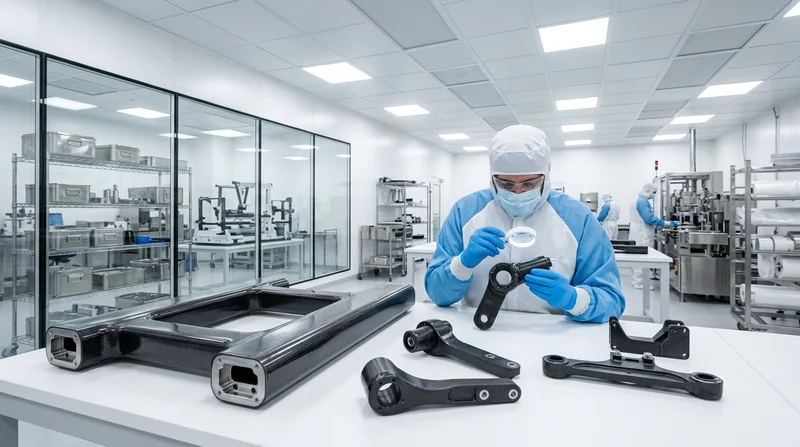
Custom Carbon Fiber Medical Device Components
Medical-grade carbon fiber components manufactured for imaging equipment, surgical instruments, and patient support systems. Carbon fiber's radiolucency (X-ray transparency) and high strength-to-weight ratio make it ideal for CT scanner beds, wheelchair frames, surgical robot arms, and MRI-compatible accessories. Biocompatible resin systems available.
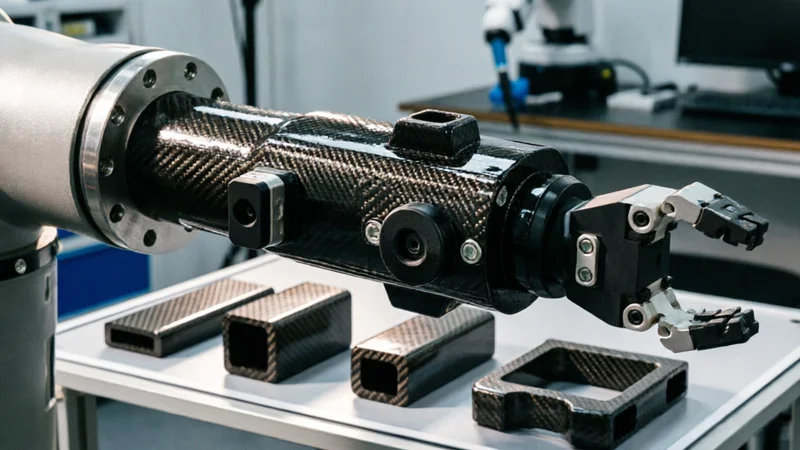
Carbon Fiber Robot End Effector Link — Custom Shape & Sensor Integration
Custom-shaped carbon fiber end effector links for robotic arms. Designed for automation integrators and research labs requiring lightweight, rigid connections between the robot wrist and gripper/tool. Can incorporate sensor mounting bosses, cable routing channels, and quick-change interfaces.

Custom Carbon Fiber Musical Instrument Parts
Carbon fiber components for musical instrument manufacturing offering superior dimensional stability, low weight, and consistent acoustic properties. We produce carbon fiber bows, guitar necks, violin chin rests, drum shells, and wind instrument bodies. Carbon fiber instruments are immune to humidity changes and temperature fluctuations that affect wooden instruments.
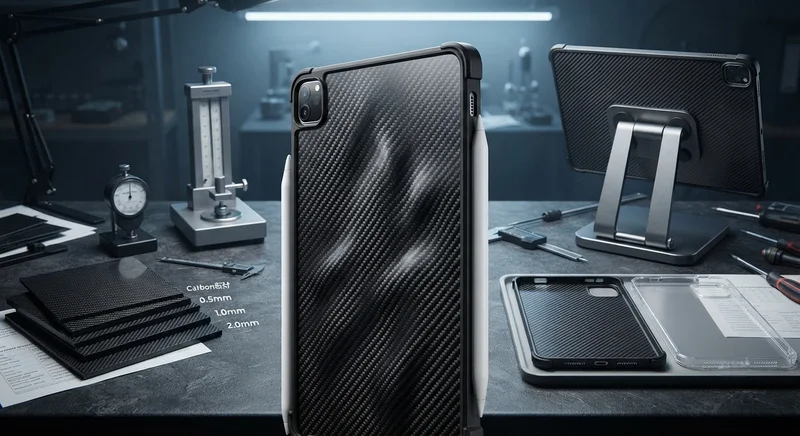
Carbon Fiber Tablet Case — Ultra-Light Protective Shell
Lightweight carbon fiber protective case for tablets and iPads. Molded from T700 3K prepreg with reinforced corner protection. Adds minimal weight while providing superior rigidity and drop protection compared to polycarbonate or silicone cases. Ideal for field workers, enterprise deployments, and professionals requiring durable tablet protection.
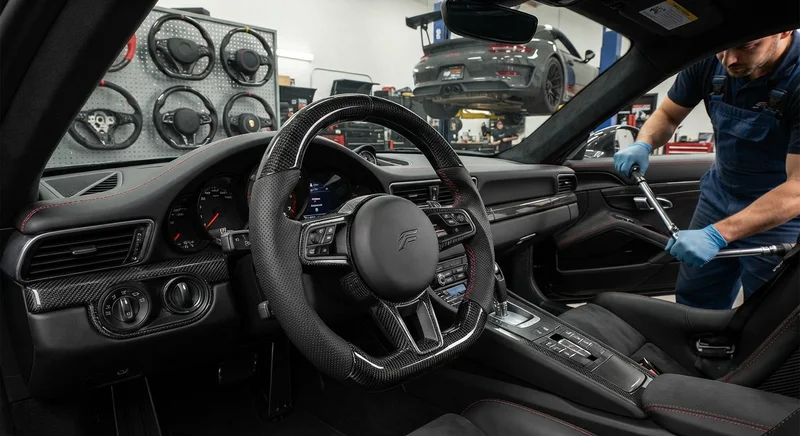
Carbon Fiber Steering Wheel — Custom Leather-Wrapped with CF Inlay
Custom carbon fiber steering wheel with genuine leather wrapping and carbon fiber inlay sections. Molded from T700 3K prepreg for maximum rigidity with a 30% weight reduction over OEM wheels. Available in D-shape (flat bottom) and round profiles. Direct bolt-on fitment for popular sports car and performance vehicle models. Custom stitching color and leather grade available.