
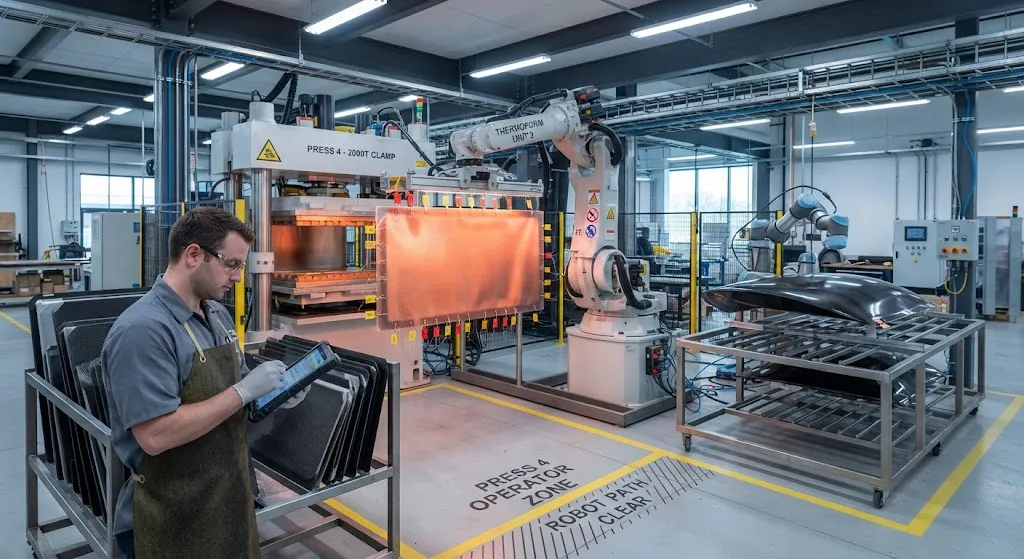
Thermoplastic composites are usually discussed through two extremes. At one end sits automated fiber placement with in-situ consolidation, which can build large, complex geometries but deposits material slowly and costs millions in equipment. At the other end sits stamping with glass-ma
Introduction
Thermoplastic composites are usually discussed through two extremes. At one end sits automated fiber placement with in-situ consolidation, which can build large, complex geometries but deposits material slowly and costs millions in equipment. At the other end sits stamping with glass-mat thermoplastics, which cycles in under a minute but only delivers discontinuous-fiber properties. Organo-sheet thermoforming sits between them: a continuous-fiber, pre-consolidated laminate blank is heated above its melt temperature, formed in a press in seconds, and cooled in the tool — combining the mechanical profile of continuous reinforcement with the cadence of a stamping line.
This article breaks down the process into its material and machine variables, compares the main matrix options on forming and service performance, and maps the two application families — wind turbine leading edges and automotive semi-structural parts — where the process economics currently work best. It closes with the design rules that separate a successful organo-sheet part from a wrinkled, distorted one.
From Semi-Finished Blank to Formed Part
An organo-sheet is a flat laminate of continuous fiber — typically woven carbon or glass, or cross-piled unidirectional layers — consolidated with a thermoplastic matrix and delivered as panels or rolls. The fabricator cuts a blank, heats it above the matrix melt in an infrared or convection furnace, transfers it to a press, and forms it in a cooled tool. The whole cycle, including part removal, lands between roughly 30 and 90 seconds.
| Criterion | Organo-sheet thermoforming | AFP in-situ consolidation | GMT / LFT stamping |
|---|---|---|---|
| Cycle time | 30-90 seconds | Minutes to hours per part | 40-90 seconds |
| Fiber architecture | Continuous (woven or UD) | Continuous tow | Discontinuous fiber |
| Strength and stiffness | High | Highest | Moderate |
| Part size limit | Press platen | Effectively unlimited | Press platen |
| Tooling cost | Steel or aluminum, moderate | Minimal tooling, high machine cost | Steel, moderate |
| Best application | Leading edges, semi-structural, high volume | Large skins, stiffened panels | Low-cost semi-structural |
Three process parameters govern quality. Forming temperature must clear the matrix melt by a controlled margin — too cold and the laminate springs back and micro-cracks; too hot and the matrix degrades and the fibers displace. Press pressure for organo-sheets is modest compared to compression molding because the matrix is already consolidated, so the tool mainly shapes and cools rather than squeezes. Cooling rate, finally, sets the crystallinity and therefore the dimensional stability of the part after ejection.
Matrix Options and Their Forming Windows
Matrix selection drives both the forming temperature and the usable lifetime of the part. Commodity matrices form on standard presses and keep cost low; high-temperature matrices require higher furnace output but unlock aviation and under-hood applications.
| Matrix | Typical forming temperature | Continuous service temperature | Cost tier | Typical use |
|---|---|---|---|---|
| Polypropylene (PP) | 170-200 °C | Up to 90 °C | Lowest | Covers, bumper structures, small semi-structural |
| PA6 | 230-260 °C | 110-120 °C | Low | Leading edges, battery covers, seat structures |
| PA66 | 260-290 °C | 130 °C | Low-moderate | E-mobility parts, structural clips, pedal boxes |
| PPS | 290-320 °C | 200 °C | High | Aviation interiors, engine-adjacent, leading edges |
| PEKK / PEEK | 340-380 °C | 250 °C | Highest | Aviation semi-structural, high-load brackets |
The wetting and consolidation quality of the melt directly determines weldability and mechanical scatter. Polyamide grades absorb moisture, which changes both the forming window and the dimensional response of the final part; processors commonly dry blanks before forming and control shop humidity around PA6 and PA66 lines. High-temperature grades avoid that maintenance burden but carry a furnace and tooling premium that only pays back when the service temperature justifies it.
Where Organo-Sheets Compete
The first commercial stronghold is wind turbine leading edges. Leading-edge protection and replacement shields are classically produced as thermoset laminates with long cure cycles; organo-sheet forming cuts the cycle from hours to under two minutes, and the thermoplastic matrix welds directly to adjacent protective materials. EU projects such as RECREATE have demonstrated natural-fiber and glass thermoplastic leading edges formed on exactly this route, confirming both erosion resistance and the feasibility of automated, press-based production for blade-edge hardware.
- Wind leading edges: erosion shields, replaceable leading-edge shells, drain and joint fairings — press-formed, weldable, and batch-produced.
- Automotive semi-structural: seat back panels, battery covers, floor modules, and bumper internals where stamped steel is overweight and GMT underperforms.
- Aviation interior and secondary: cabin shelf panels, divider structures, and galley frames that benefit from weldable assembly and low flammability grades.
- Logistics and industrial: pallets, dunnage, and machine guards that reward fast forming and impact toughness.
Against AFP in-situ, the trade is geometry for speed: organo-sheets cannot follow the double curvature and deep stiffener detail of a full skin-stringer panel, but a parts-per-minute press line beats a placement head for anything that fits the platen. Against GMT stamping, the trade is cost for performance: the continuous fiber in the blank delivers roughly double the stiffness of the same weight in discontinuous fiber, which is why semi-structural parts that must absorb bending loads migrate to organo-sheet.
Design Rules That Separate Success from Scrap
Organo-sheet forming is forgiving at the blank level and demanding at the geometry level. Successful programs share a consistent set of constraints:
- Control draw depth: woven blanks wrinkle in deep draws; keep depth-to-width ratios modest or pre-cut tailored blanks with local fabric orientation.
- Use symmetric layups: asymmetric fiber stacking distorts on cooling; mirror the stacking sequence across the laminate midplane.
- Plan for welding: keep weld flanges flat, with uniform thickness, so ultrasonic or laser welding has a consistent interface.
- Maintain uniform wall thickness: ribs and bosses drive local thinning and sink marks; draft and radii should follow stamping practice rather than sheet-metal practice.
- Control moisture: dry PA6 and PA66 blanks before forming and manage shop humidity to hold forming-window repeatability.
Partners that enforce these rules report first-pass success rates above 95 percent after tooling trials, while teams that treat organo-sheet like sheet metal typically burn several tooling iterations on wrinkle and distortion rework. The difference is the same one that separates any thermoplastic stamping program: the tool designs the part, and the blank is only as good as the thermal control around it.
Frequently Asked Questions
Can organo-sheet parts be welded or recycled?
Yes, and this is the main advantage over thermoset laminate. Because the matrix is thermoplastic, formed parts join by ultrasonic, vibration, or laser welding without adhesives or mechanical fasteners, and offcuts, rejected parts, and end-of-life components can be re-ground into compounds or re-consolidated into new blanks. In programs driven by sustainability targets, weldability and recyclability frequently tip the decision toward organo-sheet even when the raw material costs slightly more than its thermoset equivalent.
How does organo-sheet compare with UD tape and AFP in cost?
For a given part geometry that fits the platen, organo-sheet wins on equipment and cycle cost: a press line is a fraction of an AFP cell, and the cycle is measured in seconds rather than hours per part. For large skins, stiffened panels, or deep three-dimensional geometry, AFP remains the only continuous-fiber route. The pragmatic selection rule is geometric: if the part fits a blank and the press, thermoform it; if it needs tow-steering or spans beyond platen size, place it.
What thickness and size limits apply to organo-sheet blanks?
Standard organo-sheet panels run from roughly 0.4 mm to 2 mm per consolidated laminate, and thicker semi-structural parts are built by stacking and co-consolidating multiple blanks or bonding them in the same press cycle. Blank size is limited by the fabric width and the press platen — typically up to about 2 by 3 meters in production today — which covers leading-edge shells and automotive panels but excludes full-length blade spars, where UD tape and AFP remain the reference routes.
Conclusion
Organo-sheet thermoforming fills the interval between slow continuous-fiber processes and weak discontinuous-fiber stamping. It preserves continuous reinforcement, cycles in under two minutes, and forms on tooling that is a fraction of an AFP cell, which makes it the natural choice for wind leading edges, automotive semi-structural parts, and any press-sized geometry that must carry bending loads without the weight of steel. The technology is mature enough that the differentiator now sits in process control — drying, thermal windows, and tool design.
For processors selecting raw material for a thermoforming program, review our thermoplastic fabric and prepreg range, or contact our team to discuss blank formats, matrix grades, and forming support for your application.
Part of topic
Related Articles
- Bio-Based Carbon Fiber Precursors: Lignin and Polyethylene for Low-Cost Production
- Large-Tow Carbon Fiber Cost Analysis: 48K vs 60K Price-Performance Comparison
- Carbon Fiber-Resin Interface Bonding: Surface Treatment and Coupling Agent Optimization
- Digital Twin for Carbon Fiber Manufacturing: Real-Time Process Monitoring and Defect Prevention
- Thermoplastic Carbon Fiber Welding for Automotive: Ultrasonic and Induction Welding Process Windows
- Large-Tow Carbon Fiber Wet Spinning: Process Optimization for 48K/60K Production Efficiency
Interested in Our Products?
Contact our team for competitive pricing and technical specifications.
Get a QuoteRelated Products
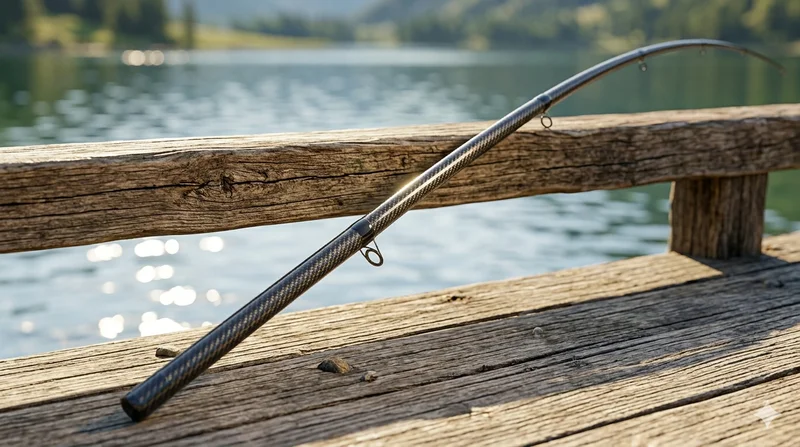
Carbon Fiber Fishing Rod Blank
High-quality carbon fiber fishing rod blank manufactured from multiple grades of Toray carbon fiber cloth. Available in a wide range of lengths, powers, and actions for freshwater and saltwater applications. Suitable for OEM rod building.

Carbon Fiber Plate — 3K Twill T700 3.0mm
Medium-thickness 3.0mm carbon fiber plate offering significantly higher load capacity while maintaining attractive 3K twill finish. Suitable for structural brackets, reinforcement plates, and load-bearing panels.

Carbon Fiber Plate — 3K Twill T700 1.5mm
Thin 1.5mm carbon fiber plate with 3K twill weave surface. Lightweight and stiff, commonly used for covers, panels, drone bodies, and applications requiring a premium aesthetic appearance.

Square Carbon Fiber Tube — 3K Twill T700
Square cross-section carbon fiber tube manufactured with 3K twill weave for torsional strength. Preferred for structural frames, trusses, and support columns where rectangular geometry offers design flexibility.
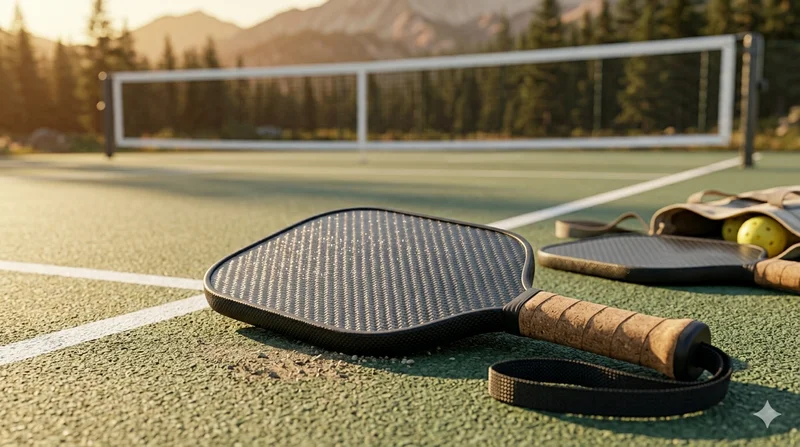
Carbon Fiber Pickleball Paddle
High-performance pickleball paddle with Toray T700 carbon fiber face and polypropylene honeycomb core. Delivers excellent power-to-weight ratio, spin generation, and vibration dampening for competitive play.