
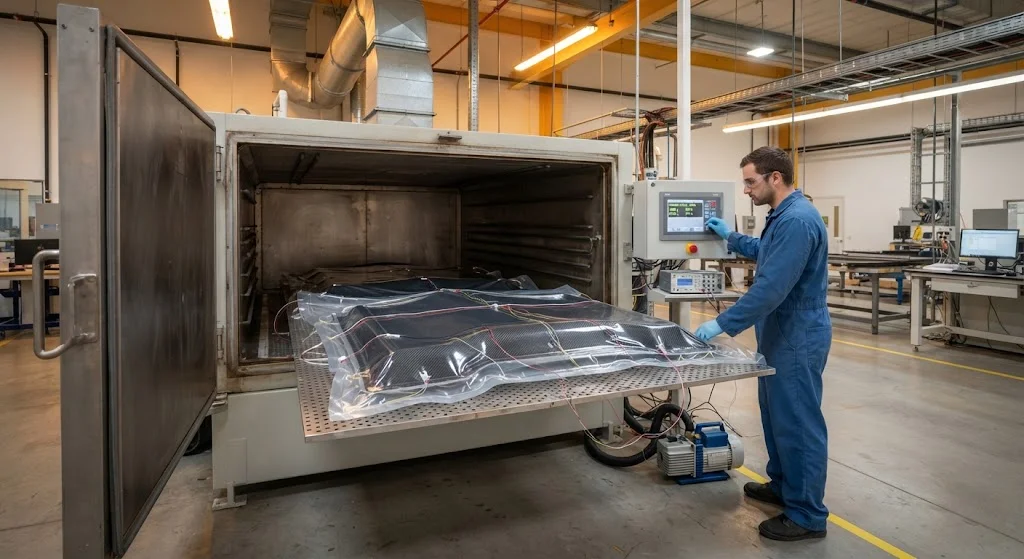
Out-of-autoclave carbon fiber processing represents one of the most significant manufacturing technology shifts in aerospace composites. Traditional autoclave curing — pressurizing parts to 6-7 bar at 180°C — produces excellent void content and mechanical properties, but the capital cost of a produc
Introduction
Out-of-autoclave carbon fiber processing represents one of the most significant manufacturing technology shifts in aerospace composites. Traditional autoclave curing — pressurizing parts to 6-7 bar at 180°C — produces excellent void content and mechanical properties, but the capital cost of a production autoclave ranges from $1 million to $10 million depending on size, and cycle times of 4-8 hours limit throughput. For aerospace programs that must scale production while controlling cost, out-of-autoclave (OoA) processing offers a compelling alternative.
OoA processing uses vacuum-bag-only (VBO) pressure and oven or convection curing to produce carbon fiber laminates with void content below 1% — the threshold required for aerospace primary structures. The technology has matured rapidly over the past decade, with multiple resin systems now qualified to aerospace specifications and several aircraft programs adopting OoA for secondary and even primary structures. This article examines the technology behind out-of-autoclave carbon fiber processing, the certification requirements that govern its adoption, and the practical steps aerospace manufacturers must follow to qualify OoA parts for flight.
OoA Process Technology: Vacuum-Bag-Only Cure
The core principle of out-of-autoclave carbon fiber processing is replacing autoclave pressure with a carefully engineered vacuum bag and resin system. In an autoclave, external pressure compresses the laminate and forces resin flow, suppressing void formation. In VBO processing, the vacuum alone drives consolidation — making the bag design, tool permeability, and resin rheology critical.
- Vacuum bag design: Multi-layer vacuum bags with breather, peel ply, and release film layers create a controlled pressure environment. The bag must maintain vacuum integrity throughout the cure cycle without leaks that would introduce porosity.
- Tool permeability: Porous tool surfaces (perforated steel, expanded metal, or breathable composite tooling) allow air and volatiles to escape from the laminate during cure. Non-porous tools require edge breather channels to provide evacuation paths.
- Resin rheology: OoA resin systems are formulated with carefully controlled gel time and viscosity windows. The resin must flow enough to wet out fibers and fill voids, but not so aggressively that it starves the laminate. Typical pot life at room temperature is 2-4 hours, with gel occurring at 80-120°C.
- Cure cycle: Standard OoA cure cycles use oven heating at 1-3°C per minute ramp rates, with holds at intermediate temperatures (80-120°C) for degassing, followed by a final cure at 150-180°C. Total cycle time is typically 2-4 hours.
The achievable void content in well-optimized OoA processing ranges from 0.5% to 1.5%, compared with 0.1% to 0.5% in autoclave processing. For many aerospace applications, void content below 1.0% is acceptable, making OoA a viable production method.
OoA vs Autoclave: Performance Comparison
| Parameter | Autoclave | OoA (VBO) | Aerospace Requirement |
|---|---|---|---|
| Consolidation pressure | 6-7 bar (external) | 1 bar vacuum (internal) | N/A |
| Void content | 0.1-0.5% | 0.5-1.5% | < 1.0% (primary structure) |
| Fiber volume fraction | 58-62% | 55-60% | > 55% |
| Interlaminar shear strength | 65-75 MPa | 60-70 MPa | > 60 MPa |
| Open-hole compression | 280-320 MPa | 260-300 MPa | Program-specific |
| Tooling cost | High (matched metal) | Moderate (composite/porous) | N/A |
| Cycle time | 4-8 hours | 2-4 hours | N/A |
| Capital equipment | $1-10M autoclave | $100-500K oven | N/A |
The performance gap between autoclave and OoA processing has narrowed significantly. Modern OoA resin systems produce interlaminar shear strengths within 5-10% of autoclave equivalents, and the economic advantages — lower capital cost, shorter cycle times, larger part capability — often outweigh the modest performance reduction for non-critical and semi-critical structures.
Aerospace Certification Requirements for OoA
Certification of out-of-autoclave carbon fiber parts follows the same regulatory framework as autoclave parts, but the process validation requirements are more extensive because the manufacturer must demonstrate equivalent performance without the process margin that autoclave pressure provides.
- Material qualification: The resin and reinforcement combination must be qualified to aerospace specifications (e.g., BMS 8-256, CMH-17, or equivalent). Testing includes mechanical properties at room temperature and elevated temperature, hot/wet conditioning, and environmental aging.
- Process specification: A detailed process specification defines the OoA cure cycle, vacuum requirements, bag assembly, tool specifications, and acceptance criteria. The specification must cover the full range of part geometries and thicknesses.
- Void content acceptance: Aerospace standards typically require void content below 1.0% for primary structures and below 2.0% for secondary structures. Ultrasonic inspection is used to verify void content across the part.
- Design allowables: The material allowables (A-basis and B-basis values) must be generated from OoA-produced samples, not inherited from autoclave data. This requires a statistically significant test program — typically 60-100 specimens per condition.
The certification pathway follows a structured approach: material screening, process development, coupon testing, element testing, sub-component testing, and full-scale component qualification. Each stage must demonstrate that the OoA process produces consistent, repeatable results.
Qualification Testing Program
A complete OoA qualification program typically requires the following test matrix:
| Test Stage | Typical Specimens | Key Properties | Duration |
|---|---|---|---|
| Material screening | 20-30 coupons | ILSS, open-hole tension, compression | 4-6 weeks |
| Process development | 50-100 coupons | Void content optimization, thickness variation | 8-12 weeks |
| A-basis allowables | 60-100 specimens per condition | Tension, compression, shear, bearing | 12-20 weeks |
| Environmental conditioning | 30-50 specimens | Hot/wet, cold, thermal cycling | 8-16 weeks |
| Damage tolerance | 20-40 specimens | BVID impact, compression after impact | 6-10 weeks |
| Element testing | 10-20 elements | Bolted joints, stiffened panels | 8-12 weeks |
| Sub-component | 3-5 sub-components | Structural performance validation | 12-20 weeks |
The total qualification timeline from material selection to flight-worthy certification is typically 18-30 months, depending on the complexity of the part and the maturity of the OoA resin system. Pre-qualified material systems from suppliers like Hexcel, Toray, and Solvay can reduce this timeline by providing baseline data that the manufacturer builds upon.
Industrial Adoption and Production Considerations
Out-of-autoclave carbon fiber processing is no longer a laboratory curiosity — it is a production reality on several aerospace programs. Airbus has adopted OoA processing for secondary structures on the A350, and several defense programs use OoA for radomes, access panels, and fairings. The technology is particularly attractive for:
- Large structures: Parts that exceed autoclave diameter limits (typically 3-6 meters) can be cured in large convection ovens at a fraction of the autoclave cost.
- High-rate production: Shorter cure cycles and parallel oven capacity enable higher production rates than autoclave-constrained programs.
- Cost-sensitive programs: Military and commercial programs facing budget pressure benefit from the 30-50% reduction in manufacturing cost that OoA processing can deliver.
Production challenges include maintaining bag integrity on complex geometries, managing resin flow on thick laminates, and ensuring consistent vacuum levels across large parts. Automated fiber placement (AFP) combined with OoA processing is an emerging production approach that addresses throughput and consistency requirements.
Frequently Asked Questions
What is the difference between out-of-autoclave and autoclave carbon fiber processing?
Autoclave processing uses external pressure (6-7 bar) from a pressurized vessel to consolidate carbon fiber laminates during cure, producing very low void content (0.1-0.5%). Out-of-autoclave (OoA) processing uses vacuum-bag-only pressure and oven curing, achieving void content of 0.5-1.5% — still within aerospace limits for most structures. The key difference is capital cost ($1-10M autoclave vs $100-500K oven) and cycle time (4-8 hours vs 2-4 hours).
Can out-of-autoclave parts meet aerospace primary structure requirements?
Yes, modern OoA resin systems can achieve void content below 1.0% and mechanical properties within 5-10% of autoclave equivalents, meeting the requirements for primary structures on many aerospace programs. The qualification process is more extensive because the manufacturer must generate design allowables from OoA-produced samples, but the certification pathway is well established and several flight programs have successfully qualified OoA primary structure.
How long does it take to qualify an OoA material system for aerospace?
A complete qualification program from material selection to flight-worthy certification typically takes 18-30 months. This includes material screening (4-6 weeks), process development (8-12 weeks), A-basis allowables generation (12-20 weeks), environmental conditioning (8-16 weeks), and component testing (8-20 weeks). Pre-qualified material systems from major suppliers can reduce this timeline by providing baseline data.
Conclusion
Out-of-autoclave carbon fiber processing has matured from an emerging technology to a production-proven manufacturing method for aerospace composites. By achieving void content below 1.0% and mechanical properties competitive with autoclave processing, OoA technology enables aerospace manufacturers to reduce capital investment, shorten cycle times, and scale production — all while meeting the stringent certification requirements of aerospace primary structures.
For aerospace programs seeking to adopt out-of-autoclave processing, the key is selecting a pre-qualified resin system, investing in process development, and following the structured qualification pathway defined by aerospace standards. YongXian supplies carbon fiber fabrics and reinforcement materials compatible with OoA processing. Explore our carbon fiber product range or contact our engineering team to discuss material systems for your out-of-autoclave program.
Part of topic
Related Articles
- Carbon Fiber Bio-Composites: Natural Fiber Hybrid Reinforcement for Sustainable Applications
- RFID Tracking for Carbon Fiber Supply Chain: Traceability and Quality Assurance
- Infrared Heating for Carbon Fiber Cure: Energy Efficiency and Cycle Time Reduction
- Carbon Fiber Polymer Matrix Composite Fire Resistance: Intumescent Coatings and Fire-Barrier Solutions
- Carbon Fiber HP-RTM Cycle Time Optimization: High-Pressure Resin Transfer Molding for Automotive
- Continuous Fiber Reinforced Thermoplastics: CFRT vs Thermoset Processing and Applications
Interested in Our Products?
Contact our team for competitive pricing and technical specifications.
Get a QuoteRelated Products
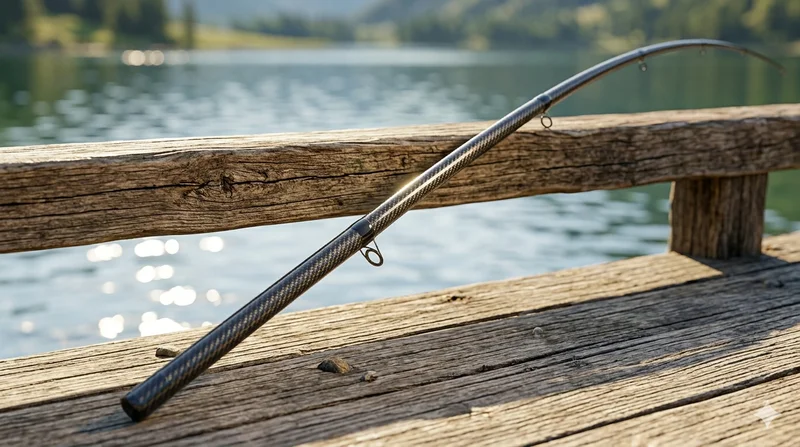
Carbon Fiber Fishing Rod Blank
High-quality carbon fiber fishing rod blank manufactured from multiple grades of Toray carbon fiber cloth. Available in a wide range of lengths, powers, and actions for freshwater and saltwater applications. Suitable for OEM rod building.

Carbon Fiber Plate — 3K Twill T700 1.5mm
Thin 1.5mm carbon fiber plate with 3K twill weave surface. Lightweight and stiff, commonly used for covers, panels, drone bodies, and applications requiring a premium aesthetic appearance.

Carbon Fiber Plate — 3K Twill T700 3.0mm
Medium-thickness 3.0mm carbon fiber plate offering significantly higher load capacity while maintaining attractive 3K twill finish. Suitable for structural brackets, reinforcement plates, and load-bearing panels.
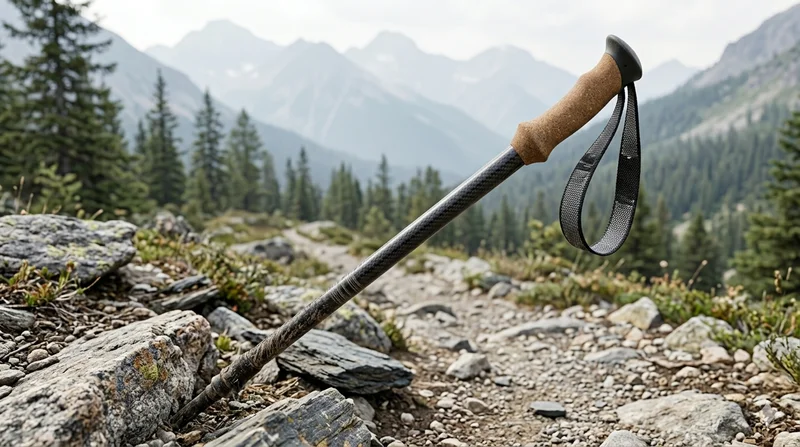
Carbon Fiber Trekking Pole
Lightweight carbon fiber trekking pole manufactured from high-grade carbon fiber tube. Weighs only 160g per pole while providing superior shock absorption and durability for hiking, trail running, and backpacking.

Square Carbon Fiber Tube — 3K Twill T700
Square cross-section carbon fiber tube manufactured with 3K twill weave for torsional strength. Preferred for structural frames, trusses, and support columns where rectangular geometry offers design flexibility.