
The leading edge of a wind turbine blade is the hardest-working sacrificial component on the machine. It takes the first impact of every raindrop, hailstone and dust particle at tip speeds above 70 meters per second, and it is the part most likely to force a repair visit long before the
Introduction
The leading edge of a wind turbine blade is the hardest-working sacrificial component on the machine. It takes the first impact of every raindrop, hailstone and dust particle at tip speeds above 70 meters per second, and it is the part most likely to force a repair visit long before the blade's 25-year design life is complete. In a conventional blade the edge is moulded integrally with the shell, so erosion damage means in-situ patching or the removal of the entire blade — an operation that can cost more than the edge itself.
European research is now testing a different philosophy: build the leading edge as a replaceable component and attach it with a bonding system that can be released on site. The RECREATE project, a Horizon Europe initiative with roughly twenty partners, has demonstrated a thermoplastic leading edge reinforced with natural fiber and mounted with a detachable adhesive joint, exhibited at the IFAT 2026 environmental technology fair in Munich. Beyond the repair economics, the material choice matters: natural-fiber thermoplastics fit the circular R-strategy framework — reuse, repair, remanufacture and recycle — more cleanly than the glass-fiber compounds they replace. This article compares the materials, explains the demonstration, and sets out why the leading edge is becoming the first truly circular component of the rotor blade.
The Leading Edge as the Blade's Wear Component
Erosion is not a cosmetic problem. Rain droplets striking the edge at speeds of 70-100 meters per second create micro-cavitation pits that grow into a rough, pitted zone; the roughness increases drag and disturbs the boundary layer, and published studies attribute annual energy losses of 1-2 percent to a mature erosion state, with cumulative lifetime penalties of 5-25 percent for untreated edges in harsh sites. Because the damage is concentrated in a narrow strip along the outboard 20-30 percent of the span, the blade after 10 years shows a healthy structure wrapped around a damaged edge.
That asymmetry is what makes a replaceable edge economically rational. If the damaged strip can be detached and exchanged for a factory-made part in a day on site, the operator avoids blade removal, crane hire and the transport of a 60-meter structure — the dominant costs of edge repair today. The RECREATE concept treats the edge as a consumable with an engineered interface, exactly as an aircraft operator treats a tyre or a brake disc, and that shift in thinking is the quiet change with the largest commercial consequence.
The RECREATE Demonstration Program
RECREATE is an EU-funded research project assembling blade manufacturers, material suppliers, recycling researchers and certification bodies — roughly twenty partners across Europe — with the goal of demonstrating blades whose components can be repaired, exchanged and recycled instead of landfilled. The leading-edge demonstrator combines three ideas that reinforce each other: a thermoplastic matrix that can be re-melted and welded, a natural-fiber reinforcement that burns cleanly at end of life, and a detachable adhesive bond that lets the edge be separated from the shell without cutting.
The demo edge was shown at IFAT 2026 in Munich, the leading international trade fair for environmental technologies, which is an unusual venue for a blade component and a deliberate statement: the selling point is waste avoidance, not just aerodynamic performance. Visitors saw the exchange procedure — release the bond, slide the edge free, fit a preformed replacement and re-bond it — performed in minutes on a demonstrator section, and the same detachable interface was presented as a template for the next generation of repairable blade design.
Natural-Fiber Thermoplastic vs Glass-Fiber Thermoplastic
The choice of reinforcement was the decisive material decision. Thermoplastic blades were already on the table before natural fibers entered, so the question was not whether to use thermoplastics but which fiber to put into them. The comparison below summarizes why flax and similar bast fibers were selected over glass for this wear-part application:
| Property | Flax-Fiber Thermoplastic | Glass-Fiber Thermoplastic | Design Consequence |
|---|---|---|---|
| Fiber density (g/cm³) | 1.4-1.5 | 2.5-2.6 | Lower mass per part at equal volume |
| Fiber tensile modulus (GPa) | 50-70 | 72-85 | Comparable stiffness per unit weight |
| Specific stiffness | 35-47 | 28-33 | Higher lightweight performance |
| Damping behavior | High | Moderate | Better vibration absorption |
| Moisture uptake at saturation | 2-7% | 0.2-0.5% | Drying and sealing requirements |
| End-of-life treatment | Low ash, clean combustion | Glass melt residue | Simpler recycling route |
Flax is the leading candidate because it combines useful specific stiffness with abundant, stable European supply and a well-developed retting and processing chain. The table shows the trade-off honestly: moisture uptake is the known weakness, managed by thorough drying before moulding and by the sealed shell configuration that keeps the fiber protected in service. In lightweight terms the composite earns its place — at equal component mass a flax-fiber edge can match the stiffness of a glass-fiber edge while dampening vibration better and ending its life with a cleaner disposal route.
Why Natural Fibers Fit the R-Strategy
The circular economy R-ladder ranks strategies from refuse through reduce, reuse, repair, refurbish, remanufacture, repurpose, recycle and recover, and the value increases as you move up the ladder. The natural-fiber thermoplastic edge scores on several rungs at once:
- Reuse: a detached edge that passes inspection can be fitted to a second blade position or kept as a spare, because the thermoplastic shell survives the release process intact.
- Repair: local damage can be healed by thermoplastic welding — remelting the matrix with a hot-air or induction tool and pressing in a small fiber patch — a repair that is impossible with a thermoset epoxy edge.
- Remanufacture: worn edges returned to the factory can be ground and over-moulded into new profiles, keeping the polymer and the fiber value in the loop.
- Recycle: at the final end of life, the part can be shredded and the natural fiber combusted with the resin for energy recovery, leaving a small ash fraction instead of the glass melt that burdens conventional compound recycling.
Glass-fiber thermoplastics can be recycled, but the glass content complicates every rung: grinding shortens the fibers, melt residues are abrasive, and incineration leaves a slag that must be landfilled. Natural fiber avoids these penalties because its organic character is compatible with energetic recovery, which gives the material an honest end-of-life story that glass cannot match for this specific wear-part role.
Manufacturing and Joining Routes
The replaceable edge is manufactured and joined with processes that are already industrialized for thermoplastic composites, which matters for cost realism. Common routes include:
- Over-moulding: a UD natural-fiber tape or fabric is formed and then over-moulded with the polymer to produce the finished edge profile in a single cycle.
- Thermoplastic welding: induction, resistance or ultrasonic welding merges the polymer matrix at the interfaces, eliminating adhesives within the part itself.
- Detachable adhesive bonding: the shell-to-edge joint uses a structural adhesive applied over a release film or peel ply, so the edge can be separated at the interface without damaging either component.
- Drying and storage discipline: natural-fiber feedstock is dried before processing and the finished part is sealed, keeping moisture uptake below the level that would affect dimensional stability.
The processes matter because they are available today: TP welding lines, over-moulding cells and adhesive bonding stations already serve the automotive and marine industries, so the RECREATE edge does not require a greenfield factory. What was demonstrated in Munich is therefore not a laboratory curiosity but a manufacturing route that can be scaled by any blade component supplier with a thermoplastic capability.
Frequently Asked Questions
Is natural fiber strong enough for a blade leading edge?
For the wear-part role, yes. The leading edge is not a primary structural member — the load-carrying spar cap remains carbon or glass fiber — so the edge acts as an abrasion- and impact-resistant shell. Flax-fiber thermoplastic provides specific stiffness comparable to glass, superior damping, and adequate impact resistance for the rain and hail environment when the matrix is correctly selected. The engineering intent is a part that absorbs local damage and is cheap to replace, not one that substitutes for the main structure, and the sustaining design loads remain in the blade shell.
How does moisture affect natural-fiber thermoplastic in service?
Flax fibers can absorb 2-7 percent moisture at saturation, which is why the manufacturing route includes thorough pre-drying and why the mounted edge sits in a sealed shell configuration that limits direct exposure. Over the design life this is a managed parameter rather than a disqualifying one: the dimensional changes are small in a bonded strip, and the RECREATE testing program includes humidity cycling to verify long-term interface stability. For comparison, the same moisture sensitivity applies to the wood cores and balsa already used in blade shells, which have operated reliably for decades when properly sealed.
Can a detachable edge be retrofitted to blades already in service?
The RECREATE demonstrator validates the concept on new-build blade sections, and the same interface logic can be adapted to field retrofit when the blade shell geometry offers a bonding surface of sufficient width and curvature. Retrofit kits would supply a preformed edge matched to laser-scanned shell contours, applied with the detachable bonding system during a planned maintenance window. The practical constraint is shell geometry tolerance, which varies between blade models, so early adoption will focus on the highest-volume blade types where scan data and replacement inventory can be amortized across a large fleet.
Conclusion
The replaceable natural-fiber thermoplastic leading edge transfers the economics of the blade's most damaged component from the crane to the factory. The RECREATE demonstration shows an edge that can be released, exchanged, repaired by welding, remanufactured by over-moulding and finally recycled with a clean thermal route — a combination no thermoset edge and no glass-fiber compound offers. The material comparison is honest about the trade-offs: moisture is managed, stiffness is comparable on a weight basis, and the end-of-life story is decisively better. As blade maintenance economics tighten, the detachable edge turns the leading edge from a fixed liability into a consumable part with a defined replacement interval.
For blade component manufacturers exploring thermoplastic capability, the natural-fiber edge is a low-risk entry point because it reuses processes that already exist in automotive and marine composite plants. Review our carbon fiber profiles and thermoplastic-compatible structural products to compare reinforcement options for your next blade or wear-parts program, or contact our engineering team for material data and prototyping support for replaceable edge components.
Part of topic
Related Articles
- Bio-Based Carbon Fiber Precursors: Lignin and Polyethylene for Low-Cost Production
- Large-Tow Carbon Fiber Cost Analysis: 48K vs 60K Price-Performance Comparison
- Carbon Fiber-Resin Interface Bonding: Surface Treatment and Coupling Agent Optimization
- Digital Twin for Carbon Fiber Manufacturing: Real-Time Process Monitoring and Defect Prevention
- Thermoplastic Carbon Fiber Welding for Automotive: Ultrasonic and Induction Welding Process Windows
- Large-Tow Carbon Fiber Wet Spinning: Process Optimization for 48K/60K Production Efficiency
Interested in Our Products?
Contact our team for competitive pricing and technical specifications.
Get a QuoteRelated Products
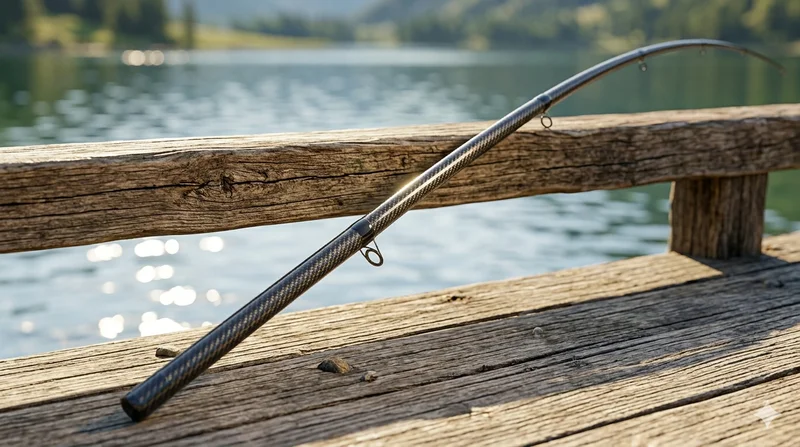
Carbon Fiber Fishing Rod Blank
High-quality carbon fiber fishing rod blank manufactured from multiple grades of Toray carbon fiber cloth. Available in a wide range of lengths, powers, and actions for freshwater and saltwater applications. Suitable for OEM rod building.

Carbon Fiber Plate — 3K Twill T700 3.0mm
Medium-thickness 3.0mm carbon fiber plate offering significantly higher load capacity while maintaining attractive 3K twill finish. Suitable for structural brackets, reinforcement plates, and load-bearing panels.

Carbon Fiber Plate — 3K Twill T700 1.5mm
Thin 1.5mm carbon fiber plate with 3K twill weave surface. Lightweight and stiff, commonly used for covers, panels, drone bodies, and applications requiring a premium aesthetic appearance.

Square Carbon Fiber Tube — 3K Twill T700
Square cross-section carbon fiber tube manufactured with 3K twill weave for torsional strength. Preferred for structural frames, trusses, and support columns where rectangular geometry offers design flexibility.
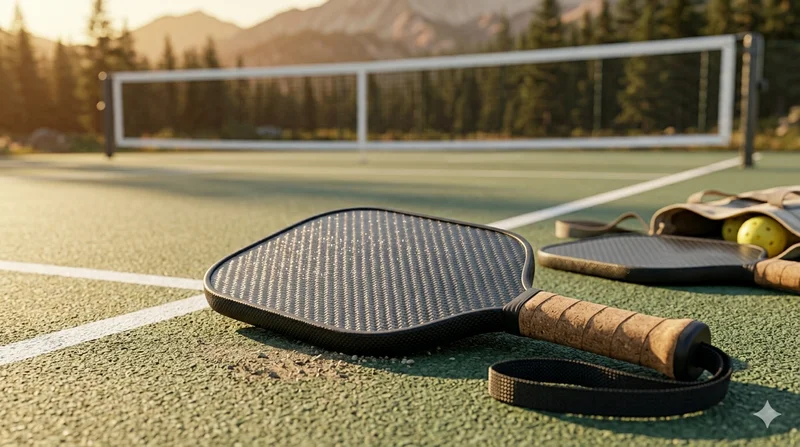
Carbon Fiber Pickleball Paddle
High-performance pickleball paddle with Toray T700 carbon fiber face and polypropylene honeycomb core. Delivers excellent power-to-weight ratio, spin generation, and vibration dampening for competitive play.