
Delamination — the separation of individual plies in a laminated composite — remains the most common and most costly failure mode in carbon fiber structures. Conventional carbon fiber laminates derive their through-thickness strength entirely from the resin matrix, and even toughened epoxy systems o
Introduction
Delamination — the separation of individual plies in a laminated composite — remains the most common and most costly failure mode in carbon fiber structures. Conventional carbon fiber laminates derive their through-thickness strength entirely from the resin matrix, and even toughened epoxy systems offer only limited resistance to crack initiation and propagation between plies. Nanostitching and interleaving address this weakness by introducing nano-scale or micro-scale toughening elements at the interlaminar interface, the exact plane where delamination cracks propagate.
For aerospace, automotive, and wind energy engineers, the appeal is clear: these interlayer modifications can double or triple the interlaminar fracture toughness of a laminate without changing the fiber architecture, cure cycle, or part geometry. This article explains how nanostitching and interleaving work, presents quantitative performance data, and reviews the applications now benefiting from these technologies.
What Is Nanostitching?
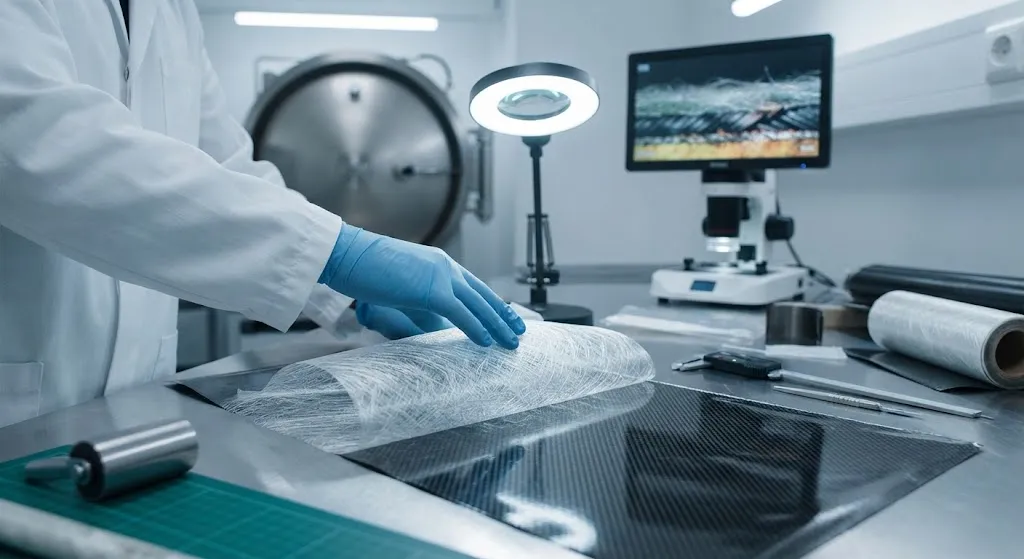
Nanostitching refers to the placement of electrospun nanofiber veils — typically 200-800 nm diameter polymer fibers — directly onto the prepreg surface before layup. The nanofiber veil acts as an interlayer toughening agent: under crack opening loads, the nanofibers bridge the crack plane, absorb energy through plastic deformation and pullout, and deflect the crack front into less favorable propagation directions. The most common nanofiber materials include:
- Polyvinylidene fluoride (PVDF): Offers excellent piezoelectric damping and chemical resistance. Widely used in aerospace research with Mode I fracture toughness improvements of 60-120%.
- Polyacrylonitrile (PAN): Can be carbonized after layup to create in-situ carbon nanofibers, adding both toughening and electrical conductivity for lightning strike protection.
- Polycaprolactone (PCL): A biodegradable thermoplastic with a low melting point (60°C), enabling热熔 bonding during cure without disrupting the thermoset matrix chemistry.
- Polyamide (nylon): Provides high elongation at break and good adhesion to epoxy matrices, suitable for high-temperature cure cycles up to 180°C.
Nanofiber veil areal weights typically range from 5-30 g/m², adding negligible thickness (10-50 μm) and less than 1-2% weight to the laminate stack. The key processing requirement is uniform deposition without clumping, which electrospinning with rotating mandrel collectors achieves at production rates of 1-5 m²/min.
What Is Interleaving?
Interleaving extends the nanostitching concept to larger-scale toughening elements. While nanostitching uses nanofiber veils measured in grams per square meter, interleaving employs thermoplastic films, particulate layers, or woven veils with areal weights of 10-80 g/m². The interleaving material is placed between plies during layup and co-cured with the thermoset matrix. Common interleaving approaches include:
- Thermoplastic particle interleaving: Nylon or PEEK powder (100-500 μm particle size) scattered on the prepreg surface melts during cure, creating localized thermoplastic domains that bridge cracks and absorb fracture energy.
- Veil interleaving: Non-woven thermoplastic veils (polyamide, PVDF) provide continuous toughening layers with controlled thickness and uniform coverage.
- Film interleaving: Thin thermoplastic films (25-75 μm) of PEEK, PEI, or polyamide are placed between plies, creating a discrete toughened interlayer. This approach provides the highest fracture toughness gains but adds the most weight and thickness.
The selection between nanostitching and interleaving depends on the targeted fracture mode, the allowable weight and thickness budget, and the cure temperature compatibility with the base resin system.
Performance Data: Fracture Toughness Gains
The effectiveness of nanostitching and interleaving is measured by interlaminar fracture toughness — the energy required to propagate a crack between plies. The table below summarizes representative data from published studies and manufacturer datasheets:
| Method | Material | Mode I GIC (J/m²) | Mode II GIIC (J/m²) | Weight Penalty |
|---|---|---|---|---|
| Baseline (toughened epoxy) | — | 250-400 | 800-1,200 | — |
| Nanostitching (PVDF veil) | 15 g/m² PVDF | 500-850 | 1,400-2,000 | +0.8-1.2% |
| Nanostitching (PAN veil) | 10 g/m² PAN | 450-700 | 1,200-1,800 | +0.6-1.0% |
| Thermoplastic particle interleaving | 20 g/m² nylon powder | 600-1,000 | 1,600-2,400 | +1.5-2.5% |
| PEEK film interleaving | 25 μm PEEK film | 800-1,500 | 2,000-3,200 | +2.0-3.5% |
| Combined nanostitch + particle | PVDF veil + nylon powder | 900-1,600 | 2,200-3,500 | +2.5-4.0% |
The data shows that nanostitching with PVDF veils can improve Mode I fracture toughness by 100-200% while adding less than 1.5% weight. PEEK film interleaving achieves the highest absolute toughness values but at a higher weight and thickness cost. For applications where weight is critical — aerospace primary structures — nanostitching offers the best toughness-to-weight ratio. For applications where maximum damage tolerance is paramount — wind turbine blade root joints, marine structures — thermoplastic interleaving provides superior performance.
Mechanism: How Nano-Scale Elements Stop Cracks
The toughening mechanisms of nanostitching and interleaving operate at three scales:
- Crack bridging: Nanofibers or thermoplastic particles span the crack faces behind the crack tip, resisting opening through fiber stretching and pullout. This is the dominant mechanism at low crack-opening displacements.
- Crack deflection: The interlayer toughening zone creates a material discontinuity that forces the crack to deviate from the interlaminar plane, increasing the total fracture surface area and energy absorption.
- Plastic deformation: Thermoplastic domains (from melted particles or veil fibers) undergo large plastic strains before failure, absorbing energy that would otherwise drive crack propagation. This mechanism is most effective at high crack-opening rates, such as impact events.
These mechanisms are synergistic: nanostitching provides crack bridging at the nano-scale while interleaving provides plastic deformation at the micro-scale. Combined approaches exploit both mechanisms simultaneously.
Manufacturing Integration and Process Compatibility
A critical advantage of nanostitching and interleaving is that they integrate into existing prepreg layup processes without requiring new equipment or cure cycle changes:
- Layup integration: Nanofiber veils or thermoplastic particles are applied to prepreg surfaces during incoming inspection or at the layup station, requiring only a veil placement step or powder scattering station.
- Cure cycle compatibility: All common toughening materials are compatible with standard autoclave cure cycles (120-180°C, 3-7 bar). PVDF and PCL melt below typical cure temperatures, ensuring proper integration with the epoxy matrix.
- Quality assurance: Ultrasonic inspection detects interlayer anomalies; fiber volume fraction measurement confirms that the toughening layer does not create resin-rich zones. CT scanning provides 3D verification for first-article qualification.
- Scrap and cost impact: Nanofiber veils cost $15-40/m², adding $0.50-2.00 per kg of finished laminate — negligible compared to the $80-200/kg cost of aerospace-grade carbon fiber prepreg.
Aerospace and Industrial Applications
Nanostitching and interleaving are being adopted across several high-value structural applications:
- Fan blade and containment structures: Engine manufacturers use PVDF nanostitching to improve bird-strike tolerance and blade-out containment, reducing the required thickness of the containment wrap by 15-25%.
- Wing-to-fuselage joints: Interleaved doubler joints at critical load-transfer areas show 2-3x improvement in fatigue crack growth resistance, extending inspection intervals.
- Wind turbine blade root joints: Thermoplastic interleaving at the blade-to-hub interface addresses the interlaminar cracking that limits blade service life to 20-25 years.
- Racing and automotive crash structures: Nanostitched carbon fiber crash boxes absorb 30-50% more energy per unit weight than non-toughened equivalents, improving occupant protection.
- Marine and offshore structures: Interleaved composites in hull panels and deck structures resist delamination from wave-slam loading and underwater impact.
Frequently Asked Questions
Does nanostitching reduce the in-plane mechanical properties of the laminate?
No — nanostitching with nanofiber veils at typical areal weights (5-15 g/m²) does not measurably reduce in-plane tensile, compressive, or shear properties. The nanofiber layer is thinner than the resin-rich interlaminar region it replaces, and the fiber volume fraction of the bulk laminate remains unchanged. Studies at NASA, Airbus, and university laboratories consistently report less than 3% variation in in-plane properties with nanostitching, within normal manufacturing scatter.
How does nanostitching compare to z-pinning or interleaving with thermoplastic films?
Each method occupies a different point on the toughness-weight-process spectrum. Z-pinning inserts rigid pins through the laminate thickness, providing the highest through-thickness strength but reducing in-plane properties by 10-20% and requiring dedicated equipment. Thermoplastic film interleaving delivers the highest Mode I fracture toughness (up to 6x baseline) but adds the most weight and thickness. Nanostitching with nanofiber veils offers the best toughness-to-weight ratio with no process equipment investment and no in-plane property penalty, making it the preferred choice for weight-critical aerospace structures.
What is the minimum order quantity for nanofiber veils from suppliers?
Most nanofiber veil suppliers (e.g., NanoTech Energy, Electrospun Company,🕷️) offer sample rolls of 1-10 m² for qualification testing and production rolls of 50-500 m². Lead times for custom areal weights or fiber compositions are typically 4-8 weeks. For production programs, blanket purchase agreements with quarterly deliveries are standard practice in the aerospace supply chain.
Conclusion
Nanostitching and interleaving represent the most practical and cost-effective path to solving the delamination problem in carbon fiber laminates. With Mode I fracture toughness improvements of 100-300% at weight penalties under 3%, these interlayer toughening strategies address the structural weakness that has historically limited composite design allowables and inspection intervals. The manufacturing simplicity — drop-in compatibility with existing prepreg layup and cure processes — removes the adoption barriers that have slowed other toughening approaches.
For engineers evaluating delamination resistance solutions, the choice between nanostitching and interleaving depends on the fracture mode priority, weight budget, and production volume. Explore our carbon fiber prepreg and fabric range, including nanostitch-compatible veils and thermoplastic interleaving materials, or contact our engineering team to discuss interlayer toughening strategies for your application.
Related Articles
- Carbon Fiber Polymer Matrix Composite Fire Resistance: Intumescent Coatings and Fire-Barrier Solutions
- Carbon Fiber HP-RTM Cycle Time Optimization: High-Pressure Resin Transfer Molding for Automotive
- Continuous Fiber Reinforced Thermoplastics: CFRT vs Thermoset Processing and Applications
- Bio-Based Carbon Fiber Precursors: Lignin and Polyethylene for Low-Cost Production
- Large-Tow Carbon Fiber Cost Analysis: 48K vs 60K Price-Performance Comparison
- Carbon Fiber-Resin Interface Bonding: Surface Treatment and Coupling Agent Optimization
Interested in Our Products?
Contact our team for competitive pricing and technical specifications.
Get a QuoteRelated Products
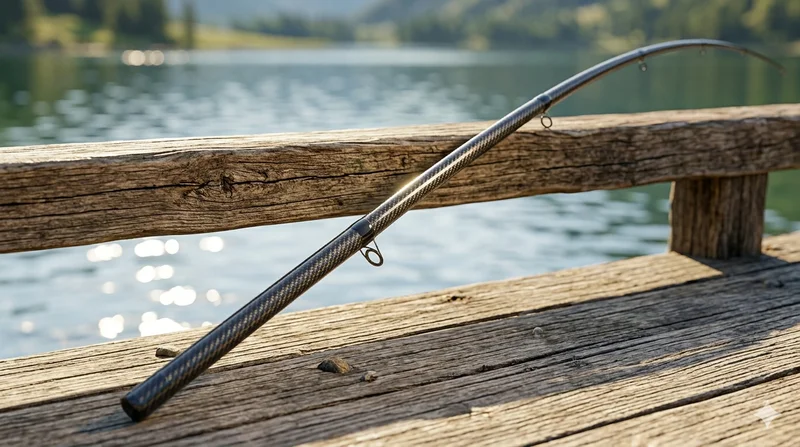
Carbon Fiber Fishing Rod Blank
High-quality carbon fiber fishing rod blank manufactured from multiple grades of Toray carbon fiber cloth. Available in a wide range of lengths, powers, and actions for freshwater and saltwater applications. Suitable for OEM rod building.

Carbon Fiber Plate — 3K Twill T700 1.5mm
Thin 1.5mm carbon fiber plate with 3K twill weave surface. Lightweight and stiff, commonly used for covers, panels, drone bodies, and applications requiring a premium aesthetic appearance.

Carbon Fiber Plate — 3K Twill T700 3.0mm
Medium-thickness 3.0mm carbon fiber plate offering significantly higher load capacity while maintaining attractive 3K twill finish. Suitable for structural brackets, reinforcement plates, and load-bearing panels.
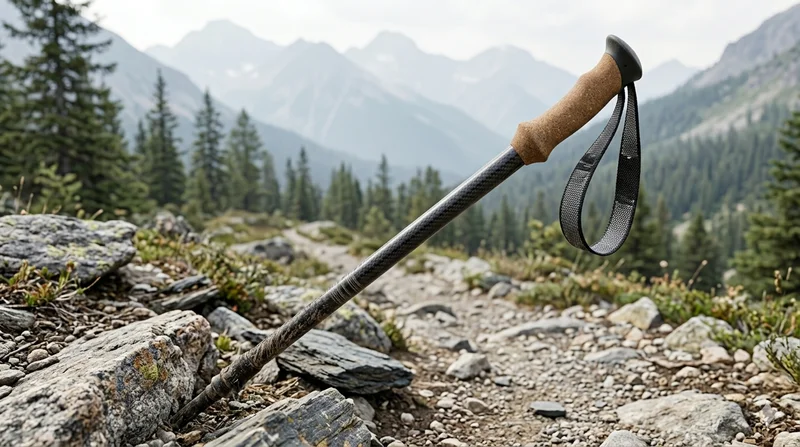
Carbon Fiber Trekking Pole
Lightweight carbon fiber trekking pole manufactured from high-grade carbon fiber tube. Weighs only 160g per pole while providing superior shock absorption and durability for hiking, trail running, and backpacking.

Square Carbon Fiber Tube — 3K Twill T700
Square cross-section carbon fiber tube manufactured with 3K twill weave for torsional strength. Preferred for structural frames, trusses, and support columns where rectangular geometry offers design flexibility.