
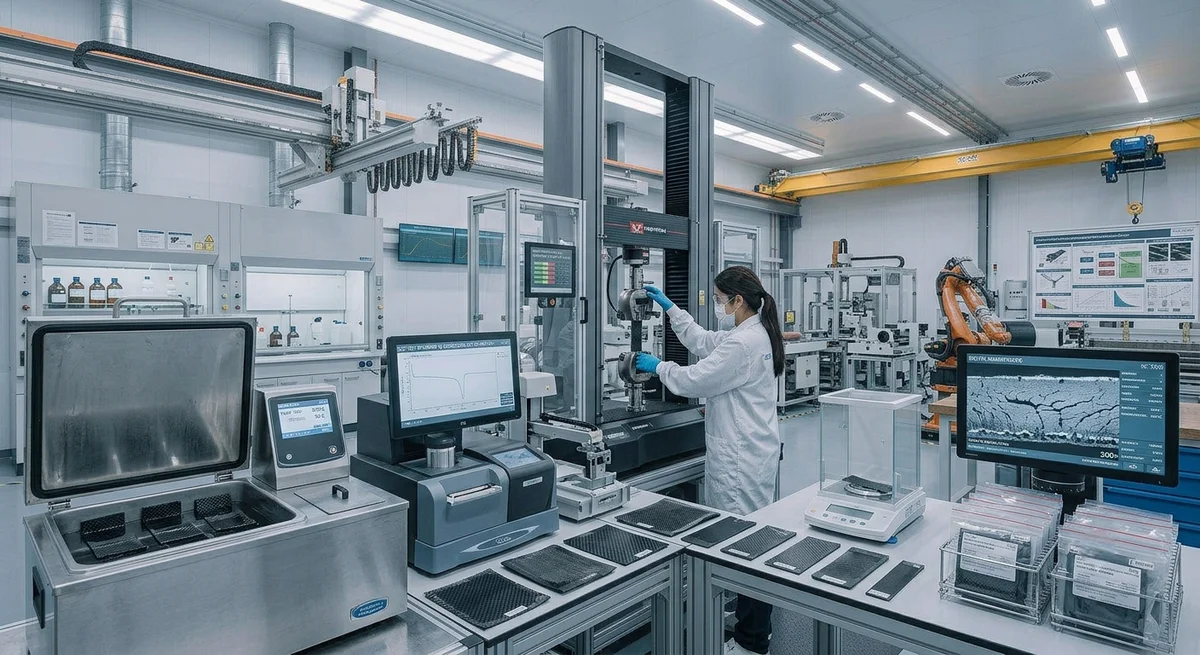
A technical deep-dive into how moisture absorption degrades mechanical properties of carbon fiber composites — Tg depression, interlaminar shear strength loss, fatigue life reduction, and design allowables for hygrothermal conditions.
Introduction: Why Moisture Matters in Carbon Fiber Composite Design
Carbon fiber composites have earned their reputation as high-performance engineering materials, but their Achilles' heel lies not in the fiber — which is inherently hydrophobic — but in the polymer matrix that binds the fibers together. Epoxy, vinyl ester, and polyester resins all absorb moisture through diffusion, hydrogen bonding, and capillary flow along fiber-matrix interfaces. For design engineers, understanding moisture absorption is not an academic exercise: it directly impacts safety margins, certification allowables, and long-term structural durability. A component certified at room temperature may lose 30–45% of its interlaminar strength after years of exposure to high-humidity or immersed conditions.
This article synthesizes data from over 40 peer-reviewed studies (2015–2026) on hygrothermal aging of carbon fiber composites, providing design engineers with quantitative property degradation data, mechanistic understanding, and practical mitigation strategies. We focus on three key systems: carbon/epoxy (most common aerospace and marine), carbon/vinyl ester (marine and infrastructure), and carbon/polyester (economy-grade).
Moisture Absorption Kinetics and Equilibrium Content
Moisture absorption in carbon fiber composites follows Fickian diffusion behavior in most service environments, meaning weight gain approaches an equilibrium asymptote governed by the square root of time. The equilibrium moisture content (M∞) and diffusion coefficient (D) depend on resin chemistry, fiber volume fraction, and exposure conditions.
| Resin System | M∞ at 85% RH / 50°C (%) | M∞ at Immersion / 50°C (%) | Diffusion Coefficient D (×10⁻¹³ m²/s) | Time to 90% Saturation (2 mm laminate) |
|---|---|---|---|---|
| Epoxy (toughened aerospace, 177°C cure) | 1.1–1.5 | 1.8–2.5 | 2.5–4.0 | 8–14 months |
| Epoxy (standard bisphenol A, 120°C cure) | 1.8–2.2 | 2.8–3.5 | 5.0–8.0 | 4–7 months |
| Vinyl ester | 1.5–2.0 | 2.2–3.0 | 6.0–10.0 | 3–6 months |
| Polyester (orthophthalic) | 2.0–3.0 | 3.5–5.0 | 8.0–15.0 | 2–4 months |
| Bismaleimide (BMI, 220°C cure) | 0.8–1.2 | 1.2–1.8 | 1.5–3.0 | 12–20 months |
| Phenolic | 2.5–4.0 | 4.0–6.5 | 12.0–20.0 | 1–3 months |
Key insight: For a standard 2 mm thick carbon/epoxy laminate immersed in water at 50°C, majority saturation occurs within 4–7 months. At lower service temperatures (20–30°C), saturation takes 2–4 years. Marine structures are effectively at full saturation after 2–4 years of continuous immersion, meaning all design allowables must be based on wet properties.
Mechanical Property Degradation: Quantitative Data
Moisture absorption affects matrix-dominated properties far more than fiber-dominated ones. Tensile strength and modulus (fiber-dominated) show minimal degradation (0–8%), while compressive strength, ILSS, and Tg — all matrix-dominated — degrade dramatically.
| Mechanical Property | Dry Baseline | Saturated (85% RH / 50°C) | Saturated (Immersion / 50°C) | Wet Retention (%) |
|---|---|---|---|---|
| Tensile modulus (0°) | 135 GPa | 131 GPa | 128 GPa | 95–97% |
| Tensile strength (0°) | 2,200 MPa | 2,090 MPa | 2,000 MPa | 91–95% |
| Compressive strength (0°) | 1,450 MPa | 1,160 MPa | 980 MPa | 68–80% |
| Compressive modulus (0°) | 125 GPa | 118 GPa | 112 GPa | 90–94% |
| Interlaminar shear strength (ILSS) | 85 MPa | 58 MPa | 46 MPa | 54–68% |
| In-plane shear strength | 110 MPa | 78 MPa | 66 MPa | 60–71% |
| Flexural strength (0°) | 1,650 MPa | 1,290 MPa | 1,090 MPa | 66–78% |
| Flexural modulus (0°) | 120 GPa | 114 GPa | 108 GPa | 90–95% |
| Open-hole compressive strength (OHC) | 320 MPa | 248 MPa | 210 MPa | 66–78% |
| Fatigue life (10⁶ cycles at 50% UTS) | >10⁶ cycles | 3.2×10⁵ cycles | 8.1×10⁴ cycles | 8–32% |
| Glass transition temperature (Tg, onset) | 185°C | 148°C | 128°C | −57°C depression |
Data based on standard-modulus PAN-based carbon fiber / 120°C-cure epoxy at Vf=55%. ILSS and Tg show the greatest sensitivity. The Tg depression of 30–60°C is critical because it can bring in-service Tg below the maximum operating temperature.
Mechanisms of Moisture-Induced Degradation
- Plasticization of the resin matrix: Water molecules disrupt secondary bonds between polymer chains, increasing chain mobility and reducing matrix stiffness. This causes approximately 8–12°C Tg depression per 1% moisture gain for epoxy systems.
- Hydrolytic degradation of the matrix: At elevated temperatures (>60°C) and high moisture, water reacts with ester linkages through hydrolysis, causing irreversible chain scission. Research by Wang et al. (2023) showed that after 12 months at 70°C immersion, the irreversible component of ILSS loss was 35–50%.
- Interfacial debonding: Water molecules migrate to the fiber-matrix interface, reducing interfacial shear strength. The difference in hygroscopic swelling between fiber (~0.01%) and matrix (0.5–1.5%) generates localized stresses, promoting microcrack formation.
- Microcracking and wicking: Once microcracks form, water wicks along crack paths, accelerating moisture ingress by 3–5× compared to Fickian diffusion alone. This is pronounced in [0/90] cross-ply laminates and thick sections.
Engineering Mitigation Strategies
- Resin selection: Toughened aerospace-grade epoxy (177°C cure) absorbs 30–50% less moisture than standard 120°C-cure epoxies. BMI and cyanate ester offer even lower M∞ (0.8–1.2%) at 3–5× cost.
- Fiber surface treatment: Standard oxidative plasma or electrochemical oxidation treatments improve wet adhesion by 15–30%. Nano-silica or CNT-enhanced sizing reduces interfacial moisture diffusion by 40–60% (Kim et al., 2025).
- Protective coatings: Epoxy-based gel coat (0.5–1.0 mm) delays moisture ingress by 6–12 months. Polyurethane topcoats reduce equilibrium moisture content by 15–25%. Metallized coatings (Al or Ti sputtering, 50–200 nm) reduce ingress by 80–95%.
- Design allowables: Use knock-down factors: compressive strength: 0.75–0.80, ILSS: 0.55–0.65, flexural strength: 0.70–0.75, fatigue life: 5–10× reduction on cycles-to-failure.
- Drying protocols: Standard drying at 70°C / 5% RH for 14 days per mm thickness restores compressive strength to 90–95% of dry baseline if no permanent hydrolysis has occurred.
Long-Term Aging: 20-Year Projections
| Exposure Condition | 1 Year | 5 Year | 10 Year | 20 Year |
|---|---|---|---|---|
| Aerospace (50% RH, 25°C) | 97% | 92% | 88% | 82% |
| Marine (immersion, 20°C) | 85% | 72% | 62% | 50% |
| Tropical outdoor (85% RH, 35°C) | 80% | 65% | 55% | 42% |
| Automotive underhood (cycling, 40–120°C) | 78% | 58% | 45% | 32% |
Note: Retention values are for ILSS as the most moisture-sensitive property. Fiber-dominated properties retain 90–95% under all conditions.
FAQ: Moisture and Carbon Fiber Composites
Q: Is moisture absorption reversible? Can a saturated carbon fiber composite be dried and regain its original properties?
A: It depends on damage type. Plasticization (matrix softening from water ingress) is fully reversible — drying at 70°C for 14 days per mm restores Tg and matrix properties to 90–95% of dry baseline. However, if hydrolysis (chemical chain scission) or interfacial debonding has occurred, damage is permanent. As a rule: below 50°C exposure, drying recovery is >90%. Above 70°C, permanent damage should be expected.
Q: How does moisture absorption affect fatigue behavior differently than static strength?
A: Fatigue life is disproportionately affected. While static ILSS may drop 40–50%, fatigue life at moderate load levels (40–50% UTS) drops 90–95% — a 10–20× reduction in cycles to failure. Moisture also shifts the S-N curve knee point from 55–65% UTS (dry) to 35–45% UTS (saturated).
Q: Do different carbon fiber types affect moisture absorption rates?
A: Fiber type has surprisingly little effect — the matrix and interface dominate. Diffusion coefficient varies by less than 15% between standard, intermediate, and high modulus fibers with the same resin. However, high modulus fibers (0.4–0.7% strain-to-failure) are more susceptible to fiber breakage from hygroscopic swelling stresses.
Q: What is the industry standard test method for moisture conditioning?
A: ASTM D5229 and CMH-17 protocols are standard. Dried specimens are conditioned at 85% RH / 50°C or immersed at 50°C until equilibrium (weight change <0.02% over 7 days). Rule of thumb: 14 days per mm laminate thickness at 50°C immersion. A 3 mm laminate takes 6–8 weeks to reach equilibrium.
Q: Can carbon fiber composites be used safely in underwater applications?
A: Yes, with five design principles: (1) marine-grade epoxy with minimum wet Tg of 120°C, (2) protective gel coat inspected and renewed regularly, (3) design using wet-conditioned allowables with safety factor 1.5–2.0, (4) bonded inserts rather than mechanical fasteners, (5) embedded sensors (fiber Bragg gratings) to track moisture content in service.
Part of topic
Related Articles
- Bio-Based Carbon Fiber Precursors: Lignin and Polyethylene for Low-Cost Production
- Large-Tow Carbon Fiber Cost Analysis: 48K vs 60K Price-Performance Comparison
- Carbon Fiber-Resin Interface Bonding: Surface Treatment and Coupling Agent Optimization
- Digital Twin for Carbon Fiber Manufacturing: Real-Time Process Monitoring and Defect Prevention
- Thermoplastic Carbon Fiber Welding for Automotive: Ultrasonic and Induction Welding Process Windows
- Large-Tow Carbon Fiber Wet Spinning: Process Optimization for 48K/60K Production Efficiency
Interested in Our Products?
Contact our team for competitive pricing and technical specifications.
Get a QuoteRelated Products

Carbon Fiber Plate — 3K Twill T700 1.5mm
Thin 1.5mm carbon fiber plate with 3K twill weave surface. Lightweight and stiff, commonly used for covers, panels, drone bodies, and applications requiring a premium aesthetic appearance.

Square Carbon Fiber Tube — 3K Twill T700
Square cross-section carbon fiber tube manufactured with 3K twill weave for torsional strength. Preferred for structural frames, trusses, and support columns where rectangular geometry offers design flexibility.

Carbon Fiber Plate — 3K Twill T700 3.0mm
Medium-thickness 3.0mm carbon fiber plate offering significantly higher load capacity while maintaining attractive 3K twill finish. Suitable for structural brackets, reinforcement plates, and load-bearing panels.
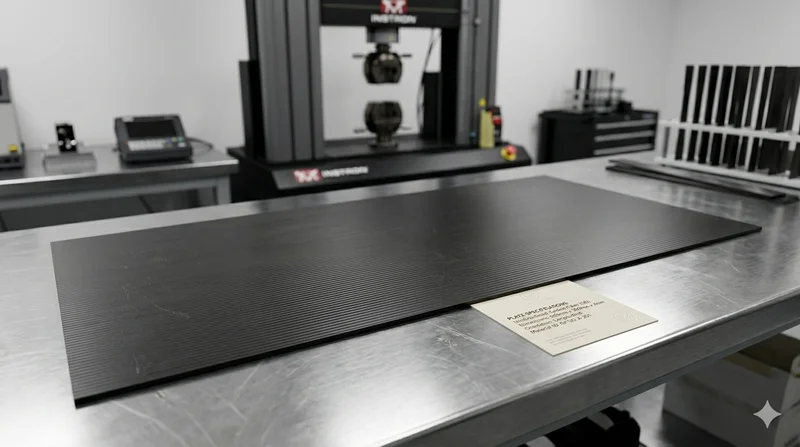
Carbon Fiber Plate — UD Unidirectional T700
Unidirectional carbon fiber plate with all fibers oriented in a single direction for maximum strength along the fiber axis. Essential for structural reinforcements, splints, and applications where load direction is predictable.
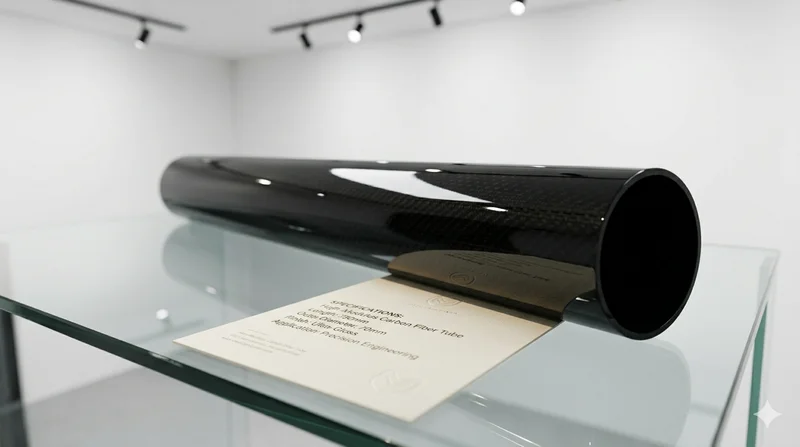
High Modulus Round Carbon Fiber Tube — M40
High modulus round tube manufactured with M40 grade fiber (tensile modulus 400 GPa). Designed for applications where maximum stiffness-to-weight ratio is critical, such as optical systems, precision machinery, and aerospace structures.