
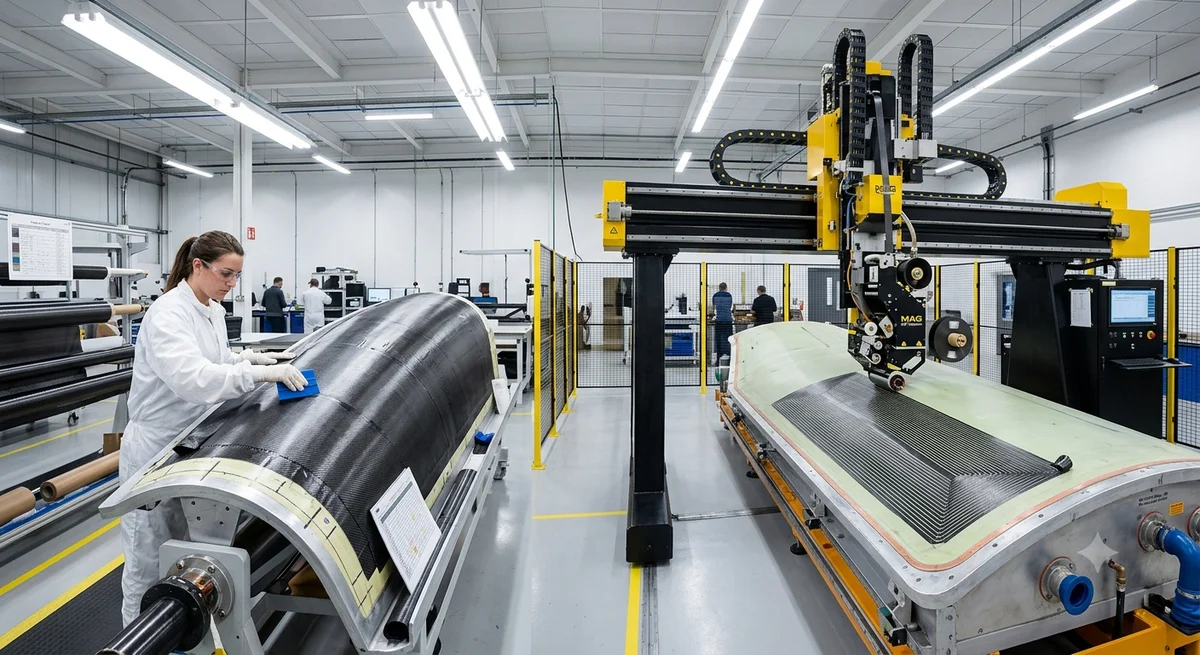
Hand lay-up vs automated tape placement (ATP) for carbon fiber composites — cost comparison, production rates, quality metrics, and process selection criteria for different production volumes and part geometries.
The Layup Process: Critical to Composite Part Quality
The layup process — placing carbon fibre plies into a mould in the correct orientation — is one of the most labour-intensive steps in composite manufacturing. It directly determines fibre orientation accuracy, ply alignment, and the resulting mechanical properties of the cured part. In 2026, manufacturers can choose between manual hand lay-up (HLU) and automated tape placement (ATP), each with distinct cost profiles and quality outcomes.
Process Comparison: Hand Lay-Up vs Automated Tape Placement
| Parameter | Hand Lay-Up (HLU) | Automated Tape Placement (ATP) |
|---|---|---|
| Material form | Prepreg or dry fabric, any width | Unidirectional prepreg tape (6.35–150 mm wide) |
| Deposition rate | 0.5–2 kg/hour per operator | 5–50 kg/hour (single head); 15–100 kg/hour (multi-head) |
| Speed | — | 0.5–2 m/s linear deposition |
| Ply orientation accuracy | ± 2° to ± 5° (operator dependent) | ± 0.2° to ± 0.5° (machine controlled) |
| Ply gap / overlap control | ± 0.5–2 mm | ± 0.1–0.5 mm |
| Scrap / waste rate | 15–35 % (offcuts, rework) | 3–8 % (optimized nesting) |
| Labour requirement | 1–3 operators per mould | 1 operator supervising 1–2 machines |
| Equipment cost (entry) | €200–2,000 (tools, cutting table) | €800K–€3M (gantry or robotic ATP cell) |
| Tooling cost | Lower (composite, wood, foam) | Higher (requires robust mould, thermal management) |
| Minimum economical volume | 1–100 parts | 500–5,000+ parts (single geometry) |
| Typical cycle time (2 m × 1 m, 10 plies) | 4–8 hours | 20–60 minutes |
Hand Lay-Up: When It Remains the Best Choice
Despite the advance of automation, hand lay-up remains the preferred process in several scenarios:
- Prototyping and low-volume production (1–100 parts): No capital investment in ATP machinery. Tooling modifications during development are simple and inexpensive.
- Complex geometries with tight radii and deep draws: Skilled operators can conform prepreg into corners and contours that ATP heads cannot access without bridging or wrinkling.
- Large parts with varying thickness or local reinforcement: Selective ply additions in high-stress areas are straightforward with hand layup; ATP requires reprogramming the entire course for each ply variant.
- Repair and field service: Impossible to bring an ATP machine to a damaged aircraft wing or bridge girder.
- Mixed material forms in one layup: Combining prepreg, dry fabric, adhesive film, and core materials in a single layup is simpler by hand.
Automated Tape Placement: When to Invest
ATP becomes economically attractive at higher volumes and when quality consistency is critical. Key scenarios:
- Mid-to-high volume production (500+ parts/year): The capital cost of an ATP cell (€800K–€3M) is amortized over thousands of parts, typically achieving 30–50 % lower cost per part compared to hand layup at 1,000 parts/year.
- Aerospace primary structures: ATP delivers the orientation accuracy (± 0.5°) and gap control (± 0.3 mm) required by aviation certification authorities. Hand layup cannot consistently meet ± 2° orientation tolerance on complex double-curvature surfaces.
- Large constant-section parts: Wing skins, fuselage barrels, and wind turbine spar caps benefit from ATP's deposition rate (5–50 kg/hour). A 20 m wing skin that takes 3 operators 3 days to lay up by hand can be deposited by a single ATP head in 4–6 hours.
- Thin, high-tolerance laminates: For laminates with 2–8 plies where ply alignment directly affects thickness tolerance, ATP's ± 0.1 mm ply gap control significantly reduces thickness variation.
Cost Comparison: Total Cost per Part at Different Volumes
For a typical aerospace component (2 m × 1.5 m skin, 12 plies, unidirectional prepreg):
| Annual Volume | Hand Lay-Up (€/part) | ATP (€/part) | ATP Advantage |
|---|---|---|---|
| 50 parts | €2,800–3,500 | €18,000–24,000 | HLU more economical |
| 200 parts | €2,200–2,800 | €4,800–6,200 | HLU still lower |
| 500 parts | €1,800–2,300 | €2,200–2,800 | Comparable |
| 1,000 parts | €1,500–1,900 | €1,100–1,500 | ATP 25–35 % lower |
| 5,000 parts | €1,300–1,600 | €650–900 | ATP 45–55 % lower |
Selecting the Right Material for Your Process
At YongXian, we supply prepreg materials for both hand layup and ATP processes. For hand layup, our YX-200 series prepregs (120 °C cure, 35–42 % resin content) offer 15–21 day out-life and controlled tack for complex layup sequences. For ATP, our YX-ATP series tapes (6.35 mm, 12.7 mm, 25.4 mm, 50.8 mm, and 152.4 mm widths) feature tight width tolerance (± 0.1 mm), consistent tack across the roll length, and a silicone release liner compatible with all major ATP heads (Electroimpact, Coriolis, MTorres). We also provide material qualification support for ATP process development.
Q: What is the payback period for an ATP cell replacing hand layup?
A: For a single-product scenario, typical payback is 2–3 years at 1,000 parts/year, or 1–1.5 years at 5,000 parts/year. The calculation depends on local labour rates, equipment utilization, and scrap reduction. In high-labour-cost regions (€35–55/hour), ATP breaks even faster. We have observed customers achieving 18-month payback at 3,000 parts/year with the combination of labour savings and scrap reduction (from 25 % down to 5 %).
Q: Can ATP handle multiple material types in a single layup?
A: Modern multi-head ATP cells can handle up to 4 different material types (e.g., unidirectional tape, adhesive film, glass scrim, copper mesh for lightning protection) in a single program. Material changeover between courses takes 10–30 seconds. However, for highly mixed-material layups (prepreg + core + dry fabric), hand layup or a combination of ATP for continuous plies and hand finishing for details remains more practical.
Q: What is the minimum part size suitable for ATP?
A: Practical minimum part size for ATP is approximately 300 mm × 300 mm for flat parts and 500 mm × 500 mm for contoured parts. Below these sizes, the acceleration/deceleration of the ATP head reduces effective deposition rate to below hand layup speed. For small parts, automated fibre placement (AFP) with narrower tows (3.175 mm or 6.35 mm) is more appropriate, or manual layup for very small quantities.
Part of topic
Related Articles
- Bio-Based Carbon Fiber Precursors: Lignin and Polyethylene for Low-Cost Production
- Large-Tow Carbon Fiber Cost Analysis: 48K vs 60K Price-Performance Comparison
- Carbon Fiber-Resin Interface Bonding: Surface Treatment and Coupling Agent Optimization
- Digital Twin for Carbon Fiber Manufacturing: Real-Time Process Monitoring and Defect Prevention
- Thermoplastic Carbon Fiber Welding for Automotive: Ultrasonic and Induction Welding Process Windows
- Large-Tow Carbon Fiber Wet Spinning: Process Optimization for 48K/60K Production Efficiency
Interested in Our Products?
Contact our team for competitive pricing and technical specifications.
Get a QuoteRelated Products

Carbon Fiber Plate — 3K Twill T700 1.5mm
Thin 1.5mm carbon fiber plate with 3K twill weave surface. Lightweight and stiff, commonly used for covers, panels, drone bodies, and applications requiring a premium aesthetic appearance.
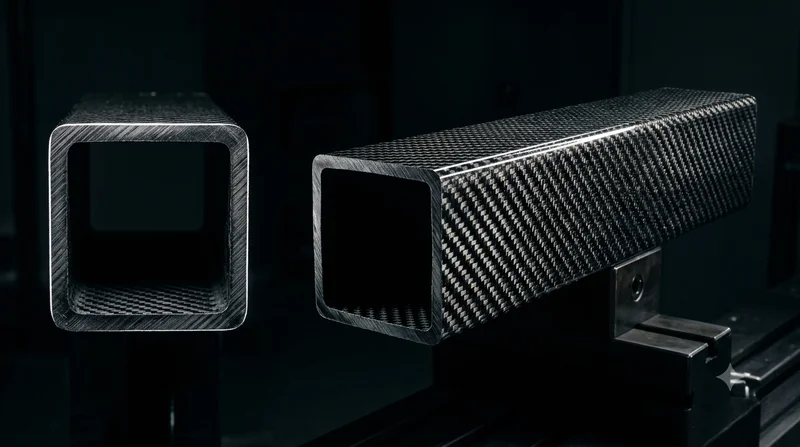
Square Carbon Fiber Tube — 3K Twill T700
Square cross-section carbon fiber tube manufactured with 3K twill weave for torsional strength. Preferred for structural frames, trusses, and support columns where rectangular geometry offers design flexibility.
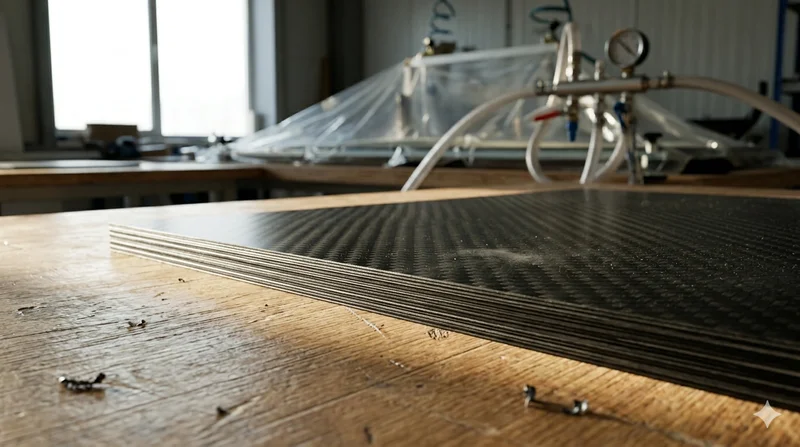
Carbon Fiber Plate — 3K Twill T700 3.0mm
Medium-thickness 3.0mm carbon fiber plate offering significantly higher load capacity while maintaining attractive 3K twill finish. Suitable for structural brackets, reinforcement plates, and load-bearing panels.
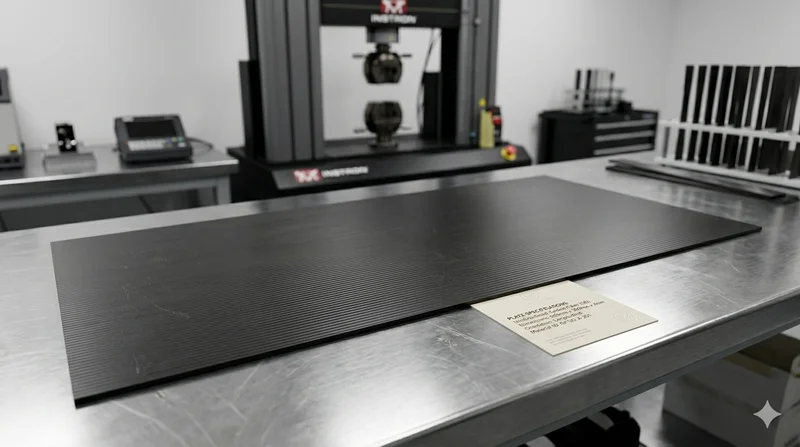
Carbon Fiber Plate — UD Unidirectional T700
Unidirectional carbon fiber plate with all fibers oriented in a single direction for maximum strength along the fiber axis. Essential for structural reinforcements, splints, and applications where load direction is predictable.
High Modulus Round Carbon Fiber Tube — M40
High modulus round tube manufactured with M40 grade fiber (tensile modulus 400 GPa). Designed for applications where maximum stiffness-to-weight ratio is critical, such as optical systems, precision machinery, and aerospace structures.