
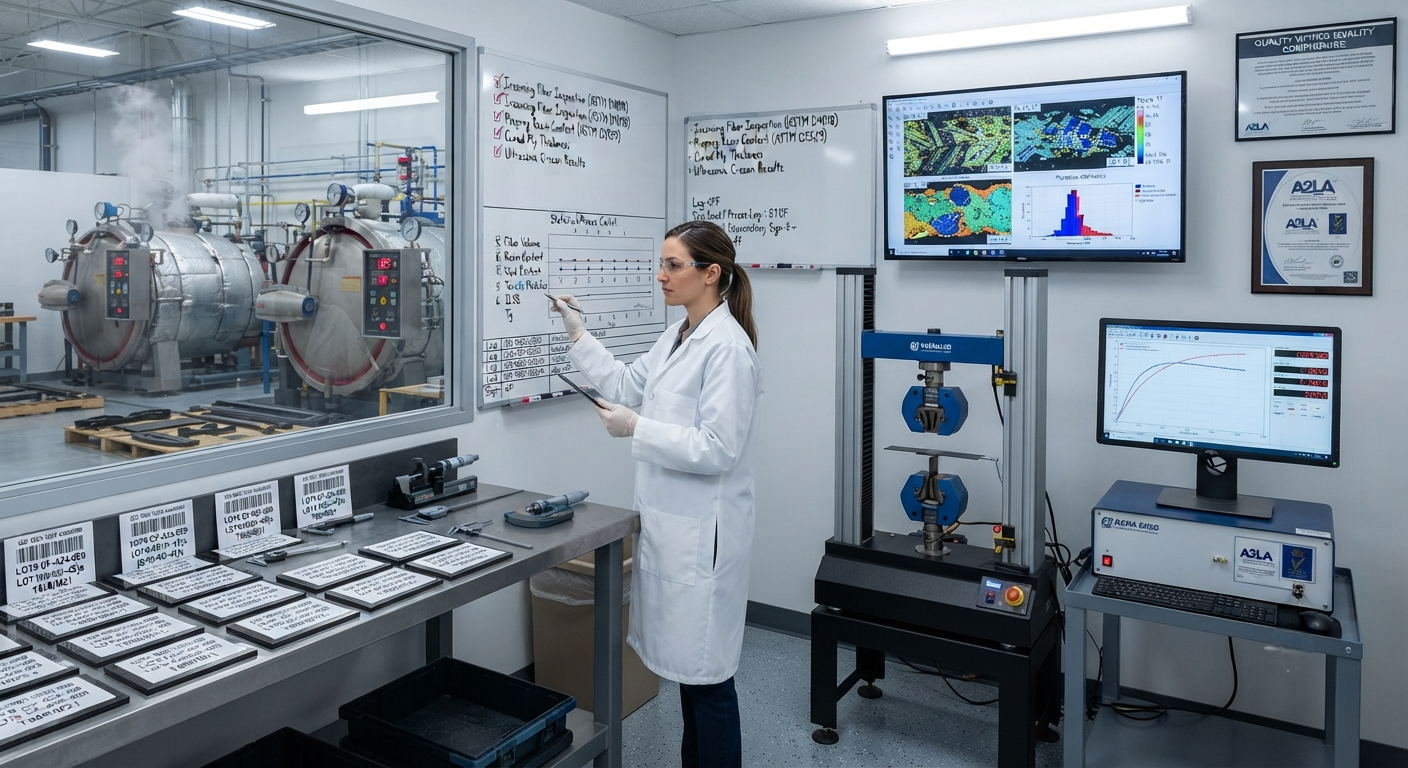
ISO 9001:2026 introduces enhanced requirements for risk-based thinking, supply chain traceability, and digital quality records that are particularly relevant for carbon fiber composite manufacturers. This article examines key process controls — from prepreg incoming inspection and autoclave cure cycle validation to NDI and electronic batch records — that composite fabricators must implement to achieve and maintain certification.
The global carbon fiber composite market is projected to reach $48.3 billion by 2030, driven by demand from aerospace, automotive, wind energy, and sporting goods sectors. As composite materials replace metals in safety-critical applications, manufacturers must demonstrate consistent quality through documented management systems. ISO 9001:2026 represents the latest evolution of the world's most widely adopted quality management standard, incorporating new requirements for risk-based thinking, supply chain traceability, and digital quality records that are particularly relevant to composite manufacturing processes.
For carbon fiber composite manufacturers, ISO 9001:2026 certification is not merely a marketing credential — it is increasingly a contractual prerequisite for Tier 1 suppliers serving Boeing, Airbus, automotive OEMs, and wind turbine manufacturers. The standard's process approach requires composite fabricators to define, monitor, and continuously improve every step from fiber receipt and prepreg storage through layup, cure, non-destructive inspection (NDI), and final machining. This article examines the key process controls that composite manufacturers must implement to achieve and maintain ISO 9001:2026 certification.
Key Process Control Requirements Under ISO 9001:2026
ISO 9001:2026 places greater emphasis on documented process control than its predecessors. For composite manufacturing, the following process parameters require formal control plans, measurement systems analysis (MSA), and statistical process control (SPC): autoclave cure cycles (temperature ramp rate, dwell time, pressure, vacuum level), prepreg out-life and tack life management, layup environment conditions (temperature, humidity, cleanroom class), and NDI acceptance criteria. Each parameter must have defined upper and lower specification limits, with corrective action triggers when measurements drift toward control limits.
| Process Parameter | Control Method | Measurement Frequency | Typical Specification | ISO 9001:2026 Clause |
|---|---|---|---|---|
| Prepreg resin content | Solvent extraction (ASTM D3529) | Per batch receipt | 32–42% by weight | 8.4 (Control of externally provided processes) |
| Autoclave temperature uniformity | Thermocouple survey (9+ points) | Quarterly + per new tool | ±3°C across part envelope | 7.1.5 (Monitoring and measuring resources) |
| Cure degree of cure | DSC (Differential Scanning Calorimetry) | Per cure cycle qualification | ≥98% degree of cure | 8.5.1 (Control of production) |
| Fiber volume fraction | Acid digestion (ASTM D3171) | Per panel — min 3 specimens | 55–65% | 8.5.1 (Control of production) |
| Porosity content | Ultrasonic C-scan + micrography | 100% NDI scan + destructive verification | <2% by area | 8.5.1 + 8.6 (Release of products) |
| Layup environment | Continuous monitoring with datalogger | Real-time with 1-minute logging | 18–24°C, 30–60% RH, Class 100k max | 7.1.4 (Environment for operation) |
Supply Chain Traceability and Raw Material Control
ISO 9001:2026 clause 8.4 requires organizations to control externally provided processes, products, and services. For composite manufacturers, this translates to rigorous incoming inspection of carbon fiber tow, prepreg, core materials, and adhesive films. Each incoming lot must be traceable from the material supplier's batch number through the manufacturer's internal lot tracking system to the final shipped part. The standard now explicitly requires digital traceability records — barcode or RFID-based tracking that enables full pedigree reconstruction within 24 hours of a quality event.
Critical material properties that require verification upon receipt include: fiber tensile strength and modulus (ASTM D4018 for tow, ASTM D3039 for laminates), areal weight of fabrics (ASTM D3776), resin gel time and viscosity, volatile content of prepreg, and tack life verification. Manufacturers must also manage out-life and shelf-life calendars for temperature-sensitive prepreg materials, with clearly defined first-expiry-first-out (FEFO) inventory rotation procedures and bonded storage area monitoring.
Non-Destructive Inspection and Process Validation
ISO 9001:2026 requires organizations to validate any production process where the resulting output cannot be verified by subsequent monitoring or measurement. Composite cure cycles fall squarely in this category — once cured, internal defects such as porosity, delamination, or improper fiber wet-out cannot be corrected. Therefore, composite manufacturers must validate cure cycles through process qualification runs that demonstrate:
- Temperature distribution within ±3°C across the entire part geometry during dwell phases
- Vacuum integrity maintained at ≥685 mmHg (27 in-Hg) throughout the cycle
- Pressure application synchronized with resin gelation (for out-of-autoclave prepregs)
- Cool-down rate controlled to minimize residual thermal stress
- First-article inspection including full C-scan, coupon mechanical testing, and micrographic analysis
In-process NDI methods commonly employed include ultrasonic A-scan for thickness and disbond detection, ultrasonic C-scan for mapping porosity and delamination across the entire part surface, tap testing for rapid bond-line assessment, shearography for honeycomb core inspection, and thermography for impact damage detection. Each NDI method must be performed by certified Level II or Level III technicians per SNT-TC-1A or an equivalent personnel certification standard.
Documentation and Records Management
ISO 9001:2026 clause 7.5 on documented information requires composite manufacturers to maintain controlled documentation for quality manuals, process specifications, work instructions, inspection and test plans, and quality records. The standard now accommodates digital quality management systems, allowing manufacturers to transition from paper travelers to electronic batch records (EBR) with digital signatures and automated data collection from cure cycle monitors, NDI equipment, and CMM inspection results.
Retention periods for composite quality records typically span the design life of the end product — for aerospace components this can exceed 30 years. Manufacturers must ensure records are stored in tamper-evident digital formats with regular backup and disaster recovery testing.
FAQ
How long does it take for a composite manufacturer to achieve ISO 9001:2026 certification from scratch?
For a composite manufacturing facility with no existing quality management system, the typical timeline is 6 to 12 months. The process includes: gap analysis against the standard (2-4 weeks), development of quality manual and 20+ required procedures (6-8 weeks), implementation and training (8-12 weeks), internal audit and management review (4-6 weeks), corrective actions from internal audit (2-4 weeks), and finally the Stage 1 and Stage 2 certification audits by an accredited certification body. Facilities that already maintain Nadcap, AS9100, or IATF 16949 certifications typically transition to ISO 9001:2026 within 3-4 months since the core process-based framework is already in place.
What are the most common non-conformities found during ISO 9001 audits of composite manufacturers?
Based on published certification body data, the most frequently cited non-conformities in composite manufacturing facilities include: inadequate control of monitored and measuring equipment (calibration gaps), insufficient evidence of operator training and competency verification for layup and NDI personnel, lack of documented risk assessment for process changes (e.g., resin system substitution, cure cycle modification), poor management of non-conforming material with missing disposition records, and incomplete supplier evaluation records — particularly for carbon fiber tow suppliers who may not themselves hold ISO 9001 certification. Addressing these five areas typically resolves 70-80% of audit findings.
Does ISO 9001:2026 require specific certifications for composite manufacturing processes like autoclave operation or NDI?
ISO 9001:2026 does not prescribe specific personnel certification schemes — it requires the organization to determine the necessary competence for personnel and take actions to acquire that competence. However, many composite manufacturers choose to adopt industry-recognized certification programs such as Nadcap AC7114 (composite materials) or AS7114 (aerospace composites) to demonstrate competence. For NDI personnel, ASNT SNT-TC-1A or NAS-410 certification is typically required by customers. Autoclave operators are generally certified through in-house training programs that include written exams, practical demonstrations, and annual re-certification covering emergency procedures, vacuum bagging techniques, and thermocouple placement. The key ISO 9001:2026 requirement is that competence is documented, verified, and periodically re-evaluated.
Conclusion
ISO 9001:2026 provides a robust framework for carbon fiber composite manufacturers to deliver consistent quality across their production processes. From raw material traceability and incoming inspection through validated cure cycles and comprehensive NDI, the standard's process-based approach aligns naturally with the multi-step complexity of composite fabrication. For B2B buyers evaluating composite suppliers, ISO 9001:2026 certification — particularly when supplemented with industry-specific programs like Nadcap or AS9100 — provides confidence that the manufacturer has implemented systematic process controls capable of producing defect-free components across production runs. Yongxian Carbon Fiber maintains ISO 9001:2026 certification with all process control documentation available for customer audit. Contact our quality engineering team to schedule a facility tour or discuss your specific composite manufacturing requirements.
Related Articles
- Recycled Carbon Fiber Market Forecast 2030: Technology Maturity and Commercialization Path
- South Korea Carbon Fiber Market 2026: Hydrogen Economy and Shipbuilding Innovation
- Wind Turbine Blade Leading Edge Protection 2026: Polyurethane, Tape, and Metallic Shield Solutions
- China Carbon Fiber Overcapacity 2026: Price War Impact and Industry Consolidation
- India Carbon Fiber Market 2026: Wind Energy, Aerospace, and Defense Expansion
- PAN Precursor Market 2026: Acrylonitrile Supply and Carbon Fiber Cost Structure
Interested in Our Products?
Contact our team for competitive pricing and technical specifications.
Get a QuoteRelated Products
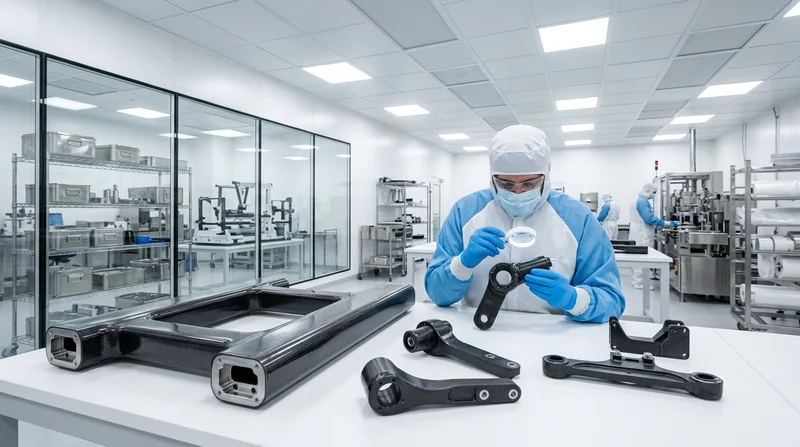
Custom Carbon Fiber Medical Device Components
Medical-grade carbon fiber components manufactured for imaging equipment, surgical instruments, and patient support systems. Carbon fiber's radiolucency (X-ray transparency) and high strength-to-weight ratio make it ideal for CT scanner beds, wheelchair frames, surgical robot arms, and MRI-compatible accessories. Biocompatible resin systems available.
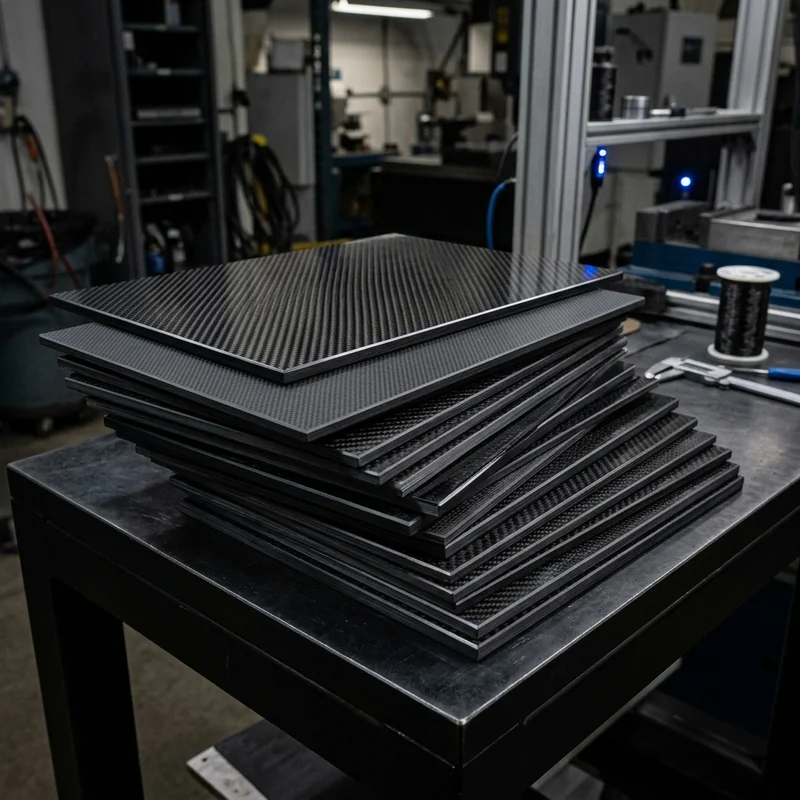
Carbon fiber standard plate-3k stripe
Lightweight, ultra-rigid standard sheets for drone fuselages, robot housings, facades and structural applications.

Square Carbon Fiber Tube — 3K Twill T700
Square cross-section carbon fiber tube manufactured with 3K twill weave for torsional strength. Preferred for structural frames, trusses, and support columns where rectangular geometry offers design flexibility.

Carbon Fiber Plate — 3K Twill T700 3.0mm
Medium-thickness 3.0mm carbon fiber plate offering significantly higher load capacity while maintaining attractive 3K twill finish. Suitable for structural brackets, reinforcement plates, and load-bearing panels.

Carbon Fiber Plate — 3K Twill T700 1.5mm
Thin 1.5mm carbon fiber plate with 3K twill weave surface. Lightweight and stiff, commonly used for covers, panels, drone bodies, and applications requiring a premium aesthetic appearance.