
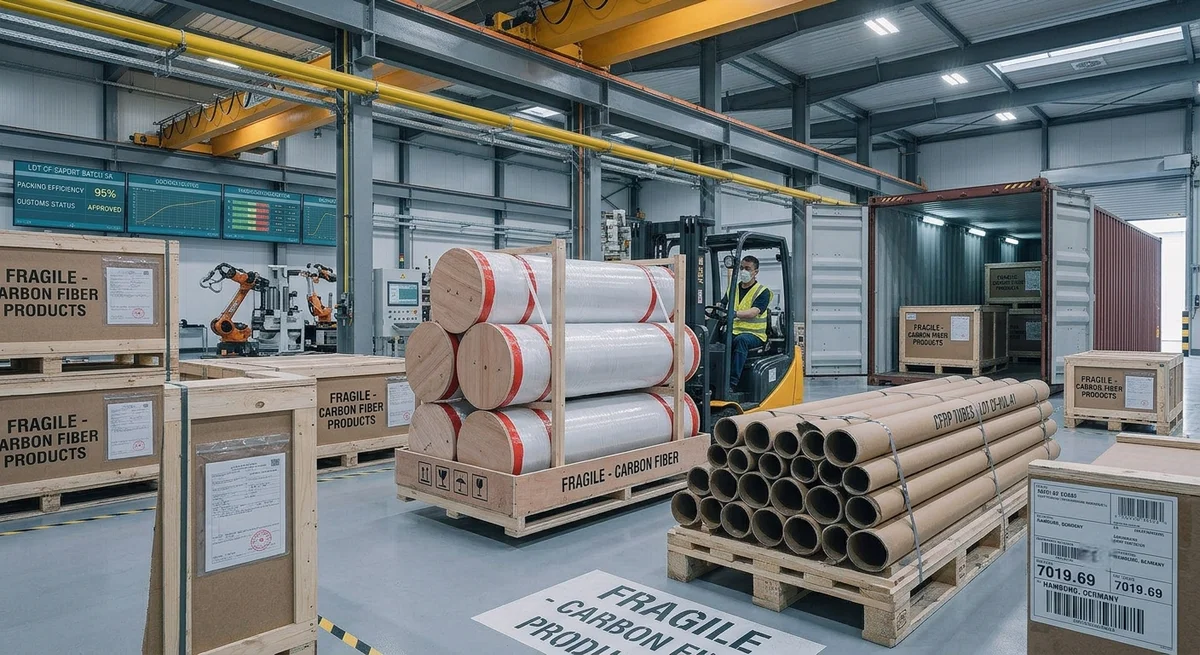
A practical B2B guide to exporting carbon fiber products internationally, covering HS code classification, export documentation requirements, specialized packaging standards, customs clearance procedures, and regional regulatory considerations for carbon fiber and CFRP shipments.
For B2B buyers sourcing carbon fiber products from international suppliers — particularly from China, which produced 62% of global carbon fiber by volume in 2025 (CCeV Market Report) — understanding the logistics chain from factory gate to final delivery is as important as product quality. Carbon fiber products occupy a unique position in international trade regulations: they are dual-use controlled materials (subject to export controls under the Wassenaar Arrangement), classified under specific HS codes that differ between raw fiber, woven fabric, prepreg, and finished components, and require specialized packaging to prevent edge damage, moisture ingress, and electrostatic discharge during transit. This guide covers the complete export process for carbon fiber products, with emphasis on shipments from Asian manufacturing hubs to North American and European markets.
HS Code Classification for Carbon Fiber Products
Correct Harmonized System (HS) code classification is the foundation of compliant carbon fiber export. Misclassification can result in customs holds, penalty fines (up to $10,000 per violation in the US), or seizure of goods. The HS code determines duty rates, export control applicability, and documentary requirements.
| Product Form | HS Code (6-digit) | Description | Duty Rate (US Import) | Duty Rate (EU Import) | Export Control |
|---|---|---|---|---|---|
| Carbon fiber raw filament (PAN-based) | 6815.11 | Carbon fibers (not woven, not fabricated) | 3.7% | 3.8–4.2% | Yes (ECCN 1C010) |
| Carbon fiber woven fabric | 7019.69 | Woven fabrics of carbon fiber | 4.2% | 4.5–5.0% | Yes (1C010) |
| Carbon fiber prepreg (resin-impregnated) | 3921.90 | Other plates, sheets, film of plastics — containing carbon fiber reinforcement | 5.3% | 5.5–6.5% | Yes (1C010, 1C210 for aerospace grades) |
| CFRP tubes (pultruded) | 3916.90 | Other profiles of plastics — reinforced with carbon fiber | 4.8% | 5.0–6.0% | Conditional |
| CFRP plates and sheets | 3926.90 | Other articles of plastics — carbon fiber composite | 3.9% | 4.2–5.5% | Conditional |
| Carbon fiber chopped/milled (short fiber) | 6815.19 | Other carbon fiber articles — milled, chopped | 2.8% | 2.5–3.0% | No |
| CFRP finished components (aerospace/grades) | 8807.30 (aerospace) | Other parts of aircraft — composite | 0% (WTO) | 0–2.5% | Yes (1C210, 9A991) |
| Carbon fiber rovings | 6815.11 | Carbon fiber roving, untwisted bundles | 3.7% | 3.8% | Yes (1C010) |
Critical note: Carbon fiber with a tensile modulus exceeding 450 GPa or tensile strength exceeding 4.5 GPa is classified under ECCN 1C010 (Wassenaar dual-use controlled) in the United States, and under similar Annex I dual-use regulations in the EU. Exporters must verify whether their specific product grade triggers these controls — standard modulus (230–240 GPa) products generally do not, but intermediate (280–350 GPa) and high-modulus (>350 GPa) grades do require export license documentation.
Export Documentation Checklist
Every international carbon fiber shipment requires the following documents. For dual-use controlled products, additional documentation (italicized) is mandatory.
- Commercial invoice — Must include: HS code (6-digit minimum, 10-digit recommended), product description with fiber type (PAN vs pitch-based), tow size (K number), modulus grade, country of origin, Incoterms 2025 (preferred: FOB Shanghai, CIF Hamburg, or DDP for key accounts).
- Packing list — Itemized by package, including net weight, gross weight, package dimensions, and CFRP tube/plate quantity per box. Must match commercial invoice exactly.
- Bill of lading (B/L) or Air waybill (AWB) — Ocean freight is the dominant mode for carbon fiber products (85% of tonnage by sea, 15% air). Standard sea freight: 25–35 days China to Europe, 18–25 days China to US West Coast.
- Certificate of origin (COO) — For RCEP (China-Japan-Korea) and CPTPP member countries, preferential duty rates apply with valid COO. For CFRP products, COO must specify carbon fiber origin if different from processing location.
- Export license / permit — Required for high-modulus grades (>350 GPa modulus, HS 6815.11/7019.69). Chinese exporters must apply through MOFCOM (Ministry of Commerce) — processing time 10–20 working days per application, valid for 12 months.
- End-user certificate (EUC) — Required by EU importers under Regulation 2021/821 for dual-use carbon fiber. Must include: end-user company name and address, final application description (e.g. "industrial roller manufacturing" not "composite parts"), and commitment not to re-export to embargoed destinations.
- Material Safety Data Sheet (MSDS) — Required for prepreg shipments (resin content classified as hazardous). For dry carbon fiber fabric, MSDS confirms non-hazardous classification (carbon fiber is classified as "not dangerous goods" under IATA/IMDG).
- Technical specification sheet — Customs authorities in the EU (DG TAXUD) and US (CBP) may request technical documentation to verify HS code classification and dual-use status. Include fiber tensile strength, tensile modulus, density, tow size, and resin content (for prepreg).
Specialized Packaging Standards for Carbon Fiber
Carbon fiber products require packaging that addresses three primary damage risks: edge impact, moisture absorption, and electrostatic discharge (ESD). The following packaging standards are recommended for export shipments:
| Product Type | Packaging Method | Moisture Barrier | ESD Protection | Cost per m³ Packaged |
|---|---|---|---|---|
| Carbon fiber rolls (fabric, up to 1250 mm wide) | Cardboard core (76–150 mm ID) + PE film wrap + reinforced kraft paper + plywood end caps | Yes — 0.15 mm PE film, moisture vapor transmission rate <0.5 g/m²·day | Antistatic PE film (surface resistivity 10⁸–10¹⁰ Ω/sq) | $45–75 |
| CFRP pultruded tubes (<6 m length) | Individual PE sleeve + corrugated cardboard sleeve + wooden crating with foam end supports | Yes — PE sleeve + silica gel desiccant packs (5 g per tube) | Corrugated cardboard provides adequate ESD isolation | $85–150 |
| CFRP plates (<2 m²) | PE interleaf between plates + edge protectors (EVA foam, 10 mm) + plywood crating with foam lining | Yes — sealed PE bag + 10 g desiccant per plate | Required — conductive foam (10⁴–10⁶ Ω) for aerospace-grade plates | $120–200 |
| Carbon fiber prepreg rolls | PE/aluminum foil vacuum bag (frozen) + insulated container with dry ice or gel packs | Aluminum foil laminate (MVTR <0.02 g/m²·day) — critical for -18°C storage | Not required (conductive carbon fibers inside sealed foil) | $250–500 (includes cold chain logistics) |
| CFRP finished parts (custom shapes) | Custom-fit foam cradle (polyurethane or ESD foam) + plywood crate + edge gussets | As required by customer specification (typically <1% moisture absorption standard) | ESD foam for electronic-adjacent components | $200–400 |
Shipping Modes and Cost Benchmarks
- Sea freight (FCL — full container load): A 20 ft container holds approximately 6–8 metric tonnes of carbon fiber fabric rolls (palletized). Shanghai to Rotterdam: $3,200–4,500 per container (2026 spot rate). Transit time: 28–32 days.
- Sea freight (LCL — less than container load): For shipments under 5 m³. $180–280 per m³. Minimum billable volume: 1 m³.
- Air freight: Used for high-value, time-sensitive prepreg rolls (requires cold chain). Shanghai to Frankfurt: $4.50–7.00/kg. Transit time: 3–5 days. Only economical for orders under 500 kg or prepreg with strict shelf-life (typically 6–12 months at -18°C).
- Rail freight (China-Europe): Growing route (48% year-over-year volume increase since 2024). Xi'an to Hamburg: 15–18 days. Cost: $2,800–3,800 per container. Limited availability for carbon fiber due to moisture sensitivity and temperature fluctuation concerns.
- Insurance: Standard marine cargo insurance (Institute Cargo Clauses A) at 0.3–0.6% of cargo value. Additional premium for CFRP: +0.15% due to fragility risk.
Regional Regulatory Considerations
China (Exporting Country): Carbon fiber exports from China require MOFCOM registration for all grades with tensile strength >3.8 GPa. Export license processing: 10–20 working days. New export control regulations effective January 2026 added quarterly reporting requirements for carbon fiber exporters — deviation from declared end-use triggers investigation within 15 days.
European Union (Importing Region): EU Regulation 2021/821 governs dual-use carbon fiber imports. All CFRP shipments with modulus >350 GPa require an EUC pre-approved by the member state customs authority. Germany's BAFA processes approximately 2,500 carbon fiber EUC applications annually, with an average processing time of 8 working days. France and Italy apply similar controls under national decree.
United States (Importing Country): Carbon fiber imports are subject to CBP (Customs and Border Protection) review under ECCN 1C010. The Bureau of Industry and Security (BIS) requires prior authorization for products exceeding 4.5 GPa tensile strength or 450 GPa modulus. BIS processing time for individual licenses: 30–60 days. EAR Section 740.14 (License Exception ENC) does not apply — standard export license is required.
FAQ: Carbon Fiber International Shipping
Q: Is carbon fiber classified as dangerous goods for shipping purposes?
Dry carbon fiber fabric, fiber, and CFRP finished parts are generally classified as non-dangerous goods under IATA DGR (Edition 67) and IMDG Code (Amendment 42-24). They are not flammable, explosive, corrosive, or toxic in their solid cured form. However, there are two exceptions: (1) carbon fiber prepreg — because the uncured epoxy resin is classified as a flammable liquid (Class 3, UN 1866, Packing Group III), prepreg shipments require IATA/IMDG dangerous goods declaration and special packaging (UN-approved outer packaging, absorbent material, and orientation arrows). (2) Carbon fiber dust — fine airborne particles from machining are classified as a respiratory hazard (PEL 15 mg/m³ total dust, 5 mg/m³ respirable fraction under OSHA), but this applies to workplace safety, not shipping classification.
Q: What is the typical lead time for carbon fiber export from China to Europe?
Total lead time from order placement to arrival at a European warehouse is typically 45–60 days, broken down as: production lead time (15–25 days, depending on weave complexity and whether the fabric is in-stock or custom-woven), export documentation and customs clearance (5–8 days), ocean freight Shanghai to Rotterdam (28–32 days), and EU customs clearance and inland delivery (5–7 days). For standard-grade (230 GPa modulus) carbon fiber fabric, express shipping via air freight can reduce total lead time to 10–14 days at a 3–5× cost premium.
Q: Do carbon fiber products require special customs documentation for NAFTA/USMCA or RCEP preferential treatment?
Yes. Under RCEP (effective for China-Japan-Korea trade since 2022), carbon fiber woven fabric classified under HS 7019.69 originating from China qualifies for a 5% duty reduction when imported into Japan (from 4.5% to effectively 0% for RCEP parties). The importer must present a valid Certificate of Origin (COO) Form RCEP at the time of customs clearance. Under USMCA (US-Mexico-Canada), carbon fiber products must meet the Regional Value Content (RVC) requirement of 62.5% net cost to qualify for zero duty — which typically requires that carbon fiber precursor as well as weaving/processing occur within USMCA territory, making Chinese-origin carbon fiber ineligible. For CPTPP members (Vietnam, Malaysia, Australia, etc.), the Product Specific Rule requires a change in tariff heading (from HS 6815 to HS 7019 or 3926), which weaving or prepreg processing achieves — so CFRP processing in a CPTPP member country using imported Chinese carbon fiber can qualify.
Related Articles
- Recycled Carbon Fiber Market Forecast 2030: Technology Maturity and Commercialization Path
- South Korea Carbon Fiber Market 2026: Hydrogen Economy and Shipbuilding Innovation
- Wind Turbine Blade Leading Edge Protection 2026: Polyurethane, Tape, and Metallic Shield Solutions
- China Carbon Fiber Overcapacity 2026: Price War Impact and Industry Consolidation
- India Carbon Fiber Market 2026: Wind Energy, Aerospace, and Defense Expansion
- PAN Precursor Market 2026: Acrylonitrile Supply and Carbon Fiber Cost Structure
Interested in Our Products?
Contact our team for competitive pricing and technical specifications.
Get a QuoteRelated Products
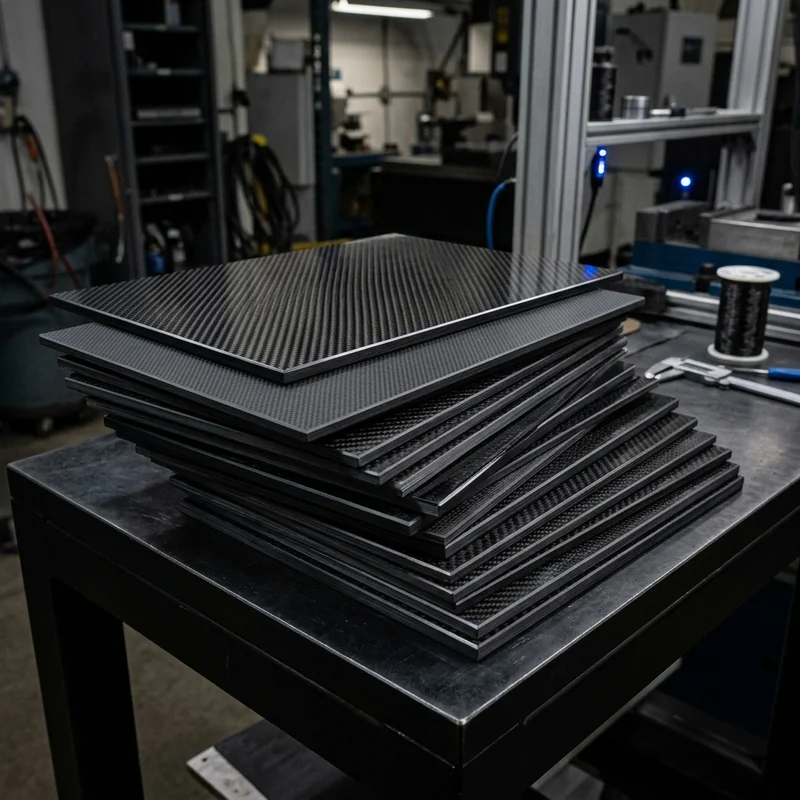
Carbon fiber standard plate-3k stripe
Lightweight, ultra-rigid standard sheets for drone fuselages, robot housings, facades and structural applications.

Carbon Fiber Plate — 3K Twill T700 1.5mm
Thin 1.5mm carbon fiber plate with 3K twill weave surface. Lightweight and stiff, commonly used for covers, panels, drone bodies, and applications requiring a premium aesthetic appearance.

Square Carbon Fiber Tube — 3K Twill T700
Square cross-section carbon fiber tube manufactured with 3K twill weave for torsional strength. Preferred for structural frames, trusses, and support columns where rectangular geometry offers design flexibility.

Carbon Fiber Plate — 3K Twill T700 3.0mm
Medium-thickness 3.0mm carbon fiber plate offering significantly higher load capacity while maintaining attractive 3K twill finish. Suitable for structural brackets, reinforcement plates, and load-bearing panels.
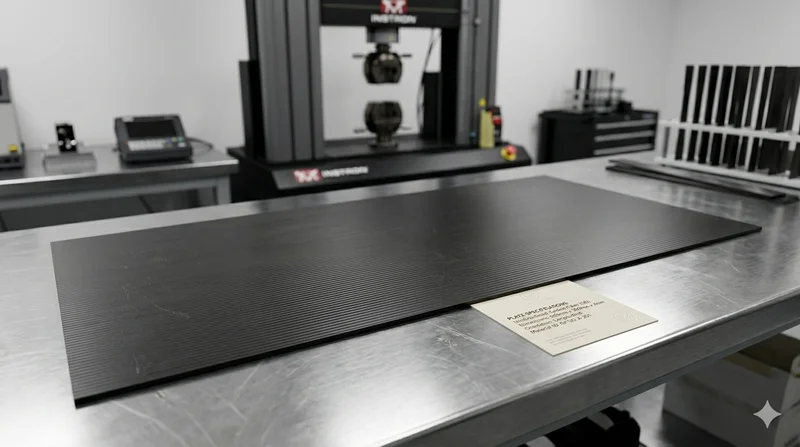
Carbon Fiber Plate — UD Unidirectional T700
Unidirectional carbon fiber plate with all fibers oriented in a single direction for maximum strength along the fiber axis. Essential for structural reinforcements, splints, and applications where load direction is predictable.