
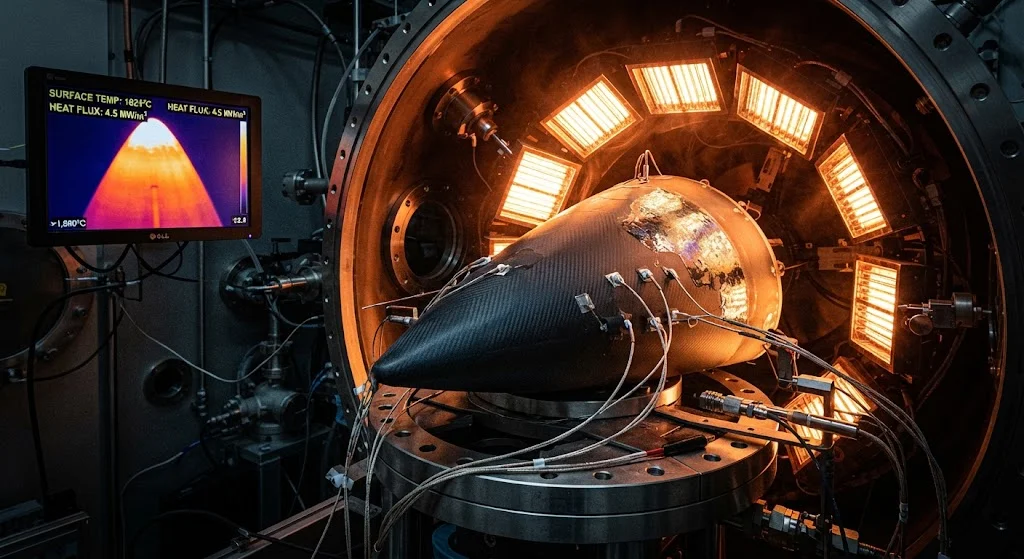
Hypersonic vehicles require advanced thermal protection systems that combine carbon fiber structural capability with extreme temperature resistance. This article covers C/C composites, ablative materials, and thermal management for Mach 5+ applications.
Introduction
Hypersonic vehicles — defined as those traveling at speeds above Mach 5 (approximately 6,000 km/h) — face extreme aerodynamic heating that creates temperature environments exceeding 2,000°C on exposed surfaces. Carbon fiber composites play a critical role in thermal protection systems (TPS) for these vehicles, providing both structural capability and thermal resistance that enables sustained hypersonic flight.
The thermal protection challenge at hypersonic speeds is fundamentally different from conventional aerospace applications. While commercial aircraft operate at temperatures where standard polymer matrix composites are adequate, hypersonic vehicles require materials that maintain structural integrity at temperatures where most organic materials decompose. This necessitates carbon-carbon (C/C) composites, ceramic matrix composites (CMC), and advanced ablative materials — all incorporating carbon fiber reinforcement.
Carbon-Carbon Composites
C/C composites are the primary structural material for hypersonic thermal protection:
Material composition: C/C composites consist of carbon fiber reinforcement in a carbon matrix, produced by infiltrating carbon fiber preforms with pitch or resin precursors followed by carbonization. The resulting material maintains strength and stiffness at temperatures up to 2,500°C in inert atmospheres.
Fiber architecture: Multi-directional woven or needled carbon fiber preforms provide quasi-isotropic properties, with fiber orientations optimized for the specific thermal and structural loads of each vehicle component. 3D woven preforms provide through-thickness reinforcement that resists delamination under thermal shock.
Oxidation protection: C/C composites oxidize rapidly above 500°C in air, requiring oxidation protection systems — typically silicon carbide (SiC) coatings applied by chemical vapor deposition (CVD) — to enable use in oxidizing environments.
Ablative Materials
Ablative thermal protection materials sacrifice mass to protect underlying structures:
Phenolic-based ablators: Carbon fiber reinforced phenolic composites are widely used as ablative heat shields for re-entry vehicles and rocket nozzles. The phenolic resin decomposes endothermically, absorbing heat through pyrolysis while the carbon char layer provides thermal insulation.
Silica-based ablators: Carbon fiber reinforced silica composites offer lower density and higher temperature capability than phenolic ablators, with applications in high heat flux regions of hypersonic vehicles.
Design approach: Ablative material thickness is designed based on total heat load rather than peak heat flux, requiring careful thermal analysis of the entire flight trajectory to optimize material usage while ensuring structural survival.
Thermal Management
Hypersonic vehicles require active and passive thermal management systems:
Radiative cooling: High-emissivity carbon-based surface coatings radiate absorbed heat to space, reducing net heat flux to the vehicle structure. Multi-layer insulation (MLI) systems minimize heat transfer to internal components.
Transpiration cooling: Porous carbon composite panels enable transpiration cooling, where coolant fluid (typically hydrogen or helium) flows through the material to absorb heat through evaporation and convection. This approach provides active thermal control for the most demanding heating environments.
Heat pipe thermal management: Embedded heat pipes within carbon composite structures distribute heat from high-temperature regions to lower-temperature areas, equalizing thermal gradients and reducing peak temperatures.
Manufacturing Challenges
Producing C/C composites and advanced thermal protection materials presents significant manufacturing challenges:
Long processing times: C/C composite production requires multiple cycles of densification (resin/pitch infiltration and carbonization), with each cycle taking days to weeks. Total production time for a single component can be 2-6 months.
High temperature processing: Carbonization and graphitization steps require furnaces operating at 1,000-3,000°C, creating significant energy costs and equipment requirements.
Quality control: Non-destructive evaluation of C/C composites is challenging due to the material's opacity and complex microstructure. X-ray CT and ultrasonic inspection must be adapted for these materials.
Applications
Carbon fiber thermal protection systems are used in several hypersonic applications:
Re-entry vehicles: C/C composite nose cones and leading edges experience the highest heating rates during atmospheric re-entry, requiring the highest temperature capability materials.
Hypersonic cruise vehicles: Sustained hypersonic flight creates prolonged heating environments where C/C composites and ablative materials protect propulsion and structural systems.
Space access: Reusable launch vehicle thermal protection systems must survive multiple re-entry cycles while minimizing maintenance requirements between flights.
Conclusion
Carbon fiber thermal protection systems are essential enabling technology for hypersonic flight. As the demand for high-speed transportation and space access grows, advances in C/C composite technology, oxidation protection, and thermal management will continue to expand the capability and reduce the cost of hypersonic vehicle thermal protection.
Part of topic
Related Articles
- Bio-Based Carbon Fiber Precursors: Lignin and Polyethylene for Low-Cost Production
- Large-Tow Carbon Fiber Cost Analysis: 48K vs 60K Price-Performance Comparison
- Carbon Fiber-Resin Interface Bonding: Surface Treatment and Coupling Agent Optimization
- Digital Twin for Carbon Fiber Manufacturing: Real-Time Process Monitoring and Defect Prevention
- Thermoplastic Carbon Fiber Welding for Automotive: Ultrasonic and Induction Welding Process Windows
- Large-Tow Carbon Fiber Wet Spinning: Process Optimization for 48K/60K Production Efficiency
Interested in Our Products?
Contact our team for competitive pricing and technical specifications.
Get a QuoteRelated Products
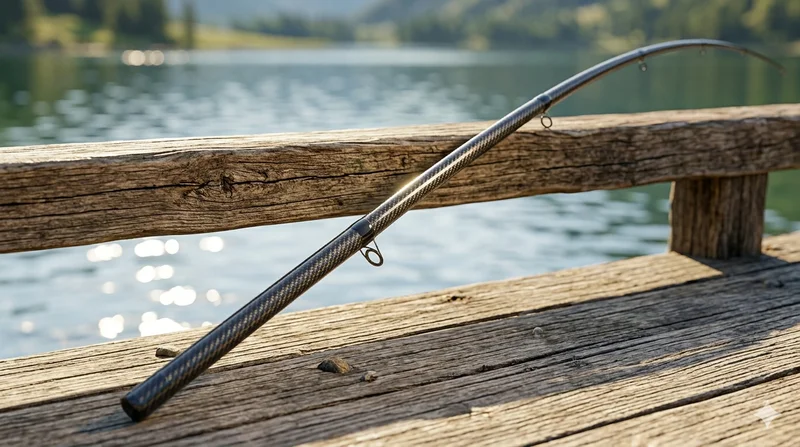
Carbon Fiber Fishing Rod Blank
High-quality carbon fiber fishing rod blank manufactured from multiple grades of Toray carbon fiber cloth. Available in a wide range of lengths, powers, and actions for freshwater and saltwater applications. Suitable for OEM rod building.

Carbon Fiber Plate — 3K Twill T700 3.0mm
Medium-thickness 3.0mm carbon fiber plate offering significantly higher load capacity while maintaining attractive 3K twill finish. Suitable for structural brackets, reinforcement plates, and load-bearing panels.

Carbon Fiber Plate — 3K Twill T700 1.5mm
Thin 1.5mm carbon fiber plate with 3K twill weave surface. Lightweight and stiff, commonly used for covers, panels, drone bodies, and applications requiring a premium aesthetic appearance.

Square Carbon Fiber Tube — 3K Twill T700
Square cross-section carbon fiber tube manufactured with 3K twill weave for torsional strength. Preferred for structural frames, trusses, and support columns where rectangular geometry offers design flexibility.
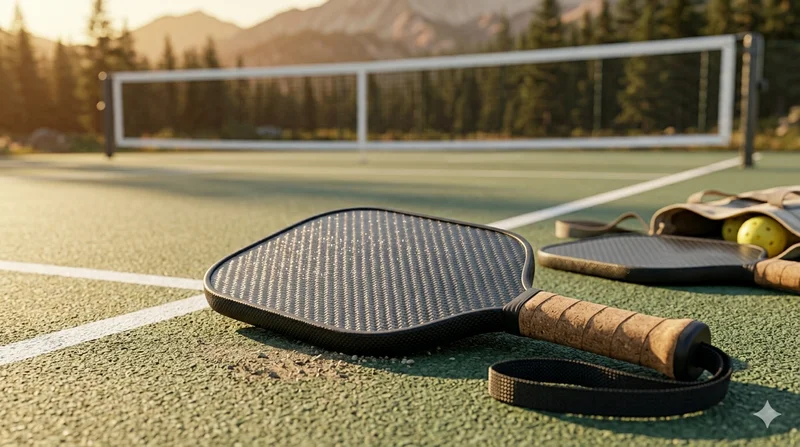
Carbon Fiber Pickleball Paddle
High-performance pickleball paddle with Toray T700 carbon fiber face and polypropylene honeycomb core. Delivers excellent power-to-weight ratio, spin generation, and vibration dampening for competitive play.