
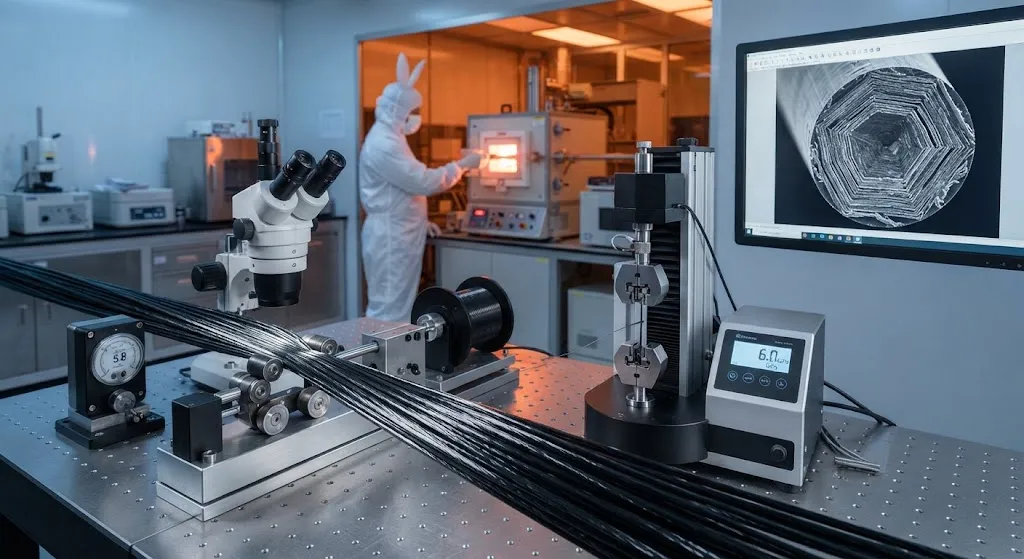
Carbon fiber technology has evolved through three distinct generations, each defined by the balance between strength and modulus. The first generation delivered standard tensile strength with moderate modulus. The second generation improved tensile strength to 5.5 GPa but at the cost of
Introduction
Carbon fiber technology has evolved through three distinct generations, each defined by the balance between strength and modulus. The first generation delivered standard tensile strength with moderate modulus. The second generation improved tensile strength to 5.5 GPa but at the cost of reduced modulus. The third generation — high-modulus high-toughness carbon fiber — breaks this trade-off, achieving 6.0 GPa tensile strength and 370 GPa modulus simultaneously. This combination is not merely incremental improvement; it is a fundamental engineering breakthrough that enables new structural possibilities in satellite design, deep-space exploration, and next-generation aerospace systems.
The significance of this achievement lies in the physics of carbon fiber. Strength and modulus are governed by different aspects of the fiber microstructure: strength depends on the absence of critical flaws in the graphene crystal structure, while modulus depends on the degree of crystal orientation along the fiber axis. Historically, processes that enhanced orientation (and thus modulus) introduced surface defects that reduced strength. The third-generation fibers overcome this limitation through precision control of precursor chemistry, spinning conditions, and stabilization parameters, creating a fiber architecture where high orientation coexists with minimal flaw density.
Precursor Chemistry and Spinning Innovation
The foundation of high-modulus high-toughness carbon fiber lies in the polyacrylonitrile (PAN) precursor system. Third-generation fibers use a co-polymer PAN with carefully controlled methyl acrylate and itaconic acid content, typically in the range of 3-5% by weight. This composition enables:
- Enhanced molecular weight distribution: Narrow molecular weight distribution (Mw/Mn < 2.0) reduces the formation of voids and defects during carbonization, directly improving tensile strength.
- Controlled cyclization kinetics: The itaconic acid co-monomer initiates cyclization at lower temperatures, producing a more uniform ladder polymer structure that translates to higher modulus after carbonization.
- Optimized spinning rheology: Wet-spinning parameters — coagulation bath temperature, draw ratio, and solvent concentration — are tuned to produce a precursor with minimal skin-core heterogeneity.
The spinning process itself has evolved. Third-generation fibers use multi-stage drawing with total draw ratios exceeding 15x, compared to 10-12x for conventional fibers. This extreme drawing aligns the polymer chains along the fiber axis before carbonization, establishing the crystal orientation that becomes the modulus foundation.
Microstructure Optimization: The Strength-Modulus Balance
The key innovation in third-generation carbon fiber is the microstructure control during stabilization and carbonization. The fiber achieves high modulus through crystal orientation while maintaining high strength through flaw minimization:
| Parameter | Second-Generation | Third-Generation | Improvement |
|---|---|---|---|
| Tensile Strength | 5.5 GPa | 6.0 GPa | +9% |
| Tensile Modulus | 320 GPa | 370 GPa | +16% |
| Strain to Failure | 1.7% | 1.6% | -6% |
| Crystal Size (La) | 1.8 nm | 2.2 nm | +22% |
| Interlayer Spacing (d002) | 0.344 nm | 0.342 nm | -0.6% |
| Surface Defect Density | Baseline | -40% | Significant reduction |
The stabilization process uses a multi-zone thermal gradient approach. The fiber passes through temperature zones from 200°C to 300°C with precisely controlled residence times. This gradient allows uniform oxidation throughout the fiber cross-section, preventing the skin-core heterogeneity that weakens conventional fibers. The carbonization phase uses two-stage heating: a low-temperature stage (800-1200°C) for structural rearrangement, followed by a high-temperature stage (1500-1800°C) for graphitization and modulus development.
Mechanical Property Characterization
The mechanical properties of third-generation carbon fiber are validated through rigorous testing protocols. Single-fiber tensile testing follows ASTM C1557 with gauge lengths of 20mm, while bundle testing uses ASTM D4018. The fiber exhibits:
- Tensile strength: 6.0 GPa (mean), with Weibull modulus exceeding 15, indicating high consistency and low variability.
- Tensile modulus: 370 GPa, measured via strain gauge and extensometer methods with confirmation through Raman spectroscopy of crystal orientation.
- Compressive strength: 2.1 GPa, significantly higher than standard-modulus fibers (1.5 GPa) due to the increased crystal alignment.
- Interlaminar shear strength: 95 MPa in epoxy composites, demonstrating excellent fiber-matrix adhesion despite the high-modulus surface chemistry.
The toughness of third-generation fiber is characterized by the combination of high strength and acceptable strain to failure. While the strain to failure (1.6%) is slightly lower than second-generation fiber (1.7%), the energy absorption capacity — the area under the stress-strain curve — is comparable due to the higher stress levels sustained throughout the loading range.
Satellite and Space Applications
The primary application driving third-generation carbon fiber development is satellite structure. Space structures demand extreme stiffness-to-weight ratios to minimize launch mass while maintaining dimensional stability under thermal cycling. The 370 GPa modulus provides:
- Dimensional stability: Low coefficient of thermal expansion (CTE) combined with high modulus ensures that antenna reflectors, solar array substrates, and optical bench structures maintain precise alignment through -150°C to +150°C thermal cycles.
- Launch load resistance: The 6.0 GPa strength provides adequate margin for launch vibration and acoustic loads, where structural failure during ascent would be catastrophic.
- Micrometeorite tolerance: The high toughness (KIC = 25 MPa√m) ensures that small particle impacts do not propagate into critical structural failure.
Deep-space exploration missions benefit from the same properties: the Voyager, New Horizons, and upcoming Europa Clipper spacecraft all use high-modulus carbon fiber for structural booms and instrument supports where mass is at a premium and reliability is non-negotiable.
Manufacturing Scale and Quality Control
Scaling third-generation carbon fiber from laboratory to production requires controlling process variability across large fiber tows. The manufacturing process uses:
- Continuous process monitoring: In-line optical fiber sensors measure fiber diameter, surface roughness, and defect density in real-time, enabling immediate process adjustment.
- Statistical process control: Weibull analysis of tensile strength data from production samples ensures that the fiber meets minimum reliability targets (B-basis values) for aerospace applications.
- Non-destructive evaluation: Raman spectroscopy and X-ray diffraction are used to verify crystal structure and orientation at sampling rates sufficient for production quality assurance.
Current production capacity for third-generation fiber remains limited, with global output estimated at 500-800 tonnes annually, primarily from Japanese and Chinese manufacturers. This scarcity reflects the precision required in every process step, from precursor synthesis through final surface treatment.
Frequently Asked Questions
What makes third-generation carbon fiber different from standard and intermediate-modulus fibers?
Third-generation carbon fiber breaks the traditional strength-modulus trade-off by achieving 6.0 GPa tensile strength and 370 GPa modulus simultaneously. Standard-modulus fiber typically offers 3.9 GPa strength and 230 GPa modulus, while intermediate-modulus fiber achieves 5.5 GPa strength but only 300 GPa modulus. The breakthrough comes from precision control of precursor chemistry and multi-zone stabilization that produces a fiber with both high crystal orientation and minimal surface defects.
Why is high modulus critical for satellite structures?
Satellite structures require extreme dimensional stability under thermal cycling in the space environment. High-modulus carbon fiber (370 GPa) combined with low coefficient of thermal expansion (near zero or slightly negative CTE) ensures that antenna reflectors, solar array substrates, and optical instruments maintain precise alignment despite temperature swings of 300°C or more. The high stiffness also minimizes vibration during station-keeping maneuvers and pointing operations.
What are the current limitations of high-modulus high-toughness carbon fiber?
The primary limitations are cost and availability. Third-generation fiber costs approximately $150-200 per kilogram, roughly 3-4 times the price of standard-modulus fiber. Global production capacity is limited to 500-800 tonnes annually. Additionally, the lower strain to failure (1.6% vs 1.7%) requires careful design consideration for applications involving significant bending or impact loads. Surface treatment protocols for resin adhesion also differ from standard fibers, requiring process qualification for composite manufacturers.
Conclusion
Third-generation high-modulus high-toughness carbon fiber represents a paradigm shift in composite material capability. By achieving 6.0 GPa strength and 370 GPa modulus simultaneously, this fiber system enables satellite and space structures that were previously impossible — lighter, stiffer, and more dimensionally stable than any alternative material. The engineering breakthrough stems from precision control of precursor chemistry, spinning optimization, and multi-zone stabilization, creating a fiber architecture where crystal orientation and flaw minimization coexist. As production scales and costs decrease, third-generation carbon fiber will expand beyond space applications into high-performance aerospace, precision instrumentation, and advanced sporting goods.
YongXian supplies high-performance carbon fiber fabrics and prepregs for demanding space and aerospace applications. Explore our advanced fiber product range or contact our engineering team to discuss material systems for your satellite or space program.
Related Articles
- Bio-Based Carbon Fiber Precursors: Lignin and Polyethylene for Low-Cost Production
- Large-Tow Carbon Fiber Cost Analysis: 48K vs 60K Price-Performance Comparison
- Carbon Fiber-Resin Interface Bonding: Surface Treatment and Coupling Agent Optimization
- Digital Twin for Carbon Fiber Manufacturing: Real-Time Process Monitoring and Defect Prevention
- Thermoplastic Carbon Fiber Welding for Automotive: Ultrasonic and Induction Welding Process Windows
- Large-Tow Carbon Fiber Wet Spinning: Process Optimization for 48K/60K Production Efficiency
Interested in Our Products?
Contact our team for competitive pricing and technical specifications.
Get a QuoteRelated Products
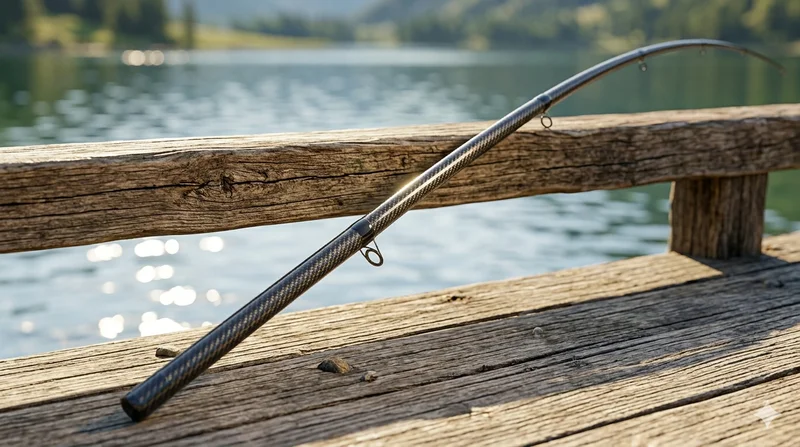
Carbon Fiber Fishing Rod Blank
High-quality carbon fiber fishing rod blank manufactured from multiple grades of Toray carbon fiber cloth. Available in a wide range of lengths, powers, and actions for freshwater and saltwater applications. Suitable for OEM rod building.
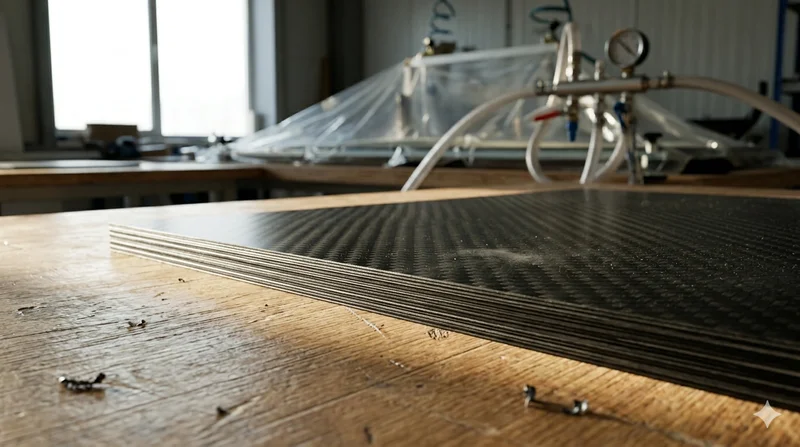
Carbon Fiber Plate — 3K Twill T700 3.0mm
Medium-thickness 3.0mm carbon fiber plate offering significantly higher load capacity while maintaining attractive 3K twill finish. Suitable for structural brackets, reinforcement plates, and load-bearing panels.
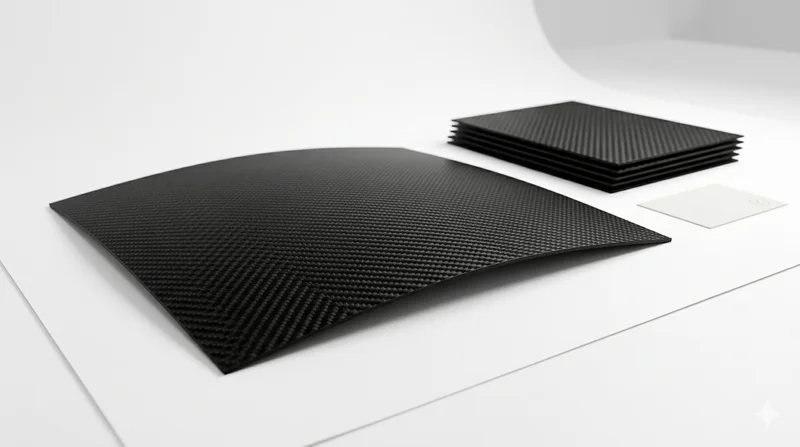
Carbon Fiber Plate — 3K Twill T700 1.5mm
Thin 1.5mm carbon fiber plate with 3K twill weave surface. Lightweight and stiff, commonly used for covers, panels, drone bodies, and applications requiring a premium aesthetic appearance.
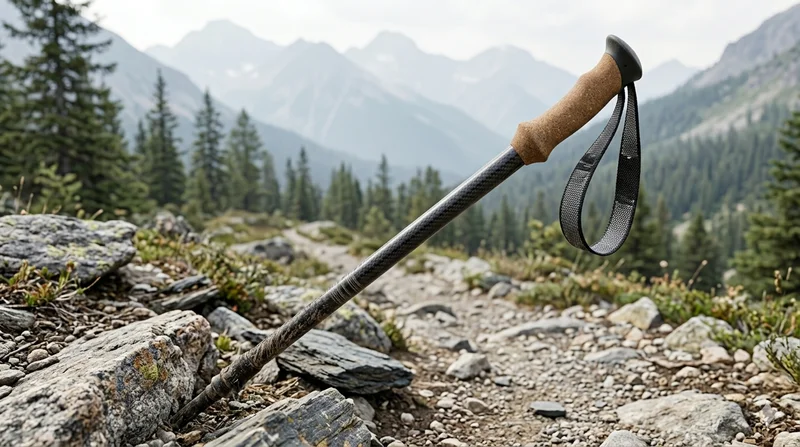
Carbon Fiber Trekking Pole
Lightweight carbon fiber trekking pole manufactured from high-grade carbon fiber tube. Weighs only 160g per pole while providing superior shock absorption and durability for hiking, trail running, and backpacking.
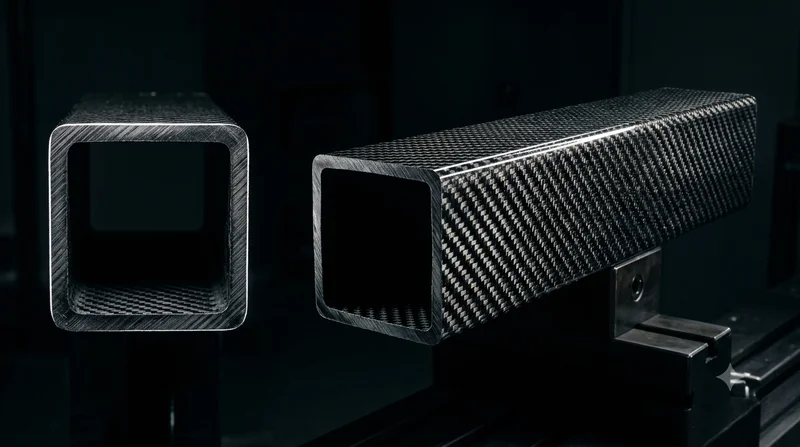
Square Carbon Fiber Tube — 3K Twill T700
Square cross-section carbon fiber tube manufactured with 3K twill weave for torsional strength. Preferred for structural frames, trusses, and support columns where rectangular geometry offers design flexibility.