
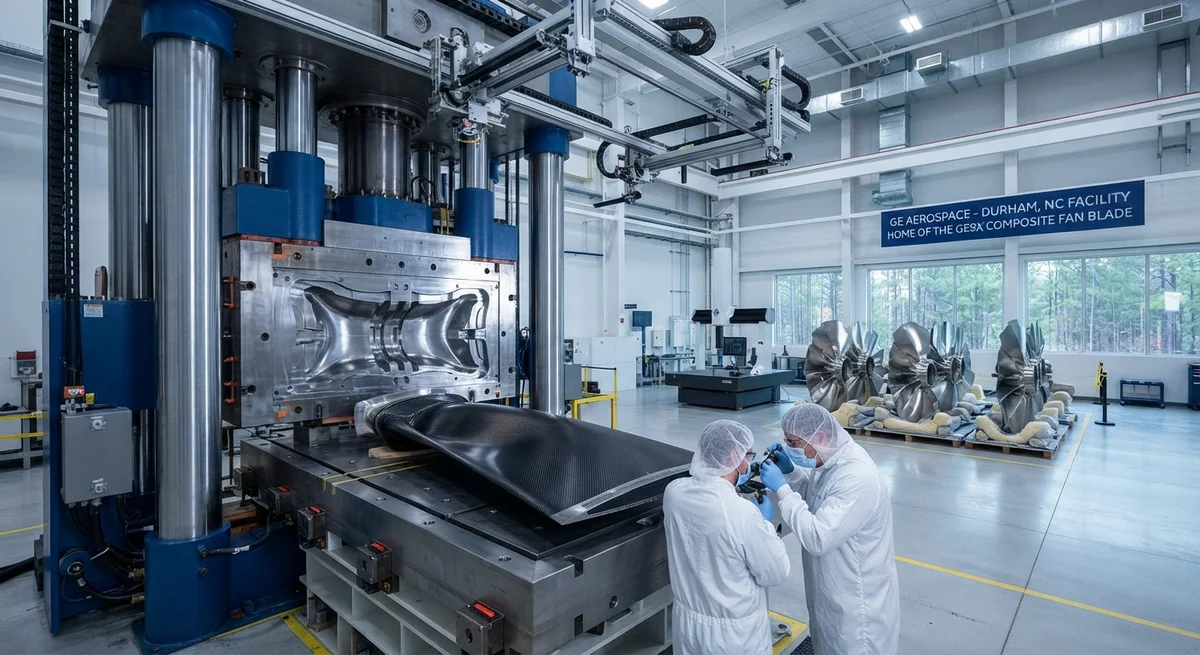
A deep technical analysis of GE Aerospace's carbon fiber composite fan blade technology, spanning three generations of engine programs (GE90/GEnx/GE9X) with cumulative 300 million flight hours, covering material science evolution, ply schedule innovations, and manufacturing process advances.
Lessons from 300 Million Flight Hours: GE Aerospace's Carbon Fiber Composite Fan Blade Legacy
In 1995, GE Aerospace launched the GE90-115B engine with a radical innovation: a fan blade made entirely of carbon fiber composite, replacing the titanium hollow-blade construction that had dominated jet engine design for three decades. Thirty years and over 300 million cumulative flight hours later, GE's composite fan blade technology has evolved through three engine programs — the GE90, GEnx, and GE9X — accumulating a reliability database unmatched in aerospace composites. This article examines the materials science, manufacturing evolution, and engineering lessons from this industrial track record.
Three Generations of Composite Fan Blades
GE Aerospace's composite fan blade journey began with the GE90-115B, the most powerful turbofan engine at its introduction. The blade required a material that could withstand bird strikes at 1,500 km/h, endure 50,000+ flight cycles, resist erosion at cruise altitudes, and operate from −55°C to +120°C. Carbon fiber composite was the only material class meeting all these requirements while delivering a 20% weight reduction over the titanium baseline.
| Parameter | GE90 (1995) | GEnx (2006) | GE9X (2019) |
|---|---|---|---|
| Fan diameter | 3.25 m | 2.82 m | 3.40 m |
| Number of blades | 22 | 18 | 16 |
| Blade weight (each) | ~11.8 kg | ~8.6 kg | ~8.2 kg |
| Weight vs titanium | −20% | −25% | −28% |
| Material system | IM7/8552 (Hexcel) | IM7/PR520 (Cytec) | IM7+/BY27X (proprietary) |
| Fiber areal weight | 268 g/m² | 268 g/m² | 190 g/m² |
| Cumulative flight hours | ~120 million | ~140 million | ~40 million |
The GE90's composite fan blade was a technological watershed — at 3.25 meters diameter, the largest ever produced, requiring 88 prepreg plies laid up by hand over 8–12 hours per blade. The blade removal rate of 0.003 per 1,000 flight hours was nearly an order of magnitude better than the titanium blades it replaced.
Ply Schedule Evolution
| Ply Architecture Feature | GE90 | GEnx | GE9X |
|---|---|---|---|
| Total plies per blade | 88 | 68 | 52 |
| Mid-span ply drops | 24 | 18 | 12 |
| 0° ply fraction | 45% | 42% | 38% |
| ±45° ply fraction | 35% | 38% | 40% |
| 90° ply fraction | 20% | 20% | 22% |
| Automated fiber placement (AFP) | None | 30% | 85% |
| Cure cycle time | 6–8 hours | 4–6 hours | 3–4 hours |
The reduction from 88 to 52 plies — a 41% decrease — was achieved through optimized ply nesting, non-crimp fabric architectures, and thinner prepreg (190 g/m² vs 268 g/m²). The increased ±45° ply fraction reflects growing understanding that torsional stiffness and bird-strike energy absorption are more critical than pure bending stiffness.
Manufacturing Process Transformation
- Automated fiber placement (AFP): GE's proprietary system places 6.35–12.7 mm tows with ±0.25 mm accuracy, reducing lay-up time from 10 hours to 45 minutes with in-situ compaction at 200–400 N per tow.
- Resin film infusion: GEnx introduced partial infusion during the cure cycle, reducing prepreg storage costs by 40% and extending out-of-freezer life from 30 to 180 days.
- Adaptive cure control: GE9X uses real-time dielectric monitoring with sensors measuring resin ionic conductivity to adjust ramp rates dynamically, reducing cure cycles by 35% and eliminating thermal runaway events causing 0.8% scrappage on GEnx.
- In-process NDT: Every GE9X blade undergoes laser shearography within 90 seconds of demolding, with a neural network trained on 8,000+ blades detecting defects as small as 3 mm — versus 45 minutes for manual ultrasonic testing on the GE90 line.
Material Science Insights
- Thin-ply advantage: Shifting from 268 to 190 g/m² prepreg reduced thermal cycling microcracking by 70%. Thin plies suppress crack propagation by encountering ply interfaces before reaching critical length — now being applied to wing skin and fuselage design.
- Ductile matrix superiority: GE's BY27X ductile epoxy achieves 180% higher strain-to-failure (6.5% vs 2.3%) at a 15°C Tg penalty — the correct trade-off when impact resistance dominates over hot-wet compression strength.
- Titanium hybrid interface: Laser-engraved micro-channels (50–100 µm deep) in the titanium leading-edge sheath create mechanical interlock with 45 MPa lap shear strength — 2.5× better than adhesive bonding alone, enabling a 30% thinner sheath.
- Moisture equilibrium: Blades reach 0.9–1.2% moisture content after 8–12 months in service, reducing matrix-dominated properties by 12–15%. GE's allowables now incorporate this wet-condition knockdown explicitly.
Supply Chain Implications
GE's success drove aerospace-grade IM7 carbon fiber demand from ~500 tonnes/year in 1995 to 8,000+ tonnes/year by 2025. Current pricing for qualified IM7-class fiber (12K tow) is $55–85/kg, compared to $18–22/kg for commercial-grade fiber. This premium reflects qualification costs of 18–24 months and $2–5 million per material system. For B2B buyers, the key lesson is clear: qualification barriers are the most significant competitive moat in aerospace composites. A Type-III qualified material system represents a 5–10 year, $5–15 million investment — once certified, replacement is effectively prohibited by requalification costs.
How do composite fan blade failure rates compare to titanium?
GE's composite fan blades have a combined removal rate of 0.003 per 1,000 flight hours versus 0.025 for titanium hollow-blade designs — an 8× improvement, attributed to superior fatigue resistance (endurance at 60–70% vs 35–45% of ultimate strength), zero corrosion, and natural crack arrest across ply interfaces. All unscheduled removals in 300 million hours traced to secondary mechanical features, not primary laminate failure.
How is the GE9X's 3.4-meter fan blade manufactured?
The GE9X blade uses proprietary matched-die compression molding in a 5,000-ton hydraulic press at 1,500–2,500 psi consolidation pressure — versus 80–100 psi in autoclave. This achieves 62–65% fiber volume fraction and a 4-hour cycle, compared to 6–8 hours for autoclave-cured GE90 blades. GE's ductile resin system maintains sufficient flow under high pressure for full fiber impregnation.
Will next-generation engines continue using composite fan blades?
Yes. Every major next-gen program including CFM International RISE (entry into service ~2035) commits to composite fan blades. The open-rotor architecture with 18+ unshrouded blades of 3.5–4.0 meters pushes technology further in erosion resistance, temperature capability, and ultra-thin plies (80–100 g/m²) for aeroelastic tailoring. Aerospace-grade carbon fiber demand is projected to reach 14,000–18,000 tonnes/year by 2035.
Conclusion
GE Aerospace's composite fan blade program — 30 years and 300 million flight hours across the GE90, GEnx, and GE9X — stands as the most successful application of carbon fiber composites in primary aerospace structures. The technology evolved from hand-laid, autoclave-cured laminates to nearly fully automated, press-molded components with refined ply architectures and advanced ductile resin systems. Industry lessons include the validation of thin-ply technology for fatigue-critical applications, the superiority of impact-optimized ductile matrix systems, and the massive competitive moat created by qualification barriers. For B2B aerospace supply chain participants, the GE fan blade story offers both a benchmark for manufacturing excellence and a roadmap for the qualification investments needed to access the next generation of aerospace composite applications.
Part of topic
Related Articles
- Bio-Based Carbon Fiber Precursors: Lignin and Polyethylene for Low-Cost Production
- Large-Tow Carbon Fiber Cost Analysis: 48K vs 60K Price-Performance Comparison
- Carbon Fiber-Resin Interface Bonding: Surface Treatment and Coupling Agent Optimization
- Digital Twin for Carbon Fiber Manufacturing: Real-Time Process Monitoring and Defect Prevention
- Thermoplastic Carbon Fiber Welding for Automotive: Ultrasonic and Induction Welding Process Windows
- Large-Tow Carbon Fiber Wet Spinning: Process Optimization for 48K/60K Production Efficiency
Interested in Our Products?
Contact our team for competitive pricing and technical specifications.
Get a QuoteRelated Products

Carbon Fiber Plate — 3K Twill T700 1.5mm
Thin 1.5mm carbon fiber plate with 3K twill weave surface. Lightweight and stiff, commonly used for covers, panels, drone bodies, and applications requiring a premium aesthetic appearance.

Square Carbon Fiber Tube — 3K Twill T700
Square cross-section carbon fiber tube manufactured with 3K twill weave for torsional strength. Preferred for structural frames, trusses, and support columns where rectangular geometry offers design flexibility.

Carbon Fiber Plate — 3K Twill T700 3.0mm
Medium-thickness 3.0mm carbon fiber plate offering significantly higher load capacity while maintaining attractive 3K twill finish. Suitable for structural brackets, reinforcement plates, and load-bearing panels.
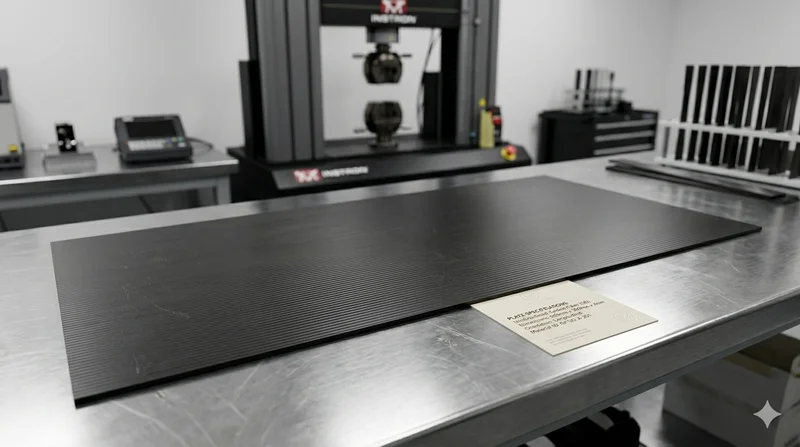
Carbon Fiber Plate — UD Unidirectional T700
Unidirectional carbon fiber plate with all fibers oriented in a single direction for maximum strength along the fiber axis. Essential for structural reinforcements, splints, and applications where load direction is predictable.
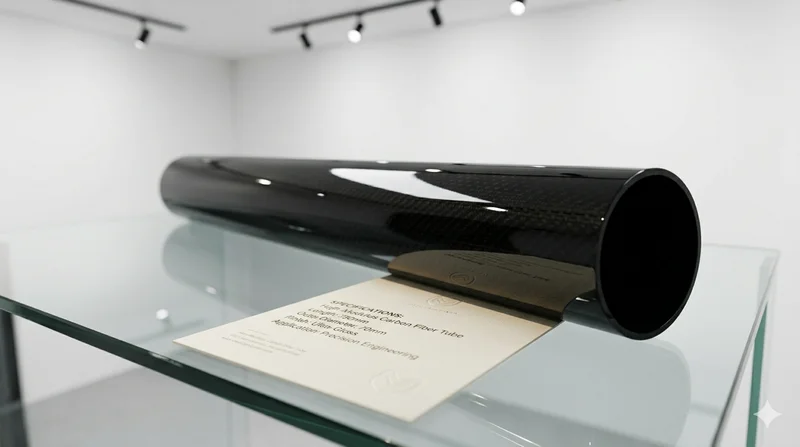
High Modulus Round Carbon Fiber Tube — M40
High modulus round tube manufactured with M40 grade fiber (tensile modulus 400 GPa). Designed for applications where maximum stiffness-to-weight ratio is critical, such as optical systems, precision machinery, and aerospace structures.