
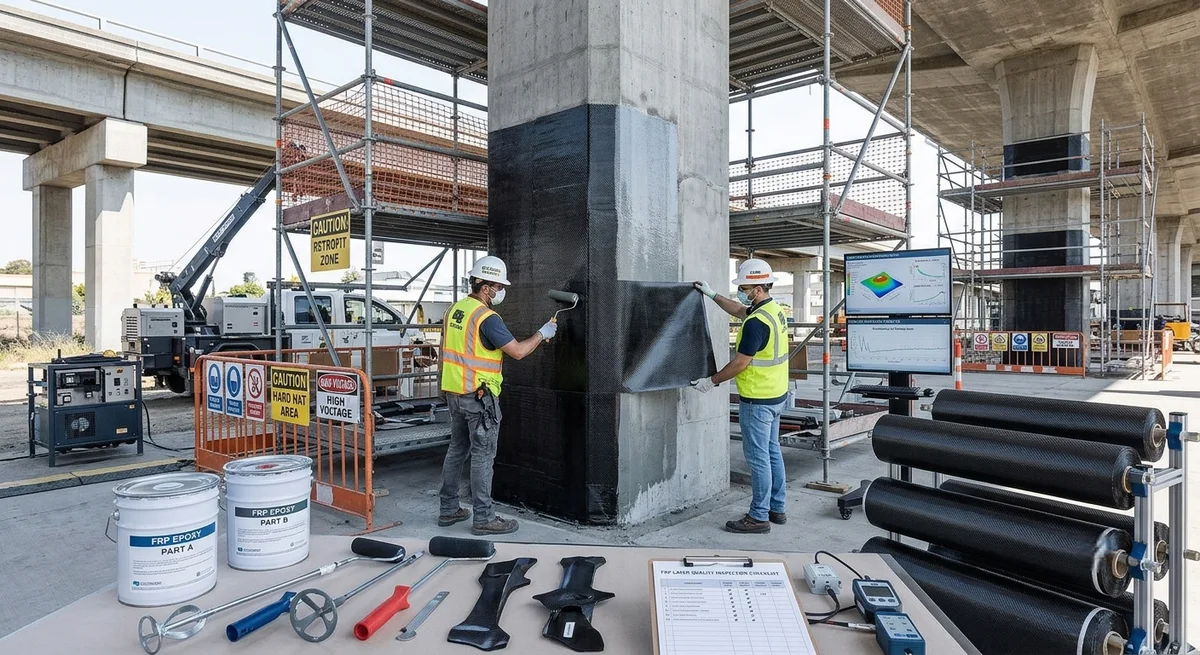
A comprehensive technical guide to CFRP column wrapping for seismic retrofit. Covers design principles, material specifications, installation procedures, quality control, and cost estimation for structural engineers and contractors.
Introduction
Carbon Fiber Reinforced Polymer (CFRP) column wrapping has become one of the most widely adopted seismic retrofit techniques worldwide. By wrapping existing concrete or masonry columns with unidirectional carbon fiber fabric and epoxy resin, engineers can increase column ductility by 200–400%, shear strength by 30–80%, and axial load capacity by 15–40%, depending on the number of wraps and fiber orientation.
This design guide provides structural engineers, contractors, and building owners with comprehensive technical information on CFRP wrapping systems for seismic retrofit applications. We cover material specifications, design calculations, installation procedures, quality control protocols, and cost estimation based on real project data.
Material System Specifications
| Property | Standard CFRP Wrap | High-Modulus CFRP Wrap | Test Method |
|---|---|---|---|
| Fiber areal weight | 300–600 g/m² | 300–450 g/m² | ASTM D3776 |
| Design thickness per ply | 0.17–0.33 mm | 0.17–0.25 mm | ASTM D3039 |
| Tensile strength (fabric) | 3,400–4,100 MPa | 2,800–3,500 MPa | ASTM D3039 |
| Tensile modulus | 225–240 GPa | 350–400 GPa | ASTM D3039 |
| Elongation at break | 1.5–1.8% | 0.7–1.0% | ASTM D3039 |
| Epoxy resin type | 100% solids, low-viscosity | 100% solids, low-viscosity | — |
| Resin tensile strength | 50–70 MPa | 50–70 MPa | ASTM D638 |
| Glass transition temp (Tg) | 60–82°C | 60–82°C | ASTM E1640 |
| Typical cost per m² (installed) | $120–$200 | $200–$350 | — |
Design Principles
Confinement Pressure Calculation
The confining pressure provided by CFRP wraps is calculated using ACI 440.2R-17 guidelines:
- Effective confinement pressure (fl): fl = (2 × n × tf × Efrp × εfe) / D, where n = number of plies, tf = fabric thickness per ply, Efrp = modulus of elasticity, εfe = effective strain in CFRP, and D = column diameter
- Minimum confinement ratio: fl/fc' ≥ 0.08 for circular columns, where fc' is concrete compressive strength
- Maximum usable strain in CFRP: εfe = 0.004 (limited to prevent debonding and maintain aggregate interlock)
- Number of plies: Typically 2–5 plies for most seismic retrofit applications. Each additional ply increases confinement pressure linearly.
Shear Strengthening
For columns with inadequate shear reinforcement, the CFRP contribution to shear strength is calculated as:
- Vf = (2 × n × tf × wf × Efrp × εfe × df) / sf, where Vf = shear contribution from FRP, wf = fabric width, df = effective depth, sf = center-to-center spacing of strips
- Full wrapping provides the highest shear contribution. U-wraps or side bonding provide 50–70% of full-wrap capacity depending on anchorage details.
Installation Procedures
- Surface preparation: Concrete substrate must be clean, dry, and free of laitance. Grind to a minimum CSP 3 (Concrete Surface Profile) per ICRI Guideline No. 310.2. Surface cracks >0.3 mm must be epoxy-injected before wrapping.
- Corner radii: All corners must be rounded to a minimum radius of 13 mm (ACI 440.2R minimum) to prevent stress concentration in the fabric. Use a corner-forming tool with radius gauge.
- Primer application: Apply a low-viscosity epoxy primer to seal the substrate and improve adhesion. Allow to cure until tack-free (typically 2–6 hours at 20°C).
- Saturating the fabric: Use a resin impregnator or hand saturation table. Fiber volume content should be maintained at 35–45%. Avoid dry spots or excess resin pooling.
- Application: Apply the saturated fabric to the prepared column with 100 mm minimum overlap in the hoop direction. For multiple plies, apply each subsequent ply before the previous one gels. Consolidate with a ribbed roller to remove air voids.
- Curing: Maintain temperature between 10°C and 35°C during cure. Full cure typically achieves in 7 days at 20°C. Accelerated cure (24 hours) possible at 35°C with appropriate epoxy system.
- Protective coating: Apply UV-resistant topcoat if exposed to sunlight. For exterior columns, use a breathable acrylic coating to allow moisture vapor transmission.
Quality Control and Testing
- Pull-off adhesion test: Minimum 1.4 MPa per ASTM D4541. Test at 1 location per 50 m² of applied wrap.
- Thickness verification: Measure wet film thickness at 3 locations per column. Deviation from specified thickness must not exceed ±15%.
- Visual inspection: Check for wrinkles, dry spots, delamination, and air entrapment. Maximum allowable void content: 2% per ACI 440.2R.
- Witness panels: Prepare 300×300 mm witness panels for each batch of epoxy mix for future mechanical testing if needed.
Cost Estimation
| Column Type | Dimensions | Number of Plies | Material Cost | Installation Cost | Total per Column |
|---|---|---|---|---|---|
| Circular (bridge pier) | 1.2m dia × 8m height | 3 | $2,400 | $3,800 | $6,200 |
| Rectangular (building) | 0.6 × 0.6m × 3m | 2 | $480 | $950 | $1,430 |
| Circular (parking garage) | 0.8m dia × 4m height | 4 | $1,100 | $2,100 | $3,200 |
| Rectangular (bridge bent) | 1.0 × 0.8m × 6m | 3 | $1,800 | $3,200 | $5,000 |
FAQ
How does CFRP wrapping compare to steel jacketing for seismic retrofit?
CFRP wrapping is 30–50% lighter, requires no heavy lifting equipment, installs 3–5× faster, and provides better corrosion resistance. Steel jacketing offers higher impact resistance but costs 40–60% more for equivalent strength gain and requires specialized welding or bolting labor.
What is the lifespan of a CFRP wrapping system?
Properly installed CFRP wraps have a service life of 30–50 years based on accelerated aging studies. UV degradation can reduce lifespan to 15–20 years if no protective coating is applied. Periodic inspection every 5 years is recommended per ACI 440.2R guidelines.
Can CFRP wrapping be applied to columns under load?
Yes, CFRP wrapping is designed to be applied to existing loaded columns. The system provides confinement that becomes effective when additional lateral load (seismic event) occurs. No unloading or shoring is typically required for column wrapping.
Part of topic
Related Articles
- Recycled Carbon Fiber Market Forecast 2030: Technology Maturity and Commercialization Path
- South Korea Carbon Fiber Market 2026: Hydrogen Economy and Shipbuilding Innovation
- Wind Turbine Blade Leading Edge Protection 2026: Polyurethane, Tape, and Metallic Shield Solutions
- China Carbon Fiber Overcapacity 2026: Price War Impact and Industry Consolidation
- India Carbon Fiber Market 2026: Wind Energy, Aerospace, and Defense Expansion
- PAN Precursor Market 2026: Acrylonitrile Supply and Carbon Fiber Cost Structure
Interested in Our Products?
Contact our team for competitive pricing and technical specifications.
Get a QuoteRelated Products

Carbon Fiber Plate — 3K Twill T700 3.0mm
Medium-thickness 3.0mm carbon fiber plate offering significantly higher load capacity while maintaining attractive 3K twill finish. Suitable for structural brackets, reinforcement plates, and load-bearing panels.

Carbon Fiber Plate — 3K Twill T700 1.5mm
Thin 1.5mm carbon fiber plate with 3K twill weave surface. Lightweight and stiff, commonly used for covers, panels, drone bodies, and applications requiring a premium aesthetic appearance.

Square Carbon Fiber Tube — 3K Twill T700
Square cross-section carbon fiber tube manufactured with 3K twill weave for torsional strength. Preferred for structural frames, trusses, and support columns where rectangular geometry offers design flexibility.
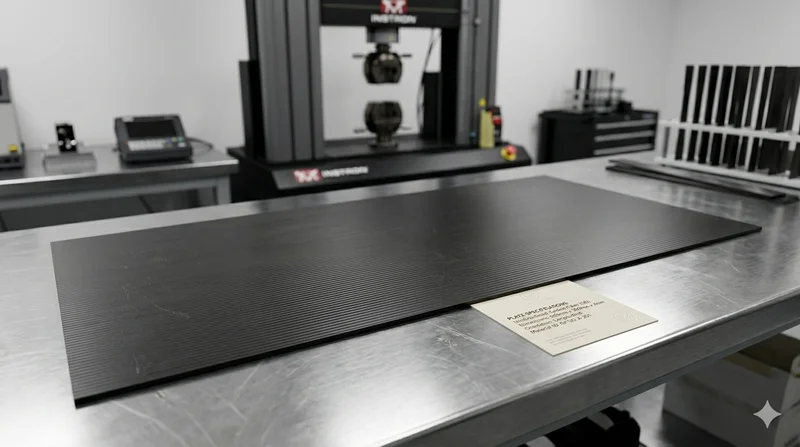
Carbon Fiber Plate — UD Unidirectional T700
Unidirectional carbon fiber plate with all fibers oriented in a single direction for maximum strength along the fiber axis. Essential for structural reinforcements, splints, and applications where load direction is predictable.
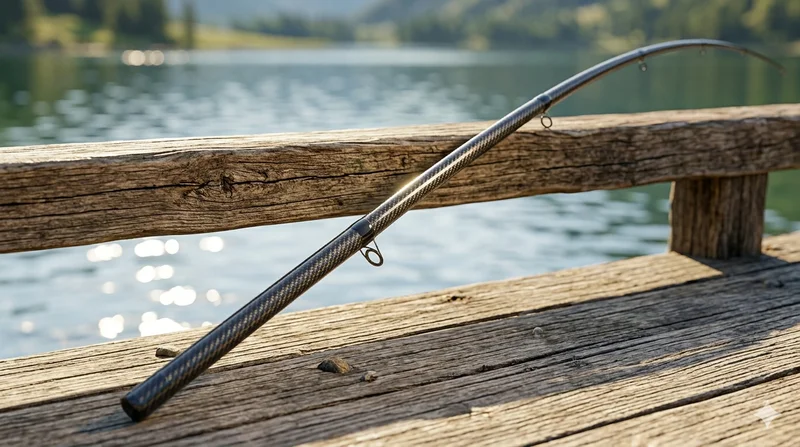
Carbon Fiber Fishing Rod Blank
High-quality carbon fiber fishing rod blank manufactured from multiple grades of Toray carbon fiber cloth. Available in a wide range of lengths, powers, and actions for freshwater and saltwater applications. Suitable for OEM rod building.