
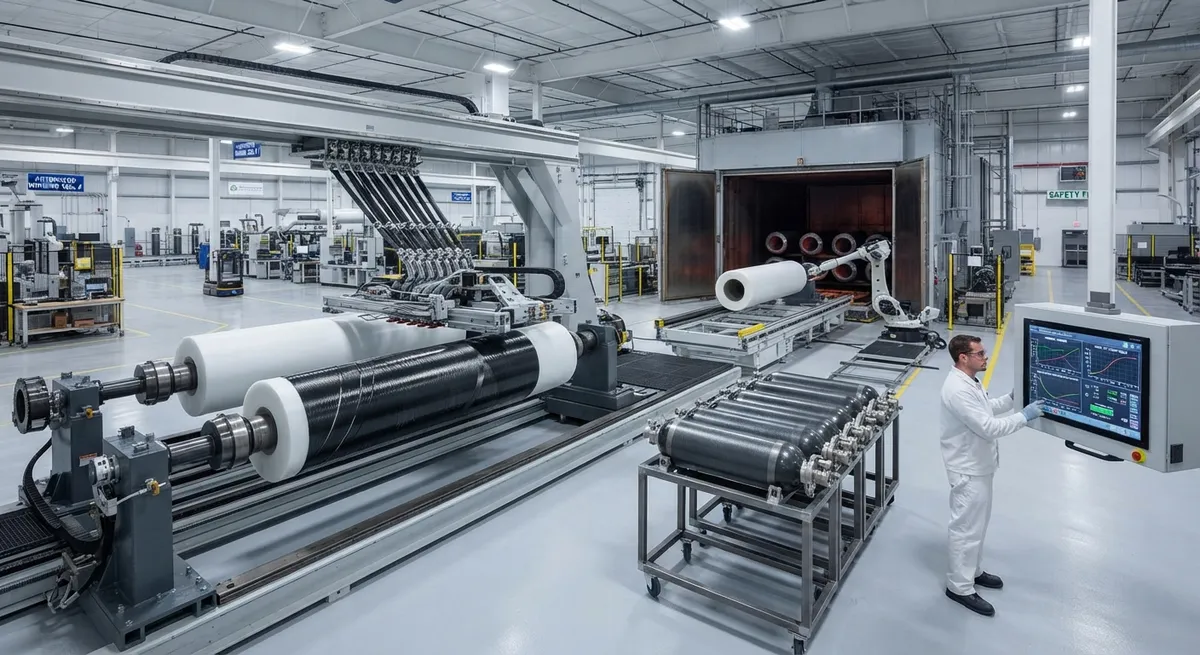
Type IV cylinders — fully composite pressure vessels with a polymer liner and a carbon fiber overwrap — are the storage technology of choice for hydrogen fuel-cell trucks, buses, and station cascades. Their defining advantage is weight: a Type IV vessel can be 40 to 70 percent lighter t
Introduction
Type IV cylinders — fully composite pressure vessels with a polymer liner and a carbon fiber overwrap — are the storage technology of choice for hydrogen fuel-cell trucks, buses, and station cascades. Their defining advantage is weight: a Type IV vessel can be 40 to 70 percent lighter than a comparable steel or Type III aluminum-lined design. For a heavy-duty truck carrying eight to ten large cylinders, that difference is often the margin between a legal payload and an overweight vehicle.
Until recently, high-volume Type IV manufacturing was concentrated in a small number of plants serving the automotive and early commercial-vehicle markets. That is changing. Umoe Advanced Composites, a Norwegian pioneer of composite cylinder technology, has begun ramping production at its Jiaxing plant, with a potential capacity of around 20,000 cylinders per year — roughly triple the output of its established lines. The plant sits at the center of a hydrogen corridor being built out with thirty refueling stations across the region. For the companies that supply, wrap, and test these vessels, the question is no longer whether Type IV is viable, but how to manufacture it in volume at acceptable cost.
Why Type IV Is the Storage Standard for Mobility
Type IV design combines a gas-tight polymer liner — typically high-density polyethylene (HDPE) or polyethylene terephthalate (PET) — with a structural shell of carbon fiber reinforced polymer applied by filament winding. The polymer liner handles sealing and permeation control, while the wound composite carries essentially all of the pressure load. Operating pressures of 350 to 700 bar (35 to 70 MPa) are standard, with 70 MPa vessels now common in heavy-duty trucking.
The table below summarizes the structural and economic differences between Type III and Type IV vessels:
| Parameter | Type III | Type IV |
|---|---|---|
| Liner material | Aluminum | Polymer (HDPE/PET) |
| Weight saving vs. steel | ~35-45% | ~50-70% |
| Corrosion fatigue risk | Moderate (metal liner) | Negligible (polymer liner) |
| Operating pressure | Up to 70 MPa | Up to 70+ MPa |
| Typical design life | 10,000+ cycles | 10,000+ cycles |
| Liner manufacturing cost | Higher (metal forming) | Lower (molding) |
| Composite share of vessel cost | ~60% | ~75-80% |
The weight advantage translates directly into fleet economics: every kilogram saved on the vessel is payload capacity or range recovered on the vehicle. That is why virtually every new heavy-duty hydrogen truck program specifies Type IV, and why cylinder makers are racing to add capacity.
The Filament Winding Process at Industrial Scale
Every Type IV cylinder follows the same manufacturing sequence: the liner is molded, the composite shell is applied by winding, the part is cured, and the finished vessel is tested and certified. In high-volume production, the shell is almost always built by wet filament winding: continuous carbon fiber tow passes through a resin bath and is laid onto the rotating liner by a computer-controlled delivery arm. Helical layers provide axial strength, hoop layers provide circumferential strength, and the winding pattern software decides the sequence, angles, and bandwidth for each layer.
Industrial-scale lines are built around multi-spindle carousels, where several liner mandrels rotate through the winding station in sequence while others are loaded, unloaded, or transported to curing. Closed-loop tension control holds fiber tension within tight tolerances, and in-process laser and ultrasonic sensors check bandwidth and void content as the fiber is laid. Because the winder software knows the exact fiber path of every layer, the machine produces parts with repeatable, traceable structure — the foundation for certification in a regulated pressure-vessel market.
Cycle Time: Where the Money Is Made or Lost
Cycle time — not machine cost — is the dominant economic variable in a cylinder plant. A facility targeting 20,000 vessels per year over roughly 250 working days must complete about 80 vessels per day, which means every minute shaved from winding or curing is multiplied by thousands of parts per year. The table below shows a representative time budget for a large truck-scale cylinder and where automation intervenes:
| Process stage | Typical duration (per vessel) | Automation lever |
|---|---|---|
| Liner preparation | 10-20 min | In-line molding, robotic handling |
| Filament winding | 45-90 min | Multi-spindle carousel, high-speed traverse |
| Curing | 120-240 min (batched) | Oven scheduling, cure monitoring |
| Trimming and port assembly | 15-30 min | Robotic trimming, torque-controlled assembly |
| Testing and certification | 30-60 min | Automated hydrotest, in-line NDT |
Curing is usually the longest single stage, which is why well-designed plants stage it in batches and keep winding stations fed continuously. A line with four carousels and four spindles each can sustain roughly 80 to 100 vessels per day when winding takes 45 to 60 minutes per vessel and curing runs off-line in parallel.
Planning a 20,000-Unit Facility
Capacity planning for high-volume Type IV production is an exercise in bottleneck management. The following factors dominate the design:
- Demand mix: A single cylinder size allows one optimized line; mixed lengths and diameters force changeovers that reduce effective output.
- Spindle count: Required daily output divided by winding cycle time dictates the number of winding spindles, plus margin for maintenance and unplanned stops.
- Curing capacity: Oven volume must match peak winding output, or the plant builds a queue at the slowest step.
- Testing throughput: Hydrostatic proof tests and non-destructive inspection must keep pace with production, or finished vessels pile up before certification.
- Material logistics: Carbon fiber tow and resin are consumed continuously; kitting, storage, and shelf-life management become planning functions, not afterthoughts.
- Redundancy: A single critical machine failure should not stop the line; spare spindles and maintenance windows are budgeted from day one.
Automation Technologies That Change the Cost Curve
The newest plants push automation far beyond the winding station itself. Robotic arms load and unload liners, trimmed vessels, and test fixtures. Manufacturing execution systems (MES) track every vessel by serial number, linking process data to the certificate of conformity issued at the end of the line. Predictive maintenance on winder axes and ovens reduces unplanned downtime, and automated defect classification on ultrasonic and laser inspection data turns quality control from a sampling activity into a full-coverage one. Each of these investments raises capital cost, but in a 20,000-unit plant the per-vessel saving in labor, scrap, and rework is typically larger than the added depreciation.
Certification and Traceability in Volume Production
A hydrogen cylinder plant cannot ship a vessel without certification, and the standards stack is part of the cycle-time budget. Vehicle cylinders are approved under UN Regulation No. 134 for fuel-cell vehicle hydrogen systems; land-vehicle fuel containers are covered by ISO 19881; and in China, Type IV vehicle cylinders are specified under GB/T 42612, with the Type III equivalent under GB/T 35544. Each standard imposes design, burst, cycle, drop, and fire-test requirements, and every vessel shipped must carry traceable process and test data.
| Standard | Scope | Cylinder type |
|---|---|---|
| UN R134 | Fuel-cell vehicle hydrogen systems, type approval | Type III and IV |
| ISO 19881 | Land vehicle fuel containers | Type III and IV |
| GB/T 35544 | China vehicle cylinders, aluminum-lined | Type III |
| GB/T 42612 | China vehicle cylinders, fiber fully-wrapped | Type IV |
The implication for capacity planning is that certification data must be generated in line with production, not after it. Serialized process records, automated hydrotest results, and in-line NDT scans are the evidence base for every certificate of conformity — which is why the testing and documentation stage appears in the cycle-time budget at all, and why traceability software is treated as production equipment rather than office software.
Frequently Asked Questions
What is a realistic cycle time for a large Type IV hydrogen cylinder?
For a truck-scale cylinder of 300-400 liters water capacity, the winding step itself typically takes 45 to 90 minutes depending on fiber volume and pattern complexity. Curing takes another two to four hours, but is batched so it overlaps with winding of subsequent vessels. Including liner preparation, trimming, and testing, a plant can sustain one completed, certified vessel per winding spindle roughly every 60 to 90 minutes of effective production time.
How many winding machines do you need to produce 20,000 cylinders per year?
At roughly 250 working days, 20,000 cylinders means about 80 vessels per day. A single multi-spindle carousel with four spindles and a 60-minute winding cycle can complete around 90 vessels per day when operated continuously, so a well-balanced plant can reach the target with two to four such carousels, depending on cylinder size and shift pattern. The practical limit is rarely the winder itself — it is the curing, testing, and certification steps downstream.
Why is wet winding used instead of dry fiber placement in high-volume hydrogen cylinder plants?
Wet winding — passing the tow through a resin bath immediately before laying it — is preferred for volume production because it eliminates the separate towpreg procurement step, lowers material cost, and tolerates higher laydown speeds on axisymmetric vessels. Dry fiber placement and prepreg winding offer cleaner process control and higher fiber volume fraction, but at higher material cost and lower throughput, which makes them the choice for specialty and aerospace parts rather than high-volume hydrogen cylinders.
Conclusion
The ramp-up of Umoe's Jiaxing plant is a concrete signal that Type IV cylinder manufacturing is entering a volume era. A 20,000-unit-per-year facility is not an incremental step; it is an order-of-magnitude change in how the industry thinks about winding automation, cycle time, and capacity planning. For vehicle makers, station operators, and storage integrators, the result is a more competitive supply base and, over time, lower system costs for hydrogen storage.
If you are evaluating carbon fiber supply for pressure vessels, hydrogen tanks, or other filament-wound structures, the fiber grade, tow count, and qualification requirements deserve careful comparison. Browse our carbon fiber and composite material range, or contact our engineering team to discuss specifications and qualification planning for your cylinder program.
Part of topic
Related Articles
- Carbon Fiber Drone Blades and Propellers: Stiffness, Balance and Noise Reduction
- Fiberglass Filament Wound Tubes: Cost-Effective Alternative to Carbon Fiber
- Filament Wound Epoxy Tube Design: Wall Thickness, Fiber Angle and Load Optimization
- Filament Wound Epoxy Tubes: Testing Standards and Quality Assurance
- Filament Wound Epoxy Tubes Manufacturing: Process and Quality Control
- Filament Wound Fiberglass Tube: Process Parameters and Performance vs Carbon Fiber
Interested in Our Products?
Contact our team for competitive pricing and technical specifications.
Get a QuoteRelated Products
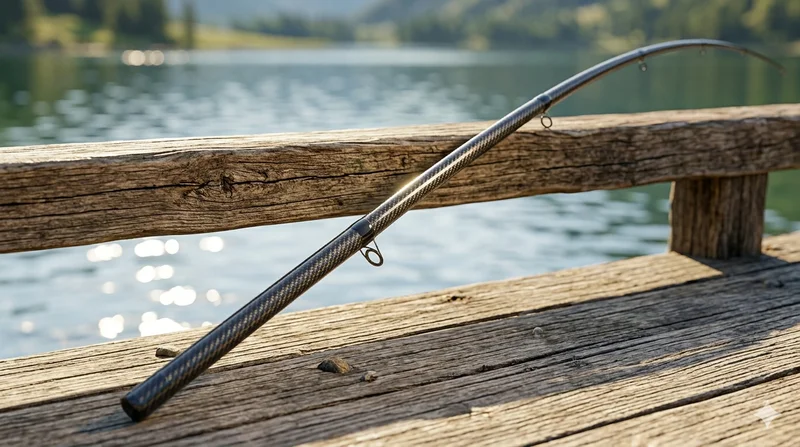
Carbon Fiber Fishing Rod Blank
High-quality carbon fiber fishing rod blank manufactured from multiple grades of Toray carbon fiber cloth. Available in a wide range of lengths, powers, and actions for freshwater and saltwater applications. Suitable for OEM rod building.

Carbon Fiber Plate — 3K Twill T700 1.5mm
Thin 1.5mm carbon fiber plate with 3K twill weave surface. Lightweight and stiff, commonly used for covers, panels, drone bodies, and applications requiring a premium aesthetic appearance.

Carbon Fiber Plate — 3K Twill T700 3.0mm
Medium-thickness 3.0mm carbon fiber plate offering significantly higher load capacity while maintaining attractive 3K twill finish. Suitable for structural brackets, reinforcement plates, and load-bearing panels.
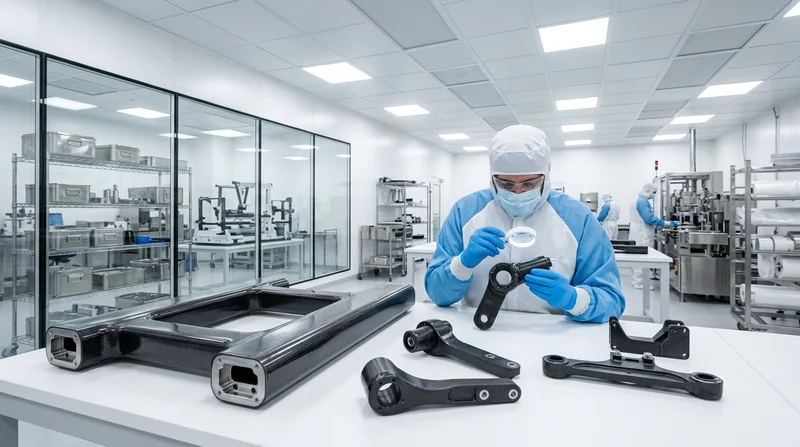
Custom Carbon Fiber Medical Device Components
Medical-grade carbon fiber components manufactured for imaging equipment, surgical instruments, and patient support systems. Carbon fiber's radiolucency (X-ray transparency) and high strength-to-weight ratio make it ideal for CT scanner beds, wheelchair frames, surgical robot arms, and MRI-compatible accessories. Biocompatible resin systems available.

Square Carbon Fiber Tube — 3K Twill T700
Square cross-section carbon fiber tube manufactured with 3K twill weave for torsional strength. Preferred for structural frames, trusses, and support columns where rectangular geometry offers design flexibility.