
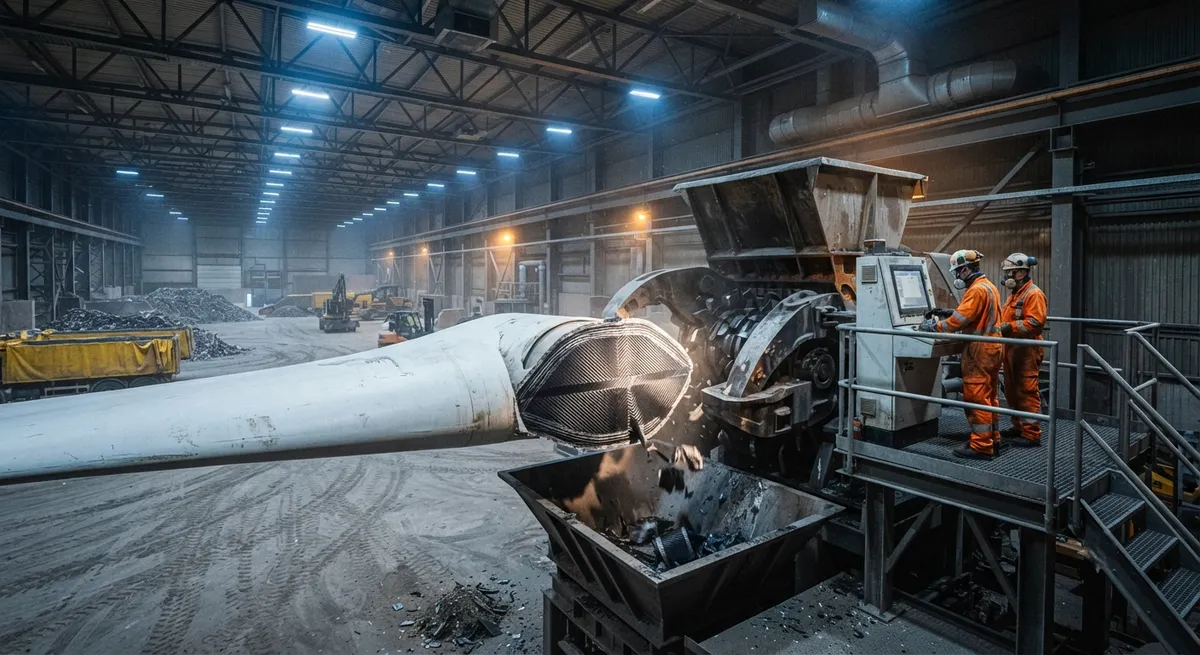
As the first generation of commercial wind turbines reaches end-of-life, the industry faces a growing crisis: what to do with thousands of tons of carbon fiber-reinforced polymer (CFRP) blade waste. This article examines industrial-scale repurposing technologies including pyrolysis-based fiber extraction for cement kiln co-processing and architectural panel manufacturing, with cost analysis and environmental impact data.
Introduction: The Wind Blade Waste Challenge
The global wind energy fleet has experienced explosive growth over the past two decades, with cumulative installed capacity reaching 906 GW by the end of 2024. However, this remarkable expansion comes with an emerging environmental liability: wind turbine blades have a typical service life of 20-25 years, and the earliest commercial-scale turbines installed in the early 2000s are now reaching their end-of-life. By 2030, an estimated 15,000 to 20,000 blades per year will require decommissioning in Europe alone, representing approximately 100,000 metric tons of composite material waste annually worldwide. Carbon fiber-reinforced polymer (CFRP) blades, which are increasingly used in larger turbines exceeding 6 MW rated capacity where mass reduction is critical, present a unique recycling challenge because their thermoset polymer matrix cannot be simply remelted and reformed like thermoplastics.
Unlike glass fiber composites, which have established recycling pathways through mechanical grinding for filler applications, carbon fiber blades retain significant residual value even after 20 years of service. Virgin carbon fiber sells for $15-35 per kilogram depending on grade and tow size, while recycled carbon fiber (rCF) commands $8-15 per kilogram when properly processed. This economic incentive, combined with tightening landfill restrictions on composite materials across the European Union and increasingly in North America, has driven rapid innovation in industrial-scale blade repurposing technologies. This article examines the two most commercially advanced pathways: cement kiln co-processing with energy recovery, and architectural panel manufacturing using mechanically separated carbon fiber fractions.
Pyrolysis-Based Carbon Fiber Extraction
Pyrolysis remains the most mature technology for recovering carbon fiber from end-of-life wind blades. The process involves heating shredded blade material to 400-800°C in an oxygen-free environment, causing the polymer matrix to decompose into combustible gases and oils while leaving the carbon fiber reinforcement intact. Modern pyrolysis systems achieve fiber tensile strength retention of 75-92% compared to virgin fiber, with the Young's modulus typically preserved at 90-98%. The recovered fibers are suitable for non-structural and semi-structural applications including cement reinforcement, injection molding compounds, and non-woven mat production.
| Parameter | Low-Temperature Pyrolysis | High-Temperature Pyrolysis | Fluidized Bed |
|---|---|---|---|
| Operating Temperature | 400-550°C | 550-800°C | 450-600°C |
| Tensile Strength Retention | 75-85% | 80-92% | 70-80% |
| Young's Modulus Retention | 90-95% | 93-98% | 85-92% |
| Energy Consumption (kWh/kg) | 3.5-5.0 | 5.5-8.0 | 4.0-6.5 |
| Fiber Surface Cleanliness | Moderate (~85%) | High (~97%) | Good (~92%) |
| Capital Cost ($M per 10 kt/yr) | $4-6 | $7-10 | $5-8 |
| Throughput (tonnes/day) | 5-15 | 10-25 | 8-20 |
Cement Kiln Co-Processing Pathway
Cement kiln co-processing has emerged as the most economically viable large-scale solution for CFRP blade waste, particularly in regions where cement plants are located within 200 km of wind farm clusters. In this process, shredded blade material replaces a portion of the conventional fuel mix in the cement kiln. The polymer matrix (typically epoxy, polyester, or vinyl ester) provides calorific value of 25-32 MJ/kg, comparable to petroleum coke at 33 MJ/kg. Meanwhile, the carbon fiber fraction acts as a silica-alumina source, contributing to the clinker chemistry and partially substituting for sand and iron ore in the raw meal formulation.
| Parameter | CFRP Blade Co-Processing | Petroleum Coke | Coal |
|---|---|---|---|
| Calorific Value (MJ/kg) | 25-32 | 33-35 | 24-30 |
| CO₂ Emission Factor (kg CO₂/GJ) | 85-95 | 101 | 95 |
| Ash Content (%) | 12-18 | 0.5-1.0 | 10-15 |
| Max Replacement Ratio (%) | 15-25 | 100 | 100 |
| Processing Cost ($/tonne) | $45-75 | $80-120 | $60-90 |
| Net CO₂ Saving vs Landfill (kg/tonne blade) | 680-850 | N/A | N/A |
The cement co-processing pathway is particularly attractive because it requires minimal preprocessing — blades are cut to 50-100 mm chips at the wind farm site using mobile shear shredders, then transported directly to the cement plant. The inorganic fiber content (carbon fibers plus glass fiber hybrid layers) is incorporated into the clinker matrix, providing a permanent materials lock-up rather than downcycling. Current commercial installations in Germany, Denmark, and the Netherlands process 8,000-12,000 tonnes of blade waste annually through this route, with plans to expand capacity to 50,000 tonnes by 2028.
Architectural Panel Manufacturing
For carbon fiber fractions with higher residual mechanical properties, architectural panel manufacturing offers a value-added repurposing pathway. Recovered carbon fibers, typically 10-40 mm in staple length after pyrolysis, are blended with fresh epoxy or polyurethane resin at 15-30% fiber volume fraction (FVF) and compression molded into architectural panels measuring up to 3,600 × 1,200 mm. These panels exhibit flexural strength of 120-200 MPa and modulus of 15-25 GPa, making them suitable for cladding, roofing, partition walls, and structural flooring in commercial buildings.
- Panel Dimensions: Standard sizes up to 3,600 × 1,200 × 6-20 mm, custom dimensions available
- Fiber Volume Fraction: 15-30% rCF with target FVF of 22% for optimal mechanical-economic balance
- Flexural Properties: Strength 120-200 MPa, Modulus 15-25 GPa (comparable to structural timber)
- Fire Rating: Class A2 (non-combustible) with appropriate filler formulation, meeting EN 13501-1
- Density: 1,400-1,700 kg/m³ depending on fiber content and resin system
- Surface Finish: Textured, smooth, or pattern-embossed options available for architectural aesthetics
- Production Rate: 200-400 panels per 8-hour shift per press line (3 presses typical per facility)
Life cycle assessment (LCA) studies on rCF architectural panels demonstrate a 55-70% reduction in global warming potential compared to equivalent aluminum panels, and 40-55% reduction versus virgin CFRP panels. The energy payback period is estimated at 6-12 months of in-service use, depending on panel thickness and application. Current market pricing for rCF architectural panels ranges from $85-160 per square meter, compared to $180-350 per square meter for virgin carbon fiber architectural products, representing a 45-55% cost reduction while maintaining 65-80% of the mechanical performance.
Economic and Environmental Impact Analysis
A comprehensive life cycle assessment comparing the three main repurposing pathways reveals significant variation in both economic return and environmental benefit. Cement kiln co-processing offers the lowest processing cost at $45-75 per tonne and the highest throughput capacity, but generates relatively modest revenue of $20-40 per tonne from avoided landfill fees and fuel substitution savings. Pyrolysis-based fiber recovery with architectural panel manufacturing offers the highest revenue potential at $350-700 per tonne of processed blade material, but requires higher capital investment ($7-10 million for a 10,000 tonne/year facility) and more complex logistics for fiber quality control. Mechanical recycling into filler applications falls in between, with processing costs of $60-100 per tonne and revenues of $80-150 per tonne from filler and aggregate markets.
| Repurposing Pathway | Processing Cost ($/tonne) | Revenue ($/tonne) | Net Value ($/tonne) | CO₂ Saving (kg/tonne) | Technology Readiness Level |
|---|---|---|---|---|---|
| Cement Kiln Co-Processing | $45-75 | $20-40 | $-25 to -55 | 680-850 | TRL 9 |
| Pyrolysis + rCF Panels | $180-280 | $350-700 | $70-420 | 1,200-1,800 | TRL 7-8 |
| Mechanical Grinding (Filler) | $60-100 | $80-150 | $10-50 | 300-500 | TRL 9 |
| Microwave-Assisted Pyrolysis | $150-220 | $400-650 | $150-430 | 1,000-1,500 | TRL 5-6 |
FAQ
Can carbon fiber from wind blades be reused in new wind blades?
While technically feasible at laboratory scale for fibers recovered via optimized pyrolysis processes with >90% strength retention, the current economic and certification barriers prevent recycled carbon fiber from being used in primary load-bearing structures of new wind blades. Most certification bodies (DNV, GL, TÜV) require full re-qualification of the material system, which is cost-prohibitive for rCF batches with variable properties. The primary reuse applications are therefore in non-structural automotive components, construction materials, and consumer goods where variable fiber properties do not compromise safety.
What is the current global capacity for wind blade recycling?
As of early 2026, the global installed capacity for wind blade recycling is approximately 120,000 tonnes per year, concentrated in Europe (65%), North America (20%), and China (10%). Major facilities include RetourMatras (Netherlands, 35,000 t/yr), Carbon Rivers (USA, 15,000 t/yr), and Vestas' blade recycling consortium facilities in Denmark (20,000 t/yr). Industry projections estimate capacity needs of 400,000-500,000 tonnes per year by 2035 to keep pace with decommissioning volumes.
How does YongXian CarbonFiber support blade repurposing?
YongXian CarbonFiber supplies intermediate carbon fiber materials specifically engineered for repurposing applications, including chopped fiber grades optimized for cement reinforcement and architectural compound blending. Our 12K and 24K standard modulus fibers (230-240 GPa modulus) are available with custom sizing chemistries that enhance compatibility with recycled thermoset matrices. We provide technical data sheets and application support for compounding operations incorporating rCF content between 10-40% by weight. Contact our technical team for material specifications and trial material requests.
Part of topic
Related Articles
- Recycled Carbon Fiber Market Forecast 2030: Technology Maturity and Commercialization Path
- South Korea Carbon Fiber Market 2026: Hydrogen Economy and Shipbuilding Innovation
- Wind Turbine Blade Leading Edge Protection 2026: Polyurethane, Tape, and Metallic Shield Solutions
- China Carbon Fiber Overcapacity 2026: Price War Impact and Industry Consolidation
- India Carbon Fiber Market 2026: Wind Energy, Aerospace, and Defense Expansion
- PAN Precursor Market 2026: Acrylonitrile Supply and Carbon Fiber Cost Structure
Interested in Our Products?
Contact our team for competitive pricing and technical specifications.
Get a QuoteRelated Products
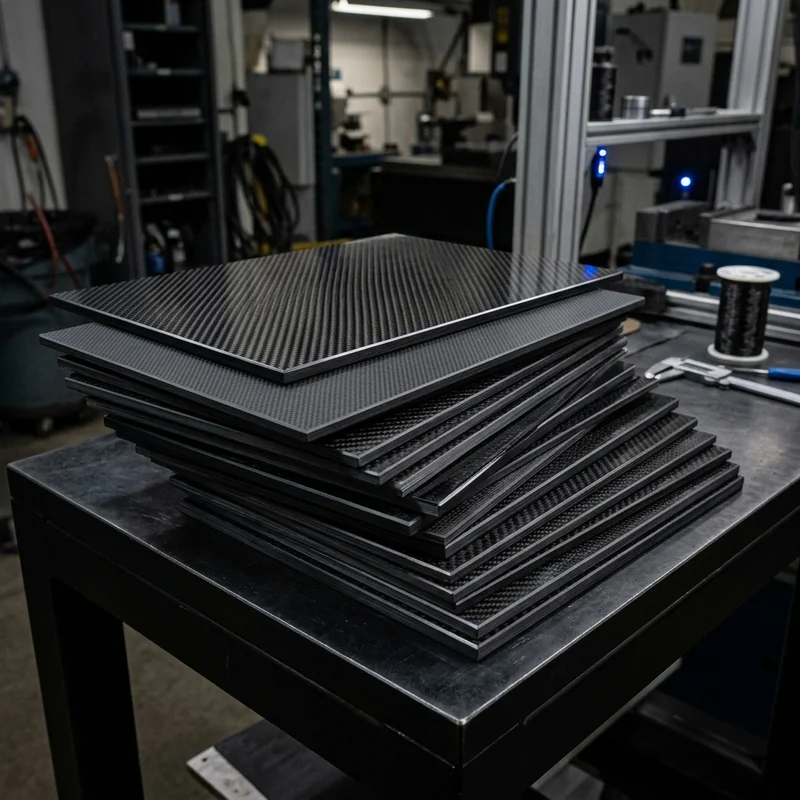
Carbon fiber standard plate-3k stripe
Lightweight, ultra-rigid standard sheets for drone fuselages, robot housings, facades and structural applications.

Carbon Fiber Plate — 3K Twill T700 3.0mm
Medium-thickness 3.0mm carbon fiber plate offering significantly higher load capacity while maintaining attractive 3K twill finish. Suitable for structural brackets, reinforcement plates, and load-bearing panels.

Carbon Fiber Plate — 3K Twill T700 1.5mm
Thin 1.5mm carbon fiber plate with 3K twill weave surface. Lightweight and stiff, commonly used for covers, panels, drone bodies, and applications requiring a premium aesthetic appearance.
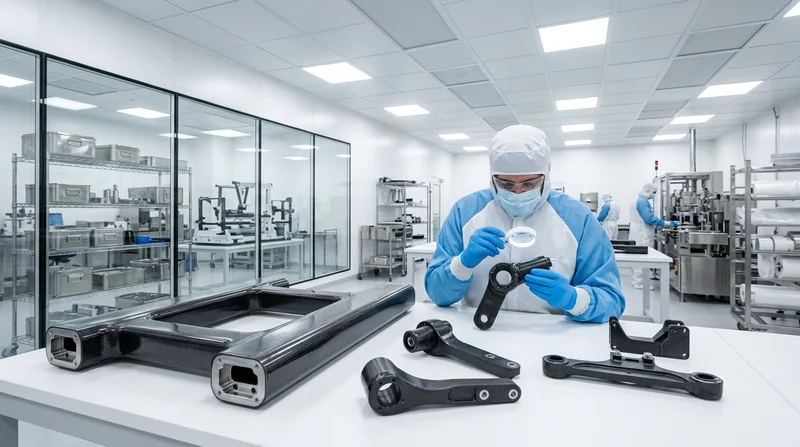
Custom Carbon Fiber Medical Device Components
Medical-grade carbon fiber components manufactured for imaging equipment, surgical instruments, and patient support systems. Carbon fiber's radiolucency (X-ray transparency) and high strength-to-weight ratio make it ideal for CT scanner beds, wheelchair frames, surgical robot arms, and MRI-compatible accessories. Biocompatible resin systems available.

Square Carbon Fiber Tube — 3K Twill T700
Square cross-section carbon fiber tube manufactured with 3K twill weave for torsional strength. Preferred for structural frames, trusses, and support columns where rectangular geometry offers design flexibility.