
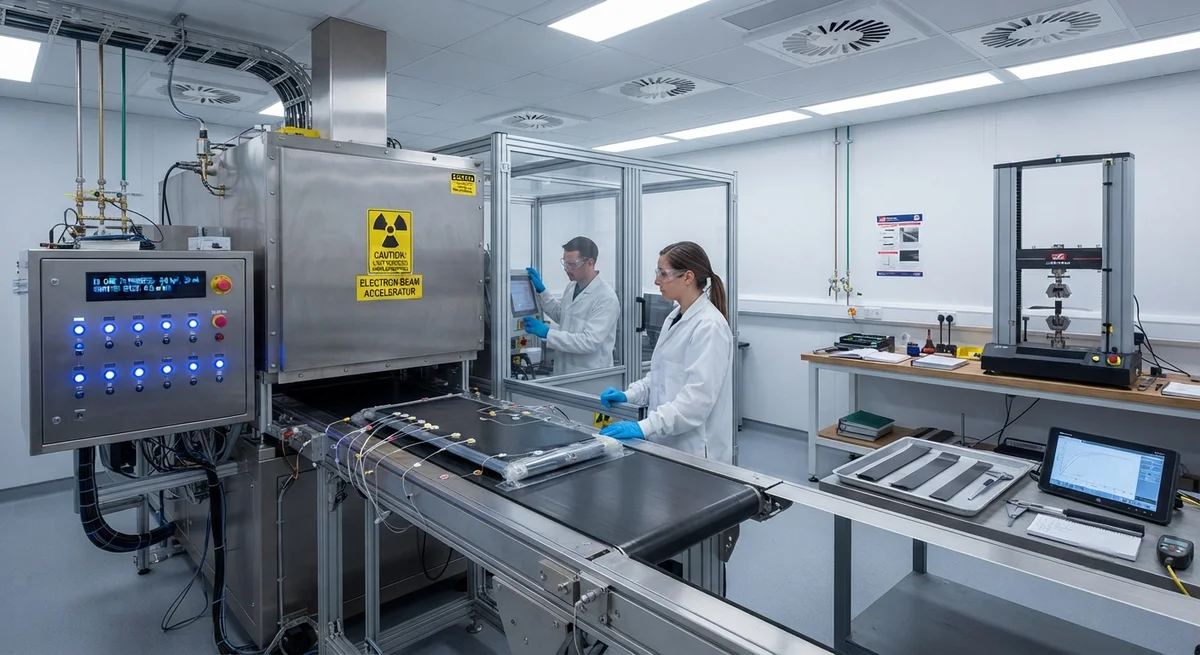
Electron beam (EB) curing is emerging as a transformative out-of-autoclave (OOA) technology for carbon fiber composites, offering cure cycles measured in seconds rather than hours while eliminating the capital-intensive autoclave bottleneck. This article examines the physics, current industrial applications, material systems, and economic implications of EB curing for composites manufacturers seeking breakthrough productivity gains in high-volume production environments.
The Autoclave Bottleneck in Composite Manufacturing
For decades, the autoclave has been the gold standard for curing high-performance carbon fiber composites. Aerospace-grade components, structural automotive parts, and high-end sporting goods rely on autoclave curing to achieve the low void content (typically ≤1%) and consistent mechanical properties that mission-critical applications demand. However, the autoclave is also the single biggest bottleneck in composites manufacturing. Autoclave cycles typically run 2–8 hours per batch, require significant energy input (heating pressurized nitrogen to 180°C+), and involve capital investments of $1–5 million per unit for production-scale vessels. These constraints limit throughput, drive up costs, and create scheduling inflexibility.
Electron beam (EB) curing offers an alternative paradigm — one where cure time collapses from hours to seconds, capital equipment costs drop by an order of magnitude, and energy consumption plummets.
How Electron Beam Curing Works
Electron beam curing uses high-energy electrons (typically 1–10 MeV) generated by an accelerator to initiate and propagate crosslinking reactions in radiation-curable resin systems. The process does not require heat — curing occurs at ambient temperature, which eliminates thermal stress in the composite part and allows the use of low-cost tooling materials.
The key physics of EB curing can be summarized as follows:
- High-energy electrons penetrate the composite layup, depositing energy along their path through Compton scattering and secondary electron generation.
- This energy deposition creates free radicals and reactive species within the resin matrix, initiating a rapid chain-growth polymerization reaction.
- Complete cure is achieved in 5–30 seconds of beam exposure, depending on the part thickness, resin chemistry, and dose requirements (typically 50–200 kGy for acrylate-based systems).
- Unlike thermal curing, EB curing proceeds from the interior of the part outward, ensuring uniform crosslink density throughout the thickness.
Comparison: EB Curing vs. Thermal Curing Processes
| Parameter | Autoclave (Thermal) | Hot Press | EB Curing (Electron Beam) |
|---|---|---|---|
| Cure time per part | 2–8 hours | 30–90 minutes | 5–30 seconds |
| Maximum part temperature | 180–250°C | 150–200°C | 30–60°C (ambient) |
| Tooling material | Steel, Invar, or aluminum | Steel or aluminum | Low-cost composites, aluminum, or wax |
| Void content achievable | ≤1% | 1–3% | ≤2% (with vacuum bag) |
| Capital equipment cost | $1–5M per unit | $200K–$1M per unit | $500K–$2M per accelerator |
| Energy consumption per part | 50–200 kWh | 20–80 kWh | 0.5–3 kWh |
| Throughput (parts/hour) | 0.1–0.5 | 0.5–2 | 60–120 |
| Continuous production? | Batch only | Batch only | In-line / conveyor compatible |
As the comparison shows, EB curing offers a 100–1000x reduction in cure time compared to autoclave processing, with dramatically lower energy consumption and the unique ability to integrate into continuous production lines.
Resin Systems Compatible with EB Curing
Not all resin systems are suitable for electron beam curing. The process requires formulations based on radiation-curable chemistry:
- Epoxy acrylates: The most widely used EB-curable resin system for structural composites. Offers good mechanical properties, fast cure response, and reasonable shelf life. Formulations with 50–200 kGy dose requirements are commercially available from major resin suppliers.
- Urethane acrylates: Provide enhanced toughness and flexibility compared to epoxy acrylates, making them suitable for applications requiring impact resistance. Used in automotive interior components and sporting goods.
- Vinyl esters: Lower-cost option with good chemical resistance. Used in infrastructure and marine applications where cost sensitivity is high.
- Cationic systems (cycloaliphatic epoxies, vinyl ethers): Offer post-irradiation dark cure that continues crosslinking after beam exposure, useful for thick sections where complete through-cure may require higher doses.
Industrial Applications and Case Studies
EB curing is transitioning from laboratory research to commercial production in several key sectors:
- Aerospace secondary structures: Boeing and Airbus have evaluated EB curing for interior panels, cargo bay liners, and fairings — components that require good mechanical properties but do not face the extreme service conditions of primary structures. Cure times of 15–30 seconds enable throughputs that would require multiple autoclaves to match.
- Automotive composite leaf springs: Several European automotive suppliers have installed EB curing lines for commercial vehicle leaf springs, achieving production rates of 60+ parts per hour compared to 2–4 parts per hour with traditional compression molding.
- Offshore oil and gas piping: EB-cured carbon fiber wraps for pipeline reinforcement are being deployed in the North Sea, where the combination of rapid cure and ambient-temperature processing eliminates the need for hot-work permits in hazardous environments.
- High-volume consumer goods: Tennis racket frames, bicycle wheels, and golf club shafts are being produced with EB curing at rates of 100–200 parts per hour on single conveyor lines.
Economic Analysis for B2B Adoption
For composites manufacturers evaluating EB curing technology, the economic case hinges on several factors:
- Capital investment: An industrial EB accelerator (1–10 MeV, 20–100 kW) costs $500K–$2M, depending on beam energy and power. This is comparable to a single production autoclave but enables 10–50x higher throughput.
- Operating cost: EB curing reduces energy costs by 90–99% compared to autoclave curing. The electron accelerator itself consumes 20–100 kW, primarily for the vacuum system and electron gun — far less than the hundreds of kilowatts needed to heat and pressurize an autoclave.
- Footprint: An EB curing cell requires approximately 100–200 m² including conveyor system and radiation shielding, compared to 300–500 m² for an equivalent-capacity autoclave installation including support equipment.
- Labor: EB curing is highly automatable — parts can be conveyed through the beam on programmable transport systems with minimal manual intervention, reducing labor costs by 50–70% compared to batch autoclave loading and unloading.
- Material cost premium: EB-curable resins carry a 15–30% premium over conventional epoxy systems, though this gap is narrowing as production volumes increase and formulation expertise matures.
Challenges and Limitations
Despite its transformative potential, EB curing faces several challenges that limit widespread adoption:
- Radiation shielding: EB accelerators require substantial concrete or lead shielding (typically 1–2 meter thick concrete walls) to protect operators from X-ray radiation generated by electron beam interactions. This adds $200K–$500K to installation costs and requires more space than unshielded processes.
- Penetration depth: Electrons have limited penetration in carbon fiber composites — typically 10–25 mm for 10 MeV beams, depending on fiber volume fraction and density. Thicker parts require dual-sided irradiation or cationic systems with dark cure capability.
- Fiber-matrix interface: The rapid, non-thermal cure can result in different fiber-matrix interfacial properties compared to thermal curing. Some EB-cured systems show lower interlaminar shear strength (ILSS), requiring careful formulation optimization.
- Regulatory approval: Aerospace and automotive qualification of EB-cured composites requires extensive testing and certification. While several material systems have received provisional approval, full qualification for primary structures remains a multi-year process.
Future Outlook
The global market for EB-cured composites is projected to grow from approximately $180 million in 2025 to $650–850 million by 2032, representing a CAGR of 20–25%. Key drivers include the automotive industry's need for high-volume composites production, aerospace's push to reduce manufacturing costs, and increasing environmental regulations that penalize the energy-intensive autoclave process. As accelerator technology continues to improve — lower costs, higher beam currents, and more compact designs — EB curing is positioned to become a mainstream composite manufacturing technology within the next decade.
Frequently Asked Questions
Does electron beam curing work with all types of carbon fiber?
Yes, EB curing is compatible with all standard carbon fiber types — PAN-based, pitch-based, and recycled carbon fibers. The electron beam interacts primarily with the resin matrix rather than the fiber reinforcement, so fiber type has minimal effect on cure kinetics. However, the carbon fiber's electrical conductivity can cause charge buildup in the composite during irradiation, which may require conductive vacuum bagging materials or anti-static measures to prevent arcing in thick laminates. Carbon fibers with higher modulus grades (e.g., M-series fibers) may show slight differences in thermal conductivity that affect the temperature profile during irradiation, but these effects are secondary and do not prevent successful curing.
What are the safety requirements for installing an EB curing line?
Industrial EB curing installations require comprehensive radiation safety infrastructure. The accelerator must be housed in a shielded enclosure — typically 1.0–1.8 meters of poured concrete for 10 MeV accelerators — with interlocked access doors, radiation monitoring systems, and emergency beam-off controls. Operators must undergo radiation safety training and wear personal dosimeters. Ventilation systems are required to remove ozone generated by electron beam interaction with air. Most industrial jurisdictions require a radioactive source license or registration for EB accelerators above certain energy thresholds. The total cost for radiation safety compliance adds approximately $300K–$600K to a typical installation. Despite these requirements, EB curing is significantly safer than competing ionizing radiation processes such as gamma curing, because the electron beam can be instantly shut off (no radioactive source storage or disposal is needed).
Can EB curing be retrofitted into existing composite manufacturing lines?
Yes, EB curing can be integrated into existing production lines in several configurations. For hand-layup or automated fiber placement (AFP) operations, the cured part can be transferred to an adjacent EB cell via conveyor or robotic transfer system. For filament winding, the EB accelerator can be positioned directly after the winding head, enabling "cure-on-the-fly" processing where the composite is cured continuously as it is wound. For existing compression molding lines, the heated press can be replaced with a conveyor-fed EB station, reducing cycle time from minutes to seconds. Retrofit costs depend on facility layout and production volume but typically range from $500K–$1.5M including shielding installation, material handling systems, and process validation. Companies considering retrofit should plan for a 6–12 month integration period including regulatory permitting for radiation safety.
Part of topic
Related Articles
- Bio-Based Carbon Fiber Precursors: Lignin and Polyethylene for Low-Cost Production
- Large-Tow Carbon Fiber Cost Analysis: 48K vs 60K Price-Performance Comparison
- Carbon Fiber-Resin Interface Bonding: Surface Treatment and Coupling Agent Optimization
- Digital Twin for Carbon Fiber Manufacturing: Real-Time Process Monitoring and Defect Prevention
- Thermoplastic Carbon Fiber Welding for Automotive: Ultrasonic and Induction Welding Process Windows
- Large-Tow Carbon Fiber Wet Spinning: Process Optimization for 48K/60K Production Efficiency
Interested in Our Products?
Contact our team for competitive pricing and technical specifications.
Get a QuoteRelated Products
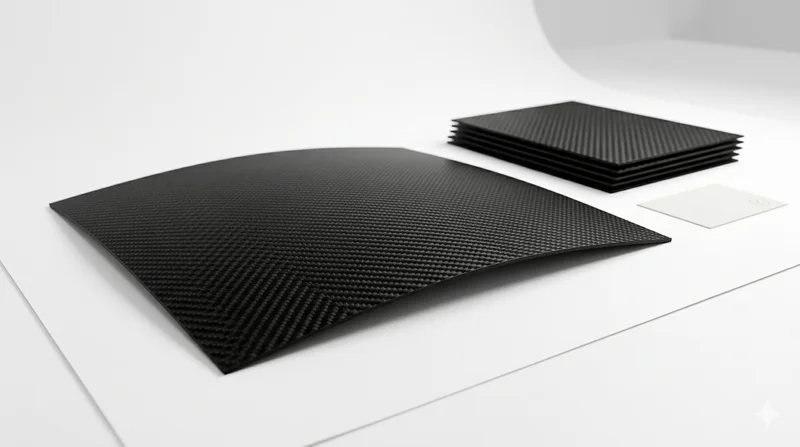
Carbon Fiber Plate — 3K Twill T700 1.5mm
Thin 1.5mm carbon fiber plate with 3K twill weave surface. Lightweight and stiff, commonly used for covers, panels, drone bodies, and applications requiring a premium aesthetic appearance.
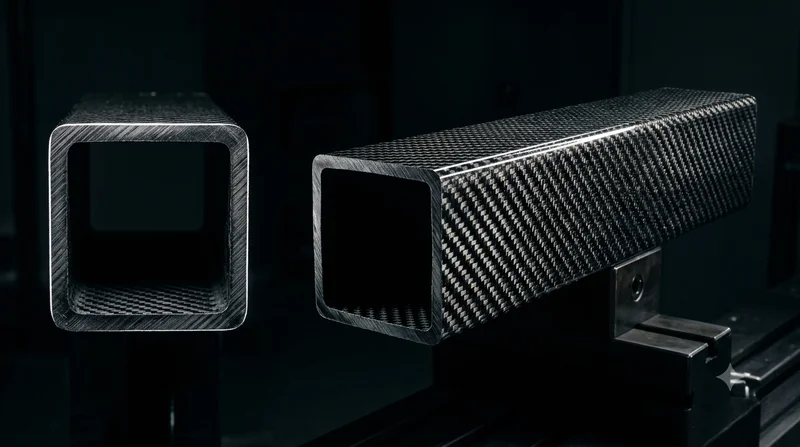
Square Carbon Fiber Tube — 3K Twill T700
Square cross-section carbon fiber tube manufactured with 3K twill weave for torsional strength. Preferred for structural frames, trusses, and support columns where rectangular geometry offers design flexibility.
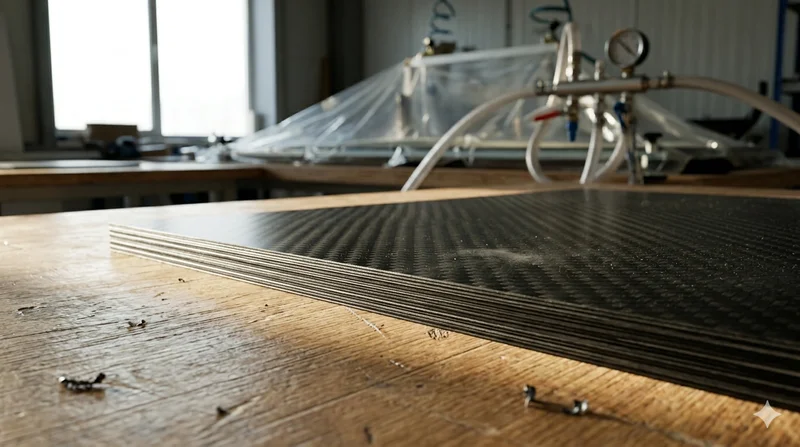
Carbon Fiber Plate — 3K Twill T700 3.0mm
Medium-thickness 3.0mm carbon fiber plate offering significantly higher load capacity while maintaining attractive 3K twill finish. Suitable for structural brackets, reinforcement plates, and load-bearing panels.
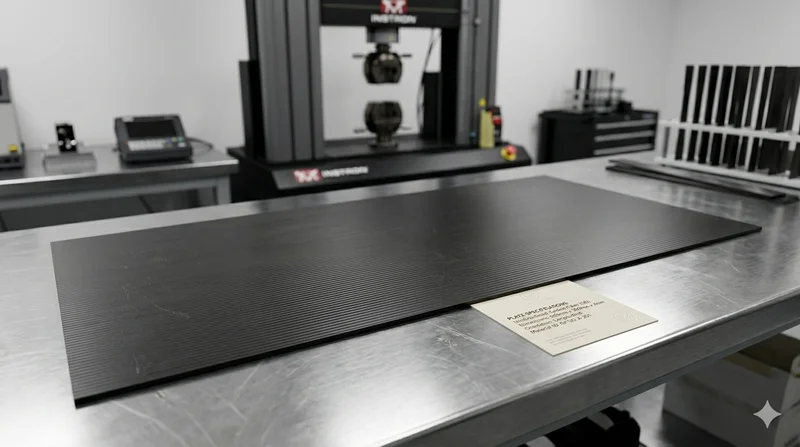
Carbon Fiber Plate — UD Unidirectional T700
Unidirectional carbon fiber plate with all fibers oriented in a single direction for maximum strength along the fiber axis. Essential for structural reinforcements, splints, and applications where load direction is predictable.
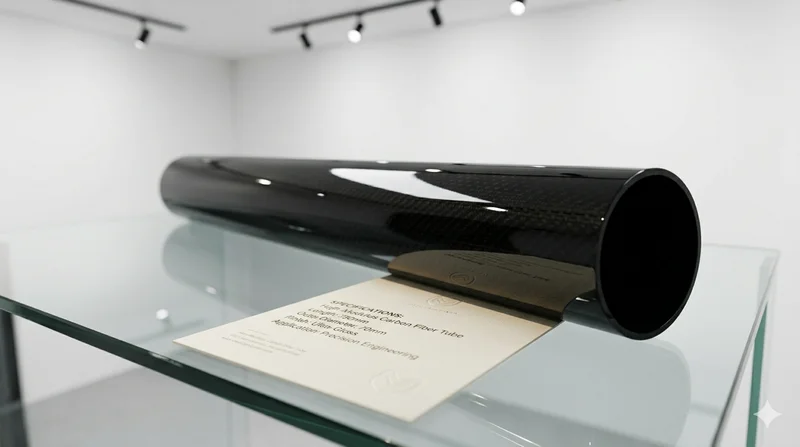
High Modulus Round Carbon Fiber Tube — M40
High modulus round tube manufactured with M40 grade fiber (tensile modulus 400 GPa). Designed for applications where maximum stiffness-to-weight ratio is critical, such as optical systems, precision machinery, and aerospace structures.