
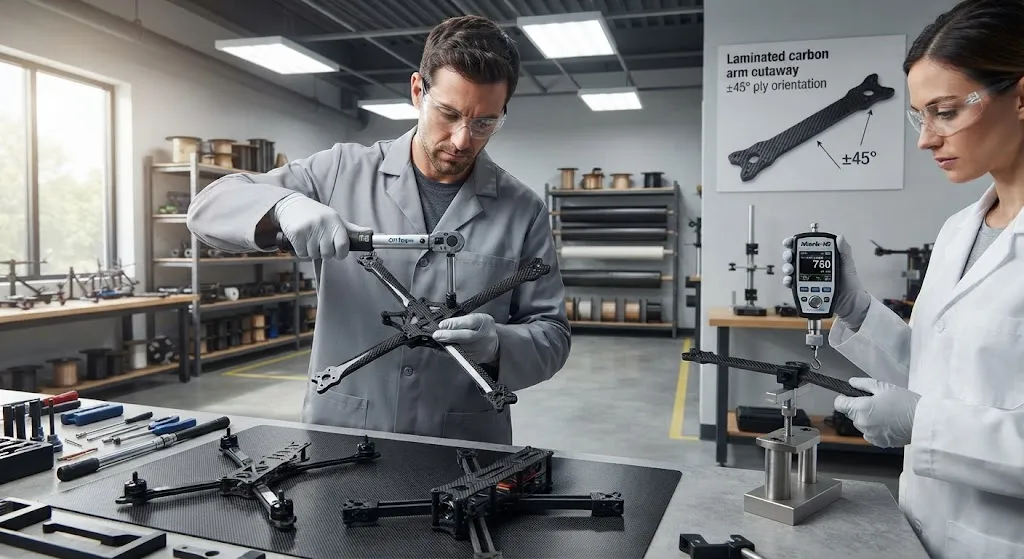
Every drone frame is, at its core, a structural compromise between two properties that pull in opposite directions: torsional stiffness and mass. A frameless, twisting airframe robs the flight controller of accurate attitude control, because the motors act on a structure that flexes und
Introduction
Every drone frame is, at its core, a structural compromise between two properties that pull in opposite directions: torsional stiffness and mass. A frameless, twisting airframe robs the flight controller of accurate attitude control, because the motors act on a structure that flexes under load instead of transferring torque cleanly to the body. But adding material to stiffen the frame adds weight, which directly shortens flight time, reduces payload, and erodes the thrust-to-weight margin that racing pilots depend on. Carbon fiber drone frames have become the industry standard precisely because carbon fiber delivers the highest torsional stiffness per unit of weight of any practical structural material — but only when the frame is designed and laminated correctly.
This article is written for engineers and procurement teams selecting carbon fiber frames for two different worlds: FPV racing quads, where grams and millisecond response times define competitiveness, and industrial inspection or delivery platforms, where a stiff, stable airframe protects expensive gimbals, sensors, and payloads across hundreds of flight hours. We will examine the physics of frame torsion, the material and layup decisions that govern stiffness, and the architecture choices that let designers tune the stiffness-to-weight balance for each mission.
Why Torsional Stiffness Matters
A multirotor controls its attitude by differentially varying the speed of opposing motors. Each motor produces thrust and a reactive torque about its own axis; the frame must transmit these moments to the whole airframe without significant twisting or lag. If the arms and center plates are torsionally soft, three problems appear:
- Control latency and oscillation: A flexing frame stores elastic energy that returns as unwanted vibration, feeding the flight controller noisy gyro data. Racing pilots experience this as "wobbly" or "floaty" response, forcing softer PID tuning that sacrifices speed.
- Propwash-induced wobble: During aggressive throttle changes, disturbed airflow hits the arms and causes high-frequency torsional excitation. A stiff frame damps this quickly; a soft one rings.
- Payload and sensor instability: For industrial drones, a twisting airframe lets a camera gimbal or LiDAR sensor deviate from the vehicle's true attitude, blurring imagery or corrupting point-cloud data even when the IMU is compensated.
The practical engineering target is a frame whose first torsional mode frequency sits well above the control bandwidth and any structural excitation frequencies. Designers typically aim for torsional mode frequencies above 150-200 Hz for FPV frames and above 60-100 Hz for larger industrial airframes, where the lower frequencies reflect the bigger, heavier structure and less aggressive maneuvering.
Carbon Fiber: The Stiffness-to-Weight Champion
The comparison below shows why carbon fiber dominates drone frame construction. Values are representative of the materials actually used in flight-capable frames:
| Property | Carbon Fiber (UD laminate) | 6061-T6 Aluminum | Nylon/Glass (3D printed) | Magnesium AZ31 |
|---|---|---|---|---|
| Elastic modulus, E (GPa) | 120-230 (unidirectional) | 68.9 | 3-8 | 45 |
| Tensile strength (MPa) | 1,500-3,500 | 310 | 40-90 | 260 |
| Density (g/cm³) | 1.55-1.6 | 2.70 | 1.2-1.4 | 1.74 |
| Specific stiffness, E/ρ (GPa·cm³/g) | 90-150 | 25.5 | 2-6 | 26 |
| Specific strength, σ/ρ (MPa·cm³/g) | 950-2,300 | 115 | 35-70 | 149 |
| Fatigue behavior in torsion | Excellent, notch-insensitive | Good, notch-sensitive | Poor (creep + fatigue) | Poor (corrosion + fatigue) |
The specific stiffness column is the key number: carbon fiber offers roughly 3.5-6 times the stiffness per gram of aluminum, and 15-50 times that of printed nylon composites. Because frame response is governed by stiffness-to-weight ratio rather than absolute stiffness, carbon fiber allows a frame that is simultaneously lighter and torsionally stiffer than a metal equivalent. Aluminum remains in entry-level and some industrial frames for cost and impact ductility, but competitive FPV and high-performance industrial airframes are now overwhelmingly carbon.
Layup Design: Tuning Torque Stiffness
Carbon fiber's anisotropy is a double-edged sword for frame design. A laminate is stiff along the fiber direction and soft perpendicular to it, which means torsional stiffness is not automatic — it must be engineered into the layup. Three mechanisms govern a frame arm's torsion:
- ±45° plies for torsional stiffness: Torsion loads a tube or beam in shear, which is carried most efficiently by fibers oriented at ±45° to the arm axis. A conventional drone arm laminate might use a quasi-isotropic stack (0°/±45°/90°) to balance bending and torsion, but arms tuned for maximum twist resistance increase the proportion of ±45° plies toward 50-70% of the total.
- Center-ply placement: For a laminate under torsion, placing ±45° plies at the outer surfaces maximizes their contribution to polar moment and stiffness. Poor layup sequencing wastes fiber that is buried near the neutral axis.
- Hollow cross-sections: A closed-section tube or a boxed/tapered arm provides dramatically higher torsional stiffness per gram than a flat plate, because shear flows around the closed section rather than through the thickness. Racing frames increasingly use hollow or partially hollow arms to exploit this.
The practical outcome is that a well-designed carbon frame arm can double its torsional stiffness at the same weight simply by rebalancing the ply orientations — which is why two frames of identical mass can feel completely different in flight.
Architecture: Racing vs Industrial Platforms
The same material, tuned for opposite missions, produces different frame architectures:
- FPV racing frames (3-7 inch, 200-700 g): True-X and stretched-X geometries with separate arms bolted to a thin top and bottom center plate. Designers maximize torsional rigidity of the arms through ±45° heavy layups while keeping the center stack minimal to save grams on a 250 g class quad. Arm stiffness is critical because these aircraft pull 6-10 g maneuvers with rapid yaw reversals.
- Industrial inspection and delivery platforms (300-1,200+ mm): Larger center plates, often a continuous monocoque or folded-plate body with integrated arm mounts, optimized for stiffness and vibration isolation rather than absolute lightness. A stiff, low-resonance airframe lets expensive gimbals and RTK-GNSS systems produce clean data. Weight is added deliberately where it buys damping and rigidity.
- Hybrid and custom frames: Many commercial platforms now use bonded aluminum inserts or metal motor mounts at high-load points while keeping the load path carbon — capturing carbon's stiffness-to-weight benefit where it matters and metal's impact and wear resistance where it is needed.
Cost and Supply Considerations
For procurement teams, carbon drone frame quality varies widely, and the price differences track manufacturing quality rather than material alone. A key indicator is the fiber used: frames made with standard modulus (230 GPa) 3K or 6K tow dominate the market; premium frames use intermediate or high-modulus fiber (290-395 GPa) to push stiffness further at the same weight, at roughly 2-4x the fiber cost. Press-molded or autoclave-cured frames with verified void control outperform cheap oven-cured parts. Because thin, high-performance arms are structurally sensitive to defects, sourcing frames from a supplier with documented laminate quality, consistent thickness, and lot control is the most reliable way to get a frame that performs as its nominal stiffness suggests.
Frequently Asked Questions
How do I increase the torsional stiffness of a carbon fiber drone frame without adding much weight?
Three high-leverage changes: rebalance the arm layup toward ±45° plies (torsional shear is carried axially along those fiber directions), move the ±45° plies to the outer surface where they contribute most to polar moment, and convert flat arms to a hollow or boxed closed section, which raises torsional stiffness per gram dramatically. All three can be done without changing wall thickness, so weight stays nearly constant while twist resistance rises. For a racing frame, using a higher-modulus fiber (intermediate modulus, ~290 GPa) is a fourth option, though it raises material cost.
Why does my carbon fiber frame feel soft or "floaty" in flight even though it is light?
A light frame is not the same as a stiff frame. Low mass helps acceleration, but if the arms and center plates are torsionally soft, the structure flexes under motor torque and stores elastic energy that returns as oscillation and vibration. The flight controller sees noisy gyro data and must be detuned, which makes the aircraft feel vague. The fix is improved torsional stiffness through layup design (more ±45°, better ply placement) or a stiffer closed-section geometry — not simply adding carbon material, which would add weight and erode the very lightness you want.
Is aluminum or 3D-printed nylon ever better than carbon fiber for a drone frame?
Yes, in specific cases. Aluminum retains value in entry-level or budget frames where cost, easy post-machining, and impact ductility (it bends rather than shatters) matter more than ultimate stiffness-to-weight. 3D-printed nylon is attractive for prototyping and one-off custom geometries at low cost, and some hybrid designs combine a printed core with carbon reinforcement. But for competitive FPV racing and most industrial payload platforms, carbon fiber's 3.5-6x specific-stiffness advantage over aluminum, and its far better fatigue and notch behavior, make it the performance leader — the trade-offs are higher material cost and brittle failure under extreme impact.
Conclusion
Carbon fiber drone frames win on torsional stiffness per gram — the single property that governs how a frame transmits motor torque into crisp, stable attitude control. The engineering lever is not simply "more carbon," but smarter layup design: ±45° plies for shear, correct ply placement, and closed-section arms that multiply torsional rigidity without added mass. Racing FPV frames push this balance toward minimum weight with maximized arm stiffness, while industrial platforms prioritize a stiff, low-resonance airframe that protects gimbals, sensors, and payloads across long service lives.
Selecting the right frame means specifying the torsional stiffness and weight you actually need for your platform class and flight profile, and sourcing from a supplier with documented laminate quality. Explore our carbon fiber fabrics and laminates for drone airframe construction, or contact our engineering team to discuss frame laminates, fiber selection, and stiffness-tuned stacking sequences for your next build.
Part of topic
Related Articles
- Bio-Based Carbon Fiber Precursors: Lignin and Polyethylene for Low-Cost Production
- Large-Tow Carbon Fiber Cost Analysis: 48K vs 60K Price-Performance Comparison
- Carbon Fiber-Resin Interface Bonding: Surface Treatment and Coupling Agent Optimization
- Digital Twin for Carbon Fiber Manufacturing: Real-Time Process Monitoring and Defect Prevention
- Thermoplastic Carbon Fiber Welding for Automotive: Ultrasonic and Induction Welding Process Windows
- Large-Tow Carbon Fiber Wet Spinning: Process Optimization for 48K/60K Production Efficiency
Interested in Our Products?
Contact our team for competitive pricing and technical specifications.
Get a QuoteRelated Products
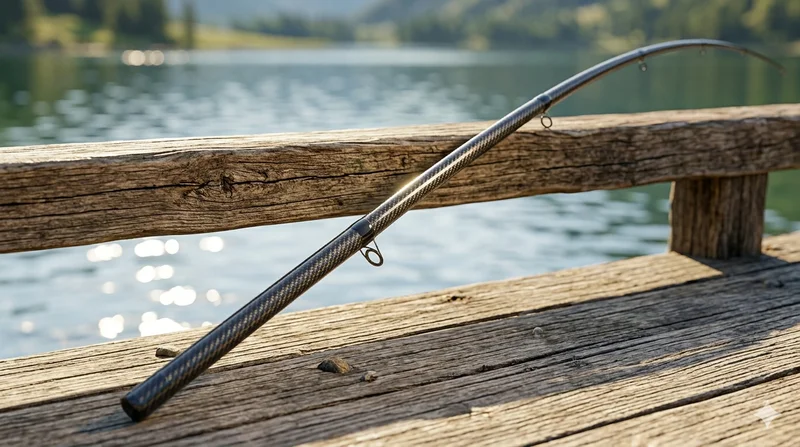
Carbon Fiber Fishing Rod Blank
High-quality carbon fiber fishing rod blank manufactured from multiple grades of Toray carbon fiber cloth. Available in a wide range of lengths, powers, and actions for freshwater and saltwater applications. Suitable for OEM rod building.
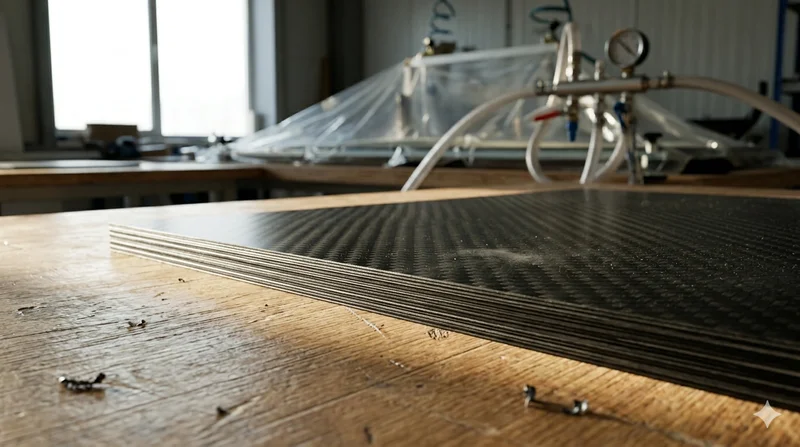
Carbon Fiber Plate — 3K Twill T700 3.0mm
Medium-thickness 3.0mm carbon fiber plate offering significantly higher load capacity while maintaining attractive 3K twill finish. Suitable for structural brackets, reinforcement plates, and load-bearing panels.
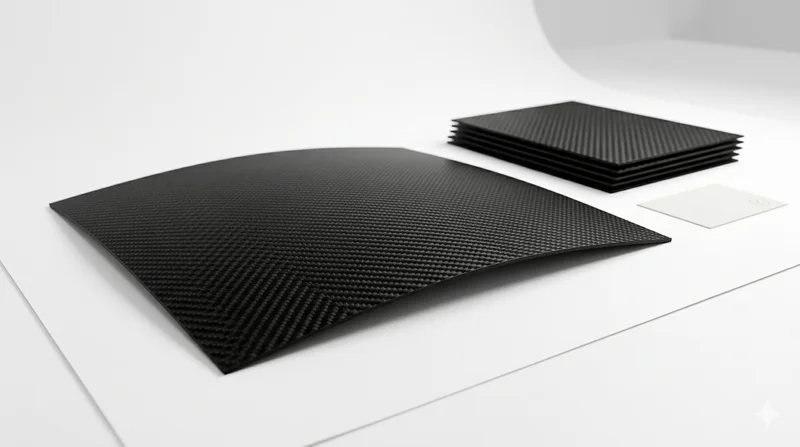
Carbon Fiber Plate — 3K Twill T700 1.5mm
Thin 1.5mm carbon fiber plate with 3K twill weave surface. Lightweight and stiff, commonly used for covers, panels, drone bodies, and applications requiring a premium aesthetic appearance.
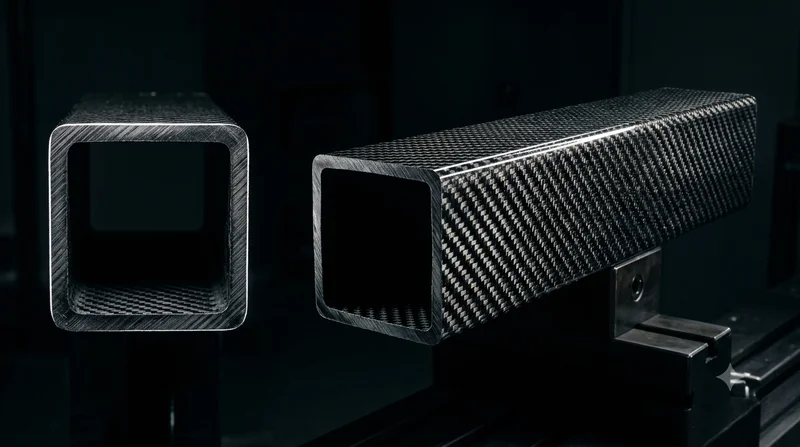
Square Carbon Fiber Tube — 3K Twill T700
Square cross-section carbon fiber tube manufactured with 3K twill weave for torsional strength. Preferred for structural frames, trusses, and support columns where rectangular geometry offers design flexibility.
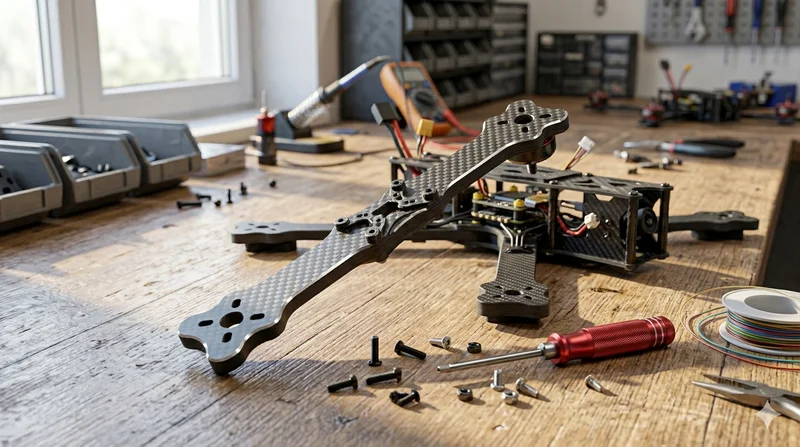
Carbon Fiber Drone Arm
Precision-molded carbon fiber drone arm combining unidirectional fiber for stiffness and woven layers for torsional strength. Designed for FPV, photography, and industrial drone platforms. Each arm is CNC-machined to exact specifications.