
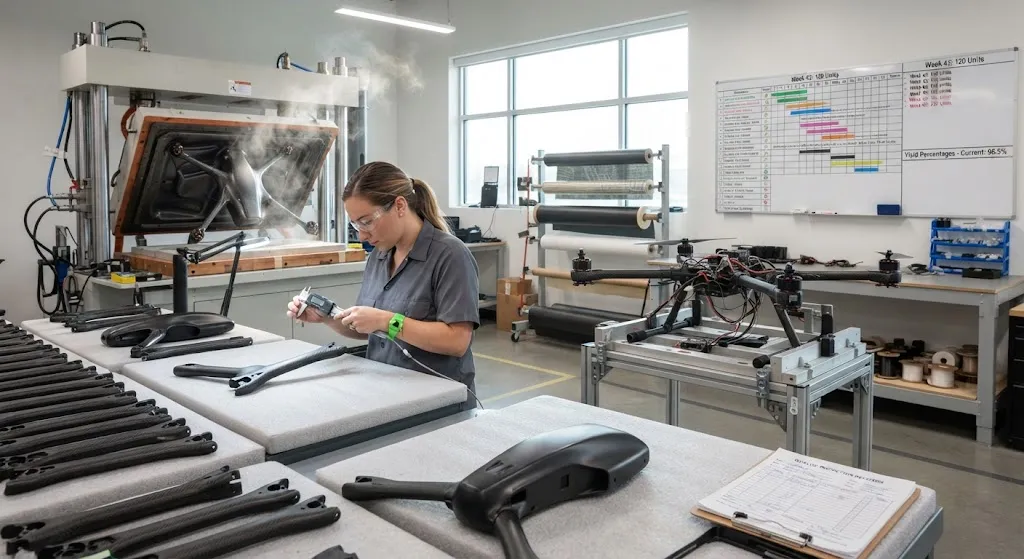
Commercial drone delivery has crossed the threshold from demonstration to deployment. Operators are flying scheduled food, medicine and parcel routes in urban and suburban corridors, and the logistics industry now treats small unmanned aircraft as a real transport layer rather than a no
Introduction
Commercial drone delivery has crossed the threshold from demonstration to deployment. Operators are flying scheduled food, medicine and parcel routes in urban and suburban corridors, and the logistics industry now treats small unmanned aircraft as a real transport layer rather than a novelty. The drone itself is where the economics are won or lost: a delivery drone must carry a meaningful payload, fly a useful distance, and return a profit per flight on a machine that is bought and maintained against tight margins.
In that calculation, the airframe is decisive. The airframe is roughly 55-60 percent of the empty weight of a typical multirotor delivery drone, and it sets the structural weight budget that the propulsion and battery systems must lift. Carbon fiber has become the default answer for airframe material because it achieves the strength and stiffness needed for crash-tolerant, weather-resistant structures at a weight that no metal can match at equal performance. The question that defines the current generation is no longer whether to use carbon fiber, but how to make carbon fiber airframes cheap enough for fleets of hundreds of aircraft.
Design Drivers: Payload, Range and the Weight Budget
A delivery drone airframe is specified backwards from the mission. A typical last-mile quadcopter carries a 1-3 kilogram payload over a 5-20 kilometer round trip, and the design targets cascade from those two numbers:
- Empty weight fraction: Efficient designs hold airframe mass between 20-25 percent of the total takeoff weight, leaving the rest for batteries, motors, avionics and payload. Carbon fiber components are the tool that keeps this fraction attainable.
- Structural stiffness: The airframe must resist motor torque and landing loads without resonance or flex that destabilizes flight control; carbon fiber's specific modulus (modulus divided by density) is roughly 4-5 times that of aluminum.
- Crash tolerance: Regulatory frameworks and insurance require damage that does not endanger people on the ground, so arms and landing structures are designed to yield in controlled locations rather than shatter.
These drivers push designers toward structures that are light, stiff and predictable in failure — the exact properties where unidirectional and fabric-reinforced carbon fiber excels. The consequence is visible across the industry: nearly every serious delivery platform, from quadcopter hybrids to fixed-wing VTOL aircraft, uses carbon fiber for arms, body shells and fuselage structures.
Production Molding Processes That Control Cost
Cost is the reason delivery drone airframes were, until recently, built as hand-laminated prototypes. Scaling to fleet production requires processes that repeat dimensionally and structurally without manual skill as a variable. Three processes dominate production drone airframe manufacturing:
| Process | Typical Cycle Time | Part Complexity | Annual Volume Suitability | Tooling Cost |
|---|---|---|---|---|
| Compression molding (BMC/SMC) | 3-8 minutes | Simple shells, arms | 50,000+ parts | High |
| Resin transfer molding (RTM) | 20-60 minutes | Complex, hollow parts | 5,000-50,000 parts | High |
| Vacuum bag / resin infusion | 2-8 hours | Large or one-piece structures | Under 10,000 parts | Low-medium |
Compression molding with chopped carbon fiber compounds is the volume champion: it produces molded arms and body plates at cycle times measured in minutes, with dimensional repeatability that hand laminates cannot approach. RTM adds the ability to mold hollow, three-dimensional structures such as one-piece fuselage shells with integrated stiffeners, at a cost per part that falls sharply once the tooling is amortized across a fleet order. For hybrid and fixed-wing drones, infusion of a single-piece wing or fuselage remains attractive when tooling budgets are tight.
Structural Solutions: Arms, Bodies and Integrated Features
Production carbon fiber drone airframes solve the structural problem with a small family of configurations. Each configuration balances crash repair cost, manufacturing simplicity and stiffness:
- Molded arms: The most stressed component on a multirotor. Production arms are compression-molded unidirectional or fabric tubes with integrated motor mounts, replacing bolted aluminum hubs with a single part.
- Monocoque bodies: One-piece molded shells carry the battery, avionics and payload while contributing torsional stiffness to the whole vehicle. RTM shells with molded-in ribs save weight versus glued-together panels.
- Integrated landing structures: Legs, skids and crush zones are molded into the primary structure, eliminating separate metal brackets and reducing the parts count that drives assembly labor.
The measurable result of these solutions is a parts-count reduction typical of well-engineered aerospace structures: a production carbon fiber multirotor body often uses 30-50 percent fewer parts than an equivalent aluminum-tube-and-bracket design, which shortens assembly time and cuts warranty exposure on a per-aircraft basis.
Unit Cost Economics Across Fleet Sizes
The cost structure of a carbon fiber drone airframe shifts dramatically with production volume. At prototype volumes of tens of units, a hand-laminated airframe costs several times its eventual fleet price. At volumes of thousands, molded carbon fiber parts reach a cost position that competes with metal on a per-part basis while weighing less:
| Fleet Scenario | Airframe Volume | Process Used | Relative Airframe Cost | Weight vs Aluminum |
|---|---|---|---|---|
| Pilot program | 10-50 units | Hand laminate / infusion | 1.0 (reference) | 30-40% lighter |
| Regional fleet | 100-500 units | RTM + compression molding | 0.35-0.5 | 35-45% lighter |
| National fleet | 1,000+ units | Compression molding (BMC/SMC) | 0.2-0.3 | 25-35% lighter |
Two implications follow. First, the business case for an operator improves at every step of scaling because the airframe — the most expensive single structural cost item — falls faster than any other component. Second, the selection of molding process is a fleet-sizing decision, not a design detail: choosing hand-lamination for a platform intended for national rollout locks in a cost structure that competition will underbid.
Quality and Certification Considerations
Scale production raises the bar for consistency. Fleet operators need airframes that fly identically from unit to unit, and aviation authorities need evidence that structural quality is maintained across production. Molded carbon fiber supports both needs better than hand layup:
- Dimensional repeatability: Molded parts hold tolerances on the order of 0.1-0.3 millimeters, which keeps rotor plane alignments and CG positions consistent across a fleet.
- Property traceability: Fiber volume fraction, void content and curing are controlled by process settings rather than operator technique, giving auditors measurable evidence of quality.
- Damage inspectability: Production airframes are designed with defined load paths, so inspection targets are predictable — molded-in witness marks and standardized test points support routine fleet inspection.
For operators, the certification path also rewards molded structures: repeatable parts make structural test data transferable across the fleet, shortening the evidence trail that regulators require for beyond-visual-line-of-sight operations.
Frequently Asked Questions
Why is carbon fiber the default material for delivery drone airframes?
Carbon fiber delivers the highest strength and stiffness per unit weight of any common engineering material, which directly extends payload and range for a fixed takeoff weight. A carbon fiber arm is roughly 35-45 percent lighter than an aluminum equivalent with the same stiffness, and the airframe is about 55-60 percent of empty drone weight, so the savings compound across the whole aircraft. Molding processes now make carbon fiber cost-competitive at fleet volumes, removing the historical cost objection.
Which molding process is cheapest for high-volume drone airframes?
Compression molding with chopped carbon fiber compounds (BMC or SMC) is the lowest-cost process at volumes above roughly 10,000 parts per year, with cycle times of 3-8 minutes per part. RTM is preferred when parts are hollow or geometrically complex, such as one-piece fuselage shells with integrated ribs, trading longer cycles for design freedom. The right choice depends on fleet size: below a few thousand units, infusion and RTM with lower tooling cost often win on total cost.
How much does a carbon fiber drone airframe weigh compared with aluminum?
For equivalent stiffness, a well-designed carbon fiber airframe is typically 30-45 percent lighter than an aluminum-tube-and-bracket design, depending on the load case and configuration. The exact number depends on fiber content, layup orientation and part integration — one-piece molded monocoque bodies save additional weight by eliminating brackets and fasteners that metal designs require. The weight saved transfers directly into payload or battery capacity.
Conclusion
Carbon fiber has moved from the performance choice for delivery drones to the cost-competitive standard for them. The design drivers of payload, range and weight budget all favor carbon fiber's strength-to-weight advantage, and the molding processes — compression molding, RTM and infusion — have brought per-unit cost into fleet-viable territory. Operators scaling to hundreds or thousands of aircraft capture a compounding cost advantage, because the airframe falls in cost faster than any other component as volume rises, while certified quality becomes easier to demonstrate with repeatable molded structures.
For drone OEMs and fleet operators engineering their next platform, the airframe material and process decisions are the biggest lever on the business case. Explore our carbon fiber materials for drone airframes, or contact our engineering team to discuss material grades and molding support for your delivery drone program.
Related Articles
- Carbon Fiber Sheets for Sale: A Buyer Checklist for Thickness, Weave and Finish
- Carbon Fiber Plate Running Shoes: Manufacturing Process and Material Specifications
- Carbon Fiber Tubes for Sale: Spec Sheet Fields That Actually Matter
- Carbon Fiber Sheets Near Me: Local Dealers and Quick Turnaround Procurement
- Carbon Fiber Tubes Near Me: Local Stock Availability and Same-Day Delivery Options
- Carbon Fiber Plate Orthotic: Lightweight Prosthetic and Medical Device Applications
Interested in Our Products?
Contact our team for competitive pricing and technical specifications.
Get a QuoteRelated Products

Carbon Fiber Plate — 3K Twill T700 1.5mm
Thin 1.5mm carbon fiber plate with 3K twill weave surface. Lightweight and stiff, commonly used for covers, panels, drone bodies, and applications requiring a premium aesthetic appearance.

Carbon Fiber Plate — 3K Twill T700 3.0mm
Medium-thickness 3.0mm carbon fiber plate offering significantly higher load capacity while maintaining attractive 3K twill finish. Suitable for structural brackets, reinforcement plates, and load-bearing panels.

Square Carbon Fiber Tube — 3K Twill T700
Square cross-section carbon fiber tube manufactured with 3K twill weave for torsional strength. Preferred for structural frames, trusses, and support columns where rectangular geometry offers design flexibility.
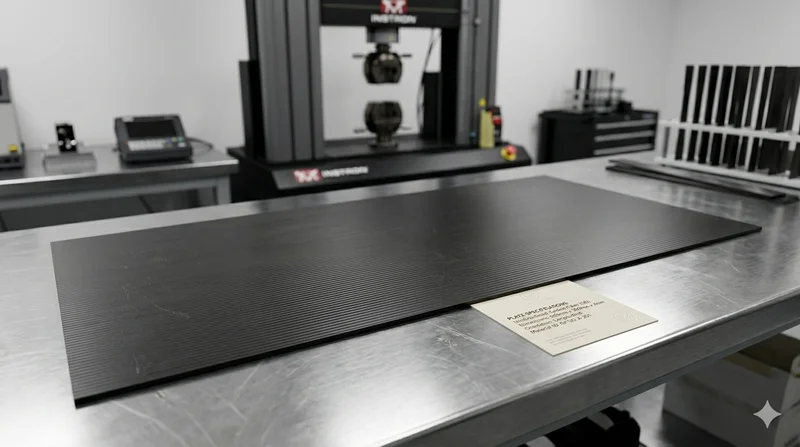
Carbon Fiber Plate — UD Unidirectional T700
Unidirectional carbon fiber plate with all fibers oriented in a single direction for maximum strength along the fiber axis. Essential for structural reinforcements, splints, and applications where load direction is predictable.
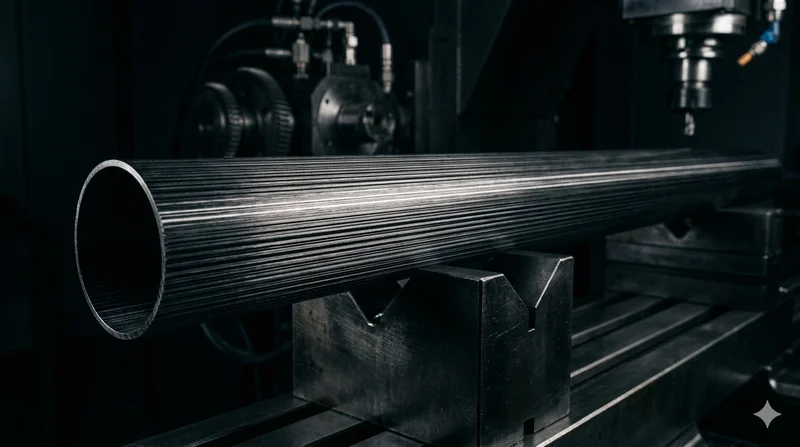
Round Carbon Fiber Tube — UD Unidirectional T700
Unidirectional (UD) round tube with all fibers aligned axially for maximum longitudinal stiffness. Ideal for applications requiring high bending rigidity with minimal weight, such as shafts, struts, and structural reinforcements.