
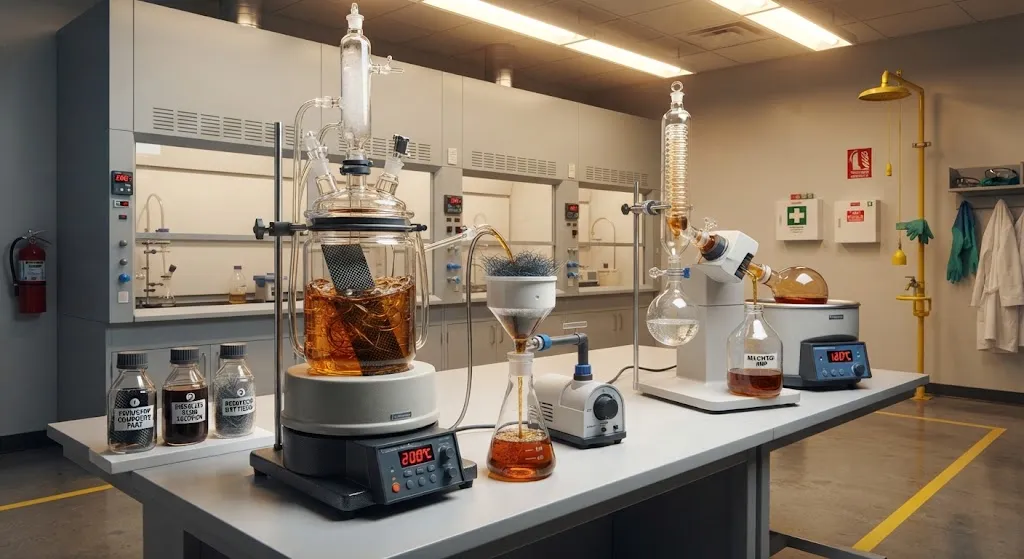
Solvent-based dissolution recycling enables recovery of carbon fiber and thermoplastic resin from end-of-life composite parts. This article examines dissolution processes, fiber quality, and economic viability for closed-loop recycling.
Introduction
Thermoplastic carbon fiber composites — including PEEK, PEKK, PA, and PP matrices — offer inherent recyclability advantages over thermoset systems because the matrix can be melted and reprocessed. Solvent-based dissolution recycling takes this advantage further by enabling selective dissolution of the thermoplastic matrix at temperatures below the melting point, recovering intact carbon fibers with minimal property degradation while also recovering the resin for reuse.
This approach addresses a key limitation of thermal recycling methods (pyrolysis), which degrade fiber properties through high-temperature exposure. Solvent dissolution operates at lower temperatures (150-300°C) and can recover both fiber and resin materials, supporting closed-loop recycling objectives.
Dissolution Processes
Several solvent-based dissolution approaches are being developed:
Single-solvent dissolution: A single strong solvent — such as N-methyl-2-pyrrolidone (NMP), dimethyl sulfoxide (DMSO), or formic acid — dissolves the thermoplastic matrix at elevated temperature and pressure. The solution is then processed to recover the dissolved resin while the carbon fibers are collected as a clean, dry reinforcement material.
Multi-solvent systems: Sequential solvent treatment addresses more complex composite structures with multiple resin systems or additives. Different solvents target specific matrix components, enabling selective material recovery.
Catalytic dissolution: Chemical catalysts lower the temperature and pressure requirements for dissolution, reducing energy consumption and equipment costs. Catalytic approaches are particularly promising for high-performance thermoplastics with high melting points.
Fiber Quality Recovery
Solvent dissolution preserves fiber properties more effectively than thermal methods:
Tensile properties: Carbon fibers recovered through solvent dissolution retain 95-98% of original tensile strength and modulus, compared to 80-90% for pyrolysis-recovered fibers. The lower processing temperatures minimize fiber surface degradation.
Surface condition: Dissolution-recovered fibers maintain better surface condition with less oxidation and surface damage. This improves fiber-matrix bonding in recycled composites, reducing the need for aggressive surface treatments.
Fiber length: Unlike mechanical grinding, dissolution recovery preserves continuous fiber lengths, enabling use in higher-performance applications that require long fiber reinforcement.
Resin Recovery
A key advantage of dissolution recycling is resin recovery:
Purity: Recovered thermoplastic resin can achieve sufficient purity for reuse in new composite formulations, typically at 70-85% of virgin resin properties.
Processing: Recovered resin is filtered, purified, and reformulated for reuse. Blending with virgin resin (typically 20-40% recycled content) maintains property requirements while reducing material costs.
Economic value: Recovered high-performance thermoplastics (PEEK, PEKK) have significant economic value, improving the business case for dissolution recycling.
Economic Viability
The economics of solvent dissolution recycling depend on several factors:
Solvent costs: Strong solvents are expensive and require recovery and recycling to minimize operating costs. Solvent recovery rates above 95% are essential for economic viability.
Energy consumption: Heating and pressurizing solvent systems requires significant energy, though less than pyrolysis. Energy costs are reduced through heat integration and solvent recycling.
Scale: Dissolution recycling is currently economic primarily for high-value aerospace and performance applications where fiber and resin values justify processing costs. Scale-up to higher-volume applications requires further cost reduction.
Conclusion
Solvent-based dissolution recycling offers a promising pathway for closed-loop recycling of thermoplastic carbon fiber composites, recovering both fiber and resin materials with minimal property degradation. As the technology matures and scales, dissolution recycling will become an increasingly important tool for managing end-of-life composite materials while preserving material value.
Part of topic
Related Articles
- Bio-Based Carbon Fiber Precursors: Lignin and Polyethylene for Low-Cost Production
- Large-Tow Carbon Fiber Cost Analysis: 48K vs 60K Price-Performance Comparison
- Carbon Fiber-Resin Interface Bonding: Surface Treatment and Coupling Agent Optimization
- Digital Twin for Carbon Fiber Manufacturing: Real-Time Process Monitoring and Defect Prevention
- Thermoplastic Carbon Fiber Welding for Automotive: Ultrasonic and Induction Welding Process Windows
- Large-Tow Carbon Fiber Wet Spinning: Process Optimization for 48K/60K Production Efficiency
Interested in Our Products?
Contact our team for competitive pricing and technical specifications.
Get a QuoteRelated Products
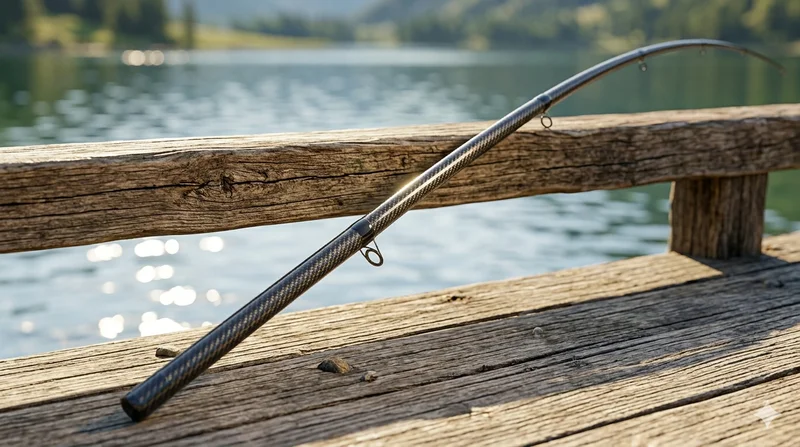
Carbon Fiber Fishing Rod Blank
High-quality carbon fiber fishing rod blank manufactured from multiple grades of Toray carbon fiber cloth. Available in a wide range of lengths, powers, and actions for freshwater and saltwater applications. Suitable for OEM rod building.

Carbon Fiber Watch Strap — 20mm/22mm Quick-Release
Premium carbon fiber watch strap with quick-release spring bars. Woven from T700 3K twill prepreg with a flexible resin system that conforms to the wrist. Available in 20mm and 22mm lug widths, compatible with Apple Watch, Samsung Galaxy Watch, Garmin, and traditional mechanical watches. Features a stainless steel buckle and carbon fiber keepers. The natural weave pattern makes each strap unique.

Carbon Fiber Plate — 3K Twill T700 1.5mm
Thin 1.5mm carbon fiber plate with 3K twill weave surface. Lightweight and stiff, commonly used for covers, panels, drone bodies, and applications requiring a premium aesthetic appearance.

Carbon Fiber Plate — 3K Twill T700 3.0mm
Medium-thickness 3.0mm carbon fiber plate offering significantly higher load capacity while maintaining attractive 3K twill finish. Suitable for structural brackets, reinforcement plates, and load-bearing panels.

Square Carbon Fiber Tube — 3K Twill T700
Square cross-section carbon fiber tube manufactured with 3K twill weave for torsional strength. Preferred for structural frames, trusses, and support columns where rectangular geometry offers design flexibility.