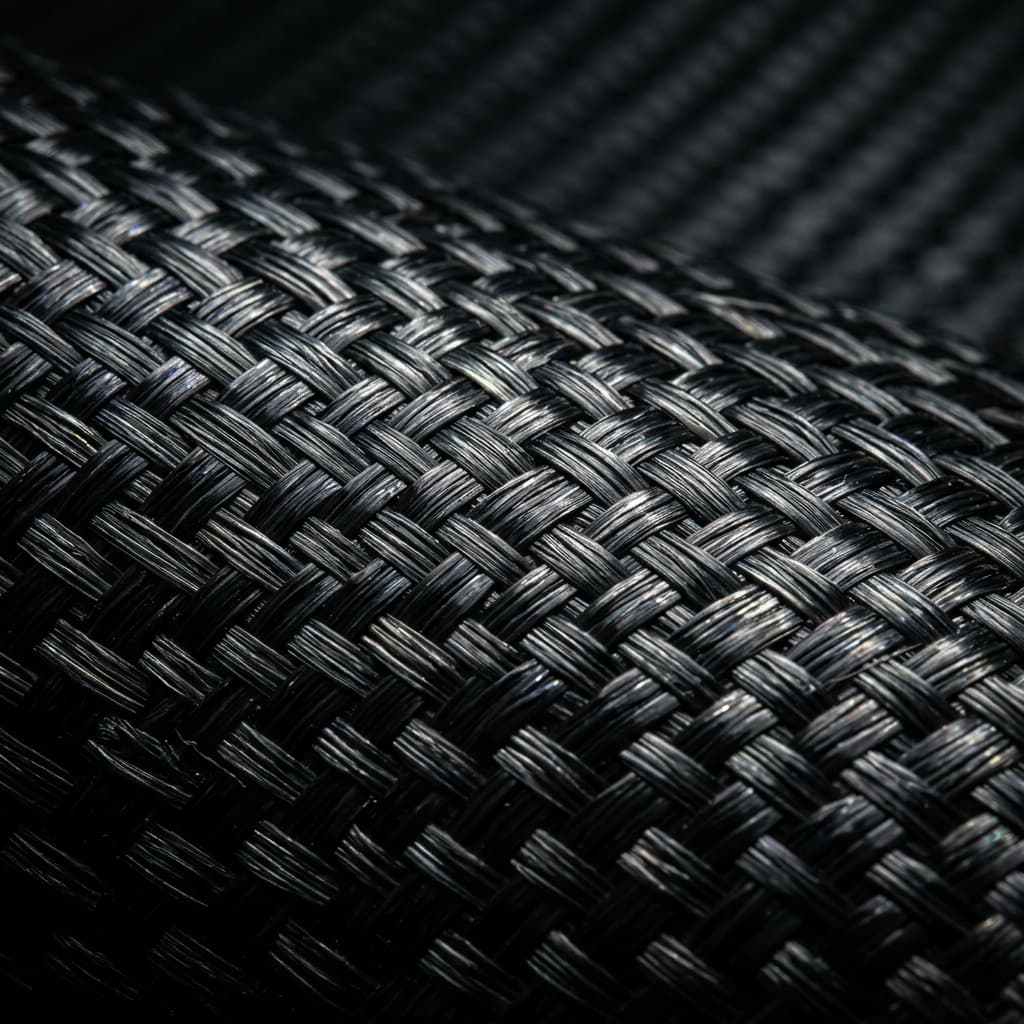

A comprehensive guide to HS code classification for carbon fiber products. Learn the correct tariff codes for carbon fiber raw materials, prepreg, composite parts, and finished goods for international trade compliance.
Understanding HS Code Classification for Carbon Fiber Products
The Harmonized System (HS) code classification for carbon fiber products presents unique challenges for exporters and importers in the composites industry. Unlike traditional materials such as steel or aluminum, carbon fiber products span multiple HS chapters depending on their form, processing stage, and end-use application. Misclassification can lead to duty overpayments, customs delays, and in severe cases, penalties for non-compliance. This guide provides a detailed framework for correctly classifying carbon fiber materials, intermediate products, and finished composite components under the current HS nomenclature.
Primary HS Code Categories for Carbon Fiber Materials
Carbon fiber products are primarily classified under Chapter 68 (Articles of stone, plaster, cement, asbestos, mica or similar materials) and Chapter 39 (Plastics and articles thereof) of the HS system. The specific classification depends on whether the product is a raw fiber, an impregnated intermediate, or a finished composite article. The following table outlines the most commonly applicable HS codes for carbon fiber products in international trade:
| Product Description | HS Code | Duty Rate (EU, %) | Duty Rate (US, %) | Duty Rate (China, %) |
|---|---|---|---|---|
| Carbon fiber filaments (unsized, >7 micron diameter) | 6815.11.00 | 2.7 | 3.7 | 8.0 |
| Carbon fiber prepreg (resin-impregnated, woven) | 3921.90.55 | 6.5 | 4.2 | 10.0 |
| Carbon fiber woven fabric (dry, not impregnated) | 6815.11.00 | 2.7 | 3.7 | 8.0 |
| Carbon fiber composite tubes (pultruded) | 6815.19.00 | 2.7 | 3.7 | 8.0 |
| Carbon fiber composite sheets/panels | 6815.19.00 | 2.7 | 3.7 | 8.0 |
| Carbon fiber reinforced polymer (CFRP) automotive parts | 8708.99.51 | 3.5 | 2.5 | 6.0 |
| Carbon fiber reinforced polymer (CFRP) aerospace parts | 8807.30.00 | 2.7 | 0.0 | 5.0 |
| Carbon fiber rovings (continuous filament bundles) | 6815.11.00 | 2.7 | 3.7 | 8.0 |
| Carbon fiber milled/milled powder | 6815.11.00 | 2.7 | 3.7 | 8.0 |
| Carbon fiber sports equipment (bicycle frames, tennis rackets) | 9506.99.00 | 2.7 | 3.9 | 12.0 |
The Critical Split: When CFRP Parts Move to End-Use Chapters
One of the most common classification errors occurs when exporters apply the base material HS code (Chapter 68 / 6815.19) to finished carbon fiber composite parts that should be classified under their end-use chapter. For example, a carbon fiber bicycle frame classified under 6815.19 would face an 8% duty rate when entering China, whereas correct classification under Chapter 95 (sports equipment, HS 9506.99) incurs a 12% rate. While the lower rate seems attractive, customs authorities routinely audit end-use classification, and underpayment discovered during post-clearance audits can result in back-duties, interest charges, and penalties of up to 200% of the duty shortfall in jurisdictions such as the European Union.
Country-Specific Ruling Variations
HS code classification is harmonized only to the six-digit level. Beyond that, individual countries apply their own national tariff lines (eight to ten digits), creating significant variation in duty rates and regulatory requirements. Exporters shipping carbon fiber prepreg to multiple markets face the following classification landscape:
| Market | National Tariff Code | Duty Rate | Special Requirements |
|---|---|---|---|
| European Union | 3921.90.55.10 | 6.5% | REACH registration required for resin components |
| United States | 3921.90.5500 | 4.2% | EPA TSCA compliance for carbon fiber precursors |
| China | 3921.90.9000 | 10.0% | CCC certification for certain composite products |
| Japan | 3921.90.090 | 4.6% | METI import notification for advanced materials |
| South Korea | 3921.90.2090 | 8.0% | K-REACH pre-registration for epoxy resin systems |
| India | 3921.90.99 | 12.0% | BIS certification for composite materials in defense applications |
Binding Tariff Information and Advance Rulings
To mitigate classification risk, carbon fiber exporters should obtain Binding Tariff Information (BTI) in the European Union or advance rulings under Section 301 of the U.S. Trade Act. In 2025, the EU issued approximately 1,240 BTI decisions related to carbon fiber and composite materials, of which 18% resulted in reclassification from the initially proposed code. The average processing time for a BTI application is 42 days in the EU and 65 days in China. Holding a valid BTI provides legal certainty for up to three years and protects against post-clearance recovery of duties if the ruling is followed correctly.
Common Classification Errors in Carbon Fiber Trade
- Prepreg misclassification: Classifying resin-impregnated carbon fiber prepreg under Chapter 68 as woven fabric rather than Chapter 39 as a plastic product. The presence of the epoxy resin matrix (typically 35-42% resin content by weight) determines classification under Chapter 39, specifically HS 3921.90.
- Composite part vs. material: Exporting finished CFRP components under the carbon fiber material code (6815.19) instead of the appropriate end-use chapter. Customs authorities apply the General Interpretative Rule 3(b), which requires classification according to the essential character of the product.
- Coated fiber vs. impregnated fiber: Distinguishing between carbon fiber with a surface coating (still Chapter 68, HS 6815.11) and carbon fiber impregnated with resin throughout the cross-section (Chapter 39, HS 3921.90). Technical testing by customs laboratories measures resin penetration using microscopic cross-sectional analysis.
- Unassembled kit classification: Carbon fiber parts shipped as unassembled kits (e.g., bicycle frame components with hardware) may be classified either under their end-use chapter or as parts under Chapter 68, depending on whether the kit includes non-composite components. The EU Customs Code prescribes classification under the main heading when the assembled product constitutes a complete article.
Free Trade Agreement Utilization for Carbon Fiber Products
Carbon fiber exporters can leverage Free Trade Agreements (FTAs) to reduce or eliminate tariff duties. Under the U.S.-Korea FTA, carbon fiber prepreg classified under HS 3921.90 receives a 0% duty rate when accompanied by a Certificate of Origin demonstrating at least 55% regional value content. Similarly, the EU-Japan Economic Partnership Agreement provides for progressive tariff elimination on carbon fiber products, with duties on prepreg (HS 3921.90) scheduled to reach 0% by 2029. However, exporters must comply with strict rules of origin requirements, including product-specific rules that may require the carbon fiber filament to be sourced domestically or from a party to the agreement.
Digital Tools for HS Code Verification
Several digital tools can assist carbon fiber exporters in verifying correct HS code classification. The WCO Mercator Programme offers an online classification database with 87,000+ binding classification decisions searchable by product description and HS code. The European Union's Access2Markets platform provides real-time duty rate calculations for carbon fiber products across all EU trade agreements. For companies handling high volumes of carbon fiber exports, automated classification software such as CustomsData or Integration Point can reduce classification time by up to 70% compared to manual review, with accuracy rates exceeding 92% for composite materials when properly trained.
Frequently Asked Questions
What is the difference between HS code 6815.11 and 3921.90 for carbon fiber products?
HS code 6815.11 applies to non-impregnated carbon fiber products such as dry woven fabrics, rovings, and filaments. HS code 3921.90 applies to resin-impregnated carbon fiber products, including prepregs and pre-impregnated sheets. The determining factor is whether the product contains a resin matrix that has penetrated the fiber structure. Customs laboratories determine this through solvent extraction tests measuring resin content above 5% by weight.
Can I use a lower-duty HS code to reduce import costs for carbon fiber products?
Intentionally using an incorrect but lower-duty HS code constitutes customs fraud and can result in penalties, back-duties, and criminal prosecution. Customs authorities use risk-based targeting systems to identify misclassification patterns. The EU's Customs Risk Management System (CRMS) specifically flags carbon fiber imports classified under Chapter 68 when similar products from the same exporter are classified under Chapter 39 by other importers. Always use the correct HS code based on the product's essential characteristics.
How do I obtain a Binding Tariff Information (BTI) ruling for carbon fiber products?
To obtain a BTI ruling for carbon fiber products in the EU, submit an application through your national customs authority's BTI system (e.g., the UK's CHIEF system or Germany's ATLAS system). The application must include: product technical data sheets, manufacturing process descriptions, resin content percentage, physical properties (density, tensile modulus, fiber areal weight), and intended end-use. Processing averages 42 days and the ruling is valid for three years across all EU member states.
Are carbon fiber samples subject to the same HS code classification as commercial products?
Carbon fiber product samples are generally classified under the same HS code as their commercial equivalents, though they may qualify for duty-free entry under temporary admission provisions (ATA Carnet system) or sample regulations. In the United States, samples valued under $200 USD and marked "not for resale" may enter duty-free under HS 9811.00. The EU allows duty-free entry for samples under Regulation (EU) 2022/2399 provided they are rendered unusable for commercial sale (e.g., cut patterns, non-standard dimensions).
How does carbon fiber classification differ for defense and dual-use items?
Carbon fiber products with tensile strength exceeding 4.5 GPa or tensile modulus exceeding 450 GPa are classified as dual-use items under Wassenaar Arrangement and subject to export controls. These materials are classified under additional HS code subheadings (6815.11 with export control suffix) and require export licenses. The U.S. International Traffic in Arms Regulations (ITAR) further restricts certain carbon fiber composite components for military applications under Category VIII of the U.S. Munitions List.
Part of topic
Related Articles
- Recycled Carbon Fiber Market Forecast 2030: Technology Maturity and Commercialization Path
- South Korea Carbon Fiber Market 2026: Hydrogen Economy and Shipbuilding Innovation
- Wind Turbine Blade Leading Edge Protection 2026: Polyurethane, Tape, and Metallic Shield Solutions
- China Carbon Fiber Overcapacity 2026: Price War Impact and Industry Consolidation
- India Carbon Fiber Market 2026: Wind Energy, Aerospace, and Defense Expansion
- PAN Precursor Market 2026: Acrylonitrile Supply and Carbon Fiber Cost Structure
Interested in Our Products?
Contact our team for competitive pricing and technical specifications.
Get a QuoteRelated Products
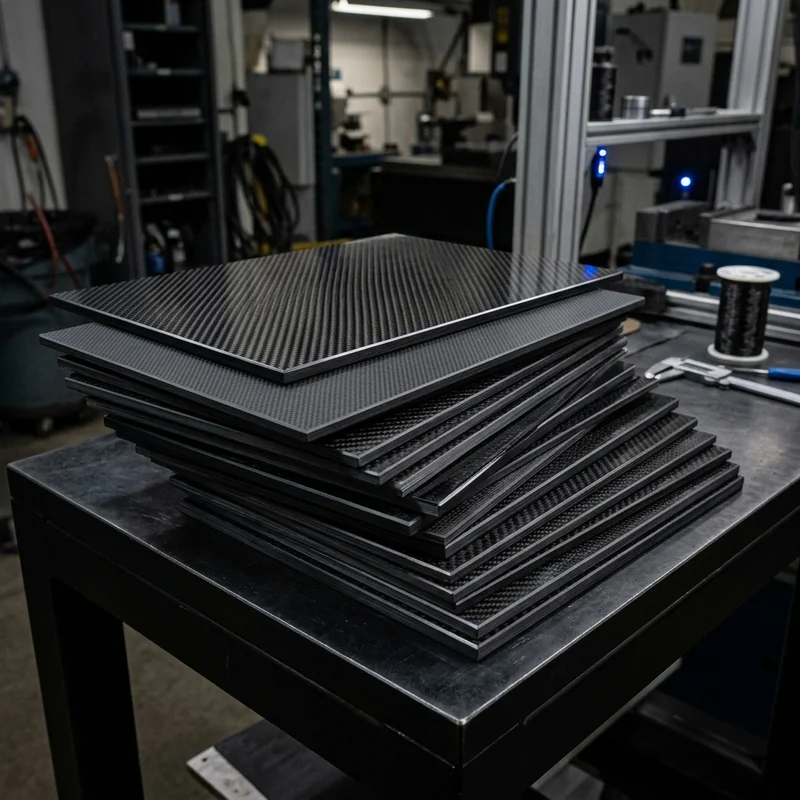
Carbon fiber standard plate-3k stripe
Lightweight, ultra-rigid standard sheets for drone fuselages, robot housings, facades and structural applications.
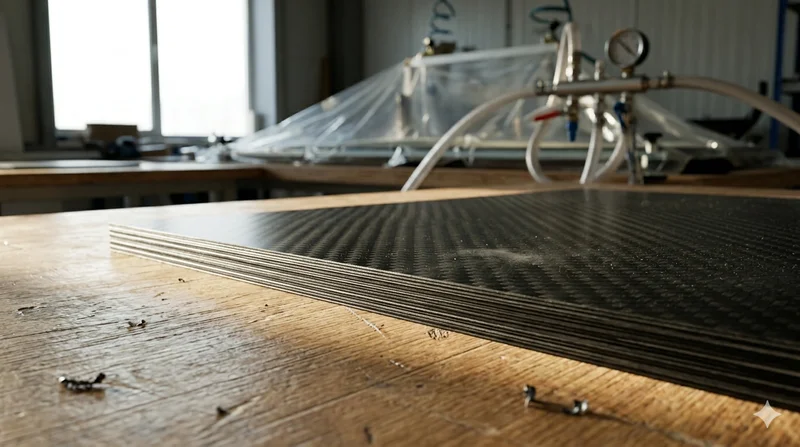
Carbon Fiber Plate — 3K Twill T700 3.0mm
Medium-thickness 3.0mm carbon fiber plate offering significantly higher load capacity while maintaining attractive 3K twill finish. Suitable for structural brackets, reinforcement plates, and load-bearing panels.
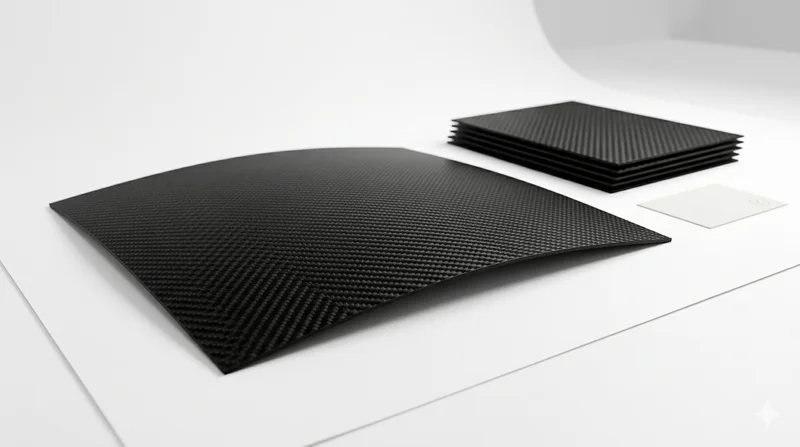
Carbon Fiber Plate — 3K Twill T700 1.5mm
Thin 1.5mm carbon fiber plate with 3K twill weave surface. Lightweight and stiff, commonly used for covers, panels, drone bodies, and applications requiring a premium aesthetic appearance.
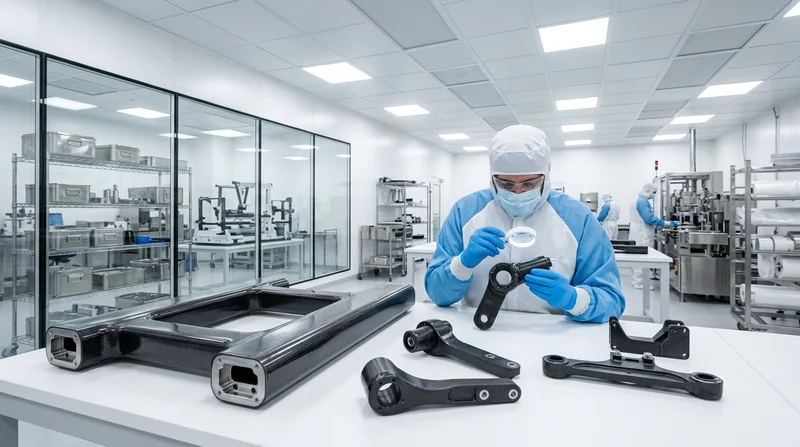
Custom Carbon Fiber Medical Device Components
Medical-grade carbon fiber components manufactured for imaging equipment, surgical instruments, and patient support systems. Carbon fiber's radiolucency (X-ray transparency) and high strength-to-weight ratio make it ideal for CT scanner beds, wheelchair frames, surgical robot arms, and MRI-compatible accessories. Biocompatible resin systems available.
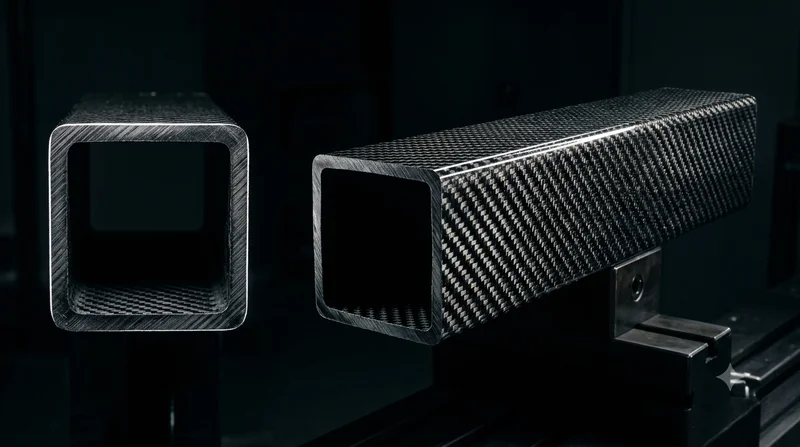
Square Carbon Fiber Tube — 3K Twill T700
Square cross-section carbon fiber tube manufactured with 3K twill weave for torsional strength. Preferred for structural frames, trusses, and support columns where rectangular geometry offers design flexibility.