

A well-written carbon fiber product specification is the single most important document in any B2B composite materials transaction. Poorly defined specifications are responsible for an estimated 35–40% of supplier-buyer disputes in the global carbon fiber market.
Introduction
A well-written carbon fiber product specification is the single most important document in any B2B composite materials transaction. Poorly defined specifications are responsible for an estimated 35–40% of supplier-buyer disputes in the global carbon fiber market (CompositesWorld Supply Chain Survey, 2025), costing the industry over $180 million annually in rework, rejected shipments, and delayed delivery penalties. This guide provides both buyers and suppliers with a structured framework for drafting, reviewing, and negotiating carbon fiber product specifications that minimise ambiguity and ensure manufacturing feasibility.
Whether you are a procurement engineer sourcing prepreg for aerospace components or a manufacturer quoting a high-volume automotive CFRP order, the principles in this guide apply across all grades and application domains.
Core Specification Parameters
| Parameter Group | Example Parameters | Why It Matters |
|---|---|---|
| Fibre type & grade | Toray T700SC 12K, Mitsubishi TR50S 24K, Zoltek PX35 50K | Determines tensile strength, modulus, and cost |
| Sizing chemistry | 1.0% epoxy-compatible sizing; 0.5% PA-sizing | Affects fibre-matrix adhesion and composite properties |
| Tow architecture | Standard untwisted tow, spread tow, woven fabric style 284 | Impacts drapability, ply thickness, and areal weight |
| Areal weight tolerance | 200 ± 6 g/m² (ISO 4605) | Variability directly affects laminate thickness control |
| Resin system (prepreg) | CYCOM® 977-2 BMI resin, 38% resin content (ASTM D3529) | Dictates cure cycle, Tg, and mechanical performance |
| Mechanical properties (laminate) | Tensile: 2,850 MPa (min); Modulus: 135 GPa (min) — 0° direction | Verifies that the delivered material meets design allowables |
| Physical dimensions | Roll width: 1,270 ± 3 mm; Roll length: 100 +1/−0 m | Roll-to-roll consistency affects automated layup |
| Packaging & shelf life | Sealed PE-lined carton, −18°C storage, 12-month frozen life | Cold chain logistics must be contractually agreed |
Negotiation Framework
- Tolerance band width: Buyers want tight tolerances (±2% modulus for aerospace); suppliers want wider bands (±5%). A common compromise is to specify tight tolerances on critical dimensions and wider tolerances on non-critical parameters, with a corresponding price differential.
- Sizing type and percentage: The buyer's matrix supplier may recommend a specific sizing chemistry. The fibre supplier may need to modify their production line, incurring a minimum order quantity (MOQ) of 500 kg or more for a custom sizing run.
- Test frequency and cost allocation: Full mechanical property testing per lot can add 15–25% to the material cost. A typical B2B compromise: the supplier conducts in-process SPC with reduced end-of-line testing, and the buyer performs an annual qualification audit with quarterly witness testing at a shared-cost model.
- MOQ and split-lot shipments: Fibre manufacturers typically require a full-spool MOQ (e.g., 46 kg for a 12K 1,000 m spool). Buyers needing smaller quantities should negotiate for split-lot surcharges rather than full MOQ pricing.
- Non-conformance handling: Define the timeframe for reporting defects (typically 15 business days), the re-test protocol (ASTM E178 for outlier detection), and the replacement or credit terms. Agree in advance whether the buyer can use a non-conforming lot under a deviation permit.
FAQ
Q: Should I specify fibre properties or laminate properties in my specification?
Specify both. Fibre properties define the incoming raw material quality; laminate properties define what the cured composite will deliver in service. A common mistake is to specify only fibre properties and assume laminate properties will follow — this ignores the critical role of sizing, fibre-matrix adhesion, and prepreg quality variability.Q: How do I handle a situation where a supplier's standard product doesn't fully meet my specification?
Request a "gap analysis" comparing your specification point-by-point against the supplier's published data sheet. For non-critical deviations, negotiate a deviation permit. For critical gaps, consider a material qualification programme (3–6 months, 4–6 batches) at shared cost before committing to production orders.Q: What is the best testing lab certification to require from a carbon fibre supplier?
The supplier's testing facility should be ISO 17025 accredited for the specific test methods referenced in the specification. For aerospace applications, Nadcap accreditation for materials testing is mandatory.Q: When is a prequalification visit to the supplier's facility advisable?
A prequalification audit is strongly recommended when: the material is for a safety-critical application; the supplier has not previously provided materials to your industry; your annual order value exceeds $500,000; the specification includes custom sizing or a non-standard resin system.Q: Can a digital specification include embedded test data validation?
Yes. Modern B2B composite procurement increasingly uses digital specification platforms that embed electronic certificates of conformance with machine-readable test results. ISO 10303 (STEP AP242) provides a standardised model for composite material data exchange.Part of topic
Related Articles
- Recycled Carbon Fiber Market Forecast 2030: Technology Maturity and Commercialization Path
- South Korea Carbon Fiber Market 2026: Hydrogen Economy and Shipbuilding Innovation
- Wind Turbine Blade Leading Edge Protection 2026: Polyurethane, Tape, and Metallic Shield Solutions
- China Carbon Fiber Overcapacity 2026: Price War Impact and Industry Consolidation
- India Carbon Fiber Market 2026: Wind Energy, Aerospace, and Defense Expansion
- PAN Precursor Market 2026: Acrylonitrile Supply and Carbon Fiber Cost Structure
Interested in Our Products?
Contact our team for competitive pricing and technical specifications.
Get a QuoteRelated Products
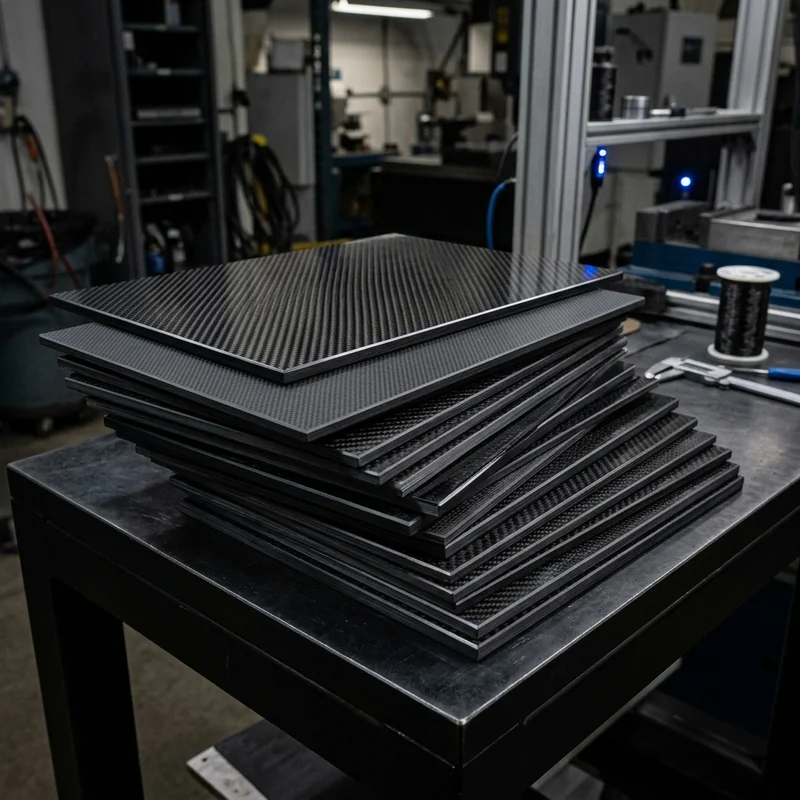
Carbon fiber standard plate-3k stripe
Lightweight, ultra-rigid standard sheets for drone fuselages, robot housings, facades and structural applications.

Carbon Fiber Plate — 3K Twill T700 1.5mm
Thin 1.5mm carbon fiber plate with 3K twill weave surface. Lightweight and stiff, commonly used for covers, panels, drone bodies, and applications requiring a premium aesthetic appearance.
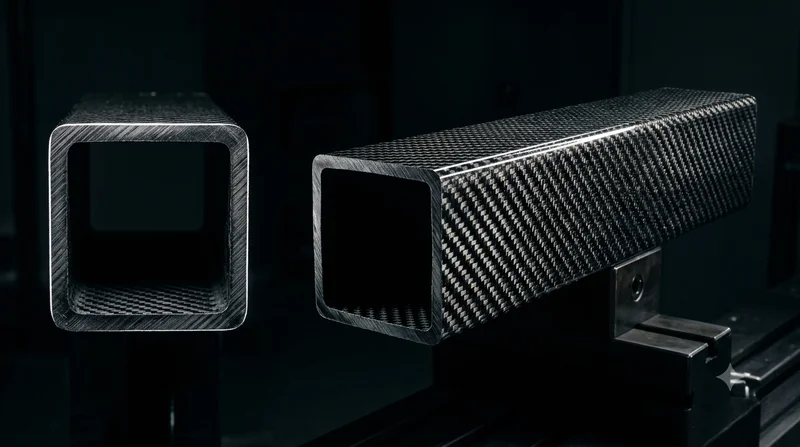
Square Carbon Fiber Tube — 3K Twill T700
Square cross-section carbon fiber tube manufactured with 3K twill weave for torsional strength. Preferred for structural frames, trusses, and support columns where rectangular geometry offers design flexibility.
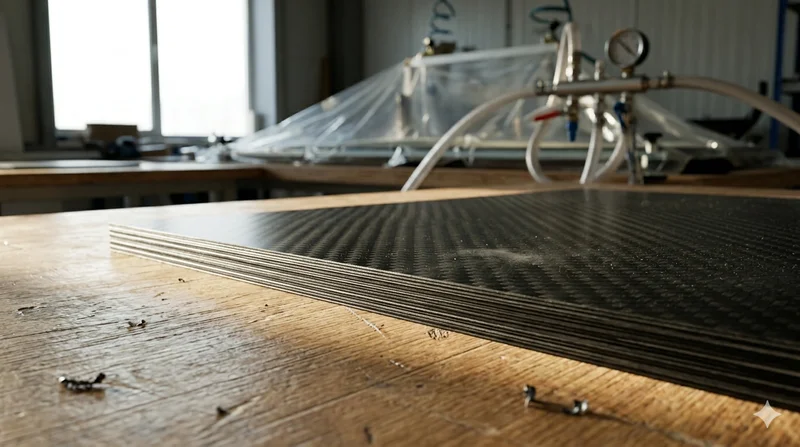
Carbon Fiber Plate — 3K Twill T700 3.0mm
Medium-thickness 3.0mm carbon fiber plate offering significantly higher load capacity while maintaining attractive 3K twill finish. Suitable for structural brackets, reinforcement plates, and load-bearing panels.
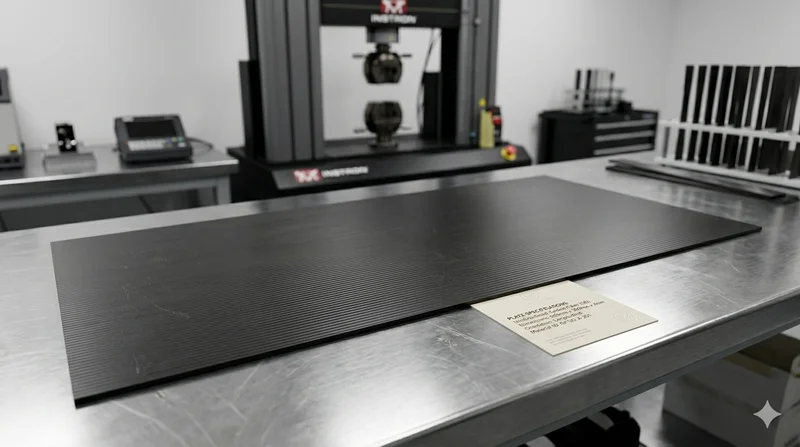
Carbon Fiber Plate — UD Unidirectional T700
Unidirectional carbon fiber plate with all fibers oriented in a single direction for maximum strength along the fiber axis. Essential for structural reinforcements, splints, and applications where load direction is predictable.