
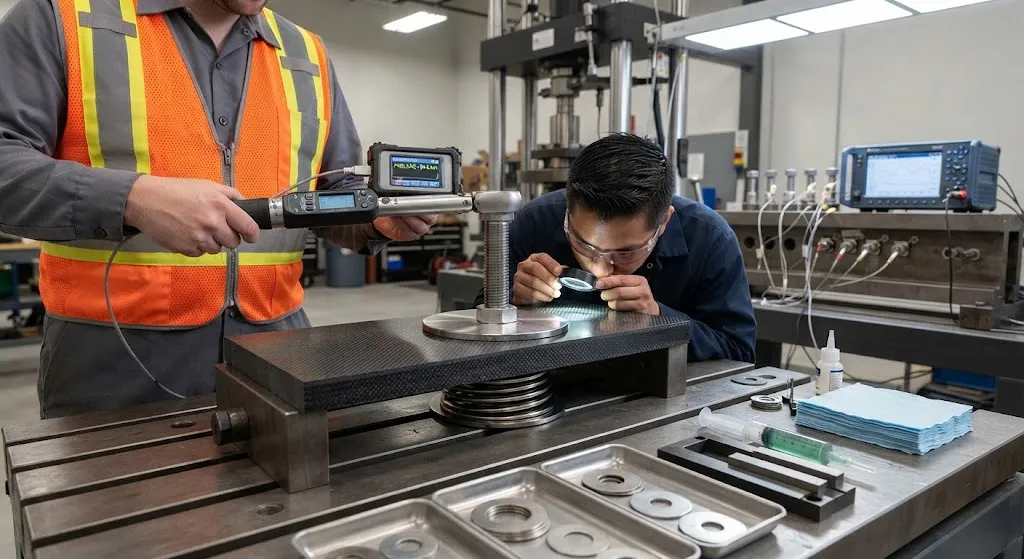
A bolted composite joint looks permanent the day it is assembled, but it is quietly losing its clamp load from the first torque cycle. When a bolt is torqued against a carbon fiber laminate, the polymer matrix beneath the washer compresses, and because epoxy is viscoelastic it continues
Introduction
A bolted composite joint looks permanent the day it is assembled, but it is quietly losing its clamp load from the first torque cycle. When a bolt is torqued against a carbon fiber laminate, the polymer matrix beneath the washer compresses, and because epoxy is viscoelastic it continues to deform slowly under sustained pressure. Hole walls loaded in bearing creep in the same way. The practical consequence is torque relaxation: the preload drops, sometimes by 10-20 percent within the first hour, and by smaller amounts over weeks and months, until creep slows to a near plateau. If that decay is not accounted for, joints loosen under vibration, fatigue life falls, and critical fasteners in wind turbine roots, aircraft attach fittings and vehicle suspension brackets drift out of specification.
This article explains the mechanisms of creep and relaxation in composite bolted joints, compares washer systems and joint configurations with measured data, and provides a practical framework for washer selection, preload strategy and re-torque intervals.
Why Composite Joints Relax: Matrix Creep and Bearing Pressure
Metallic joints relax mainly through thread settlement and gasket creep, both small. Composite joints add a much larger source: the polymer matrix itself. Epoxy and thermoplastic matrices behave viscoelastically, meaning deformation has an elastic part that is recovered and a time-dependent part that accumulates. Under the high local pressure of a bolt head or washer — easily 100-300 MPa under a standard washer — the matrix compresses, redistributes load to neighboring fibers, and slowly densifies. The same happens in bearing on the hole edge, where the laminate bears against the bolt shank.
The consequence is a characteristic relaxation curve. Joints typically lose 10-20 percent of initial preload in the first hour, then a further 5-10 percent over the first week, after which the rate decays roughly logarithmically. The total relaxation that matters for design — the plateau reached after months of service — depends strongly on matrix type, temperature, moisture content and the local pressure level. Higher bearing pressure drives faster creep, which is why under-sized washers create disproportionately large relaxation.
Assembled Washer and Joint Configurations: Data Comparison
The table below compares typical clamp-load retention for common washer and preload strategies on a CFRP joint, normalized to the preload measured immediately after torquing:
| Configuration | Clamp load after 1 h | Clamp load after 1,000 h | Re-torque needed before service |
|---|---|---|---|
| Standard steel washer, torqued wet | 82% | 72-75% | Yes, after bedding-in |
| Standard washer, torqued dry | 85% | 76-79% | Yes, after bedding-in |
| Oversized load-spreading washer | 88% | 80-83% | Optional |
| Belleville spring washer stack | 93% | 88-90% | No |
| Belleville + liquid shim on panel side | 94% | 90-92% | No |
The data shows the two levers that matter. First, spreading the bearing load lowers the local pressure under the washer, which slows matrix creep: an oversized washer roughly halves the pressure and therefore roughly doubles the time constant of relaxation. Second, a compliant element such as a Belleville washer absorbs the relaxation as reduced spring deflection rather than reduced clamp load — the spring pushes back as the matrix creeps, keeping residual preload high. The best results come from combining both: a Belleville stack over an oversized washer, with a load-spreading spacer against the composite.
Washer Systems and Preload Strategy
Washer selection for composite joints follows five rules that are worth treating as fixed design constraints:
- Load spreading first: Use the largest practical washer or a bonded metallic doubler under the head and nut; the goal is to keep bearing pressure below roughly 100-150 MPa on the laminate surface.
- Belleville washers for critical joints: A stack of Belleville springs maintains preload across creep and thermal cycling; size the stack so its travel exceeds the expected relaxation, typically 0.1-0.3 mm of joint compression.
- Liquid shim at bearing interfaces: Where laminates do not sit perfectly flat, a cured liquid shim on the panel side prevents point loading and edge crushing under the washer lip.
- Control friction scatter: Lubricated threads reduce the torque-to-preload scatter that hides early relaxation; document the friction coefficient used in the assembly specification.
- Re-torque once after bedding-in: For applications without Bellevilles, one re-torque pass hours after initial assembly recovers most of the first-day relaxation at negligible cost.
Preload strategy follows from the same logic. Torque-to-yield and torque-angle methods that work on steel joints give poor control on composite joints because the joint stiffness itself relaxes; producers should specify either a re-torque pass or a compliant washer, and where preload is safety-critical, use a direct load measurement — a load cell, ultrasonically monitored bolt, or a calibrated stack height check — rather than trusting torque alone.
Re-Torque Intervals and Long-Term Inspection
Re-torque practice depends on the failure consequence. For non-critical joints, a single re-torque pass 24 hours after initial assembly — after the steep part of the relaxation curve — restores most of the lost preload, and the joint then settles at the plateau. For critical joints, operators schedule re-torque at defined intervals or switch to Belleville-based designs that eliminate the need. In wind energy, blade root T-bolt assemblies are typically re-torqued after the first 1-3 operating months, then checked periodically with hydraulic tensioning that measures bolt extension rather than torque. In aerospace, critical attach fittings are tension-controlled on assembly and monitored through bolt-stretch measurements during overhaul intervals.
Temperature and moisture accelerate creep, so joints that see hot, humid service relax faster and need tighter inspection plans. The inspection signature of a relaxing joint is a drop in preload with no corrosion and no change in torque at the nut — the classic sign that the composite, not the fastener, has moved. Re-torqueing at that point is effective, but re-torqueing repeatedly without addressing the root cause invites thread galling; the durable fix is a compliant element or an oversized bearing area, decided at design time rather than in the field.
Frequently Asked Questions
Is torque relaxation in composite joints really that fast?
Yes in absolute terms, but it is well understood. Measurements consistently show 10-20 percent preload loss in the first hour after torquing a CFRP joint, as the viscoelastic matrix compresses under the washer and at the hole edge. The rate then falls off roughly logarithmically, so most of the total relaxation happens early. Designers account for this by pretensioning to a higher initial load, specifying a re-torque pass after bedding-in, or using a compliant washer. The important nuance is that the fast initial drop is repeatable and predictable — it is not a defect, it is material behavior that the joint design must absorb.
What is the best washer for a carbon fiber bolted joint?
There is no single best washer, but the combination that performs best in tests is a Belleville spring stack over an oversized load-spreading washer, with a liquid shim under the bearing face if the laminate surface is not perfectly flat. The oversized washer limits bearing pressure and slows matrix creep; the Belleville stack converts relaxation into spring deflection and keeps residual preload high; the shim prevents edge crushing. For non-critical joints where cost dominates, an oversized standard washer with one re-torque pass after 24 hours is a practical and proven alternative.
How do you know when a composite joint needs re-torquing?
The reliable signal is actual preload, not torque. Because friction scatter makes torque an unreliable proxy on composite joints, critical joints are re-torqued on a schedule — typically after 24 hours for a single bedding-in pass, or after the first operating months for wind and heavy-equipment joints — or monitored directly with load cells, bolt-stretch measurements or ultrasonic bolt gauges. As a practical rule, if a joint shows no corrosion and no visible damage but the nut turns freely below its original mark, the composite has relaxed and the joint should be re-torqued to the specified preload, not just to the specified torque.
Conclusion
Composite bolted joints relax because the matrix creeps, and the first hour takes away 10-20 percent of the preload before the rate decays. The design response is not to fight the material but to absorb its behavior: spread the bearing load with oversized washers to slow creep, add a Belleville spring stack to hold residual preload, use liquid shims at imperfect interfaces, and schedule a bedding-in re-torque or a direct tension check where safety matters. Joints designed this way hold their clamp load for decades of service with predictable inspection intervals.
For design teams specifying reliable composite assemblies, the checklist is bearing pressure, washer compliance and preload verification. Browse our carbon fiber plate, tube and fastening-compatible laminate products, or contact our engineering team for joint design and testing support.
Part of topic
Related Articles
- Bio-Based Carbon Fiber Precursors: Lignin and Polyethylene for Low-Cost Production
- Large-Tow Carbon Fiber Cost Analysis: 48K vs 60K Price-Performance Comparison
- Carbon Fiber-Resin Interface Bonding: Surface Treatment and Coupling Agent Optimization
- Digital Twin for Carbon Fiber Manufacturing: Real-Time Process Monitoring and Defect Prevention
- Thermoplastic Carbon Fiber Welding for Automotive: Ultrasonic and Induction Welding Process Windows
- Large-Tow Carbon Fiber Wet Spinning: Process Optimization for 48K/60K Production Efficiency
Interested in Custom Carbon Fiber Products?
Contact our team for competitive pricing and technical specifications.
Get a QuoteRelated Products
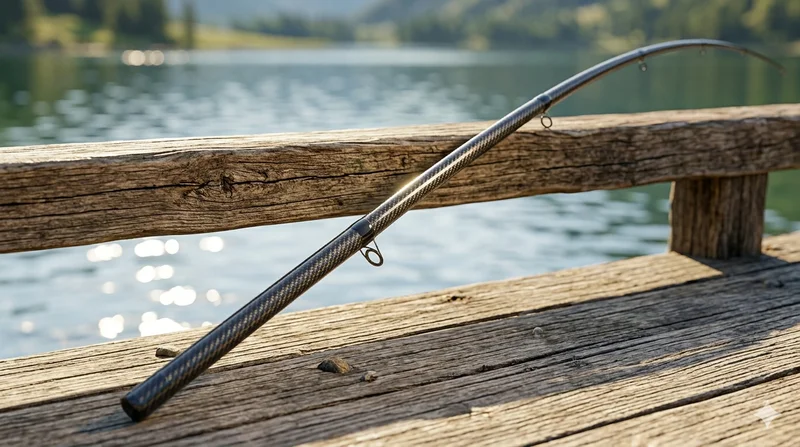
Carbon Fiber Fishing Rod Blank
High-quality carbon fiber fishing rod blank manufactured from multiple grades of Toray carbon fiber cloth. Available in a wide range of lengths, powers, and actions for freshwater and saltwater applications. Suitable for OEM rod building.
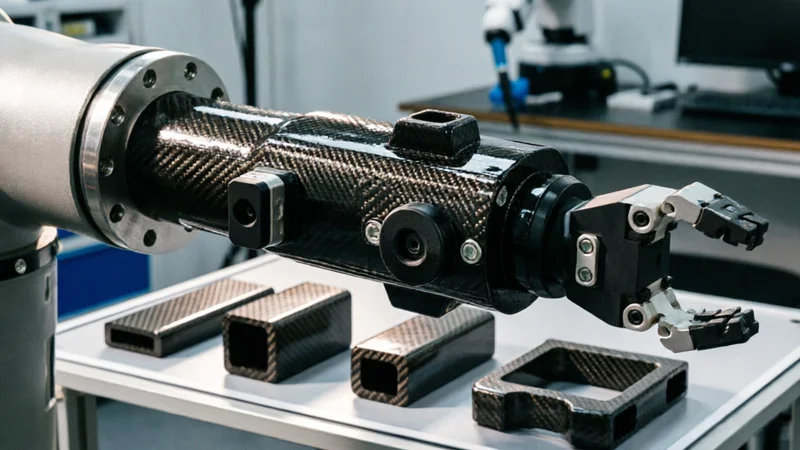
Carbon Fiber Robot End Effector Link — Custom Shape & Sensor Integration
Custom-shaped carbon fiber end effector links for robotic arms. Designed for automation integrators and research labs requiring lightweight, rigid connections between the robot wrist and gripper/tool. Can incorporate sensor mounting bosses, cable routing channels, and quick-change interfaces.
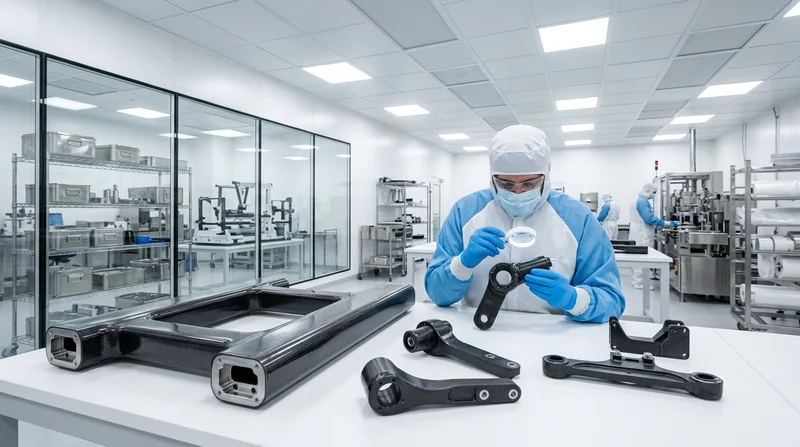
Custom Carbon Fiber Medical Device Components
Medical-grade carbon fiber components manufactured for imaging equipment, surgical instruments, and patient support systems. Carbon fiber's radiolucency (X-ray transparency) and high strength-to-weight ratio make it ideal for CT scanner beds, wheelchair frames, surgical robot arms, and MRI-compatible accessories. Biocompatible resin systems available.

Custom Carbon Fiber Musical Instrument Parts
Carbon fiber components for musical instrument manufacturing offering superior dimensional stability, low weight, and consistent acoustic properties. We produce carbon fiber bows, guitar necks, violin chin rests, drum shells, and wind instrument bodies. Carbon fiber instruments are immune to humidity changes and temperature fluctuations that affect wooden instruments.
Carbon Fiber Tablet Case — Ultra-Light Protective Shell
Lightweight carbon fiber protective case for tablets and iPads. Molded from T700 3K prepreg with reinforced corner protection. Adds minimal weight while providing superior rigidity and drop protection compared to polycarbonate or silicone cases. Ideal for field workers, enterprise deployments, and professionals requiring durable tablet protection.