
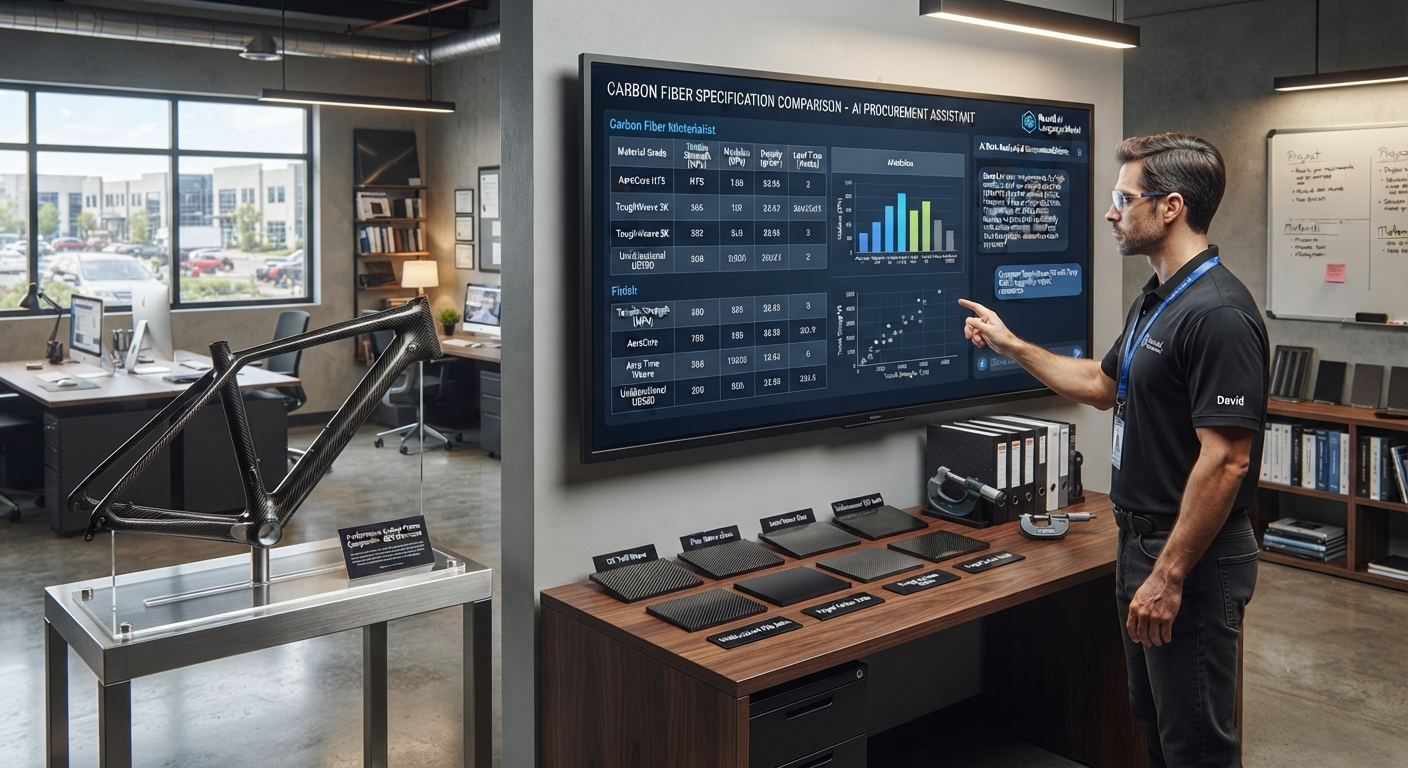
The carbon fibre supply chain is increasingly complex. A B2B buyer evaluating quotes from suppliers in China, Japan, Europe, and North America must reconcile tensile modulus values measur
Introduction
The carbon fibre supply chain is increasingly complex. A B2B buyer evaluating quotes from suppliers in China, Japan, Europe, and North America must reconcile tensile modulus values measured in GPa, filament counts (1K to 50K+), sizing chemistries, weave patterns, and resin compatibility — all while cross-referencing multiple manufacturer datasheets. In 2025–2026, a new tool has entered the procurement workflow: large language models (LLMs) capable of parsing, comparing, and explaining technical specification data at a level that rivals a junior composites engineer.
This article provides a practical framework for B2B buyers to use AI tools — including GPT-4o, Claude, DeepSeek, and domain-specific LLMs — to accelerate carbon fibre material selection, reduce specification errors, and negotiate more effectively with suppliers. We include real examples of specification comparison, a decision matrix for common aerospace vs. industrial grades, and a detailed cost-performance analysis across the major fibre producers.
Understanding Carbon Fibre Specifications: A Quick Reference
Before evaluating AI tools, a B2B buyer must understand the key parameters that differentiate carbon fibre grades. The table below summarises the primary specification categories and their relevance to procurement decisions:
| Parameter | Unit | Typical Range | Procurement Relevance |
|---|---|---|---|
| Tensile modulus | GPa | 220–950 GPa | Determines stiffness-to-weight ratio. Standard modulus (230 GPa) for most industrial uses; intermediate (290 GPa) for aerospace; high modulus (350+ GPa) for space structures. |
| Tensile strength | MPa | 3,500–7,000 MPa | Primary indicator of load-bearing capacity. T700-grade (4,900 MPa) is the most common industrial standard. T1100 (7,000 MPa) is used in defence and premium sporting goods. |
| Filament count | K (thousands) | 1K–50K | 1K–3K for woven aerospace fabrics; 12K–24K for industrial pultrusion and filament winding; 50K for cost-sensitive wind energy blades. |
| Density | g/cm³ | 1.75–1.82 g/cm³ | Consistent across PAN-based fibres (~1.81 g/cm³). Pitched-based fibres are denser (2.0+ g/cm³) with higher modulus. |
| Sizing type / content | % by mass | 0.5–2.0% | Critical for resin compatibility. Epoxy sizing (most common), polyurethane, nylon, or PAEK sizing for thermoplastic matrices. Mismatch causes poor fibre-matrix bonding. |
| Carbon content | % | 92–99.9% | Higher carbon content improves conductivity and thermal stability. Aerospace grades: ≥99.5%. |
| Filament diameter | µm | 5–7 µm | Thinner filaments (5 µm) give better fatigue life; thicker (7 µm) offer lower cost per filament. |
When comparing suppliers across regions, a critical inconsistency arises: Japanese manufacturers (Toray, Teijin, Mitsubishi) typically report properties in SI units with ISO 10618 test methods, while Chinese manufacturers (Zhongfu Shenying, Weihai Guangwei, Jiangsu Hengshen) increasingly follow the same standards but may report minimum guaranteed values versus typical values. An LLM trained on these norms can flag discrepancies instantly.
How LLMs Improve Specification Comparison
Five specific use cases where LLMs outperform traditional spreadsheet-based comparison for carbon fibre procurement:
- Cross-datasheet reconciliation: An LLM can ingest PDF datasheets from 5–10 manufacturers and produce a normalised comparison table with units converted to a common standard. Example: converting JIS K 7074 test results to ASTM D3039 equivalents while flagging test-method differences.
- Grade substitution analysis: "Find a Chinese equivalent to Toray T700SC-12K-50C with similar tensile modulus, strength, and epoxy-compatible sizing." The LLM cross-references available grades from Zhongfu Shenying SYT45, Guangwei GW400G, and Hengshen HS-12K and ranks them by similarity score.
- Quantity-dependent pricing estimation: Using public tender data and historical shipping indices, an LLM can estimate whether a supplier's CFR price per kilogram (ex-works China vs. CIF Hamburg) is competitive for the buyer's volume tier.
- RoHS / REACH compliance verification: An LLM with retrieval-augmented generation (RAG) can confirm whether a specific sizing chemistry or fibre finish meets EU REACH, China GB/T, and US DOT regulatory requirements simultaneously.
- Technical specification drafting: Generate a procurement specification document that includes required test methods, acceptance criteria (AQL), packaging standards, and certificate-of-conformance templates — in English, Chinese, or Japanese.
Head-to-Head: Standard Industrial Carbon Fibre Grades
The following table compares the four most widely sourced carbon fibre grades for industrial B2B applications, with pricing data valid for mid-2026:
| Grade | Manufacturer | Filament | Tensile Modulus (GPa) | Tensile Strength (MPa) | Sizing | Price Range ($/kg, CIF Asia) |
|---|---|---|---|---|---|---|
| T700SC-12K-50C | Toray (Japan) | 12K | 230 | 4,900 | Epoxy 1.0% | $22–28 |
| SYT45-12K | Zhongfu Shenying (China) | 12K | 228 | 4,800 | Epoxy 1.2% | $14–18 |
| GW400G-12K | Weihai Guangwei (China) | 12K | 235 | 4,900 | Epoxy 1.0% | $15–19 |
| HS-12K-E | Jiangsu Hengshen (China) | 12K | 230 | 4,700 | Epoxy 0.8% | $13–17 |
The data shows that Chinese-manufactured grades now offer near-identical tensile modulus and strength to Toray T700SC at a 30–45% price discount. The primary differentiators are sizing consistency, batch-to-batch CV (coefficient of variation), and the availability of high-modulus variants above 300 GPa — areas where Japanese manufacturers still maintain a lead. An LLM can weight these factors by the buyer's application requirements and suggest the optimal cost-performance trade-off.
Using LLMs for Cost-Performance Optimisation
Beyond simple grade comparison, LLMs can model the total cost of ownership for carbon fibre across the supply chain. Consider a B2B buyer sourcing 50 tonnes of 12K carbon fibre for pressure vessel (Type IV hydrogen tank) manufacturing:
Prompt example for an LLM: "Compare the total landed cost per vessel for Type IV hydrogen tank production using Toray T700SC at $25/kg vs. Zhongfu Shenying SYT45 at $16/kg. Include: fibre cost per tank (16 kg fibre per tank), transport from Shanghai port to Rotterdam, EU import duty (3.7% on Chinese carbon fibre vs. 0% on Japanese under EU-Japan EPA), and the risk-adjusted cost of 2% higher batch-to-batch CV requiring additional NDT testing. Assume annual volume of 50,000 tanks."
The LLM returns a model showing that despite the 36% raw material savings, the Chinese option carries an additional $1.80/tank in testing costs and $2.10/tank in tariff liability, narrowing the effective saving to $5.10/tank — still substantial at $255,000 annually across 50,000 tanks. The LLM also flags that for hydrogen storage applications, the 0.3% difference in tensile modulus translates to negligible wall-thickness change, making the Chinese grade technically equivalent for this use case.
Limitations and Risk Management
While LLMs are powerful specification tools, B2B buyers must understand their limitations:
- Outdated training data: Most publicly available LLMs have training cutoffs in late 2023 or early 2024. New product grades released in 2025–2026 may not be in training data. Use RAG (retrieval-augmented generation) to feed current datasheets.
- Hallucination of specification values: LLMs can generate plausible-looking but incorrect mechanical properties. Always verify LLM-generated comparisons against original manufacturer datasheets.
- Pricing volatility: Carbon fibre spot prices fluctuated by ±18% in 2025 due to shifts in wind energy demand and PAN precursor availability. LLM pricing models are only as current as the data fed to them.
- Language nuance: Chinese technical specifications sometimes use GB/T testing methods that report slightly different values than ISO or ASTM equivalents. An LLM unaware of these method differences may overstate or understate performance gaps.
Frequently Asked Questions
Which LLM is best for comparing carbon fibre specifications?
For structured datasheet comparison, GPT-4o and Claude 3.5 Sonnet both perform well at parsing tables and converting units. DeepSeek offers stronger Chinese-language technical reading comprehension, making it preferable when comparing Chinese manufacturer datasheets in their original language against English-language Japanese standards. For RAG workflows, Claude with a custom knowledge base of manufacturer datasheets provides the most reliable outputs.
Can AI replace a composites engineer in the procurement process?
No. LLMs augment — not replace — specialised engineering review. They are most effective at the initial screening stage, reducing a 40-hour datasheet review to 2–4 hours. Final material qualification, prototype testing, and supplier audit still require a qualified composites engineer. The cost saving is in time-to-quote reduction, not elimination of human oversight.
What is the best approach to building an AI-assisted procurement workflow?
A three-tier approach: (1) Use an LLM chat interface for rapid initial comparisons and drafting; (2) Build a RAG pipeline with your preferred suppliers' datasheets stored as vector embeddings for consistent, source-grounded analysis; (3) Implement a verification step where LLM outputs are checked against a structured database of mechanical properties before being used in purchase orders. YongXian CarbonFiber offers a specification-matching API for B2B buyers using this workflow.
How do Chinese carbon fibre grades compare to Toray in 2026?
For standard modulus (230 GPa) and intermediate modulus (290 GPa) grades, Chinese manufacturers such as Zhongfu Shenying, Weihai Guangwei, and Jiangsu Hengshen offer technically equivalent products at 30–45% lower pricing. The gap narrows at high modulus (350+ GPa) and ultra-high tensile strength (6,000+ MPa) grades, where Toray and Teijin maintain a 15–25% performance lead. In 2025–2026, Chinese producers have accelerated their high-end R&D, with several new HM-grade fibres in pilot production.
What is the minimum order quantity for Chinese carbon fibre suppliers?
For standard 12K and 24K industrial grades, Chinese carbon fibre manufacturers typically quote MOQ of 500 kg–1,000 kg per specification per shipment. For custom sizing chemistries or spool formats, MOQ rises to 2,000–5,000 kg. Trial orders of 50–100 kg are available through sourcing partners such as YongXian CarbonFiber, which aggregates demand across multiple B2B buyers to reach production MOQ.
Related Articles
- Recycled Carbon Fiber Market Forecast 2030: Technology Maturity and Commercialization Path
- South Korea Carbon Fiber Market 2026: Hydrogen Economy and Shipbuilding Innovation
- Wind Turbine Blade Leading Edge Protection 2026: Polyurethane, Tape, and Metallic Shield Solutions
- China Carbon Fiber Overcapacity 2026: Price War Impact and Industry Consolidation
- India Carbon Fiber Market 2026: Wind Energy, Aerospace, and Defense Expansion
- PAN Precursor Market 2026: Acrylonitrile Supply and Carbon Fiber Cost Structure
Interested in Our Products?
Contact our team for competitive pricing and technical specifications.
Get a QuoteRelated Products
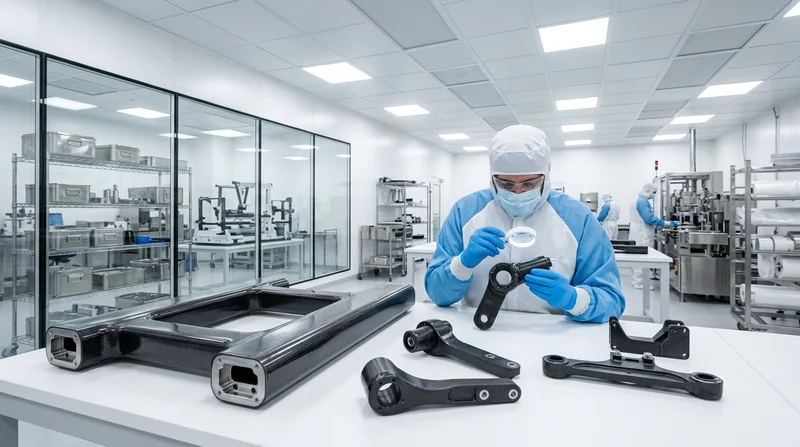
Custom Carbon Fiber Medical Device Components
Medical-grade carbon fiber components manufactured for imaging equipment, surgical instruments, and patient support systems. Carbon fiber's radiolucency (X-ray transparency) and high strength-to-weight ratio make it ideal for CT scanner beds, wheelchair frames, surgical robot arms, and MRI-compatible accessories. Biocompatible resin systems available.
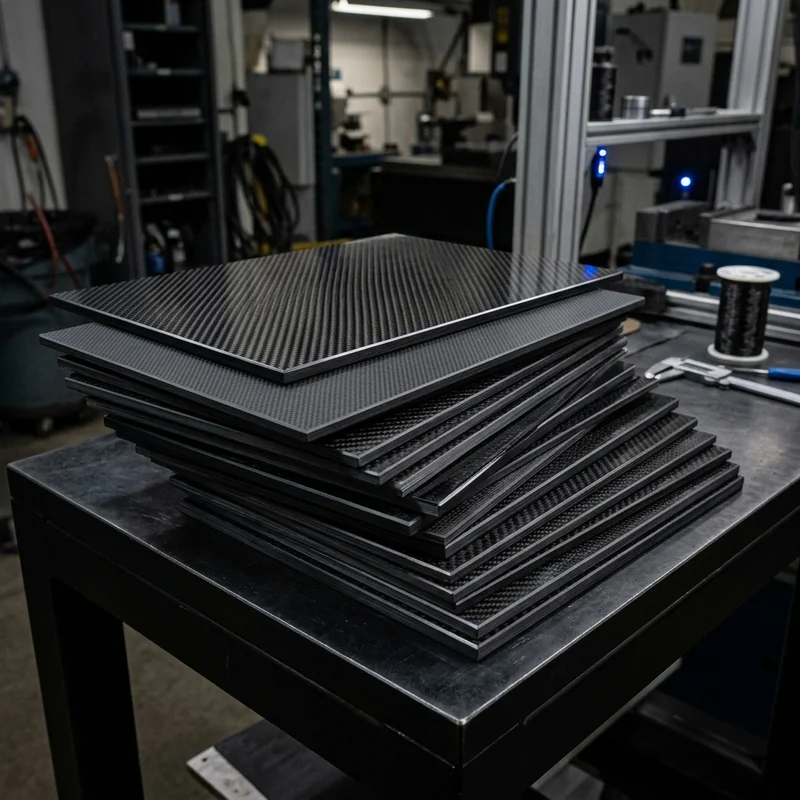
Carbon fiber standard plate-3k stripe
Lightweight, ultra-rigid standard sheets for drone fuselages, robot housings, facades and structural applications.

Square Carbon Fiber Tube — 3K Twill T700
Square cross-section carbon fiber tube manufactured with 3K twill weave for torsional strength. Preferred for structural frames, trusses, and support columns where rectangular geometry offers design flexibility.

Carbon Fiber Plate — 3K Twill T700 3.0mm
Medium-thickness 3.0mm carbon fiber plate offering significantly higher load capacity while maintaining attractive 3K twill finish. Suitable for structural brackets, reinforcement plates, and load-bearing panels.

Carbon Fiber Plate — 3K Twill T700 1.5mm
Thin 1.5mm carbon fiber plate with 3K twill weave surface. Lightweight and stiff, commonly used for covers, panels, drone bodies, and applications requiring a premium aesthetic appearance.