
Carbon fiber reinforced plastic (CFRP) is entering its end-of-life wave. The first generation of large wind turbine blades, aircraft components, and automotive parts is being decommissioned, and the industry faces a hard question: what happens to the fiber after the part is gone? The an
Introduction
Carbon fiber reinforced plastic (CFRP) is entering its end-of-life wave. The first generation of large wind turbine blades, aircraft components, and automotive parts is being decommissioned, and the industry faces a hard question: what happens to the fiber after the part is gone? The answer matters more than ever because compliance is now the driver. EU Regulation 2026/718 mandates that 70% of wind turbine blade mass be recycled, and similar extended producer responsibility rules are being drafted across the Asia-Pacific region. Against this backdrop, global CFRP recycling capacity of approximately 6,120 tonnes per year looks modest relative to the estimated waste volumes arriving this decade.
Recyclers and blade manufacturers evaluating their options converge on the same shortlist: pyrolysis, solvolysis, and mechanical grinding, followed by fiber remanufacturing into usable products. The processes differ dramatically in the properties they retain, the capital they require, and the markets they serve. This article compares the three routes on concrete engineering terms, so that procurement and engineering teams can match a recycling process to their retained-property requirements.
Why CFRP Recycling Became a Compliance Question
For most of the industry's history, composite waste was landfilled or incinerated because the energy cost of reclaiming carbon fiber exceeded the value of the recovered material. That calculus has changed for three reasons. First, regulation: EU Regulation 2026/718 sets a 70% recycling-by-mass target for wind blades, with landfill bans phased in from 2027. Second, supply: recycled carbon fiber costs roughly one-third to one-half of virgin aerospace-grade fiber, a spread that makes reclaimed tow attractive for non-flight-critical applications. Third, volume: tens of thousands of blades are scheduled for decommissioning before 2035, and each 60-meter blade contains 15-25 tonnes of composite material.
The result is that recycling is no longer an environmental add-on but a procurement input. Process selection now depends on measurable engineering outcomes: how much tensile strength survives, whether fiber length is preserved, and whether the resin fraction can be recovered as chemical feedstock.
Pyrolysis: The Volume Workhorse
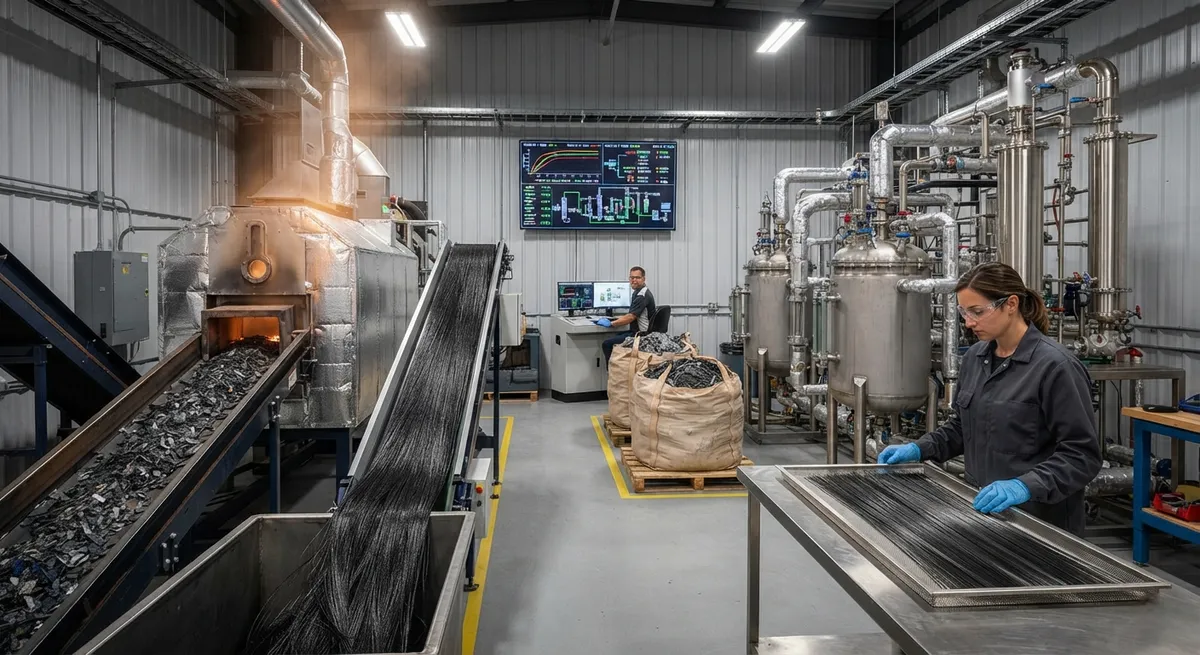
Pyrolysis decomposes the polymer matrix in an oxygen-free environment at 450-700°C, leaving clean carbon fibers behind. The matrix is converted to pyrolysis gases and char, which are combusted to heat the furnace; residual char on the fiber surface is removed in a short post-oxidation stage. Commercial pyrolysis plants run continuous belt or rotary kiln furnaces, making the process the highest-throughput route available today. Most of the world's existing recycling capacity, including the multi-thousand-tonne plants in Germany, the United Kingdom, and the United States, is built on this technology.
The trade-off sits in the fiber properties. Typical strength retention after pyrolysis is 80-95% of the virgin fiber, while modulus retention is close to 100% because the graphitic structure of the fiber core survives the heat. Fiber length is usually cut during shredding and sieving rather than by the thermal step, so output is dominated by discontinuous fibers of 10-80 mm. The sizing layer is burned off, which is beneficial for re-coating but means the fiber must be re-sized before it can bond well with new resin systems.
Solvolysis: Higher Retained Properties at Higher Cost
Solvolysis replaces heat with chemistry. The composite is exposed to solvents — water, alcohols, glycols, or mild acids — at 200-450°C under pressure, which depolymerizes the matrix and releases fibers under far gentler conditions than pyrolysis. Strength retention of 90-99% is routinely reported, and the fiber is released cleanly enough to be re-impregnated without aggressive surface treatment. An additional advantage is that solvolysis can recover the resin fraction as reusable chemical feedstock, closing the loop on both constituents of the composite.
The costs are equally real. Batch processing times range from 1 to 24 hours, solvent recovery and purification consume energy, and the pressure vessels required are more expensive per tonne of throughput than a belt furnace. Solvolysis is therefore positioned where retained fiber value is highest: aerospace offcuts, high-modulus fiber, and applications where a 10% strength delta justifies a higher recycled-fiber price.
Process Comparison at a Glance
The table below compares the four main CFRP recycling routes on the criteria that matter for procurement decisions:
| Parameter | Mechanical Grinding | Pyrolysis | Solvolysis | Fluidized Bed |
|---|---|---|---|---|
| Typical temperature | Ambient | 450-700°C | 200-450°C | 450-550°C |
| Batch time | Minutes | 2-6 hours | 1-24 hours | Seconds to minutes |
| Fiber strength retention | 60-75% | 80-95% | 90-99% | 70-85% |
| Fiber length preserved | Very short (1-10 mm) | 10-80 mm | Long (near original) | Short (5-30 mm) |
| Resin fraction recovery | No | Energy only | Yes, as feedstock | Energy only |
| Typical cost per kg | Lowest | $5-8 | $10-20 | $6-10 |
| Commercial maturity | Established | Established | Emerging scale-up | Demonstration |
The pattern is consistent: the gentler the process, the higher the retained properties, and the higher the processing cost. Selection therefore follows the value of the recovered fiber. For blade mass-compliance recycling, where the goal is volume at acceptable quality, pyrolysis dominates. For high-modulus aerospace fiber that will be re-used in structural secondary parts, solvolysis earns its premium.
Fiber Remanufacturing: From Recycled Fibers to New Products
Recovered fiber is only valuable when it is converted back into manufactured goods. The remanufacturing routes in commercial use today include:
- Nonwoven mats and felts: Air-laid or carded recycled fiber is needle-punched into mats used for automotive underbody panels, insulation covers, and semi-structural interlayers, at fiber contents of 30-60% by weight.
- Chopped fiber for molding compounds: Recycled tow chopped to 3-25 mm feeds bulk molding compound (BMC) and sheet molding compound (SMC) for injection and compression molding of brackets, housings, and covers.
- Pellettized compounds for injection molding: Recycled fiber compounded with polyamide or polypropylene at 20-40% fiber loading produces pellets that match short-glass-fiber grades in stiffness while saving 30-50% of weight.
- Aligned and remanufactured continuous tow: The highest-value route, where clean pyrolysis or solvolysis fiber is re-spun or spread into aligned formats that approach virgin properties, enabling structural secondary structures.
- Construction materials: Shredded recycled fiber reinforces cement, mortars, and architectural panels, absorbing the lowest-value fraction of the waste stream without purity requirements.
For wind blade compliance specifically, the mass of the composite must be accounted for, so the nonwoven and construction routes matter as much as the premium aerospace routes. A compliant blade recycling chain typically combines pyrolysis for volume with a remanufacturing step that turns the recovered fiber into construction or automotive inputs.
Frequently Asked Questions
Which CFRP recycling process retains the highest fiber strength?
Solvolysis retains the highest fiber tensile strength, typically 90-99% of virgin properties, because the chemical depolymerization of the matrix is far gentler than the thermal decomposition used in pyrolysis. Pyrolysis typically retains 80-95% of strength with near-full modulus retention, while mechanical grinding drops strength to 60-75% and shortens fibers severely. The retained-property ranking is the inverse of the cost ranking: the gentler the process, the more expensive the recycling.
Can recycled carbon fiber replace virgin fiber in structural applications?
Recycled carbon fiber is not yet certified for primary aerospace or automotive structure because retained properties vary with feedstock and process, and design allowables have not been accumulated at the scale of virgin fiber. It is, however, widely used in secondary structures, interior components, and semi-structural parts where a 10-20% property derate is acceptable. Aligned remanufactured tow from clean solvolysis fiber narrows the gap to virgin properties and is the most promising route toward structural re-use in the next certification cycle.
How much does CFRP recycling cost, and is it economically viable?
Pyrolysis recycling of carbon fiber typically costs $5-8 per kilogram of recovered fiber, solvolysis $10-20 per kilogram, against a virgin fiber price of $15-30 per kilogram for standard grades. The economics work when the recovered fiber is sold into applications that tolerate short, unsized fiber — nonwovens, molding compounds, and construction materials — and when landfill or incineration costs are factored into the total cost of ownership. Regulatory pressure from EU Regulation 2026/718 shifts the equation further, because non-compliance now carries a direct cost for blade manufacturers and their supply chains.
Conclusion
CFRP recycling has moved from a sustainability talking point to a hard engineering and compliance discipline. Pyrolysis provides the volume backbone with 80-95% strength retention at $5-8 per kilogram; solvolysis delivers 90-99% retention for high-value fiber at a premium; and fiber remanufacturing converts both outputs into nonwovens, molding compounds, pellets, and aligned tow. With global capacity near 6,120 tonnes per year and EU Regulation 2026/718 demanding 70% blade recycling by mass, the constraint is no longer technology — it is process selection matched to retained-property requirements.
For procurement and engineering teams building a compliant recycling chain, the decision framework is straightforward: define the required retained properties, price the recovered fiber against virgin grades, and select the process that meets both. Explore our range of carbon fiber fabrics and recycled-fiber-friendly reinforcement formats, or contact our engineering team to discuss feedstock specifications for your recycling or remanufacturing program.
Part of topic
Related Articles
- Carbon Fiber Drone Blades and Propellers: Stiffness, Balance and Noise Reduction
- Fiberglass Filament Wound Tubes: Cost-Effective Alternative to Carbon Fiber
- Filament Wound Epoxy Tube Design: Wall Thickness, Fiber Angle and Load Optimization
- Filament Wound Epoxy Tubes: Testing Standards and Quality Assurance
- Filament Wound Epoxy Tubes Manufacturing: Process and Quality Control
- Filament Wound Fiberglass Tube: Process Parameters and Performance vs Carbon Fiber
Interested in Our Products?
Contact our team for competitive pricing and technical specifications.
Get a QuoteRelated Products
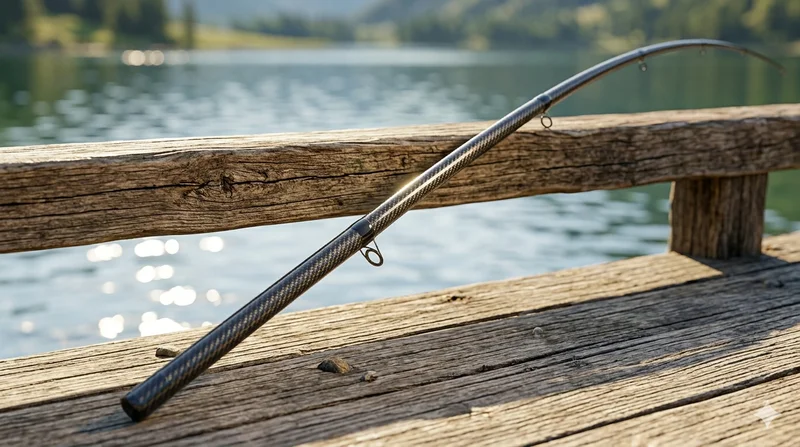
Carbon Fiber Fishing Rod Blank
High-quality carbon fiber fishing rod blank manufactured from multiple grades of Toray carbon fiber cloth. Available in a wide range of lengths, powers, and actions for freshwater and saltwater applications. Suitable for OEM rod building.

Carbon Fiber Plate — 3K Twill T700 1.5mm
Thin 1.5mm carbon fiber plate with 3K twill weave surface. Lightweight and stiff, commonly used for covers, panels, drone bodies, and applications requiring a premium aesthetic appearance.
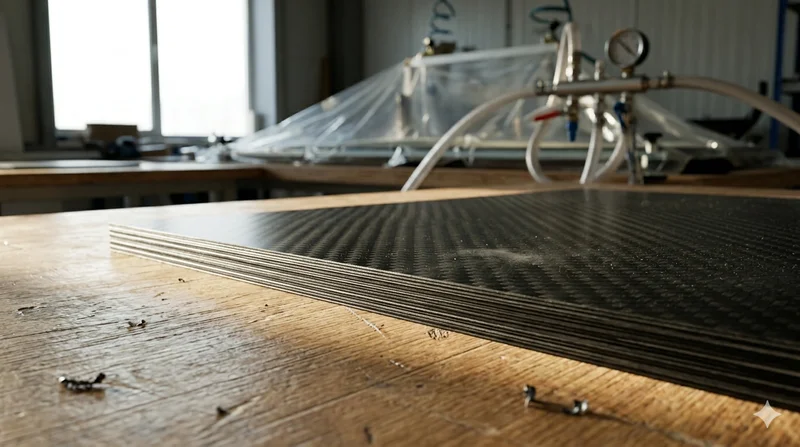
Carbon Fiber Plate — 3K Twill T700 3.0mm
Medium-thickness 3.0mm carbon fiber plate offering significantly higher load capacity while maintaining attractive 3K twill finish. Suitable for structural brackets, reinforcement plates, and load-bearing panels.
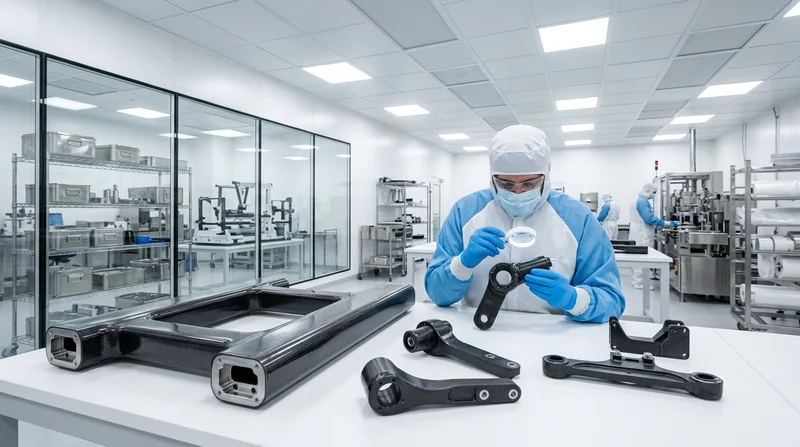
Custom Carbon Fiber Medical Device Components
Medical-grade carbon fiber components manufactured for imaging equipment, surgical instruments, and patient support systems. Carbon fiber's radiolucency (X-ray transparency) and high strength-to-weight ratio make it ideal for CT scanner beds, wheelchair frames, surgical robot arms, and MRI-compatible accessories. Biocompatible resin systems available.

Square Carbon Fiber Tube — 3K Twill T700
Square cross-section carbon fiber tube manufactured with 3K twill weave for torsional strength. Preferred for structural frames, trusses, and support columns where rectangular geometry offers design flexibility.