A carbon fiber tube assembly service turns stock carbon tube into finished structures: drone frames, camera jigs, robot arms, tent poles, antenna masts and modular frames, cut to length, joined with bonded sockets or clamps, and delivered as assemblies rather than loose parts. Buying the service bea
Introduction
A carbon fiber tube assembly service turns stock carbon tube into finished structures: drone frames, camera jigs, robot arms, tent poles, antenna masts and modular frames, cut to length, joined with bonded sockets or clamps, and delivered as assemblies rather than loose parts. Buying the service beats building the capability in-house when joint repeatability, straightness and bond quality decide whether the structure survives vibration and outdoor duty. This guide covers the process, the tolerances worth specifying, and the cost at each level of complexity.
You will also see how a carbon fiber tube supplier feeds the assembly line, which tube grades belong in stock for assembly work, and how carbon fiber tube for sale pricing compares with the price of a finished assembly.
What a Carbon Fiber Tube Assembly Service Covers
The scope runs from raw tube to tagged, inspected assemblies. Typical operations:
- Cut and end facing: saw or abrasive cut to length, ends squared on a facing operation, deburred so no roving wicks adhesive out of the joint.
- Sleeve and fitting prep: aluminum or steel sleeves knurled and solvent-wiped, internal sanding of the bond area on the tube inside.
- Jig loading: tubes located in a fixture against datum faces so hole patterns and overall length stay controlled during cure.
- Bond or clamp: adhesive socket joints cured 24 hours at room temperature, or quick-release clamps installed for field-adjustable structures.
- Inspection and kitting: straightness roll test, runout check on rotating assemblies, label each unit with its drawing revision.
The difference between a hobby-built frame and a service-built frame is almost always the fixture: without a jig, every assembly cures into its own slightly different geometry.
Choosing a Carbon Fiber Tube Supplier for Assembly Work
Assembly quality starts with the tube itself. What a carbon fiber tube supplier should hold for assembly-grade stock:
| Tube type | OD range | OD tolerance | Straightness | Best for |
|---|---|---|---|---|
| Pultruded round | 3-50 mm | +/- 0.1 mm | 0.5 mm/m | Frames, masts, pushrods |
| Roll-wrapped | 8-120 mm | +/- 0.2 mm | 0.3 mm/m | Precision jigs, optics |
| Pultruded square | 10-40 mm | +/- 0.15 mm | 0.5 mm/m | Machine frames |
| Sandwich wall | 20-80 mm | +/- 0.3 mm | 0.4 mm/m | Weight-critical booms |
Ask for the certificate with fiber grade and resin on every lot, and confirm the supplier separates stock kept for assembly — straight, graded, cut-square — from general-sale tube. General stock is cheaper and usually a tenth of a millimetre worse in straightness, which is exactly the tenth that shows up as misalignment in a bonded frame.
Joint Methods and Assembly Tolerances
How tubes meet fittings decides strength, serviceability and cost. Four joint methods with typical values for 10 mm OD tube:
| Method | Joint geometry | Strength vs tube | Cost per joint |
|---|---|---|---|
| Adhesive socket | Bond length 1.5-2x OD, 0.1 mm glue line | 60-80 percent | 2-5 USD |
| Bonded with sleeve | Knurled sleeve inside, epoxy filled | 75-90 percent | 4-8 USD |
| Bolted clamp | Split clamp, torque to 2-3 Nm | 40-60 percent | 1-3 USD |
| Bond plus mechanical lock | Socket bond plus cross pin | 85-95 percent | 6-12 USD |
Assembly tolerances to write into the order: overall length +/- 0.5 mm on cut assemblies, perpendicularity +/- 0.3 degrees at fitted ends, runout below 0.2 mm on any rotating sub-assembly, and straightness inherited from the tube certificate. Ask how the service measures runout — V-blocks with a dial indicator, or visual.
From Stock Tubes to Custom Carbon Fiber Assemblies
Scale-up from loose tube to delivered assembly happens in three stages:
- Stage 1 — cut kit: tubes cut to length with ends faced, packed by position number, ready for your team to bond. Lowest risk, validates dimensions.
- Stage 2 — bonded sub-assembly: two to six tubes joined into a frame section in the vendor's jig, with a first-article report on length and squareness.
- Stage 3 — full assembly: frame with fittings, inserts, clamps and torque sheet, tested as a unit and packed for the line.
Decide early which stage you buy: every stage up adds vendor handling but removes your fixture investment. Most programs qualify at stage 1, settle at stage 2, and move to stage 3 only when volume justifies a dedicated jig.
Carbon Fiber Tube for Sale: Parts and Assembly Pricing
Indicative 2026 pricing for 100-piece lots of standard 6 mm pultruded tube, and for the assembly operations on top:
| Item | Price | Notes |
|---|---|---|
| Tube, per meter | 2.5-5.5 USD | 6 mm solid, graded straightness |
| Cut and face, per end | 0.3-0.8 USD | Squared, deburred |
| Adhesive socket joint | 2-5 USD | Jigged, room-temperature cure |
| Four-tube frame section | 18-35 USD | Bonded in fixture with report |
| Full frame assembly | 45-95 USD | With fittings, clamps and inspection |
Carbon fiber tube for sale at cut-rate prices rarely survives an assembly line: ovality and bow that do not matter in a single loose tube become cumulative error across four bonded joints. Compare suppliers on the finished joint, not the per-metre headline.
Frequently Asked Questions
When should I buy an assembly instead of cutting tubes myself?
Buy the assembly when joints must repeat — more than about twenty units, tight squareness requirements, or a bond that needs controlled surface treatment and a cure jig you do not own. Cutting tubes yourself stays sensible for prototypes and one-off builds, where a simple miter box and hand clamps are enough. The crossover is usually around twenty pieces per year of the same geometry.
How do I specify a carbon fiber tube assembly service on a drawing?
Mark tube lengths with tolerances, identify every joint and its method, call out datum faces for the jig, state required straightness and runout, and note whether fittings and hardware are supplied by the vendor. Add the inspection requirement — dimensional report, roll test, or both — and the quantity with a first-article before production. Clear datums matter more than 3D visuals.
Can a carbon fiber tube supplier also do the assembly?
Often yes, and it shortens the chain: tube, cut, bond and inspection come from one lot traceability. Confirm the supplier holds assembly-grade tube separately, runs a fixture for your geometry, and issues a first-article report. If they only sell tube by the metre, pair them with a separate assembly house and agree who owns the joint specification.
Conclusion
A carbon fiber tube assembly service is worth its cost when it brings the fixture, the joint process and the inspection record your structure needs: squared ends, defined bond lengths, measured runout and lot-traceable tube. Source stock through a carbon fiber tube supplier that grades straightness for assembly work, choose joint method from load and service requirements, and write length, perpendicularity and runout into the order. Start with a cut kit, qualify the joints, then step up to full custom carbon fiber assemblies as volume grows. To review tube grades, joint options and current assembly pricing, browse our carbon fiber tube range or contact our team with your drawings and joint list.
Part of topic
Related Articles
- Carbon Fiber Parts Assembly: Process, Tolerances and Cost
- Carbon Fiber Plate Bonding Service: Process, Tolerance and Cost
- Carbon Fiber Sheet Gasket Supplier: Product, Specs and Sourcing
- Carbon Fiber Sheet for Skis: Design, Specs and Sourcing
- Carbon Fiber Plate for Guitar: Design, Specs and Sourcing
- Carbon Fiber Sheet for Surfboard: Design, Specs and Sourcing
Interested in Our Products?
Contact our team for competitive pricing and technical specifications.
Get a QuoteRelated Products
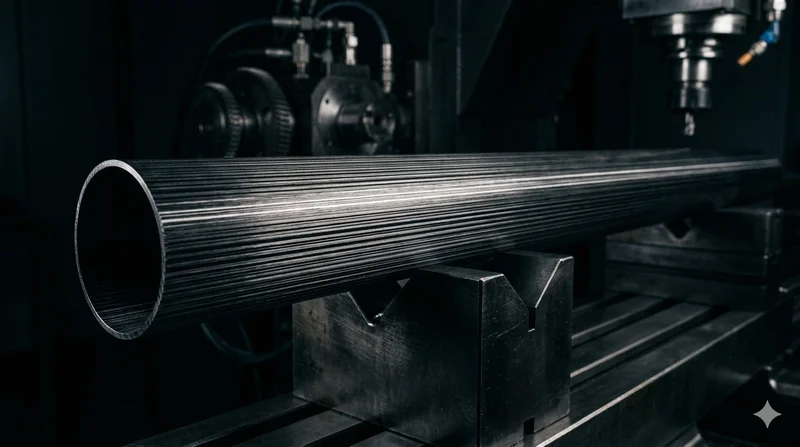
Round Carbon Fiber Tube — UD Unidirectional T700
Unidirectional (UD) round tube with all fibers aligned axially for maximum longitudinal stiffness. Ideal for applications requiring high bending rigidity with minimal weight, such as shafts, struts, and structural reinforcements.
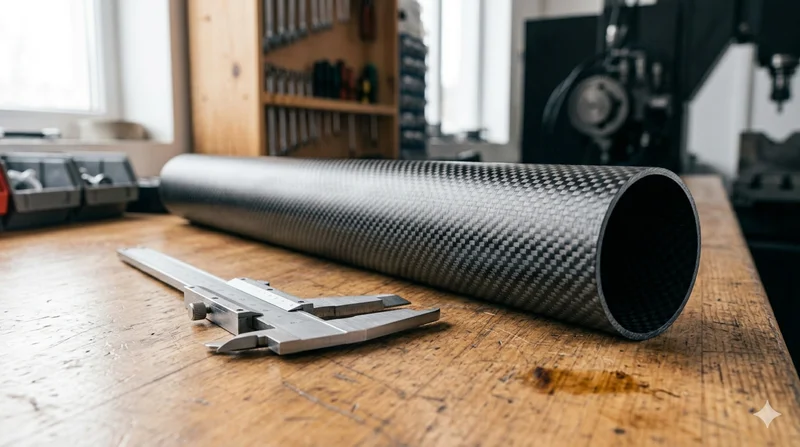
Round Carbon Fiber Tube — 3K Plain Weave T700
Standard round carbon fiber tube manufactured from Toray T700 grade fiber with 3K plain weave. Offers balanced strength and stiffness for general industrial applications including robotics, automation, sports equipment, and aerospace structures.
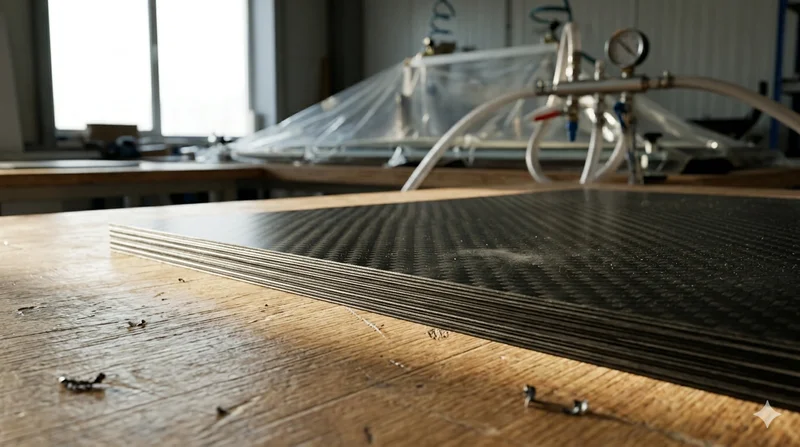
Carbon Fiber Plate — 3K Twill T700 3.0mm
Medium-thickness 3.0mm carbon fiber plate offering significantly higher load capacity while maintaining attractive 3K twill finish. Suitable for structural brackets, reinforcement plates, and load-bearing panels.
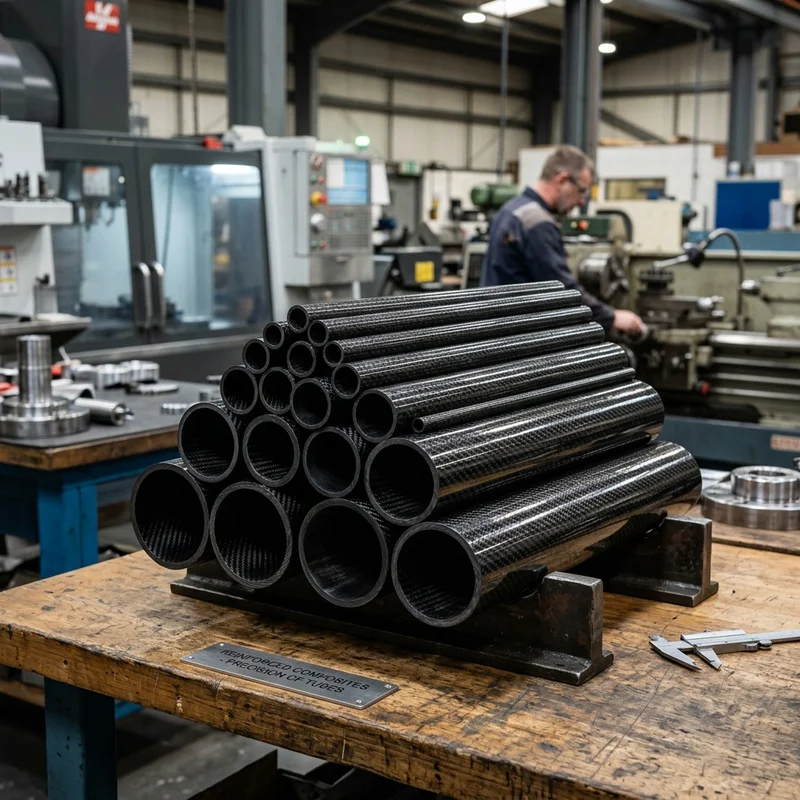
Round Carbon Fiber Tube — 3K Twill
Lightweight and ultra-stiff round tubes ideal for drone frames, robotics, and structural applications.
Carbon Fiber Plate — 3K Twill T700 1.5mm
Thin 1.5mm carbon fiber plate with 3K twill weave surface. Lightweight and stiff, commonly used for covers, panels, drone bodies, and applications requiring a premium aesthetic appearance.