Choosing a carbon fiber sheet gasket supplier is the first step when a sealing face must handle solvents, fuels or elevated temperature without swelling the way rubber does. Gaskets cut from carbon fiber sheet are rigid, low-compressibility seals used on flanges, pump housings, fuel-cell end plates
Introduction
Choosing a carbon fiber sheet gasket supplier is the first step when a sealing face must handle solvents, fuels or elevated temperature without swelling the way rubber does. Gaskets cut from carbon fiber sheet are rigid, low-compressibility seals used on flanges, pump housings, fuel-cell end plates and semiconductor tooling where a soft elastomer would creep, cold-flow or contaminate the media. This guide explains what such a supplier actually sells, how the material behaves against PTFE and rubber, and which numbers to demand before placing an order.
You will also get cutting tolerances by method, typical blank pricing, and a four-point verification pass so the first lot from a new carbon fiber sheet supplier does not leak on the first pressure cycle. The final section covers the questions buyers ask most about thickness selection, MOQ and lead time.
What a Carbon Fiber Sheet Gasket Supplier Actually Sells
A gasket-focused supplier does more than ship flat sheet. The product line usually spans four items:
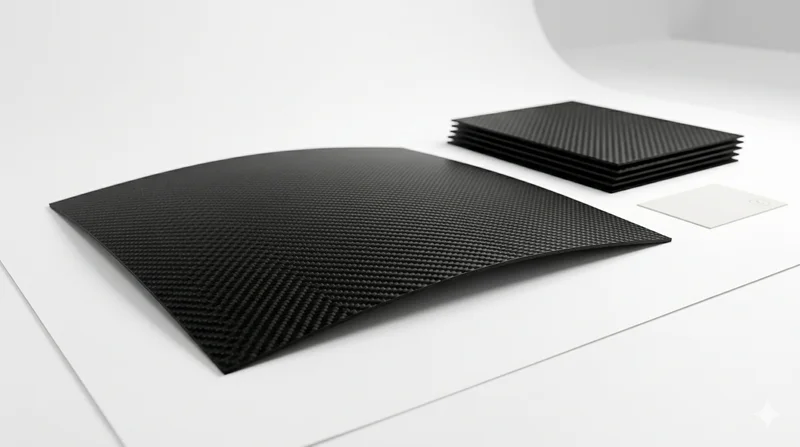
- Stock sheet in sealing grades: 0.5-3 mm carbon fiber sheet, 3K twill or plain weave, epoxy matrix, cut into standard blanks such as 100 x 100 mm, 200 x 200 mm and ring sizes for common pipe diameters.
- CNC-cut custom blanks: customer DXF or drawing converted to toolpaths, with bolt-hole patterns, tongue-and-groove profiles and irregular outlines held to a stated tolerance.
- Material certificates: fiber grade, resin system, sheet thickness and lot number on a COA, which matters whenever the gasket sits in a regulated chemical or electronics line.
- Kitting and packaging: blanks interleaved with separator film, labelled by tag number, so assembly crews do not mix 1 mm and 2 mm stock on the same flange.
If a vendor only sells full sheets and will not cut bolt holes, you are buying material, not a gasket supply line — budget your own CNC time and scrap rate on top of the sheet price.
Carbon Fiber Sheet Material vs PTFE and Rubber Gaskets
Carbon fiber sheet material wins on rigidity and dimensional stability; it loses on conformability. The practical trade-offs against the two usual alternatives:
| Property | Carbon fiber sheet gasket | PTFE gasket | NBR rubber gasket |
|---|---|---|---|
| Continuous temperature | 120-150 C with standard epoxy | -200 to 260 C | -30 to 120 C |
| Working pressure | 25-40 bar on machined faces | 10-25 bar | up to 10 bar |
| Compressibility | 1-2 percent | 5-10 percent | 25-40 percent |
| Solvent and fuel resistance | Good with epoxy matrix | Excellent | Poor to fair |
| Cost index (100 = CF) | 100 | 55-70 | 20-30 |
Use carbon fiber sheet when the flange faces are machined flat and bolt load is available to compress a rigid seal; use PTFE when chemical resistance must be absolute; keep NBR for water and air service on rough faces where conformity matters more than chemistry.
Thickness, Cutting Methods and Gasket Tolerances
Thickness selection follows pressure and flange stiffness: 0.5-1 mm for small instrument flanges, 1-2 mm for pump and valve bodies, 2-3 mm for large frames where bolt spacing is wide. Cutting method sets the tolerance you should write into the purchase order:
| Cutting method | Practical range | Tolerance | Edge quality |
|---|---|---|---|
| CNC routing | 1-6 mm sheet | +/- 0.15 mm | Clean, slight tool witness |
| Waterjet | 0.5-6 mm sheet | +/- 0.08 mm | Smooth, no heat zone |
| Die cutting | up to 1 mm | +/- 0.05 mm | Best for volume rings |
| Laser | not recommended | - | Resin burn and edge delamination |
Bolt holes should be ± 0.1 mm on position, not just diameter — a ring that fits the bore but misses the bolt circle by half a millimetre will not seat. Ask the carbon fiber sheet gasket supplier to state hole-position tolerance separately from outline tolerance in the quote.
How to Choose a Carbon Fiber Sheet Supplier for Gasket Blanks
Beyond price, five checks separate a material seller from a gasket supply partner:
- Cutting in-house or controlled: if cutting is outsourced, ask who holds the tolerance and how hole positions are inspected.
- Lot traceability: each blank lot should map to a sheet lot number on the COA.
- Sample protocol: request a 10-blank sample with dimensional report before releasing production quantity.
- MOQ transparency: realistic minimums are 20-50 blanks per size for CNC work; quotes demanding hundreds on a first run usually resell imported stock.
- Documentation pack: drawing revision, thickness measurement record and material certificate shipped with the goods, not emailed a week later.
A supplier who answers all five in the first quotation is already running a gasket process, not a sheet warehouse.
Carbon Fiber Sheet for Sale: Blank Pricing
Published sheet prices and finished blank prices are different numbers. Indicative 2026 ranges for 400 x 400 mm 3K epoxy sheet, and for CNC-cut 100 x 100 mm blanks with four bolt holes:
| Item | Sheet price (400 x 400 mm) | Blank price at 50 pcs | Lead time |
|---|---|---|---|
| 0.5 mm sheet | 18-26 USD | 3.2-4.5 USD | 3-5 days |
| 1 mm sheet | 30-44 USD | 4.0-5.8 USD | 3-5 days |
| 2 mm sheet | 52-78 USD | 5.5-8.0 USD | 5-7 days |
| 3 mm sheet | 70-105 USD | 7.5-11.0 USD | 5-7 days |
Carbon fiber sheet for sale at a price far below the ranges above usually means off-grade cloth, mixed resin content or no certificate. Compare quotes on blank cost per piece with tolerance and COA included — that is the number the production line actually consumes.
Frequently Asked Questions
When should I pick a carbon fiber sheet gasket instead of PTFE?
Pick carbon fiber sheet when the joint faces are machined flat, bolt load is sufficient, and the media are solvents, fuels or moderate-temperature chemicals where a rigid low-creep seal is preferred. Choose PTFE when the process fluid is a strong acid, steam or a substance that attacks epoxy, or when operating temperature exceeds 150 C. Many plants keep both grades in stock and select by media list rather than by habit.
What thickness of carbon fiber sheet gasket should I order?
Match thickness to flange stiffness and bolt spacing: 0.5-1 mm for instrument and small-bore flanges, 1-2 mm for pump and valve bodies with machined faces, 2-3 mm for large frames where wide bolt circles need a stiffer seal. When replacing a failed rubber gasket, do not simply copy its thickness — rigid seals need less compressibility, so recheck bolt torque against the new gasket data.
What is the typical MOQ and lead time for custom blanks?
For CNC-cut blanks with bolt holes, realistic minimums are 20-50 pieces per size, with 3-7 day lead times for standard 0.5-3 mm sheet. Die-cut rings in volume can go lower per piece but require tooling. Ask for a first-article sample batch with a dimensional report before committing to a production release, and confirm the quote states outline and hole-position tolerances separately.
Conclusion
A carbon fiber sheet gasket supplier is worth choosing on process, not on sheet price alone: in-house cutting with stated outline and hole-position tolerances, lot-traceable certificates, a sample protocol and honest MOQ. Use carbon fiber sheet material for rigid, low-creep sealing on machined faces, PTFE for absolute chemical resistance, and rubber where conformity beats chemistry. Compare carbon fiber sheet for sale pricing per finished blank with tolerance and COA included, run the five-point verification pass, and the first order becomes a repeatable supply line. To review sheet grades, blank cutting options and current pricing, browse our carbon fiber sheet range or contact our team with your drawing, thickness and bolt pattern.
Part of topic
Related Articles
- Carbon Fiber Parts Assembly: Process, Tolerances and Cost
- Carbon Fiber Tube Assembly Service: Process, Tolerance and Cost
- Carbon Fiber Plate Bonding Service: Process, Tolerance and Cost
- Carbon Fiber Sheet for Skis: Design, Specs and Sourcing
- Carbon Fiber Plate for Guitar: Design, Specs and Sourcing
- Carbon Fiber Sheet for Surfboard: Design, Specs and Sourcing
Interested in Our Products?
Contact our team for competitive pricing and technical specifications.
Get a QuoteRelated Products
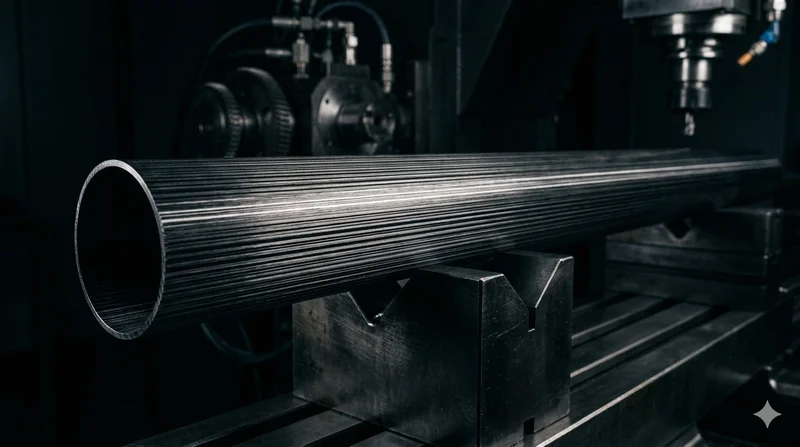
Round Carbon Fiber Tube — UD Unidirectional T700
Unidirectional (UD) round tube with all fibers aligned axially for maximum longitudinal stiffness. Ideal for applications requiring high bending rigidity with minimal weight, such as shafts, struts, and structural reinforcements.
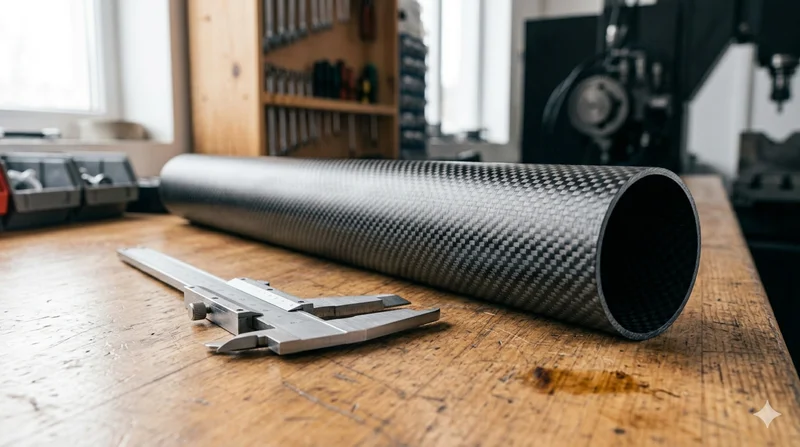
Round Carbon Fiber Tube — 3K Plain Weave T700
Standard round carbon fiber tube manufactured from Toray T700 grade fiber with 3K plain weave. Offers balanced strength and stiffness for general industrial applications including robotics, automation, sports equipment, and aerospace structures.
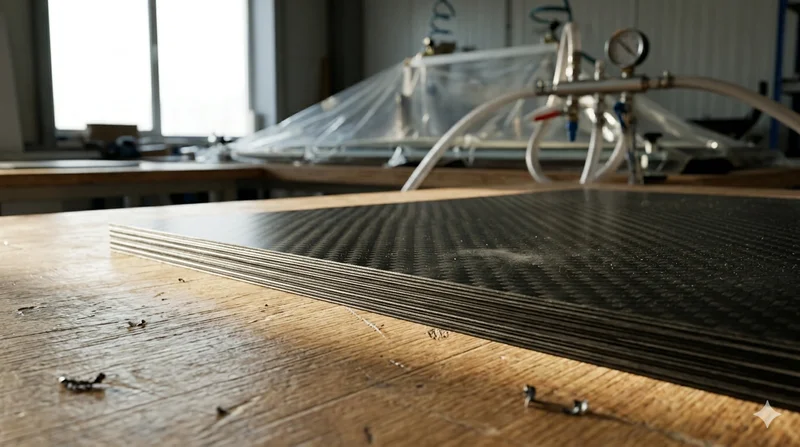
Carbon Fiber Plate — 3K Twill T700 3.0mm
Medium-thickness 3.0mm carbon fiber plate offering significantly higher load capacity while maintaining attractive 3K twill finish. Suitable for structural brackets, reinforcement plates, and load-bearing panels.
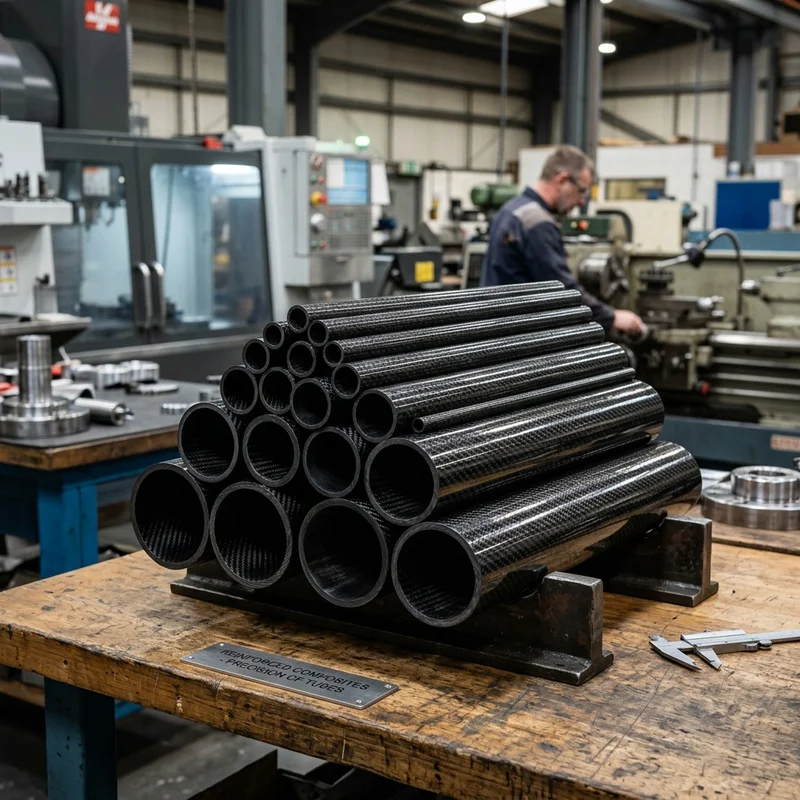
Round Carbon Fiber Tube — 3K Twill
Lightweight and ultra-stiff round tubes ideal for drone frames, robotics, and structural applications.
Carbon Fiber Plate — 3K Twill T700 1.5mm
Thin 1.5mm carbon fiber plate with 3K twill weave surface. Lightweight and stiff, commonly used for covers, panels, drone bodies, and applications requiring a premium aesthetic appearance.