A carbon fiber parts assembly service takes fabricated parts — cut, molded or CNC-trimmed panels, brackets, tubes and inserts — and turns them into finished units: housings, frames, mounting plates and structural sub-assemblies ready for your line. The service matters when repeatability across joint
Introduction
A carbon fiber parts assembly service takes fabricated parts — cut, molded or CNC-trimmed panels, brackets, tubes and inserts — and turns them into finished units: housings, frames, mounting plates and structural sub-assemblies ready for your line. The service matters when repeatability across joints, hardware alignment and inspection records decide whether the build ships. This guide covers the process, the tolerances worth writing into a purchase order, and how custom carbon fiber fabrication upstream connects to assembly downstream.
You will also see how a carbon fiber parts assembly shop prices its work, when to search for custom carbon fiber parts near me versus a national supplier, and how single-part orders scale into complete custom carbon fiber assemblies.
What a Carbon Fiber Parts Assembly Service Covers
The scope runs from loose fabricated parts to labeled, inspected assemblies. Typical operations:
- Incoming check: verify each fabricated part against the drawing — flatness, hole positions, edge finish — before any adhesive is opened.
- Jig and fixture load: locate parts on datum faces so holes, overall dimensions and stack-up stay controlled during cure.
- Bond and fasten: structural adhesive on defined bond areas, plus mechanical fasteners where the design calls for serviceable joints.
- Hardware integration: inserts, threaded studs, bushings and gaskets installed to torque or press-fit spec.
- Inspection and kitting: dimensional report, torque record on fastened joints, label each unit with its drawing revision.
The difference between a bench-built unit and a service-built unit is almost always the fixture: without a jig, every assembly cures into its own slightly different geometry, and stack-up errors accumulate across the joints.
From Custom Carbon Fiber Fabrication to Assembly
Assembly quality starts upstream. What a custom carbon fiber fabrication provider should hand over for assembly work:
| Part type | Typical tolerance | Handoff requirement | Common failure |
|---|---|---|---|
| CNC-trimmed panel | +/- 0.2 mm edge | Protected edges, flat on pallet | Delamination at trim edge |
| Molded bracket | +/- 0.3 mm hole position | Release agent removed, datum marked | Residue blocking adhesive |
| Pultruded tube cut | +/- 0.1 mm length | Squared ends, deburred | Bow over 0.5 mm/m |
| Cured insert | +/- 0.15 mm concentricity | Threads chased, surface clean | Insert pull-out under load |
Ask whether the fabricator keeps parts for assembly separate from general stock — cleaned, protected, stacked flat. Mixed into general inventory, parts arrive with edge damage and release-film residue that costs an hour of rework per batch at the assembly bench.
Jigs, Bonding and Assembly Tolerances
How parts meet each other decides strength, serviceability and cost. Four join methods with typical values for a 3 mm panel to a tube:
| Method | Joint geometry | Strength vs part | Cost per joint |
|---|---|---|---|
| Adhesive lap | Overlap 15-25 mm, 0.1 mm glue line | 65-85 percent | 2-6 USD |
| Adhesive plus bolts | Lap bond with 4-6 M4 bolts | 80-95 percent | 5-12 USD |
| Bolted only | Clamped flange, torque sheet | 45-65 percent | 3-8 USD |
| Threaded insert bond | Insert bonded into pocket, then bolted | 70-90 percent | 4-10 USD |
Assembly tolerances to write into the order: overall length and width within +/- 0.3 mm on jigged assemblies, hole-to-hole within +/- 0.15 mm across mating parts, flatness within 0.5 mm per meter on loaded faces, and torque values with a tolerance of 10 percent on every fastened joint. Ask how the service measures stack-up — CMM report, gauge pins, or visual.
From Single Parts to Custom Carbon Fiber Assemblies
Scale-up from loose parts to delivered assemblies happens in three stages:
- Stage 1 — sorted kit: fabricated parts cleaned, counted and packed by position number, ready for your team to join. Lowest risk, validates the fabrication tolerances.
- Stage 2 — bonded sub-assembly: two to eight parts joined in the vendor's jig, with a first-article report on dimensions and hole positions.
- Stage 3 — complete assembly: frame or housing with hardware, inserts, gaskets and torque sheet, tested as a unit and packed for the line.
Decide early which stage you buy: each stage up adds vendor handling but removes your fixture investment. Most programs qualify at stage 1, settle at stage 2, and move to stage 3 only when volume justifies a dedicated jig.
Pricing: Parts and Assembly Cost
Indicative 2026 pricing for 100-piece lots of a standard 3 mm CNC-trimmed panel, and for the assembly operations on top:
| Item | Price | Notes |
|---|---|---|
| Fabricated panel, per piece | 8-18 USD | 3 mm, trimmed and bagged |
| Incoming inspection, per lot | 25-60 USD | Dimensional spot check |
| Adhesive lap joint | 2-6 USD | Jigged, room-temperature cure |
| Four-part sub-assembly | 25-55 USD | Bonded in fixture with report |
| Complete assembly with hardware | 60-130 USD | Fasteners, inserts, inspection |
Searching for custom carbon fiber parts near me usually optimizes for shipping speed and low minimums; a regional or national fabricator often wins on jig capability and lot traceability. Compare suppliers on the finished joint and the inspection record, not the per-piece headline.
Frequently Asked Questions
When should I buy an assembly instead of joining parts myself?
Buy the assembly when joints must repeat — more than about twenty units, tight hole-to-hole requirements, or a bond that needs controlled surface treatment and a cure jig you do not own. Joining parts yourself stays sensible for prototypes and one-off builds, where hand clamps and a flat table are enough. The crossover is usually around twenty pieces per year of the same geometry.
How do I specify carbon fiber parts assembly on a drawing?
Mark part numbers with tolerances, identify every joint and its method, call out datum faces for the jig, state required flatness and hole positions, and note whether hardware and inserts are supplied by the vendor. Add the inspection requirement — dimensional report, torque record, or both — and the quantity with a first-article before production. Clear datums matter more than 3D visuals.
Can the fabricator also do the assembly?
Often yes, and it shortens the chain: fabrication, cleaning, bonding and inspection come from one lot traceability. Confirm the supplier holds parts for assembly separately, runs a fixture for your geometry, and issues a first-article report. If they only cut and mold parts, pair them with a separate assembly house and agree who owns the joint specification.
Conclusion
Carbon fiber parts assembly is worth its cost when it brings the fixture, the joint process and the inspection record your build needs: datum-located parts, defined bond areas, measured hole positions and lot-traceable hardware. Start upstream with a fabricator who cleans and protects parts for assembly, choose joint method from load and service requirements, and write tolerances into the purchase order rather than the email thread. Start with a sorted kit, qualify the joints, then step up to complete custom carbon fiber assemblies as volume grows. To review process capability, joint options and current pricing, browse our carbon fiber parts range or contact our team with your drawings and joint list.
Part of topic
Related Articles
- Carbon Fiber Tube Assembly Service: Process, Tolerance and Cost
- Carbon Fiber Plate Bonding Service: Process, Tolerance and Cost
- Carbon Fiber Sheet Gasket Supplier: Product, Specs and Sourcing
- Carbon Fiber Sheet for Skis: Design, Specs and Sourcing
- Carbon Fiber Plate for Guitar: Design, Specs and Sourcing
- Carbon Fiber Sheet for Surfboard: Design, Specs and Sourcing
Interested in Our Products?
Contact our team for competitive pricing and technical specifications.
Get a QuoteRelated Products
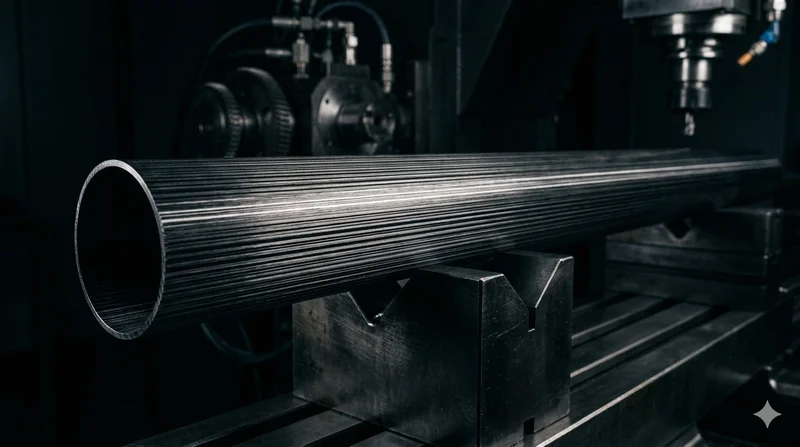
Round Carbon Fiber Tube — UD Unidirectional T700
Unidirectional (UD) round tube with all fibers aligned axially for maximum longitudinal stiffness. Ideal for applications requiring high bending rigidity with minimal weight, such as shafts, struts, and structural reinforcements.
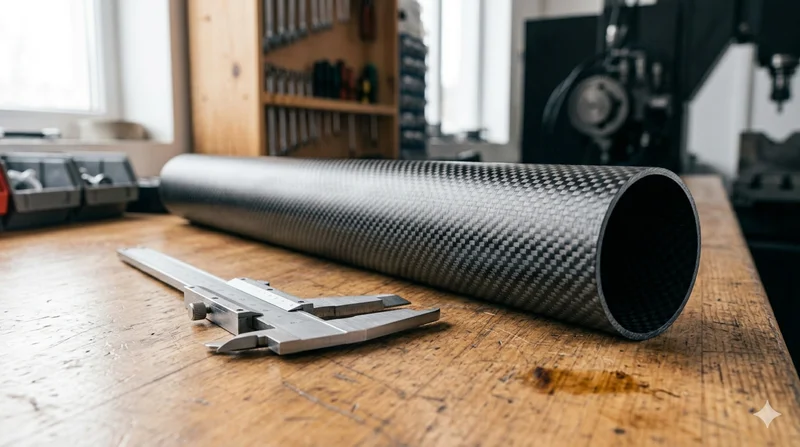
Round Carbon Fiber Tube — 3K Plain Weave T700
Standard round carbon fiber tube manufactured from Toray T700 grade fiber with 3K plain weave. Offers balanced strength and stiffness for general industrial applications including robotics, automation, sports equipment, and aerospace structures.
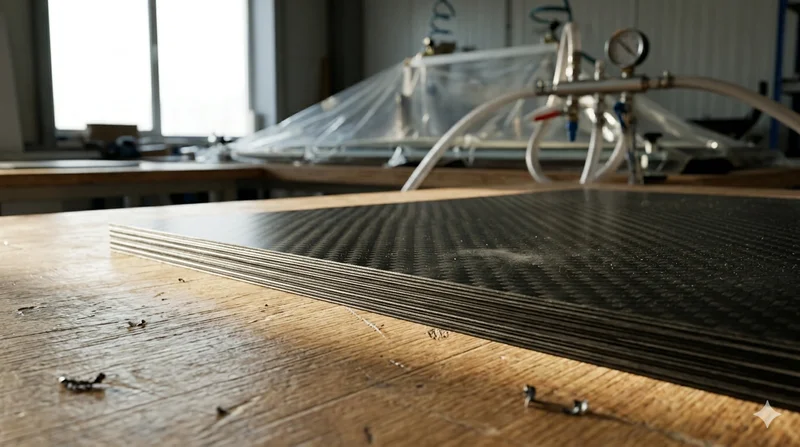
Carbon Fiber Plate — 3K Twill T700 3.0mm
Medium-thickness 3.0mm carbon fiber plate offering significantly higher load capacity while maintaining attractive 3K twill finish. Suitable for structural brackets, reinforcement plates, and load-bearing panels.
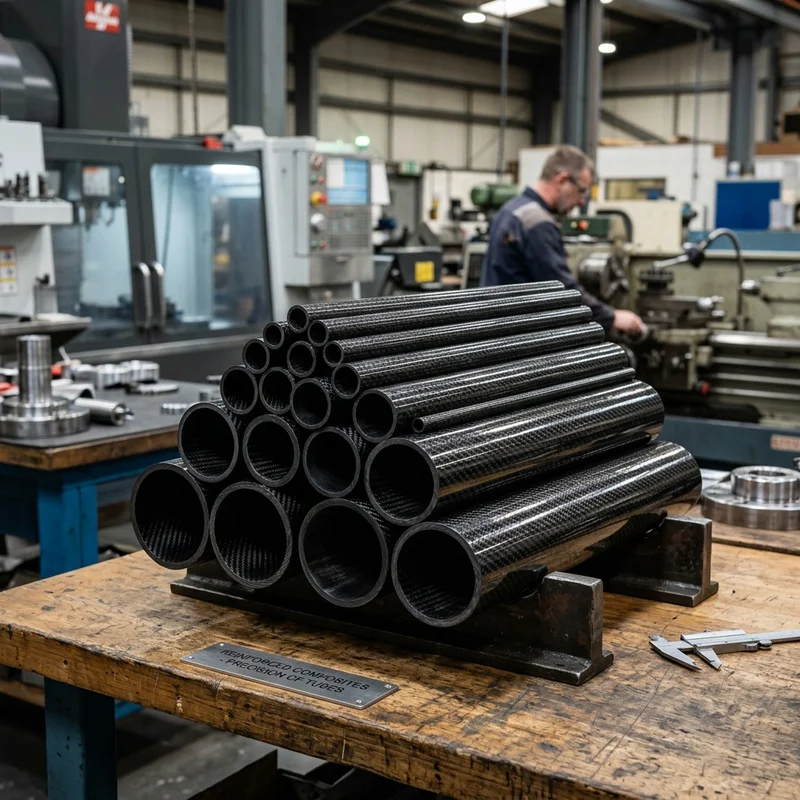
Round Carbon Fiber Tube — 3K Twill
Lightweight and ultra-stiff round tubes ideal for drone frames, robotics, and structural applications.
Carbon Fiber Plate — 3K Twill T700 1.5mm
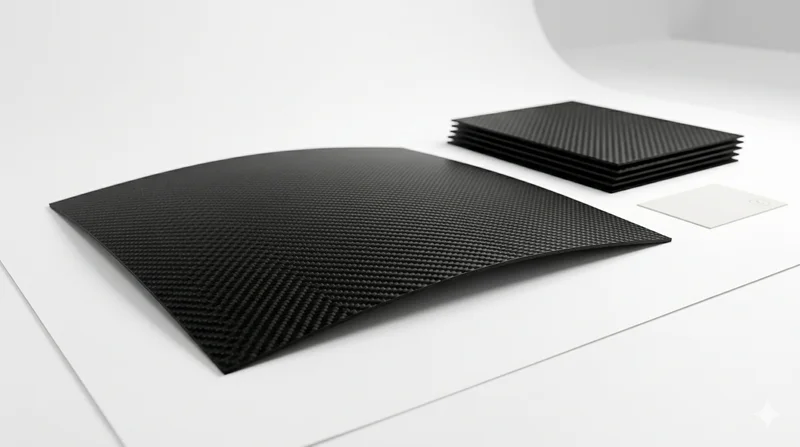
Thin 1.5mm carbon fiber plate with 3K twill weave surface. Lightweight and stiff, commonly used for covers, panels, drone bodies, and applications requiring a premium aesthetic appearance.