A carbon fiber plate bonding service takes flat CFRP panels — cut, drilled and cured — and joins them into stiff, lightweight structures with structural adhesive instead of rivets or welds. Buying the service matters when the joint quality decides whether a bonded panel survives thermal cycling, vib
Introduction
A carbon fiber plate bonding service takes flat CFRP panels — cut, drilled and cured — and joins them into stiff, lightweight structures with structural adhesive instead of rivets or welds. Buying the service matters when the joint quality decides whether a bonded panel survives thermal cycling, vibration or a 10-year outdoor duty life, and your own shop lacks the surface treatment, fixture and cure control to guarantee it. This guide walks through the joint designs, the preparation steps, the tolerances you should specify, and the cost of the work.
You will also see how a single carbon fiber plate custom joint grows into full custom carbon fiber assemblies: which steps stay in-house at the bonding vendor, which drawings you must provide, and what numbers appear on the quote so two suppliers can be compared fairly.
What a Carbon Fiber Plate Bonding Service Includes
A complete service is a controlled process, not a tube of glue. Typical scope of work:
- Incoming inspection: plate flatness, hole positions and edge quality checked against your drawing before any adhesive is opened.
- Surface preparation: grit blast or abrasion to a defined profile, solvent wipe, then plasma or flame treatment on the bond area within a stated pot life window.
- Adhesive metering and mixing: two-part systems dispensed by ratio-controlled meter, open time recorded per batch.
- Fixture and cure: parts loaded into a jig that holds geometry, cured at room temperature for 24 hours or post-cured in an oven at 60-80 C to raise service temperature.
- Trim, inspect, document: squeeze-out removed, bond line thickness measured, first-article report with flatness and dimension results.
Skipping any step — especially surface treatment and fixture — is how bonded plates fail at the interface while the plate itself is undamaged.
Carbon Fiber Plate Custom Joint Designs
Joint geometry sets the strength ceiling. Four designs cover most plate bonding work, with typical values for 2 mm plate in standard epoxy:
| Joint | Geometry | Relative strength | Cost index |
|---|---|---|---|
| Scarf | 5-10 degree taper over 10-20x thickness | 90-100 percent of parent | 150 |
| Lap | Overlap 10-20x plate thickness | 70-85 percent | 100 |
| Butt with backer | Full penetration, external strip both sides | 55-70 percent | 80 |
| Tongue and groove | Machined interlock, adhesive in channel | 75-90 percent | 130 |
Scarf joints win on load path but need CNC tapering; laps are the workhorse for field repairs and frames. A carbon fiber plate bonding service should recommend geometry from your load case, not from habit — if the quote defaults to lap on a bending-dominated panel, ask why.
Surface Preparation and Adhesive Selection
Adhesive choice follows stiffness, temperature and line speed. The four systems you will actually be offered:
| Adhesive | Cure | Lap shear on CFRP | Best for |
|---|---|---|---|
| Two-part epoxy | 24 h room temp, or 2 h at 80 C | 25-35 MPa | Rigid structural joints, oven post-cure |
| Epoxy film | 60-90 min at 80-120 C | 28-35 MPa | Controlled bond line, low voids |
| Polyurethane | 24-48 h, flexible | 10-15 MPa | Mismatched expansion, impact zones |
| Methacrylate | Fixture in 10-20 min | 15-25 MPa | Fast fixtures, mixed materials |
Whatever the system, plasma treatment within two hours of bonding typically lifts peel strength 30-60 percent on bare epoxy surfaces — the cheapest quality upgrade in the whole process.
Carbon Fiber Plate Manufacturing Tolerances After Bonding
Bonding adds its own error stack on top of plate manufacturing tolerances. Numbers worth writing into the purchase order:
- Bond line thickness: 0.1-0.3 mm target, held to +/- 0.05 mm by calibrated glass bead spacers or film adhesive.
- Assembly flatness: +/- 0.3 mm per meter typical with a machined jig; without a jig, expect 0.8-1.5 mm per meter.
- Part position: +/- 0.2 mm on hole-to-hole features when the fixture locates on datums, not on the plates themselves.
- Cure shrinkage: 0.1-0.3 percent linear on room-temperature cures; oven post-cure reduces long-term drift.
Ask how the service measures flatness after cure — laser tracker, granite plate and feeler gauge, or visual. Only the first two belong on a certificate.
From Single Joints to Custom Carbon Fiber Assemblies
Most buyers start with one joint type and discover they needed an assembly. A practical scale-up path:
- Stage 1 — bonded coupons: lap or scarf samples with reported lap shear, to qualify the adhesive and the process window.
- Stage 2 — sub-assembly: two to five plates bonded into a frame or box section, with first-article dimensional report.
- Stage 3 — kitted assembly: plates delivered with hardware, inserts and torque sheet, ready for your line to finalize.
Cost per joint for 2 mm plate in 100-piece lots: simple lap 3-8 USD, scarf 8-20 USD, jigged multi-plate frame 25-80 USD depending on cure cycle. Tooling for a dedicated jig is a one-time 300-1500 USD, amortized across the program.
Frequently Asked Questions
When does bonding beat bolting for carbon fiber plates?
Bonding wins when you need continuous load transfer, sealed joints and uniform stress — large panels, thin plates and fatigue-critical structures. Bolting stays better when joints must be opened for maintenance, when carbon fiber plate manufacturing tolerances stack too wide for adhesive gap control, or when field repairs are expected. Many designs use both: bonded primary structure with bolted access panels.
How long does a carbon fiber plate bonding service take?
Plan3-5 days for first-article coupons and report, 7-14 days for a jigged sub-assembly including fixture build, and 24-48 hours of cure inside that window. Two-part epoxy at room temperature adds a full day before parts can be handled; oven post-cure compresses handling time but requires scheduled oven capacity. Ask the quote to separate fixture time from cure time.
What drawings do you need to quote bonded assemblies?
Provide plate outlines with datums, hole patterns and tolerances, bond area marks, required flatness, adhesive preference if any, and target quantities. A 3D model helps but a dimensioned2D drawing with a bond note is enough for most quotes. For custom carbon fiber assemblies, also state whether the vendor supplies inserts, hardware and inspection documentation.
Conclusion
A carbon fiber plate bonding service is judged by its process control: inspected incoming plates, defined surface preparation, metered adhesive, fixtured cure and measured bond lines with reported tolerances. Choose joint geometry from the load case, pick the adhesive from temperature and stiffness requirements, and write flatness and bond line numbers into the purchase order instead of trusting visual inspection. Start with coupons, qualify the window, then scale into full custom carbon fiber assemblies with first-article reports at every stage. To review joint options, capability tables and current lead times, browse our carbon fiber plate range or contact our team with your drawings and load case.
Part of topic
Related Articles
- Carbon Fiber Parts Assembly: Process, Tolerances and Cost
- Carbon Fiber Tube Assembly Service: Process, Tolerance and Cost
- Carbon Fiber Sheet Gasket Supplier: Product, Specs and Sourcing
- Carbon Fiber Sheet for Skis: Design, Specs and Sourcing
- Carbon Fiber Plate for Guitar: Design, Specs and Sourcing
- Carbon Fiber Sheet for Surfboard: Design, Specs and Sourcing
Interested in Our Products?
Contact our team for competitive pricing and technical specifications.
Get a QuoteRelated Products
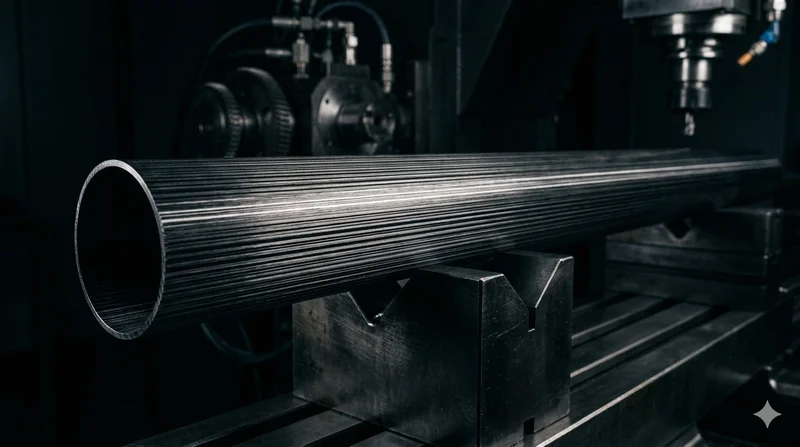
Round Carbon Fiber Tube — UD Unidirectional T700
Unidirectional (UD) round tube with all fibers aligned axially for maximum longitudinal stiffness. Ideal for applications requiring high bending rigidity with minimal weight, such as shafts, struts, and structural reinforcements.
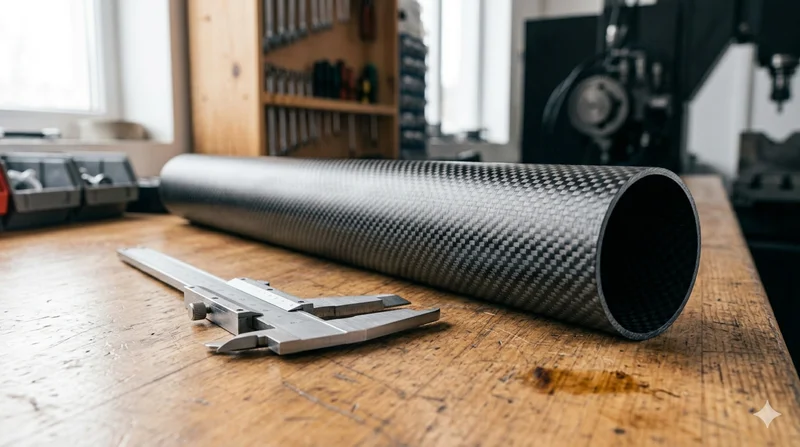
Round Carbon Fiber Tube — 3K Plain Weave T700
Standard round carbon fiber tube manufactured from Toray T700 grade fiber with 3K plain weave. Offers balanced strength and stiffness for general industrial applications including robotics, automation, sports equipment, and aerospace structures.
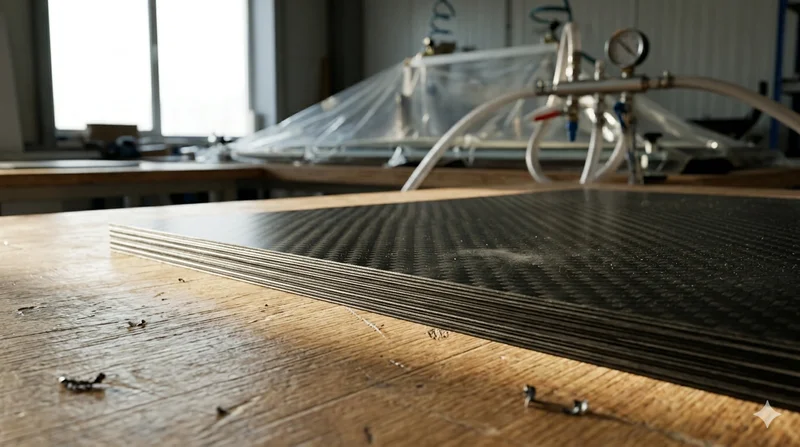
Carbon Fiber Plate — 3K Twill T700 3.0mm
Medium-thickness 3.0mm carbon fiber plate offering significantly higher load capacity while maintaining attractive 3K twill finish. Suitable for structural brackets, reinforcement plates, and load-bearing panels.
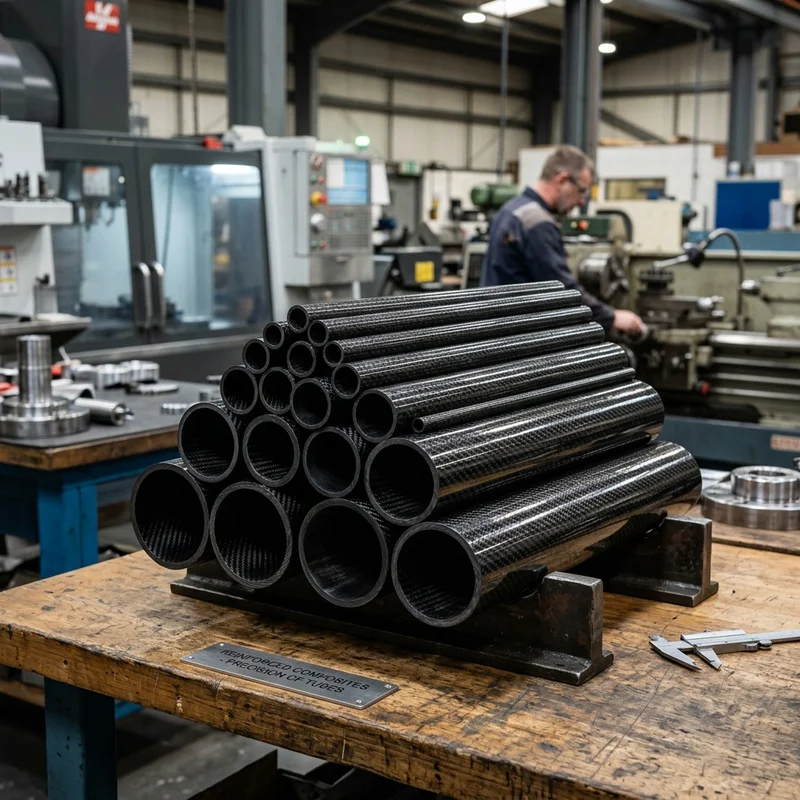
Round Carbon Fiber Tube — 3K Twill
Lightweight and ultra-stiff round tubes ideal for drone frames, robotics, and structural applications.
Carbon Fiber Plate — 3K Twill T700 1.5mm
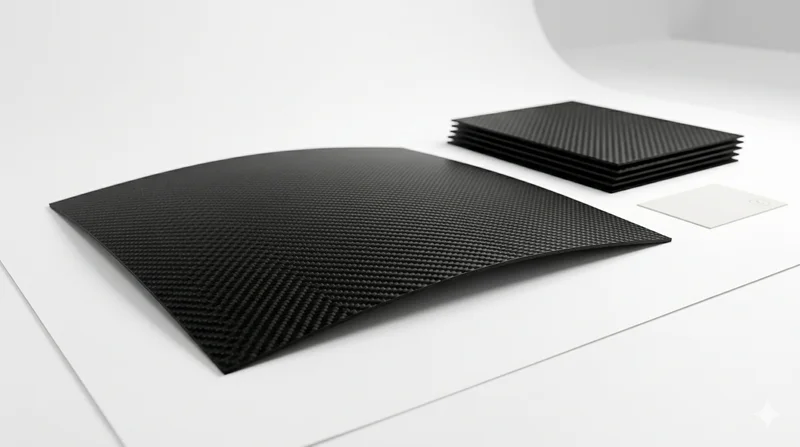
Thin 1.5mm carbon fiber plate with 3K twill weave surface. Lightweight and stiff, commonly used for covers, panels, drone bodies, and applications requiring a premium aesthetic appearance.