A carbon fiber telescopic tube supplier determines whether your extendable pole locks solid at full reach or twists under load three months after delivery. Telescopic tubes are not one product: every stage, wall thickness and joint design changes stiffness, weight and the price you pay per finished
Introduction
A carbon fiber telescopic tube supplier determines whether your extendable pole locks solid at full reach or twists under load three months after delivery. Telescopic tubes are not one product: every stage, wall thickness and joint design changes stiffness, weight and the price you pay per finished meter. Buyers who only compare per-meter quotes end up with poles that sag, joints that slip, or a minimum order quantity that never matches their actual program.
This guide walks through stage configurations, overlap and joint design, the commercial terms a supplier must state up front, and the questions to ask when you buy carbon fiber telescopic tube for poles, masts and extendable tools.
Carbon Fiber Telescopic Tube Supplier: What You Are Actually Buying
A telescopic assembly is a stack of tapered or straight stages that slide inside each other, each joint carrying the bending moment at full extension. The supplier is selling three things at once: the pultruded or roll-wrapped tube stock, the machining that sizes each stage so the fit stays snug, and the joint hardware — twist locks, flip locks or internal wedge clamps. Miss any one of the three and the assembly fails as a whole.
| Configuration | Stage OD range | Typical wall | Retracted / extended | Average weight | Best fit |
|---|---|---|---|---|---|
| 3-stage straight | 22 / 18 / 14 mm | 1.0-1.2 mm | 0.9 m / 2.6 m | 95 g/m | Camera poles, inspection sticks |
| 4-stage tapered | 28 / 24 / 19 / 15 mm | 1.2-1.5 mm | 1.1 m / 4.0 m | 120 g/m | Solar panel cleaning, painting |
| 5-stage light | 20 / 17 / 14 / 12 / 10 mm | 0.8-1.0 mm | 0.8 m / 4.5 m | 70 g/m | Telescopic antennas, flags |
| 2-stage heavy wall | 40 / 34 mm | 2.0-2.5 mm | 1.4 m / 2.8 m | 240 g/m | Drone masts, industrial poles |
Numbers above are typical catalog ranges, not a substitute for the drawing your supplier signs off. A carbon fiber telescopic tube supplier who cannot show the fit tolerance between stages — usually 0.05 to 0.15 mm clearance — is quoting tube stock, not a working assembly.
Choosing Diameters, Wall Thickness and Stage Overlap
Extension ratio is the first trade: every extra stage retracts shorter but multiplies joint compliance. Three stages at roughly 2.8x extension is the sweet spot for most hand poles; beyond five stages the tip deflection grows faster than the reach does. Design the overlap before you design anything else — each joint needs 80 to 150 mm of engagement so bending load passes through two walls, not one.
- Overlap per joint: 80 mm minimum for light poles, 120-150 mm above 3 m reach; short overlap is the most common cause of a wobbly tip.
- Wall thickness: 1.0 mm holds for 22 mm stages; step up to 1.5 mm once the outer stage passes 30 mm or the pole carries side load.
- Fiber modulus: standard modulus (70-90 GPa) for cost-driven cleaning poles, mid modulus (120-160 GPa) where tip stiffness matters more than grams.
- Straightness: hold 0.5 mm per meter or stages bind during extension; ask for the measurement method, not just the number.
- Joint hardware: twist locks wear plastic inserts — confirm they are replaceable and that the clamp band is not glued to the tube.
Ask your carbon fiber telescopic tube supplier for the deflection figure at a stated load and extension, not a generic stiffness claim. One number, one test setup, and you can compare offers side by side.
Buy Carbon Fiber Telescopic Tube: MOQ, Price Drivers and Lead Time
When you buy carbon fiber telescopic tube, price is driven by stage count, outer diameter, whether the tubes are cut and sanded, and who machines the joint seats. Raw pultruded rod is cheap; a five-stage assembly with four lock positions and a printed scale costs several times more per finished meter. The commercial frame usually looks like this:
| Order type | MOQ | Lead time | What changes the price |
|---|---|---|---|
| Stock 3-stage poles | 50-100 pcs | 7-10 days | Lock brand, handle grip, packaging |
| Custom OD / wall combo | 300-500 pcs | 3-4 weeks | Tooling change, first-article inspection |
| Private mold joint + scale print | 1,000 pcs | 5-6 weeks | Injection tooling, silk-screen or laser print |
| Sample lot | 10-20 pcs | 1-2 weeks | Engineering time, no tooling amortized |
Payment terms for first orders are usually 30 percent deposit against 70 percent before shipment, or an irrevocable letter of credit above roughly 30,000 USD. Freight matters more than people expect: telescopic poles ship long, so carton length pushes dimensional weight — consolidate models into shared carton sizes before you negotiate the quote.
Carbon Fiber Telescopic Tube Supplier China: Factory vs Trading Company
A carbon fiber telescopic tube supplier China directory mixes two very different sellers. The factory runs pultrusion or roll-wrapping lines, owns the cutting and sanding stations, and can adjust wall thickness within a production run. The trading company aggregates catalogs from several workshops, which is fine for one-off sourcing but weak when a fit tolerance drifts and nobody owns the process.
Three questions separate them on a first call: where is the pultrusion line, who machines the joint seats, and can you audit the straightness record for the last five batches? Factories answer with addresses and process sheets; traders answer with photographs. Both can ship on time — only one can fix a bad batch without finding a new workshop.
Carbon Fiber Telescopic Tube Supplier Factory: Line Capability and QC
Inside a capable carbon fiber telescopic tube supplier factory, the line looks repetitive on purpose: creel and resin bath, heated die, puller, automatic cut-off, then a sanding and marking station before stages go to assembly. What matters for your order is which steps are in-house and which are farmed out.
- In-house pultrusion controls fiber volume fraction and wall consistency run to run — ask for the resin system and fiber volume percentage on the certificate.
- In-house cutting and sanding protects stage length tolerance; outsourced finishing is where 1 mm length errors creep in.
- Assembly bench should torque-lock every unit against a go/no-go gauge, not spot-check a carton.
- First-article report: stage OD, wall, straightness, extension force and lock holding force, signed before the production run.
- Batch traceability: lot number printed on the carton and matched to the cure or pultrusion date of the tube stock.
A factory that shows all five without being asked is the supplier you can build a program on. One that offers a lower price and a photograph of a warehouse is offering inventory risk, not capability.
Frequently Asked Questions
What MOQ should I expect for a custom telescopic configuration?
Stock configurations ship from 50 to 100 pieces. A custom diameter, wall or stage count typically starts at 300 to 500 pieces because the cutting program, sanding jigs and lock fit must be re-validated. Private mold joints push the minimum to about 1,000 pieces, amortizing injection tooling over the order. Sample lots of 10 to 20 pieces are available for qualification before you commit.
How do I check stage fit and straightness before shipment?
Extend and collapse each sample stage five times and measure tip deflection at full reach under a stated side load. Straightness should hold within 0.5 mm per meter, and stage clearance should stay in the 0.05 to 0.15 mm window the supplier declared. Request the first-article report with these numbers before the production run starts, not after the containers sail.
Can a supplier match an existing pole brand's dimensions?
Yes, if you send measured samples or controlled drawings: stage count, each outer diameter, wall, overlap, lock type and retracted length. Reverse engineering from three sample poles takes one to two weeks and produces a dimensional report you approve before tooling. Confirm who owns the report — it prevents a second factory from quietly shifting tolerances later.
Conclusion
The right carbon fiber telescopic tube supplier sells a signed drawing and a first-article report, not a per-meter price: stage fit, overlap, straightness and lock holding force are the four numbers that decide whether the pole works at full reach. Fix those first, then compare quotes.
YongXian supplies carbon fiber telescopic tubes and finished extendable pole assemblies with lot traceability and export documentation. Browse our carbon fiber tube range or send your stage schedule and annual volume for a quotation.
Part of topic
Related Articles
- Carbon Fiber Foam Core Supplier: Specs, MOQ and Lead Time
- Carbon Fiber Sandwich Panel Supplier: Specs, MOQ and Lead Time
- Carbon Fiber Honeycomb Panel Supplier: Specs, MOQ and Lead Time
- Carbon Fiber Tapered Tube Supplier: Specs, MOQ and Lead Time
- Carbon Fiber Oval Tube Supplier: Specs, MOQ and Lead Time
- Carbon Fiber Square Tube Supplier: Specs, MOQ and Lead Time
Interested in Our Products?
Contact our team for competitive pricing and technical specifications.
Get a QuoteRelated Products
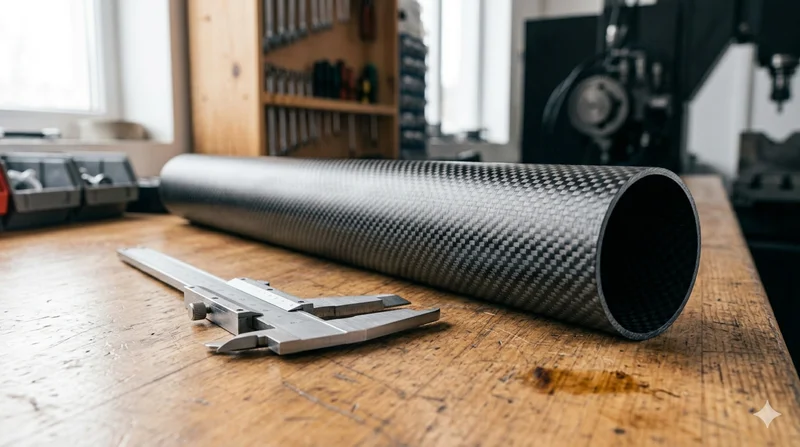
Round Carbon Fiber Tube — 3K Plain Weave T700
Standard round carbon fiber tube manufactured from Toray T700 grade fiber with 3K plain weave. Offers balanced strength and stiffness for general industrial applications including robotics, automation, sports equipment, and aerospace structures.
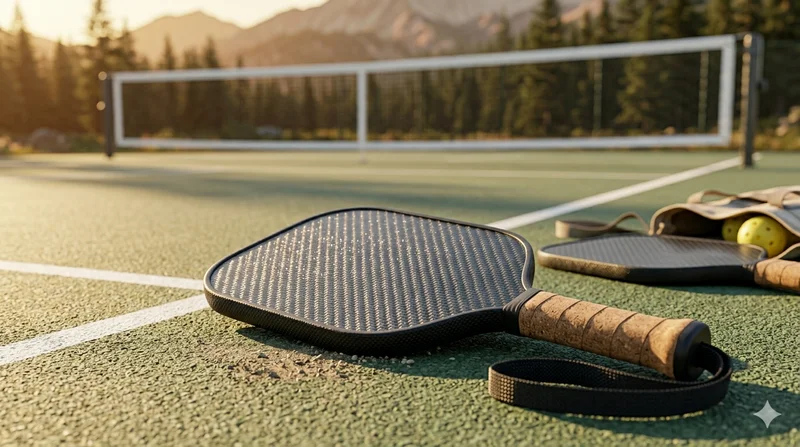
Carbon Fiber Pickleball Paddle
High-performance pickleball paddle with Toray T700 carbon fiber face and polypropylene honeycomb core. Delivers excellent power-to-weight ratio, spin generation, and vibration dampening for competitive play.
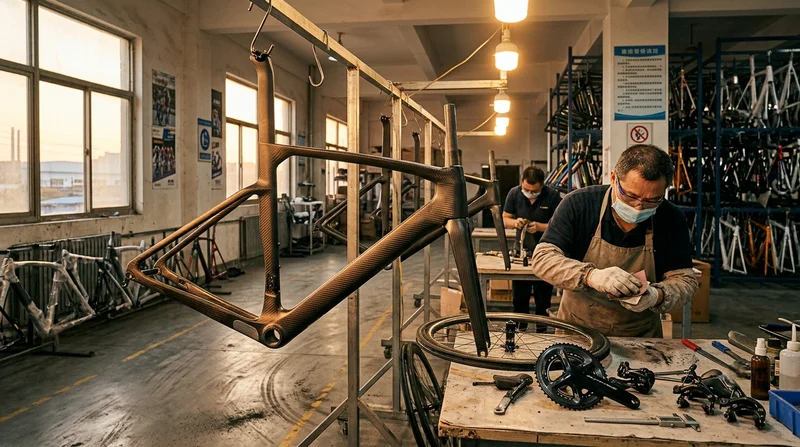
Custom Carbon Fiber Bicycle Frame
Full-custom carbon fiber bicycle frame manufactured to your geometry specifications. We produce road, gravel, mountain, and track frames using high-modulus carbon fiber layups optimized for each riding discipline. Monocoque construction with internal cable routing, available with disc or rim brake mounts.
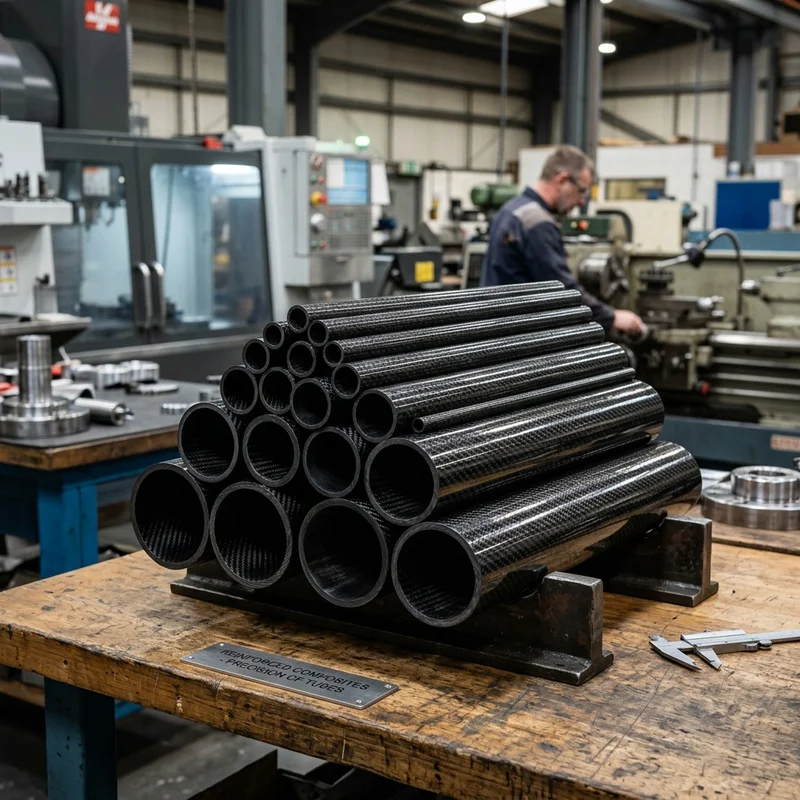
Round Carbon Fiber Tube — 3K Twill
Lightweight and ultra-stiff round tubes ideal for drone frames, robotics, and structural applications.
Round Carbon Fiber Tube — UD Unidirectional T700
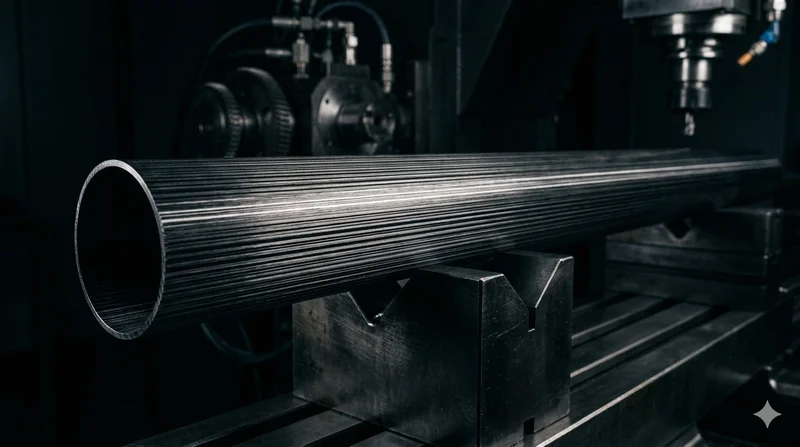
Unidirectional (UD) round tube with all fibers aligned axially for maximum longitudinal stiffness. Ideal for applications requiring high bending rigidity with minimal weight, such as shafts, struts, and structural reinforcements.