A carbon fiber foam core supplier decides whether your sandwich panel keeps its shape under load or delaminates after the first season. Foam core is the hidden half of a carbon fiber laminate: it adds stiffness at almost no weight, but only if density, shear strength and cell structure match the ski
Introduction
A carbon fiber foam core supplier decides whether your sandwich panel keeps its shape under load or delaminates after the first season. Foam core is the hidden half of a carbon fiber laminate: it adds stiffness at almost no weight, but only if density, shear strength and cell structure match the skin you plan to bond. Buyers who pick the cheapest board on a datasheet usually discover the mismatch in the boat hull, drone airframe or wind blade that fails in service.
This guide covers the core grades a supplier should stock, the density and shear windows that matter, sheet sizes and cutting options, and the commercial terms — MOQ, price drivers and lead time — you should settle before you buy carbon fiber foam core for production.
Carbon Fiber Foam Core Supplier: What You Are Actually Buying
A foam core supplier sells more than blocks of plastic foam. Closed-cell boards differ by polymer chemistry, density and cell size, and each grade behaves differently under shear, impact and temperature. The right choice balances three numbers: core density in kg/m3, compressive strength perpendicular to the panel, and shear modulus that keeps the skins from sliding over each other when the panel bends.
| Core grade | Density | Compressive strength | Service temperature | Relative cost | Best fit |
|---|---|---|---|---|---|
| PMI (Rohacell type) | 32-200 kg/m3 | 0.4-2.0 MPa | up to 180 °C cure | High | Aerospace prepreg, high-temp cure |
| PVC closed-cell | 40-200 kg/m3 | 0.3-1.6 MPa | up to 80 °C continuous | Medium | Marine hulls, radomes, blades |
| PU foam | 30-120 kg/m3 | 0.2-0.9 MPa | up to 80 °C | Low | Prototypes, buoyancy, interiors |
| PET foam | 40-160 kg/m3 | 0.3-1.2 MPa | up to 85 °C | Medium-low | Recyclable panels, wind blades |
Figures are typical catalog ranges across suppliers, not a substitute for the certificate that ships with your lot. A carbon fiber foam core supplier who cannot state the batch density tolerance — usually within plus or minus 5 percent — is selling packaging foam, not structural core.
Foam Core Selection: Density, Shear and Sheet Size
Start from the load case, not the price list. A panel that must resist point loads — a deck step, a landing gear mount — needs higher compressive strength than a buoyancy box where shear barely registers. Then match the sheet to your layup: skin bonding quality depends on how flat and how clean the core face is, and on whether the board arrives primed or raw.
- Density window: 40-80 kg/m3 covers most marine and drone sandwich work; go above 100 kg/m3 only where impact or fastener pull-out governs the design.
- Shear modulus: ask for the value in both directions — cores milled from block behave differently from boards extruded in sheets.
- Sheet size: standard boards run 1000 x 2000 mm or 1200 x 2400 mm; larger panels mean joints in the core, which need scarfing or honeycomb inserts.
- Thickness tolerance: plus or minus 0.5 mm is common, plus or minus 0.2 mm costs more and is worth it under prepreg skins.
- Face condition: calendered or primed faces wet out faster; raw sawn faces need an extra resin coat before bonding.
Ask your carbon fiber foam core supplier for a stamped thickness report per lot and for the cutting method used — hot wire, CNC mill or band saw — because each leaves a different surface roughness your laminate must wet out.
Buy Carbon Fiber Foam Core: MOQ, Price Drivers and Lead Time
When you buy carbon fiber foam core, price follows density, grade chemistry, sheet size and how much cutting the supplier does before shipping. Structural PMI can cost five times more per cubic meter than basic PU, and a CNC-cut nesting job adds setup time that a full sheet does not carry. The commercial frame usually looks like this:
| Order type | MOQ | Lead time | What changes the price |
|---|---|---|---|
| Stock full sheets | 5-10 sheets | 7-14 days | Grade, density, sheet size |
| Custom thickness or grade | 50-100 sheets | 3-5 weeks | Production run setup, density check |
| CNC-cut kits | 20-50 kits | 2-3 weeks | Nesting efficiency, programming |
| Sample set | 1-2 sheets | 1-2 weeks | Engineering time, no run amortized |
Payment for a first order is typically 30 percent deposit against 70 percent before shipment, or an irrevocable letter of credit above roughly 30,000 USD. Foam core ships light but bulky: freight cost tracks volume weight, so consolidating to one grade and one sheet size usually saves more than negotiating two percent off the material.
Carbon Fiber Foam Core Supplier China: Factory vs Trading Company
A carbon fiber foam core supplier China directory mixes two sellers with different strengths. The factory runs its own foaming or extrusion lines, controls density from batch to batch, and can hold a tolerance when your program demands it. The trading company aggregates several mills, which works for spot purchases but leaves nobody accountable when a lot arrives two density grades light.
Three questions separate them on a first call: where is the foaming line, can you audit the last five density certificates, and who cuts the sheets — in-house or outsourced? Factories answer with process sheets and addresses; traders answer with catalog photographs. Both can ship on time; only one can re-press a soft batch without finding another mill.
Carbon Fiber Foam Core Supplier Factory: Core Cutting and Lamination QC
Inside a capable carbon fiber foam core supplier factory, the line looks repetitive on purpose: foaming or block extrusion, board lamination, aging, then cutting and inspection before packing. What matters for your order is which steps stay in-house.
- Density verification: weight and volume check per lot, with the certificate number printed on the wrapping label.
- In-house cutting: hot wire for PU, CNC milling for PVC and PMI — outsourced cutting is where thickness tolerance drifts.
- Surface prep: primed faces or plasma treatment available on request, since raw foam is the usual cause of poor wet-out.
- First-article report: thickness, density, flatness and sheet dimensions signed before the production run starts.
- Batch traceability: lot number matched to the foaming date so a defect can be traced to one run, not the whole year.
A factory that shows all five without being asked is a supplier you can build a program on. One that offers a lower price and a warehouse photograph is offering inventory risk, not capability.
Frequently Asked Questions
What MOQ should I expect for a custom foam core grade?
Stock sheets ship from 5 to 10 pieces. A custom density, chemistry or thickness typically starts at 50 to 100 sheets because the foaming run, aging cycle and cutting program must be re-validated. CNC-cut kits start around 20 to 50 kits once nesting data exists. Sample sets of one or two sheets are available for qualification before you commit to a production lot.
How do I verify core density before bonding?
Cut a 100 mm cube from each incoming sheet, weigh it, and divide by the measured volume. Compare the result against the certificate tolerance — plus or minus 5 percent is standard for structural cores. Check thickness at five points per sheet with a caliper, and reject sheets that bow more than 3 mm across a meter, because uneven core thickness shows up as resin-rich or resin-starved lines in the finished laminate.
Can a supplier match a core I already use in production?
Yes, if you send a sample block and the datasheet values that matter: grade chemistry, density, compressive and shear strength, sheet size and thickness tolerance. Reverse engineering takes one to two weeks and produces a comparison report you approve before tooling. Confirm who owns that report — it prevents a second mill from quietly shifting the density window later.
Conclusion
The right carbon fiber foam core supplier sells a stamped density certificate and a first-article report, not a price per cubic meter: density window, shear modulus and thickness tolerance are the three numbers that decide whether your sandwich panel holds its shape. Fix those first, then compare quotes.
YongXian supplies carbon fiber foam core sheets and cut-to-size kits with lot traceability and export documentation. Browse our composite core range or send your core schedule and annual volume for a quotation.
Part of topic
Related Articles
- Carbon Fiber Sandwich Panel Supplier: Specs, MOQ and Lead Time
- Carbon Fiber Honeycomb Panel Supplier: Specs, MOQ and Lead Time
- Carbon Fiber Telescopic Tube Supplier: Specs, MOQ and Lead Time
- Carbon Fiber Tapered Tube Supplier: Specs, MOQ and Lead Time
- Carbon Fiber Oval Tube Supplier: Specs, MOQ and Lead Time
- Carbon Fiber Square Tube Supplier: Specs, MOQ and Lead Time
Interested in Our Products?
Contact our team for competitive pricing and technical specifications.
Get a QuoteRelated Products
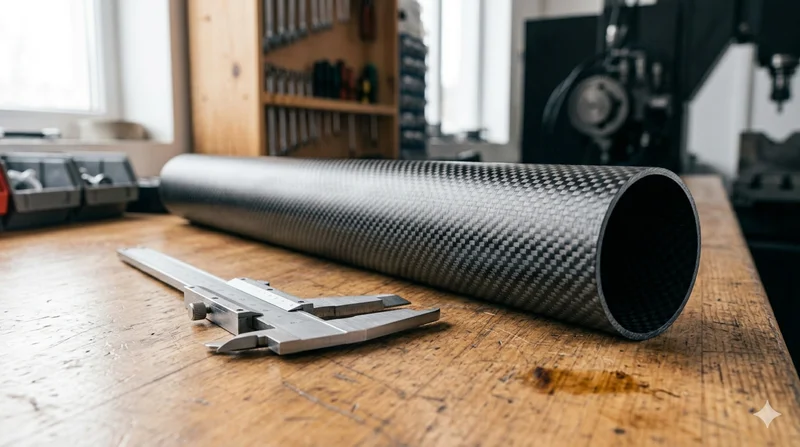
Round Carbon Fiber Tube — 3K Plain Weave T700
Standard round carbon fiber tube manufactured from Toray T700 grade fiber with 3K plain weave. Offers balanced strength and stiffness for general industrial applications including robotics, automation, sports equipment, and aerospace structures.
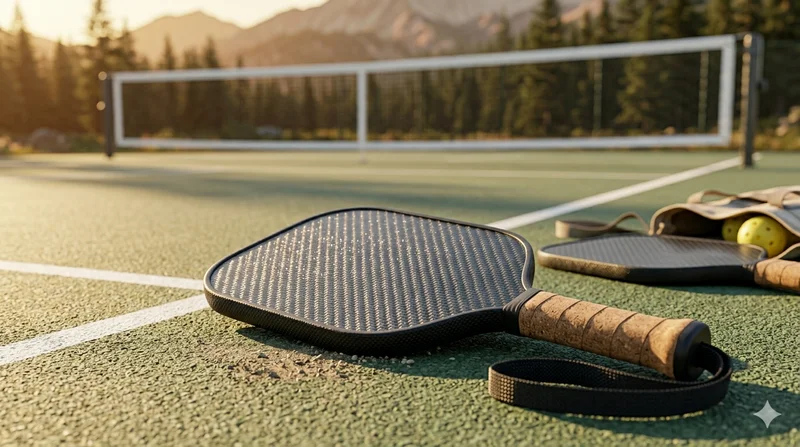
Carbon Fiber Pickleball Paddle
High-performance pickleball paddle with Toray T700 carbon fiber face and polypropylene honeycomb core. Delivers excellent power-to-weight ratio, spin generation, and vibration dampening for competitive play.

Custom Carbon Fiber Bicycle Frame
Full-custom carbon fiber bicycle frame manufactured to your geometry specifications. We produce road, gravel, mountain, and track frames using high-modulus carbon fiber layups optimized for each riding discipline. Monocoque construction with internal cable routing, available with disc or rim brake mounts.
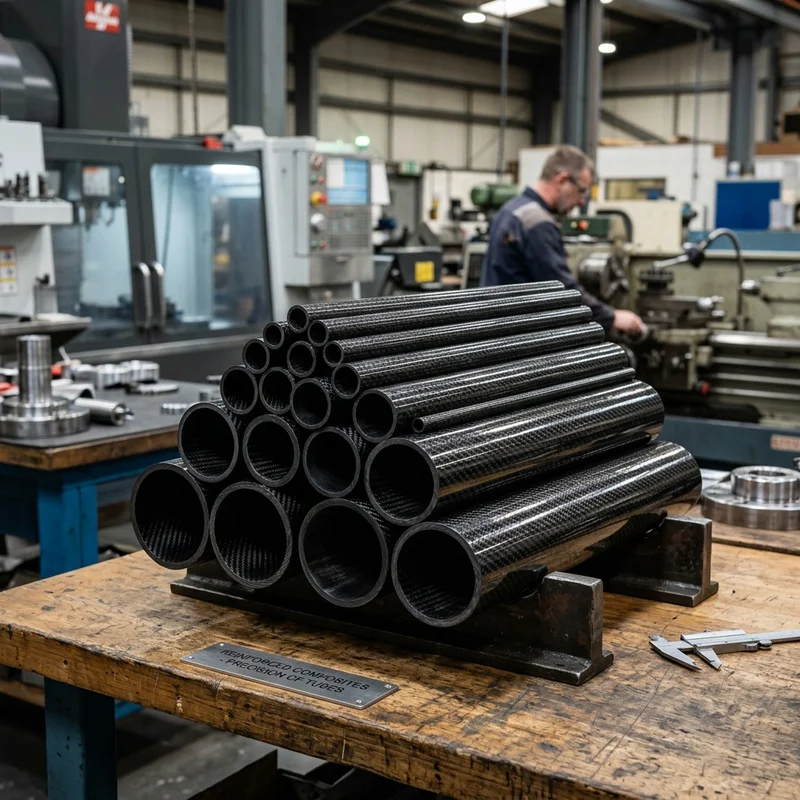
Round Carbon Fiber Tube — 3K Twill
Lightweight and ultra-stiff round tubes ideal for drone frames, robotics, and structural applications.
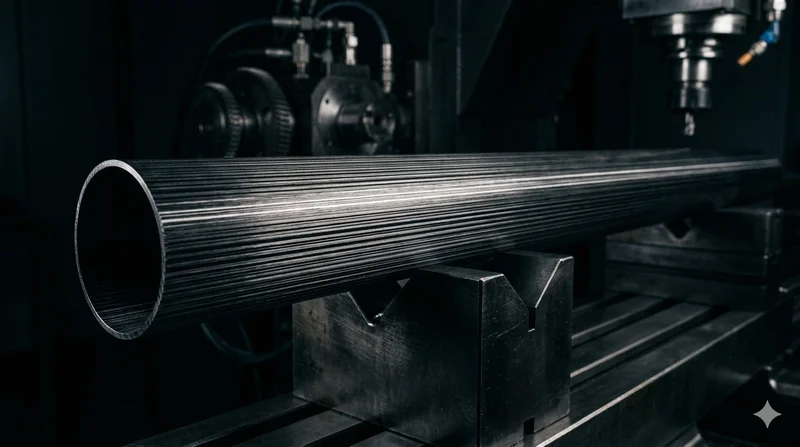
Round Carbon Fiber Tube — UD Unidirectional T700
Unidirectional (UD) round tube with all fibers aligned axially for maximum longitudinal stiffness. Ideal for applications requiring high bending rigidity with minimal weight, such as shafts, struts, and structural reinforcements.